


Skip to content
  • Facebook
  • X
  • Linkedin
  • WhatsApp
  • YouTube
  • Associate Journalism
  • About Us
  • Privacy Policy
  • 033-46046046
  • editor@artifex.news
Artifex.News

Artifex.News

Stay Connected. Stay Informed.

  • Breaking News
  • World
  • Nation
  • Sports
  • Business
  • Science
  • Entertainment
  • Lifestyle
  • Toggle search form
  • Oscars push back nominations announcement amid California wildfires
    Oscars push back nominations announcement amid California wildfires World
  • Fire department to issue practical checklist for fire safety in existing schools
    Fire department to issue practical checklist for fire safety in existing schools Nation
  • 50-Year-Old Indian-Origin Man Gets Life Term For Girlfriend’s Murder In UK
    50-Year-Old Indian-Origin Man Gets Life Term For Girlfriend’s Murder In UK World
  • Jofra Archer To Play For RCB In IPL 2024? Social Media Post Has Fans Wondering
    Jofra Archer To Play For RCB In IPL 2024? Social Media Post Has Fans Wondering Sports
  • “Poor In My Opinion”: Jos Buttler Criticises Dharamsala Outfield Ahead Of Cricket World Cup Match vs Bangladesh
    “Poor In My Opinion”: Jos Buttler Criticises Dharamsala Outfield Ahead Of Cricket World Cup Match vs Bangladesh Sports
  • Samson — from an enigma to a superking
    Samson — from an enigma to a superking Sports
  • Heat Waves In Mexico Lead To Submerged Homes
    Heat Waves In Mexico Lead To Submerged Homes World
  • Saudi eyes electric jets to reach Mecca, new resorts
    Saudi eyes electric jets to reach Mecca, new resorts World
Indian research can shape the world

Indian research can shape the world

Posted on October 6, 2026 By admin


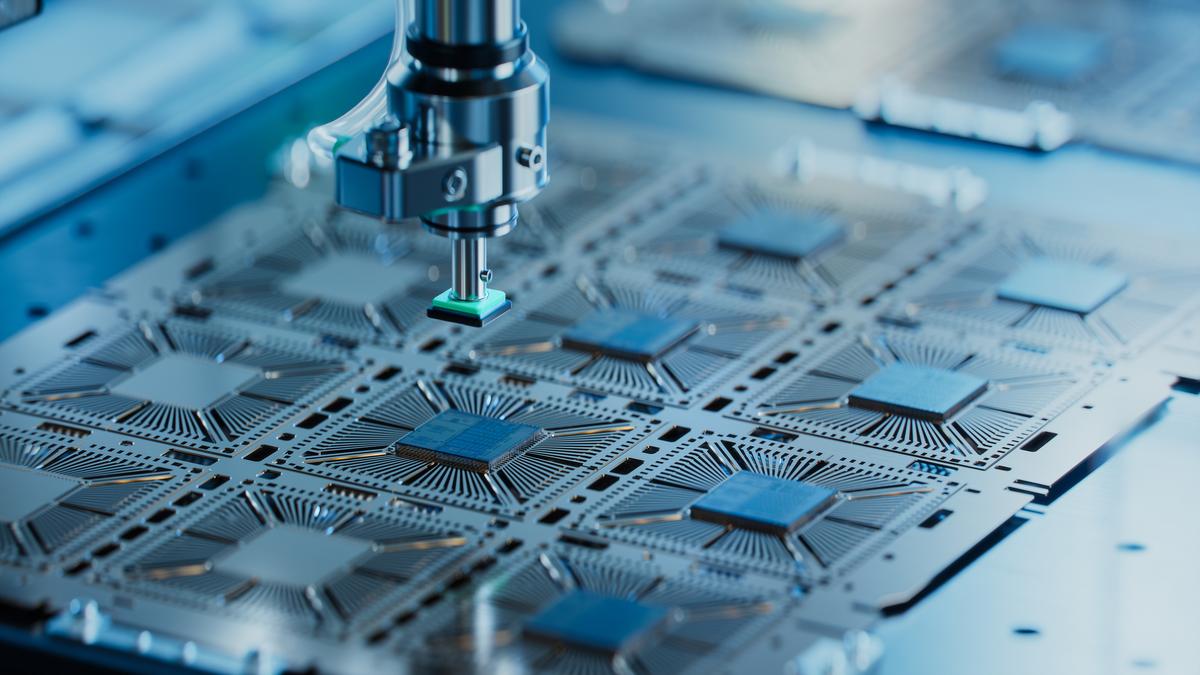
‘For science from India to have global impact by developing transformative technologies, four things need to be addressed.’
| Photo Credit: Getty Images/iStockphoto

People fret about the buses India has missed in its technological growth. The list is familiar: aircraft, advanced weapons, new materials, and biotechnology. In each, we look at what others built decades ago and ask why we did not. There is value in this introspection, and there is danger. The value is that it forces us to ask whether our systems can be streamlined and enabled. Catching up is not a bad thing. Much of the world’s industrial history is a history of catching up. The danger is that catch-up-itis can become a habit. If our ambition is always defined by what someone else has already done, we will always arrive late, pay for licences and know-how, and build on foundations laid elsewhere. The costs of technological catch-up are a heavy burden, and they recur with every new wave.

Also read | India has a research blindspot: its own science system

There is a better question to ask, and it arises from a tectonic change in the relationship between science and technology. By science, we mean discovery, curiosity, the effort to explain the universe, and the development of abstract ideas in mathematics. By technology, we mean the development of tools that enable humans to transform the world. For much of history, these were treated as separate enterprises, with technology following science at a distance, sometimes by a century.

However, over the past 50 years or so, we have increasingly seen fundamental research and application sewn together at the hip. Much of our understanding of how genes are regulated came from studying viruses that infect bacteria. More recently, studying how bacteria defend themselves gave us CRISPR technology within just a few years, which has an extraordinary range of applications. Today, the distance and time from curiosity to application are short. This shift lets thinking and training lead, and it shows that investing in fundamental research will enable leading than playing catch-up. The bus we need to board is the next one, and it has not yet left.

Get on the bus first

For science from India to have global impact by developing transformative technologies, four things need to be addressed.

First, invest in high-quality education at scale. The features of AI that democratise access to learning allow us to reach millions of students poorly served by our moribund institutions, and to bypass those institutions where necessary. But learning science requires doing science. Hundreds of experimental “foundries” in engineering, physics, biology, chemistry and math should be created; places where young people work with real instruments on real problems.

Second, national laboratories need to be liberated from insularity. The bulk of our national labs are currently poorly accessible to researchers, students and companies outside their walls. This can easily change, benefiting both labs and universities. All national labs need to be organised around three zones: green for open interaction, amber for collaboration, and red for strategic work. Much of what India’s labs do belong in the green and amber zones.

Third is flexibility. Many say we are a low-trust society and that our regulators should trust our research system more and be more flexible. The response to this is to point out that trust is low because compliance with guidelines is poor, necessitating onerous rules. However, India does have many high-quality islands of excellence in universities, institutes and laboratories. These institutions do comply with the rules and regulations, and should be freed from the weight of General Financial Rules compliance, a weight few other countries place on their scientists. Accountability should be measured by outcomes, and not by procedure at every step. Flexibility can allow these institutions to leap ahead.

Fourth, our regulatory system still needs much reform. Approvals for research with biological materials and for clinical trials remain slow and unpredictable. The more hoops companies and researchers must jump through, the less likely small and medium-sized institutions are to succeed, since only those with deep pockets can afford the time and costs. Thus, high-quality, speedy regulation is important.

None of this is beyond us; they can be achieved step by step. Many are already doing so in pockets. What is missing is the decision to make those pockets the norm, and a few who dedicate themselves to this task. How long will it take to become a science-driven nation with global impact? If we improve just 10% in each sector, field, and every year, we will be nearly seven times better in 20 years.

K. VijayRaghavan is Former Principal Scientific Adviser to the Government of India and chairs Ashoka University’s Science Advisory Council; Archish Mittal is Vice-President, Iron Pillar

Published – October 07, 2026 12:59 am IST


Source link

Science Tags:india research, india tech research, india technology research, research in india, science research in india, technology research in india

Post navigation

Previous Post: Traffic snarls at Delhi’s brand-new flyover persist week after opening
Next Post: The China-U.S. rapprochement

Related Posts

  • A star party in the mountains
    A star party in the mountains Science
  • NASA astronaut Butch Wilmore retires less than five months after extended Starliner spaceflight
    NASA astronaut Butch Wilmore retires less than five months after extended Starliner spaceflight Science
  • Sci-Five | The Hindu Science Quiz: On Antoine Lavoisier
    Sci-Five | The Hindu Science Quiz: On Antoine Lavoisier Science
  • Is posture how kangaroos can speed up without burning more energy?
    Is posture how kangaroos can speed up without burning more energy? Science
  • Why is red the colour of danger?
    Why is red the colour of danger? Science
  • Artemis crew reaches the moon, approaches record-breaking distance from Earth
    Artemis crew reaches the moon, approaches record-breaking distance from Earth Science

More Related Articles

ISRO hand-holding start-ups to foster space ecosystem ISRO hand-holding start-ups to foster space ecosystem Science
New molecular pathways contributing to cardiovascular disease in Indians found New molecular pathways contributing to cardiovascular disease in Indians found Science
Ehrlich builds the basis for chemotherapy Ehrlich builds the basis for chemotherapy Science
Using AI to classify neem fruits based on azadirachtin content Using AI to classify neem fruits based on azadirachtin content Science
‘Defect to win’: science is set to be overwhelmed by fraud papers ‘Defect to win’: science is set to be overwhelmed by fraud papers Science
What happens when public knowledge is created on private infrastructure? What happens when public knowledge is created on private infrastructure? Science
SiteLock

Archives

  • October 2026
  • September 2026
  • August 2026
  • July 2026
  • June 2026
  • May 2026
  • April 2026
  • March 2026
  • February 2026
  • January 2026
  • December 2025
  • November 2025
  • October 2025
  • September 2025
  • August 2025
  • July 2025
  • June 2025
  • May 2025
  • April 2025
  • March 2025
  • February 2025
  • January 2025
  • December 2024
  • November 2024
  • October 2024
  • September 2024
  • August 2024
  • July 2024
  • June 2024
  • May 2024
  • April 2024
  • March 2024
  • February 2024
  • January 2024
  • December 2023
  • November 2023
  • October 2023
  • September 2023
  • August 2023
  • July 2023
  • June 2023
  • May 2023
  • April 2023
  • March 2023
  • February 2023
  • January 2023
  • December 2022
  • November 2022
  • October 2022
  • September 2022
  • August 2022
  • July 2022
  • June 2022
  • May 2022

Categories

  • Business
  • Nation
  • Science
  • Sports
  • World

Recent Posts

  • Twenty-five years of leadership, an India transformed
  • The China-U.S. rapprochement
  • Indian research can shape the world
  • Traffic snarls at Delhi’s brand-new flyover persist week after opening
  • Why charging for UPI changes the math

Recent Comments

  1. Larrymix on UP Teacher Who Asked Students To Slap Muslim Classmate
  2. Larrymix on UP Teacher Who Asked Students To Slap Muslim Classmate
  3. Larrymix on UP Teacher Who Asked Students To Slap Muslim Classmate
  4. MelvinLit on UP Teacher Who Asked Students To Slap Muslim Classmate
  5. Larrymix on UP Teacher Who Asked Students To Slap Muslim Classmate
  • 3 Israelis Killed In Shooting Near Jordan Border, Gunman Shot Dead
    3 Israelis Killed In Shooting Near Jordan Border, Gunman Shot Dead World
  • Pope repeats call to negotiate in Ukraine, Gaza
    Pope repeats call to negotiate in Ukraine, Gaza World
  • What is the best way to get to the moon from the earth?
    What is the best way to get to the moon from the earth? Science
  • Access Denied
    Access Denied Nation
  • Access Denied
    Access Denied Nation
  • Access Denied Sports
  • Access Denied Sports
  • Golden Visa Inquiries From US Citizens Soar After Trump Win
    Golden Visa Inquiries From US Citizens Soar After Trump Win World

Editor-in-Chief:
Mohammad Ariff,
MSW, MAJMC, BSW, DTL, CTS, CNM, CCR, CAL, RSL, ASOC.
editor@artifex.news

Associate Editors:
1. Zenellis R. Tuba,
zenelis@artifex.news
2. Haris Daniyel
daniyel@artifex.news

Photograher:
Rohan Das
rohan@artifex.news

Artifex.News offers Online Paid Internships to college students from India and Abroad. Interns will get a PRESS CARD and other online offers.
Send your CV (Subjectline: Paid Internship) to internship@artifex.news

Links:
Associate Journalism
About Us
Privacy Policy

News Links:
Breaking News
World
Nation
Sports
Business
Entertainment
Lifestyle

Registered Office:
72/A, Elliot Road, Kolkata - 700016
Tel: 033-22277777, 033-22172217
Email: office@artifex.news

Editorial Office / News Desk:
No. 13, Mezzanine Floor, Esplanade Metro Rail Station,
12 J. L. Nehru Road, Kolkata - 700069.
(Entry from Gate No. 5)
Tel: 033-46011099, 033-46046046
Email: editor@artifex.news

Copyright © 2023 Artifex.News Newsportal designed by Artifex Infotech.