



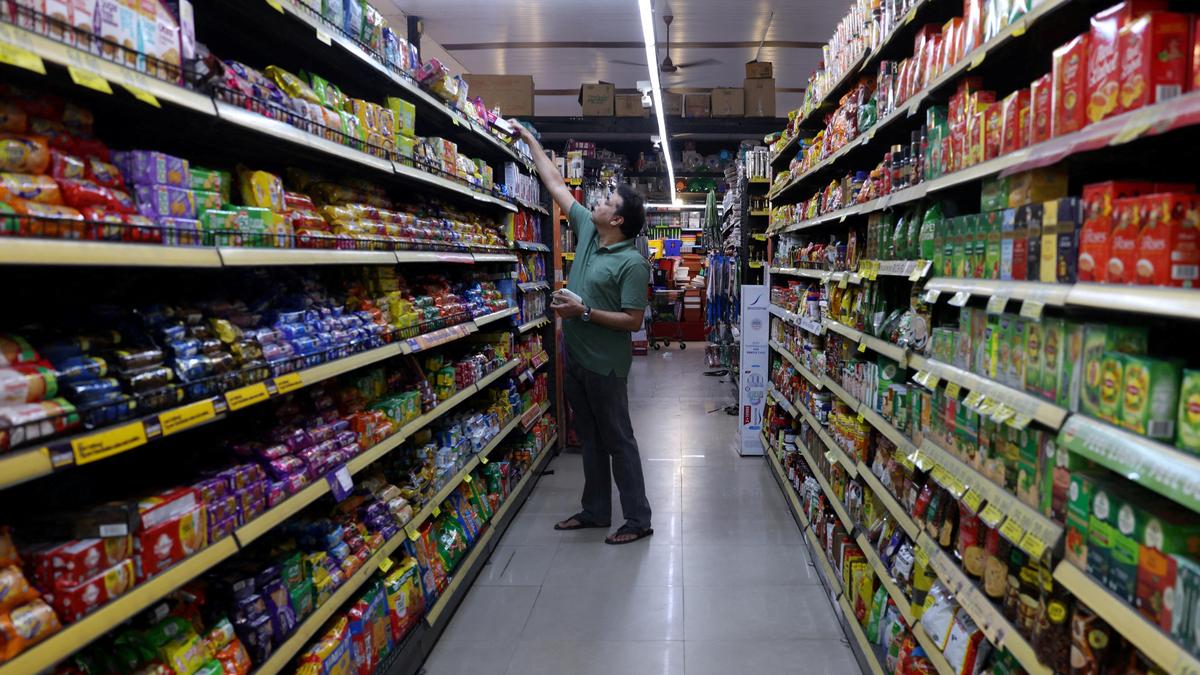
India’s food market, estimated at $550–$600 billion is growing at 6–7% CAGR, supported by economic growth and urbanisation, Devesh Deval, Joint Secretary, Ministry of Food Processing Industries said.
He said food processing, accounting for nearly 8% of gross value added in manufacturing, is strategically important as it creates greater value for farmers, attracts investment and is the second-highest employment creator in manufacturing.
“The government’s focus is to increase the level of processing across all 16 broad sub-sectors and ensure greater value reaches farmers,” Mr. Deval said on the on the sidelines of Anuga Select India and Anuga FoodTec India 2026 global food & beverages show organised by Koelnmesse in Mumbai.
“Cereals, meat, fruits and vegetables and dairy remain key segments, with India being the world’s second-largest producer of fruits and vegetables and the largest producer of milk. Fisheries, marine products and animal husbandry also receive dedicated policy attention, while healthier and plant-based foods are emerging areas of innovation,” he emphasised.
Stating that protein was particularly relevant given India’s large vegetarian population, he said there was a need to meet growing protein requirements.
Tarun Bajaj, senior consultant, Agricultural and Processed Food Products Export Development Authority (APEDA), speaking on the occasion, said India exported $53 billion worth of agricultural and processed food products in 2025–26, placing the country among the top 10 exporters globally.
“Despite geopolitical challenges, exports continue to grow, with rice, meat, marine products, coffee and tea among the leading products, while processed food exports are steadily increasing,” he said.
“This growth reflects the development of infrastructure at both the macro and micro levels, supported by conducive government policies and strong performance by farmers,” he said.
Speaking at the show Martina Englhardt-Kopf, Vice Minister, Ministry of Food and Agriculture, Federal Republic of Germany, said “At a time when geopolitical tensions, the pandemic and disruptions to global supply chains have highlighted the importance of resilience and food security, strong regional value chains must go hand in hand with stable, transparent and rules-based international trade.”
She said the conclusion of the India–EU Free Trade Agreement was therefore “an economically significant milestone, creating a market of around two billion people and liberalising trade covering 99.3% of EU and 96.6% of India’s trade value.”
Addressing delegates Silvio Erkens, Minister of Food Safety, Fisheries & Horticulture, Kingdom of the Netherlands, said “The food sector stands at the crossroads of opportunity and responsibility, with climate change, geopolitical instability and energy shortages creating new challenges for food production, trade and processing.”
“This makes international partnerships, innovation and business collaboration essential,” he said.
According to Milind Dixit, managing director, India & SAARC Region, Koelnmesse Pvt. Ltd. India’s food processing industry is entering an important phase of expansion, driven by rising domestic consumption, greater value addition, technology adoption and stronger integration with global markets.
“The sector has already reached around $382 billion in FY25 and is projected to approach $689 billion by FY34, while processed food now accounts for more than 20% of India’s agricultural exports,” he added.
Published – October 02, 2026 04:37 am IST