


Skip to content
  • Facebook
  • X
  • Linkedin
  • WhatsApp
  • YouTube
  • Associate Journalism
  • About Us
  • Privacy Policy
  • 033-46046046
  • editor@artifex.news
Artifex.News

Artifex.News

Stay Connected. Stay Informed.

  • Breaking News
  • World
  • Nation
  • Sports
  • Business
  • Science
  • Entertainment
  • Lifestyle
  • Toggle search form
  • Access Denied
    Access Denied Nation
  • Access Denied
    Access Denied Nation
  • “We See Our Faces In Mirror”: Sunil Gavaskar’s Unfiltered Message To Rohit Sharma, Virat Kohli
    “We See Our Faces In Mirror”: Sunil Gavaskar’s Unfiltered Message To Rohit Sharma, Virat Kohli Sports
  • Vistara Airlines CEO says ‘worst is behind us’; operations have stabilised
    Vistara Airlines CEO says ‘worst is behind us’; operations have stabilised Business
  • Trinamool nominates Sobhandeb as Opposition leader, Firhad as Chief Whip
    Trinamool nominates Sobhandeb as Opposition leader, Firhad as Chief Whip Nation
  • Market capitalisation of four of top-10 valued firms jumps ₹81,151 crore; ICICI, HDFC Bank biggest gainers
    Market capitalisation of four of top-10 valued firms jumps ₹81,151 crore; ICICI, HDFC Bank biggest gainers Business
  • “Clear Unplayable Beamer”: Ex-India Star’s Blunt Take On Virat Kohli’s Dismissal
    “Clear Unplayable Beamer”: Ex-India Star’s Blunt Take On Virat Kohli’s Dismissal Sports
  • Access Denied
    Access Denied Nation
A tiny insect, a deadly enemy: how medicine’s discovery of its impact shaped health and town planning

A tiny insect, a deadly enemy: how medicine’s discovery of its impact shaped health and town planning

Posted on August 20, 2026 By admin


Anyone waiting for municipal approval of a building plan may wonder why a local body should regulate construction on private land. In the Madras Presidency, such powers were formalised under the Madras City Municipal Corporation Act, 1919. After Independence, the first Conference of State Ministers on Town and Country Planning in 1960 gave impetus to master plans, planning legislation and similar regulatory systems across India. Behind these powers lay a public health purpose: ensuring proper drainage, sewage disposal, and healthier settlements. That rationale had been powerfully reinforced decades earlier by the work of a British doctor in India, who showed how environmental neglect could enable a tiny member of the animal world to transmit a deadly disease killing millions.

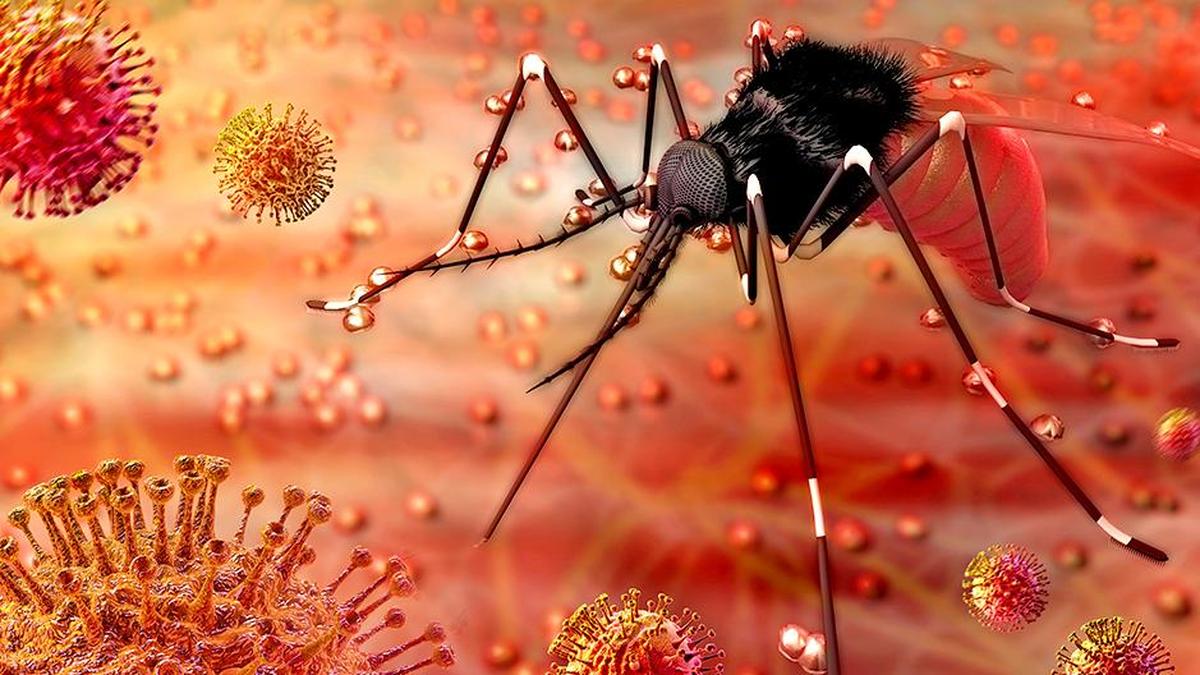
On August 20, 1897, inside a modest laboratory in Secunderabad, a British medical officer named Ronald Ross bent over his microscope and examined the stomach of this creature. What he saw that afternoon would help change the course of medicine. Within the stomach wall there were small and pigmented bodies. Ross had allowed the creature to feed on a patient with malaria several days earlier. The structures he was seeing provided crucial evidence that the malaria parasite did not merely pass through that creature by accident, but developed inside it. That was the point at which the role of that creature in the malaria lifecycle began to become scientifically visible. That creature is none other than a mosquito, and World Mosquito Day on August 20 was to commemorate this discovery in India.

The hidden enemy

For centuries, people suffered from malaria without knowing what caused it. The disease was particularly common around marshes and stagnant water. Since people living near such places frequently developed fever, chills and weakness, the illness came to be associated with unhealthy air. The very word ‘malaria’ comes from the Italian mala aria, meaning ‘bad air’. The association with stagnant water was not entirely wrong. What people could not see was that the water provided breeding sites for mosquitoes.

An important breakthrough came in 1880, when the French physician Alphonse Laveran examined the blood of patients with malaria and identified the parasite responsible for the disease. For the first time, scientists could actually see the organism causing malaria. But solving one mystery created another. If the parasite lived in human blood, how did it move from one person to the next? It could not simply appear in another person’s bloodstream. Some mechanism had to carry it. This missing link became one of the great medical questions of the late nineteenth century.

The mosquito idea

Patrick Manson, a physician who had studied tropical diseases, had already shown that mosquitoes played a role in the lifecycle of filarial parasites. He began to suspect that mosquitoes might also be involved in malaria. Ronald Ross, an officer of the Indian Medical Service, met Manson in England in 1894 and became interested in testing this hypothesis. Ross returned to India and began a painstaking series of experiments. He allowed mosquitoes to feed on people with malaria. He later dissected the insects under a microscope and proved with evidence that the parasite had entered and developed inside them.

The complete story did not emerge in a single experiment. Ross continued his work, particularly using malaria parasites of birds, and demonstrated further stages of the parasite inside mosquitoes, including its movement towards the salivary glands. Scientists in Italy subsequently established the transmission cycle of human malaria through Anopheles mosquitoes. Science had finally connected the pieces. A mosquito bites a person carrying malaria parasites. The parasites undergo further development inside the insect. When the infected mosquito later bites another person, the parasite can enter the new host and begin another infection. Ross received the Nobel Prize in Physiology or Medicine in 1902 for his work on malaria.

Health revolution

This discovery did more than solve a biological mystery. It completely changed malaria control. If mosquitoes transmitted malaria, preventing mosquito bites and reducing mosquito populations could prevent the disease. Drainage of stagnant water, environmental sanitation, mosquito nets, screening of houses and later, insecticides became important public health tools.

Disease prevention was no longer directed against an invisible ‘bad air’. Public health had acquired a clearly identifiable target. Its danger lay not in physical strength, but in what it carried from one human being to another. Though the mosquito appears to be an unlikely killer, it is considered the world’s deadliest member of the animal world because different species transmit malaria, dengue, chikungunya, yellow fever, Zika, Japanese encephalitis, lymphatic filariasis, and other infections. This distinction also explains why mosquito control cannot rely on a single strategy.

India’s long battle

India occupies a distinctive place in the history of malaria. It was in India that Ross carried out much of the work that clarified the relationship between mosquitoes and malaria. The country has also lived with the enormous health and economic consequences of mosquito-borne diseases for generations. India has made substantial progress in reducing malaria and has set the goal of malaria elimination by 2030. Yet dengue, chikungunya and other vector-borne diseases continue to remind us that success against one mosquito-borne infection does not automatically eliminate the larger mosquito problem. Surveillance, early diagnosis, prompt treatment, vector control and environmental management must therefore work together.

The tools available today would have been unimaginable to Ross. Modern laboratories can identify pathogens using molecular methods. Genomic surveillance can track changes in parasites and mosquito populations. Insecticide-treated nets protect millions of people. Yet, mosquitoes remain remarkably successful because they adapt to human environments and exploit the conditions we create.

In 2025, India recorded 233,917 malaria cases but only 76 deaths. The low fatality reflects the success of diagnosis and treatment; the continuing caseload shows that prevention remains unfinished. Planning authorities were empowered to regulate buildings, drainage, and sewage, in part to prevent environmental hazards, including stagnant water where mosquitoes breed. Yet stagnant water pools remain in and around buildings, providing mosquitoes with their breeding grounds. Public-health authorities are then left to control what should partly have been prevented, while battling insecticide resistance, increasing human and animal movement, urbanisation, and fragmented coordination with planners.While the discovery of mosquito’s role in the spread of disease was made in India, we are still battling to govern the environment in which it breeds.

(Dr. C. Aravinda is an academic and public health physician. The views expressed are personal. aravindaaiimsjr10@hotmail.com)

Published – August 20, 2026 02:17 pm IST


Source link

Science Tags:mosquito and malaria, mosquito day, mosquito diseases

Post navigation

Previous Post: Max Verstappen commits to Red Bull until end of 2030
Next Post: Odisha forms inquiry committee to examine relocation of villages from tiger habitat

Related Posts

  • Is it possible to reduce the risk of depression?
    Is it possible to reduce the risk of depression? Science
  • The green and crimson chemistry of the watermelon
    The green and crimson chemistry of the watermelon Science
  • What is a dark comet? A quick guide to the ‘new’ kids in the Solar System
    What is a dark comet? A quick guide to the ‘new’ kids in the Solar System Science
  • Forest loss from SE Asia rubber is up to 3 times more than thought: study
    Forest loss from SE Asia rubber is up to 3 times more than thought: study Science
  • SpaceX successfully launches 10th Starship test flight
    SpaceX successfully launches 10th Starship test flight Science
  • White House directs NASA to create time standard for the moon
    White House directs NASA to create time standard for the moon Science

More Related Articles

Significance of quantum dots in nanotechnology | Explained Significance of quantum dots in nanotechnology | Explained Science
HIV breakthrough: new pre-exposure prophylaxis called lenacapavir found 100% effective in trial HIV breakthrough: new pre-exposure prophylaxis called lenacapavir found 100% effective in trial Science
Blockbuster drug raises questions of scientific colonialism Blockbuster drug raises questions of scientific colonialism Science
No immediate need to collaborate with China on space, says ISRO No immediate need to collaborate with China on space, says ISRO Science
Why can’t we feel the earth moving? Why can’t we feel the earth moving? Science
Private aviation is releasing more than its ‘fair share’ of emissions Private aviation is releasing more than its ‘fair share’ of emissions Science
SiteLock

Archives

  • August 2026
  • July 2026
  • June 2026
  • May 2026
  • April 2026
  • March 2026
  • February 2026
  • January 2026
  • December 2025
  • November 2025
  • October 2025
  • September 2025
  • August 2025
  • July 2025
  • June 2025
  • May 2025
  • April 2025
  • March 2025
  • February 2025
  • January 2025
  • December 2024
  • November 2024
  • October 2024
  • September 2024
  • August 2024
  • July 2024
  • June 2024
  • May 2024
  • April 2024
  • March 2024
  • February 2024
  • January 2024
  • December 2023
  • November 2023
  • October 2023
  • September 2023
  • August 2023
  • July 2023
  • June 2023
  • May 2023
  • April 2023
  • March 2023
  • February 2023
  • January 2023
  • December 2022
  • November 2022
  • October 2022
  • September 2022
  • August 2022
  • July 2022
  • June 2022
  • May 2022

Categories

  • Business
  • Nation
  • Science
  • Sports
  • World

Recent Posts

  • FDI push: ₹4,896 cr across 29 projects; India allows 10% Chinese stake
  • Andhra Pradesh’s AI-powered GST model wins national acclaim, says official
  • HOCKEY WORLD CUP | Time to buckle up for tougher games, says India men’s coach Craig Fulton
  • AP MP’s son booked after Aston Martin fatally hits woman in Hyderabad; police serve notice
  • Stock markets end flat as elevated crude oil prices cap gains

Recent Comments

  1. WilliamRakah on UP Teacher Who Asked Students To Slap Muslim Classmate
  2. StephenBeida on UP Teacher Who Asked Students To Slap Muslim Classmate
  3. Josephfep on UP Teacher Who Asked Students To Slap Muslim Classmate
  4. DavidOxile on UP Teacher Who Asked Students To Slap Muslim Classmate
  5. WilliamMom on UP Teacher Who Asked Students To Slap Muslim Classmate
  • India’s T20 World Cup Squad Based On IPL 2024 Show: No Mohammed Siraj, Ishan Kishan; Hardik Pandya’s Form Poor
    India’s T20 World Cup Squad Based On IPL 2024 Show: No Mohammed Siraj, Ishan Kishan; Hardik Pandya’s Form Poor Sports
  • Access Denied World
  • Syria, Kurds extend truce to allow transfer of IS detainees
    Syria, Kurds extend truce to allow transfer of IS detainees World
  • Access Denied World
  • Access Denied Sports
  • No change in trade policy with India: Pakistan
    No change in trade policy with India: Pakistan World
  • Reborn James Rodriguez Holds Key To Colombia’s Copa America Final Hopes
    Reborn James Rodriguez Holds Key To Colombia’s Copa America Final Hopes Sports
  • Political reality of Afghanistan has changed, UN sanctions regime must take this into account: India at UN
    Political reality of Afghanistan has changed, UN sanctions regime must take this into account: India at UN World

Editor-in-Chief:
Mohammad Ariff,
MSW, MAJMC, BSW, DTL, CTS, CNM, CCR, CAL, RSL, ASOC.
editor@artifex.news

Associate Editors:
1. Zenellis R. Tuba,
zenelis@artifex.news
2. Haris Daniyel
daniyel@artifex.news

Photograher:
Rohan Das
rohan@artifex.news

Artifex.News offers Online Paid Internships to college students from India and Abroad. Interns will get a PRESS CARD and other online offers.
Send your CV (Subjectline: Paid Internship) to internship@artifex.news

Links:
Associate Journalism
About Us
Privacy Policy

News Links:
Breaking News
World
Nation
Sports
Business
Entertainment
Lifestyle

Registered Office:
72/A, Elliot Road, Kolkata - 700016
Tel: 033-22277777, 033-22172217
Email: office@artifex.news

Editorial Office / News Desk:
No. 13, Mezzanine Floor, Esplanade Metro Rail Station,
12 J. L. Nehru Road, Kolkata - 700069.
(Entry from Gate No. 5)
Tel: 033-46011099, 033-46046046
Email: editor@artifex.news

Copyright © 2023 Artifex.News Newsportal designed by Artifex Infotech.