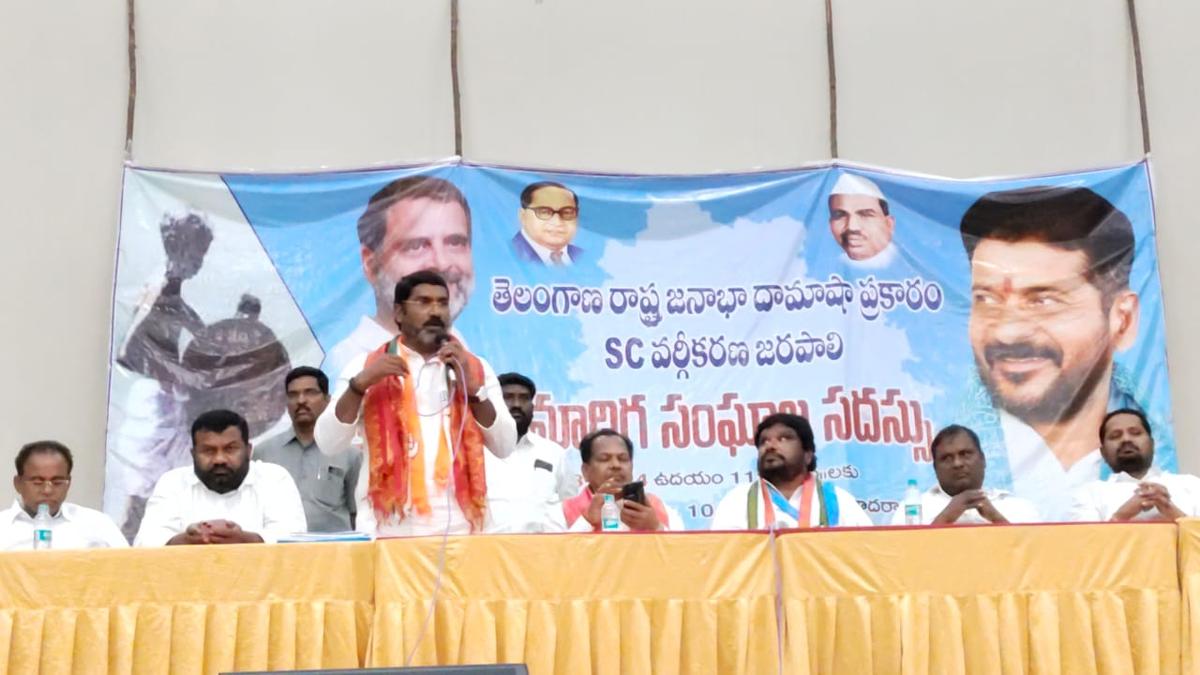

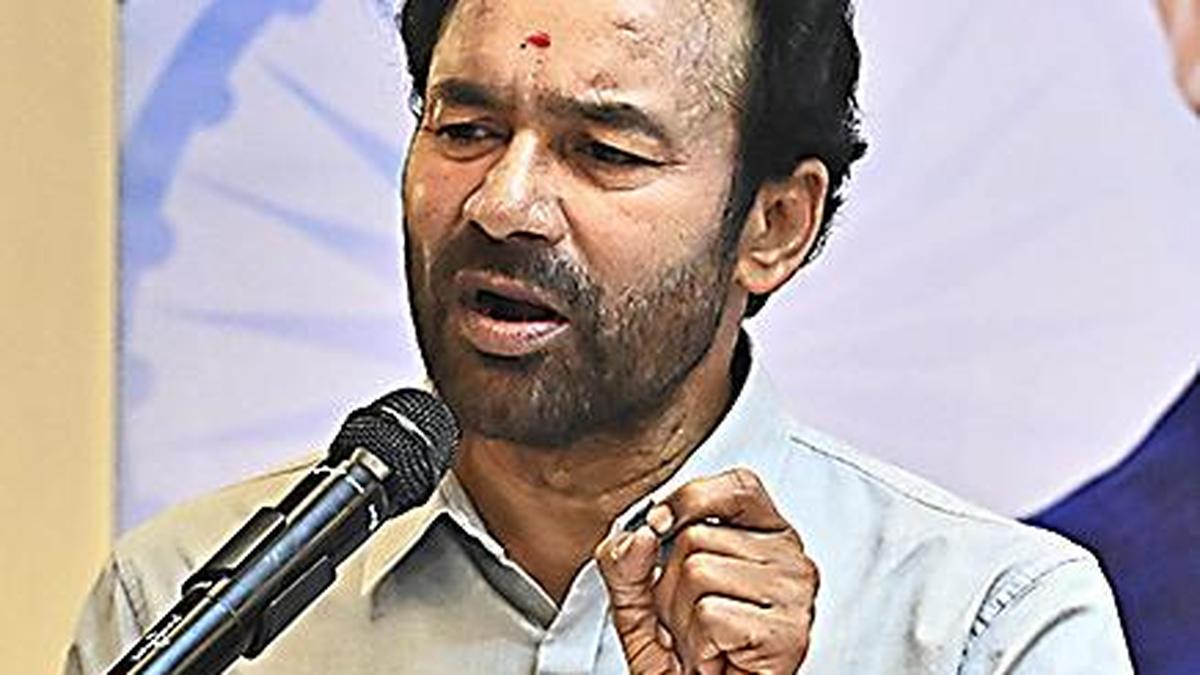
Union Minister G. Kishan Reddy in Hyderabad. File.
| Photo Credit: SIDDHANT THAKUR
The Mines and Minerals (Development and Regulation) Amendment Bill, 2026, passed in Parliament on Thursday (August 13, 2026), does not seek to impinge upon the rights of States over their resources, Union Minister for Coal and Mines G. Kishan Reddy said on the day. The legislation is primarily aimed at ensuring growth and equitability in the overall ecosystem, he told reporters here.
The Minister said the amendment encompasses only certain major minerals and does not extend to minor minerals over which the States retain absolute control.

“The government’s primary objective is to ensure identical [taxation] rates across the board to ensure [effective prices] do not spike. We are neither seeking to impinge upon any State’s rights nor acquire any control [over States’ resources],” he stated.
Seeking to clarify the standing on minor minerals, Mr. Reddy said, “It [the ratified legislation] does not change the revenue dynamics for minor minerals, neither for its exploration, production, land acquisition, instituting blocks, auctioneering as well as its levying of State taxes and cess.”
According to a memo circulated by the government, the list of major minerals includes coal, lignite, iron ore, graphite, cobalt, lithium and nickel among others.

Further, the provision of the law encompasses only 11 States: Andhra Pradesh, Chhattisgarh, Gujarat, Jharkhand, Karnataka, Madhya Pradesh, Odisha, Rajasthan, Gujarat, Uttar Pradesh and Goa.
Arguing that the Union government has ensured flow of revenue to States, he reported that States’ share in overall mineral revenues have accelerated from 65% to 88% between fiscal year 2014-15 and 2024-25. That from has elevated to 96% from 55% during the same period.
Separately, Mr. Reddy also told reporters that the proposed legislation would be seeking to put forth a suitable structure for the proposed coal and minerals exchange.
“We want to enable reforms that would help spur the production of major minerals,” he stated, adding, “In [the proposed] exchange, differing rates would hamper the market for entities with higher prices. Thus, similar prices become important.”

Separately, officials also informed that India is expected to have its first coal exchange in the “eight to nine months”.
The Rajya Sabha on Wednesday (August 12) passed the Mines and Minerals (Development and Regulation) Amendment Bill, 2026, which, among other things, seeks that States do not levy any tax or cess on mineral bearing lands and their operations. The now-ratified legislation had drawn opposition from States, especially Kerala, for “overriding” federal structure and encroaching upon their constitutional powers.
Published – August 13, 2026 10:37 pm IST