


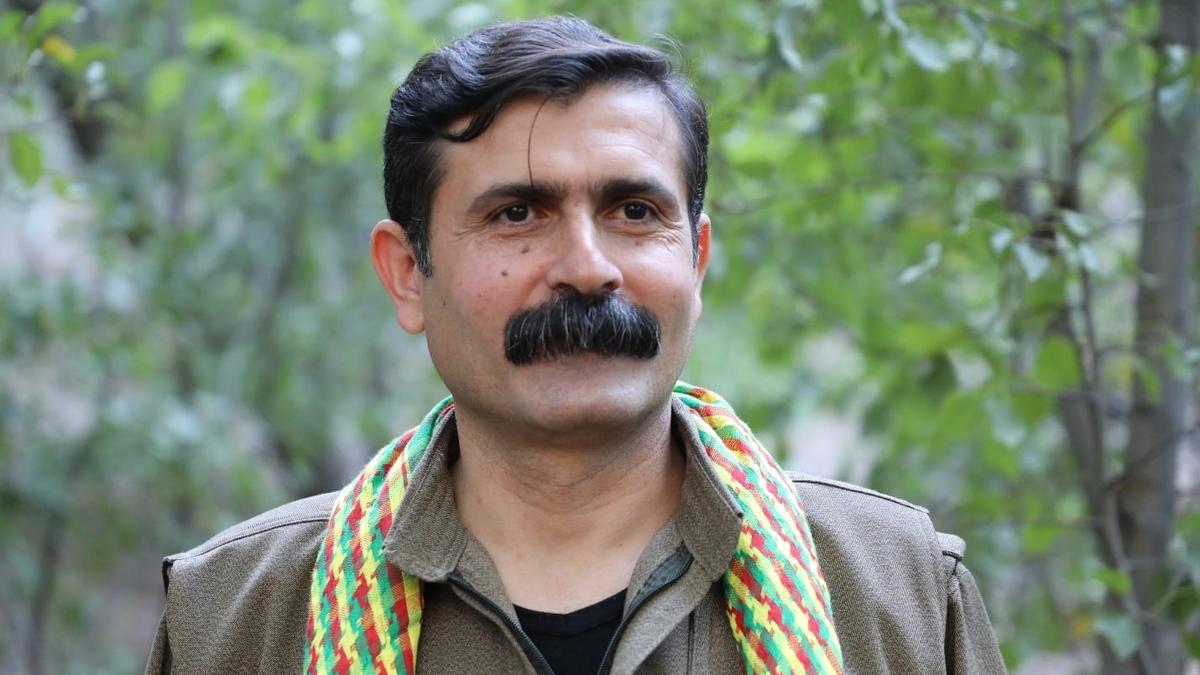
The Kurdistan Free Life Party (PJAK), an armed militant group and political party based in Iran’s Kurdish region (also known as Eastern Kurdistan), says they are not a proxy of any power but a force for democratic change and freedom in Iran. PJAK, which is aligned with the Kurdistan Workers Party (PKK) of Turkiye, has sought greater autonomy for Eastern Kurdistan in Iran. After the U.S. and Israel launched their war on Iran on February 28, there were speculations that Kurdish groups in Iran would join the war against the Islamic Republic. In an email interview with The Hindu, Rivar Abdanan, a spokesperson of PJAK and a member of the party’s Leadership Council, said PJAK would enter the war only if the “existence of the Kurdish people comes under threat”. He, however, added that the primary cause of the current conflict lies in the Islamic Republic’s “repressive domestic policies and its expansionist policies across the region”. Asked if PJAK would condemn the U.S.-Israel’s war on Iran, Mr. Abdanan said the issue cannot be reduced to “a simple choice between encouraging war or condemning war”. Edited excerpts:
PJAK and the broader Kurdish coalition have emphasised certain restraint or an independent course during the war, even as clashes continue inside Iran. What factors are guiding PJAK’s current military posture?

Whenever the attacks of the Islamic Republic reach a level that threatens the existence of the Kurdish people, we will certainly respond. In the past, whenever the regime attacked the Kurdish people or PJAK forces, we responded within the framework of the internationally recognised principle of legitimate self-defence.
PJAK is a political party. We seek to operate within the framework of democratic politics. We are not a traditional armed movement whose activities are defined solely by armed struggle. Our strategy is to build a democratic, self-administered society among the Kurdish people and to work toward the establishment of a democratic republic throughout Iran. The Islamic Republic wants to drag us into a long and exhausting war. Our objective, however, is to preserve the Kurdish people’s social and political potential for democratic struggle so that they can play their role when the right opportunity arises.
We are not anyone’s proxy force. We strongly reject the mindset that views the Kurds merely as a military force. The Kurds are a nation struggling for freedom and democracy. As long as the political future of the Kurdish people has not been clearly defined in the plans of the world’s major powers, and until we are certain that the Kurds will not once again become victims and will enjoy a political status worthy of their rights, we will not become part of any international coalition or project.
However, if we see a policy that genuinely serves the interests of the Kurdish people and is sincerely aimed at moving beyond the Islamic Republic toward the establishment of a democratic political system that benefits all the peoples of Iran, we will shape our own policies toward constructive engagement with governments and actors working against the Islamic Republic.

Do you condemn the American-Israeli attacks on Iran?
We do not believe the issue can be reduced to a simple choice between encouraging war or condemning war. PJAK does not pursue a policy of militarism, nor do we consider war an appropriate path to achieving freedom and democracy. At the same time, we believe the primary cause of the current conflict lies in the Islamic Republic’s repressive domestic policies and its expansionist policies across the region. This regime bears responsibility for the blood of thousands of Kurdish and Iranian citizens. It has repeatedly attacked our forces and continues to use severe violence against the Kurdish people. The wave of executions and repression inside Iran, particularly in Kurdish regions, continues unabated.
During last winter’s nationwide uprising against the regime, thousands of Kurds in Ilam and Kermashan — both integral parts of Kurdistan — were massacred. Therefore, we consider pressure on this dictatorial regime and strikes against its centres of repression to be positive, as long as they do not harm civilians or undermine the future right to self-determination of the peoples of Iran, including the Kurds.
How do you look at your relations with Israel and the U.S.?
PJAK struggles on the basis of the interests of the Kurdish nation and for the achievement of a democratic political status for the Kurds in Iran. For this reason, we keep our diplomatic channels open to all governments and political actors whose engagement could serve Kurdish interests, contribute to Kurdish freedom, and support the establishment of a democratic political system in Iran. Our only red line in relations with states and political forces is the protection of our people’s national interests. Any relationship that does not undermine Kurdish national interests and contributes to the expansion of freedom and democracy throughout Iran is, in our view, legitimate.
There have been discussions about Kurdish groups potentially playing a larger ground role or joining efforts against the Iranian state. Under what conditions would PJAK consider more active participation in the conflict?
If the current war and crisis reach a point where we believe the existence of the Kurdish people is under threat, and it becomes clear that our intervention is necessary to protect them, we will certainly make the decisions required by the situation.
At the same time, we believe that the Kurdish community in Iran has achieved a level of self-organisation that enables it, even under difficult circumstances, to protect its existence while continuing its democratic struggle for freedom.
PJAK is part of the Coalition of Political Forces of Iranian Kurdistan. How is coordination working within the coalition amid the war?
As PJAK, we strive to work in close coordination and cooperation with the other Kurdish parties within the framework of the Coalition of Political Forces of Iranian Kurdistan. So far, this cooperation, coordination, and convergence have been positive and constructive.
At present, the greatest threat facing the Kurdish people comes from the repressive policies of the Islamic Republic. For many years, Turkey pursued its anti-Kurdish policies with all the means at its disposal. However, for some time now, a process of dialogue and efforts to find a political and democratic solution to the Kurdish question has begun. If this process continues, it could also encourage a more positive perception of Turkey among the Kurds of Iran.
However, if these negotiations collapse, or if Turkey follows through on its threats to intervene against the Kurds of Iran during the current Iran–U.S.–Israel conflict, the region will undoubtedly face a new and serious crisis.
As for Iraq, as long as its policies remain under the influence of the Islamic Republic or are shaped by Turkey’s direction, it cannot exercise genuine political independence. The Kurds — whether in Iraq or Iran — pose no threat to Iraq. On the contrary, the further Iraq distances itself from anti-Kurdish policies, the greater its chances of achieving lasting stability in the future.
There are also deep concerns within Kurdish society regarding the policies of the U.S. and Israel toward the Kurds. America’s inconsistent approach in Rojava and toward the Syrian Kurds has also created concern among the Kurds of Iran. Likewise, the capture of the Kurdish leader Abdullah Öcalan and his transfer to Turkey — with Israel’s cooperation — remains deeply embedded in the collective memory of the Kurdish people.
Regional and global powers must abandon their traditional approach toward the Kurds. They should no longer view the Kurds merely as a pressure card, but rather as an influential political actor.
Looking ahead, what does PJAK envision for Iranian Kurdistan especially considering that Iran is under attack?
The Kurdish people possess significant political, intellectual, and defensive capacities. Their ability to influence geopolitical developments in both Iran and the wider region is considerable. In my view, the Kurds can continue their democratic struggle alongside the other peoples of Iran and play an important role in the country’s transition beyond the current regime.
During the ‘Woman, Life, Freedom’ (Jin, Jiyan, Azadî) uprising in 2022-23, we witnessed how PJAK’s political vision and the Kurdish philosophy of struggle inspired people across Iran. I believe that if we continue our struggle within the framework of the ‘Woman, Life, Freedom’ movement, the Kurdish people can achieve freedom while, within a democratic republic of Iran, exercising their right to self-determination through a system of democratic self-administration.
How do you look at Iran’s attacks on the Kurdistan Region of Iraq? Is it part of any larger Iranian plan to weaken the Kurdish resistance?
The Islamic Republic, like the Pahlavi regime before it, has always viewed the Kurdish people through a security lens. The suppression of the Kurds has become one of the fundamental pillars of its state policy. The very existence of the Kurdistan Region’s political system does not pose a threat to Iran. In fact, some political parties in the Kurdistan Region — particularly the Kurdistan Democratic Party (KDP) — maintain relations with the Islamic Republic. These ties have been widely criticised by many Kurds because they create political dependency and do not serve the interests of the Kurdish people.
The Islamic Republic justifies its attacks on the Kurdistan Region by claiming that Iranian Kurdish parties use the Region as a base to enter Iran. In reality, this is nothing more than a pretext. The regime accepts the Kurds only as long as they do not struggle for their freedom. The moment the Kurdish people speak of their rights or take action to defend them, the Islamic Republic responds with a highly securitised and violent approach. Therefore, the attacks carried out by the Islamic Republic against the Kurdish people and their freedom movement are aimed solely at preserving the regime’s domination over Kurdistan.
As PJAK, we will continue to resist the regime’s attacks against the Kurdish people and their movement for freedom.