




Skip to content
  • Facebook
  • X
  • Linkedin
  • WhatsApp
  • YouTube
  • Associate Journalism
  • About Us
  • Privacy Policy
  • 033-46046046
  • editor@artifex.news
Artifex.News

Artifex.News

Stay Connected. Stay Informed.

  • Breaking News
  • World
  • Nation
  • Sports
  • Business
  • Science
  • Entertainment
  • Lifestyle
  • Toggle search form
  • Activists question Speaker J.C.D. Prabhakar’s participation in ‘pro-life’ rally
    Activists question Speaker J.C.D. Prabhakar’s participation in ‘pro-life’ rally Nation
  • 0, 0, 0, 0, 0: In Terrible 46 All Out Display vs New Zealand, Virat Kohli And Co. Set Unwanted 136-Year First
    0, 0, 0, 0, 0: In Terrible 46 All Out Display vs New Zealand, Virat Kohli And Co. Set Unwanted 136-Year First Sports
  • “He Cried…”: Vinesh Phogat Accused Of Not Thanking ‘Coach’ Mahavir Phogat By Cousin Babita Phogat
    “He Cried…”: Vinesh Phogat Accused Of Not Thanking ‘Coach’ Mahavir Phogat By Cousin Babita Phogat Sports
  • Access Denied
    Access Denied Nation
  • Israel-Iran war highlights: Trump vows to destroy Iranian warships that get near U.S. blockade
    Israel-Iran war highlights: Trump vows to destroy Iranian warships that get near U.S. blockade World
  • Veteran Dogra relishes the role of a talent scout
    Veteran Dogra relishes the role of a talent scout Sports
  • Russia-Ukraine gas transit: Kyiv says Russian gas transit stopped ‘in interests of national security’
    Russia-Ukraine gas transit: Kyiv says Russian gas transit stopped ‘in interests of national security’ World
  • Access Denied Business
Why inflation is rising in India

Why inflation is rising in India

Posted on July 20, 2026 By admin


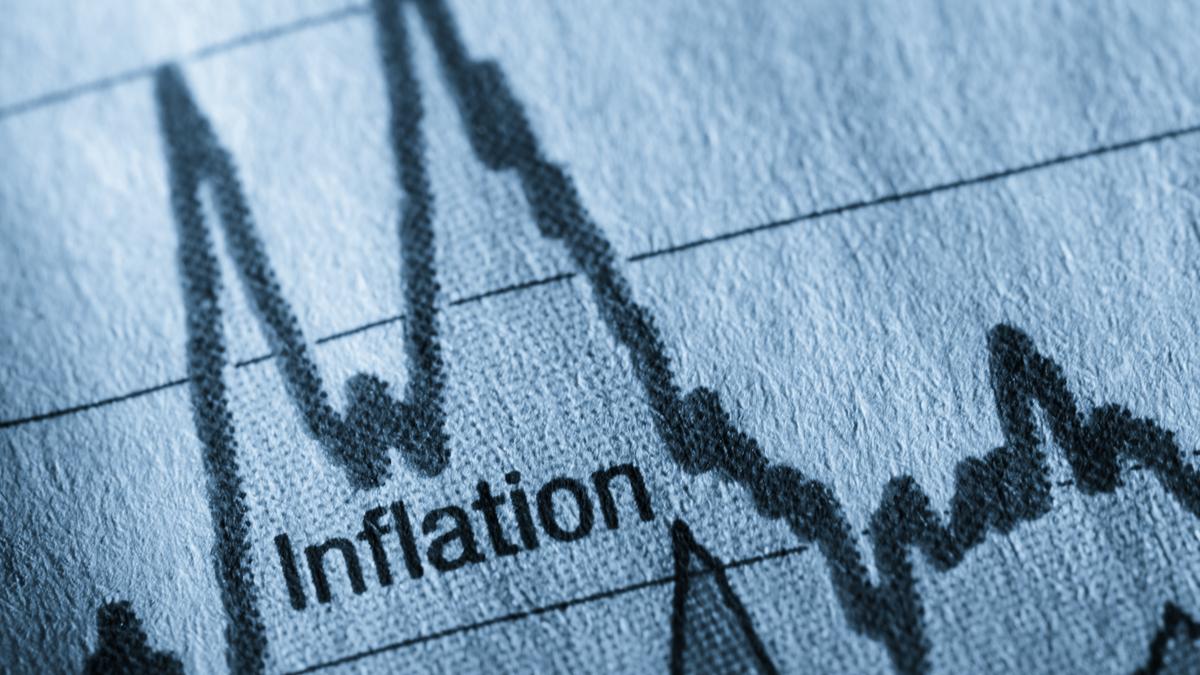
Inflation, except during the COVID-19 pandemic, has remained relatively low in India for over a decade. But it is back with a bang. Wholesale Price Index (WPI) inflation is hovering close to 10% in June (Chart 1a). After remaining low — negative, or close to 0 — until December last year, the climb started with a sharp jump since March this year.

Even those with only a fleeting connection to economics believe that prices rise when demand outpaces supply (overheating), and vice versa. But is that really the case?

Before we go into the causes, let us look at what contributed to this rise in WPI inflation in the first place. The WPI is a weighted average of three sub-categories of commodities: primary articles (food, minerals, etc.), fuel and power and manufactured products. Chart 1b shows the contribution of each to total WPI inflation. The latter two — the orange and the red bars — have contributed to this dramatic jump in recent months. Fuel and power prices require little explanation as they are determined by oil prices purchased from abroad and are essentially imported prices. However, primary commodity and manufactured product prices need to be understood.

Structural differences in pricing

The Polish economist Michal Kalecki argued that while primary commodity prices are demand-determined, industrial prices are cost-determined. In other words, inflation of industrial commodities is not determined by a demand and supply mismatch. Come to think of it, this is commonsensical if you leave aside the quintessential demand-supply curves out of your head. After all, prices of cars, cycles, or toothbrushes do not fluctuate with a change in their demand. If more cars are demanded, more are produced and supplied to the customer instead of increasing the price. Prices of tomatoes or mangoes, on the other hand, vary quite significantly with a mismatch between demand and supply.

Viewed this way, the demand and supply curves need to be reconstructed (Graph 1). For primary commodities (panel (a)), supply is virtually fixed, represented by a vertical curve on the quantity axis, whereas demand follows the usual downward sloping curve. A decline in supply (shifting of the supply curve in panel (a) to the left) will increase its prices. In the case of food, for example, a bad monsoon will affect production adversely, thereby decreasing supply and increasing its prices. A good monsoon, on the other hand, will bring the prices down. Inflation here is demand-pull.

For the manufactured commodities (panel (b)), the supply curve is flat, which means a rise or a fall in demand (shifting of the demand curve) will bring about an equivalent supply of such commodities with no change in their prices. Again, the reason is simple. Most such commodities, except in cases of supply constraints, are produced in factories that run below capacity, so an increase in their demand simply increases their production. Demand here, quite opposite to the earlier case, has no role to play in determining their prices. Prices are determined instead by the cost of production. The supply curve is nothing but a profit markup over the cost (the vertical difference between supply and cost is the profit markup). A rise in the costs would push the cost curve up, and, unless the capitalists want to absorb this rise in cost through a lower markup, this would get passed on as higher prices in the market. Inflation here is purely cost-push.

What happened in the Indian case?

Having seen this difference, let us apply this idea to the inflationary problem currently facing India. If manufactured prices are cost-determined, what do their costs depend on? While wage cost is an important component of total costs, it is usually not the factor that pushes prices up because Indian workers do not really have space to bargain for higher wages. In other words, Indian workers are mostly price-takers; they make do with what they get. It is the material costs instead, which create the inflationary impulse.

One of the most important materials used in the production of any industrial commodity is oil. If we plot the movement of fuel and power against the manufactured prices (Chart 2), we can see almost a one-to-one correspondence between the two. A rise in fuel and power prices raised the manufactured inflation as well.

Food prices, too, have risen. One likely reason is the adverse impact of an inadequate monsoon, as a result of the El Niño effect, on agricultural production this year. Chart 3 plots data on food price inflation with years in which the country experienced droughts. In every instance, drought conditions were accompanied by a significant rise in food inflation, much in line with the Kaleckian structuralist idea. To be sure, there have been instances in which food price inflation has taken place even in the absence of such supply shocks. These could perhaps be the years of high demand. Suffice to say that a drought is a sufficient, even if not a necessary, condition for food prices to soar.

What is to be done?

Given these structural differences, can something be done to control inflation? Let us start with the food prices. We believe food prices need to be decoupled from the vagaries of nature to the extent possible. That India solely depends on the rain gods to feed its population is in itself quite unscientific and an anachronism in the modern era of technology. The country must invest heavily in agriculture, particularly in irrigation infrastructure, which is not entirely dependent on the monsoon.

As for manufactured goods, controlling fuel and power costs, when crude oil prices are rising, may be difficult, but there are still ways that they can be controlled. Instead of the ill-thought-out inflation targeting framework, the government should apply a countercyclical indirect tax policy to keep fuel and power prices in check. If the government can reduce the customs and excise duties when crude prices soar, the cost at the pump can be controlled. In fact, this is exactly what the government did a few months ago, which is why pump prices were held constant despite soaring crude prices in the international markets. Unfortunately, the government has withdrawn this measure, which is one of the primary reasons WPI inflation has risen sharply.

(The authors are a part of the DevMac (Development Macroeconomics) network, which seeks pluralism in Economics)

Published – July 21, 2026 08:30 am IST



Source link

Business

Post navigation

Previous Post: Palestinians say Israeli forces kill two during settler attack
Next Post: Police outnumbered, taken aback by number of protesters who reached Parliament’s doorstep

Related Posts

  • Access Denied Business
  • Access Denied Business
  • Consultations ongoing for introducing tenders for offshore wind in Tamil Nadu: Official
    Consultations ongoing for introducing tenders for offshore wind in Tamil Nadu: Official Business
  • Bank of India Q3 net profit surges 35% to ₹2,517 crore 
    Bank of India Q3 net profit surges 35% to ₹2,517 crore  Business
  • What India’s growth really means
    What India’s growth really means Business
  • Tech firms reiterate opposition to telcos’ demand of OTT licensing
    Tech firms reiterate opposition to telcos’ demand of OTT licensing Business

More Related Articles

The Union Budget as litmus test of a rethink or stasis The Union Budget as litmus test of a rethink or stasis Business
Access Denied Business
Job opportunities dwindling in industrialised Gujarat  Job opportunities dwindling in industrialised Gujarat  Business
Access Denied Business
AI song generator Udio offers brief window for downloads after Universal settlement upsets users AI song generator Udio offers brief window for downloads after Universal settlement upsets users Business
Access Denied Business
SiteLock

Archives

  • September 2026
  • August 2026
  • July 2026
  • June 2026
  • May 2026
  • April 2026
  • March 2026
  • February 2026
  • January 2026
  • December 2025
  • November 2025
  • October 2025
  • September 2025
  • August 2025
  • July 2025
  • June 2025
  • May 2025
  • April 2025
  • March 2025
  • February 2025
  • January 2025
  • December 2024
  • November 2024
  • October 2024
  • September 2024
  • August 2024
  • July 2024
  • June 2024
  • May 2024
  • April 2024
  • March 2024
  • February 2024
  • January 2024
  • December 2023
  • November 2023
  • October 2023
  • September 2023
  • August 2023
  • July 2023
  • June 2023
  • May 2023
  • April 2023
  • March 2023
  • February 2023
  • January 2023
  • December 2022
  • November 2022
  • October 2022
  • September 2022
  • August 2022
  • July 2022
  • June 2022
  • May 2022

Categories

  • Business
  • Nation
  • Science
  • Sports
  • World

Recent Posts

  • IIT Bombay faculty member booked for caste abuse, suicide abetment
  • Arjun finds form as India beats Spain; Savitha stars for women
  • CWC chief flags ‘malpractices’ in phytosanitary certification, pitches integrated logistics to boost agri-exports
  • Handloom weavers block Tenkasi-Madurai road
  • Ecologists urge scientists and policymakers to study imminent ‘Super’ El Niño to prepare for the future

Recent Comments

  1. AlvinNet on UP Teacher Who Asked Students To Slap Muslim Classmate
  2. AlvinNet on UP Teacher Who Asked Students To Slap Muslim Classmate
  3. Jamesslits on UP Teacher Who Asked Students To Slap Muslim Classmate
  4. MichaelClear on UP Teacher Who Asked Students To Slap Muslim Classmate
  5. Jamesslits on UP Teacher Who Asked Students To Slap Muslim Classmate
  • British journalist deported from Pakistan after seeking meeting with Imran Khan in jail
    British journalist deported from Pakistan after seeking meeting with Imran Khan in jail World
  • Access Denied Sports
  • Bill Gates’ Former Assistant Steve Ballmer Is Now World’s 5th Richest Person
    Bill Gates’ Former Assistant Steve Ballmer Is Now World’s 5th Richest Person World
  • Explained | The global push to make ecocide a crime
    Explained | The global push to make ecocide a crime World
  • Alfonsine bags the Chief Justice’s Cup
    Alfonsine bags the Chief Justice’s Cup Sports
  • Stock markets rebound in early trade after 4 days of slump; Sensex jumps over 530 points
    Stock markets rebound in early trade after 4 days of slump; Sensex jumps over 530 points Business
  • Access Denied Sports
  • At 23.7 Degrees, Delhi Records Warmest Republic Day In 8 Years
    At 23.7 Degrees, Delhi Records Warmest Republic Day In 8 Years Nation

Editor-in-Chief:
Mohammad Ariff,
MSW, MAJMC, BSW, DTL, CTS, CNM, CCR, CAL, RSL, ASOC.
editor@artifex.news

Associate Editors:
1. Zenellis R. Tuba,
zenelis@artifex.news
2. Haris Daniyel
daniyel@artifex.news

Photograher:
Rohan Das
rohan@artifex.news

Artifex.News offers Online Paid Internships to college students from India and Abroad. Interns will get a PRESS CARD and other online offers.
Send your CV (Subjectline: Paid Internship) to internship@artifex.news

Links:
Associate Journalism
About Us
Privacy Policy

News Links:
Breaking News
World
Nation
Sports
Business
Entertainment
Lifestyle

Registered Office:
72/A, Elliot Road, Kolkata - 700016
Tel: 033-22277777, 033-22172217
Email: office@artifex.news

Editorial Office / News Desk:
No. 13, Mezzanine Floor, Esplanade Metro Rail Station,
12 J. L. Nehru Road, Kolkata - 700069.
(Entry from Gate No. 5)
Tel: 033-46011099, 033-46046046
Email: editor@artifex.news

Copyright © 2023 Artifex.News Newsportal designed by Artifex Infotech.