






When commercial ships started bypassing the Red Sea due to attacks from Yemen’s Houthis, the immediate consequences could be felt thousands of kilometres away in the form of higher freight charges, slower supply chains and ships taking the longer route around Africa. At first sight, it seemed like yet another disruption in one of the world’s busiest waterways, brought on by the conflict in West Asia.
However, the Red Sea crisis was not merely about shipping.
The attacks highlighted a larger geopolitical reality: conflicts in West Asia and the Horn of Africa are no longer isolated events but are increasingly converging into one another. While the Gaza war has bled into the Red Sea through Houthi attacks on commercial vessels, the war in Sudan has intensified competition for influence in Africa among the Gulf countries. Ethiopia’s drive for maritime access has heightened tensions in the Horn of Africa, even as external players, from the U.S. and China to Turkey and the Gulf monarchies, have expanded their military, diplomatic and economic presence along the Red Sea.
Historically, West Asia and the Horn of Africa were treated as separate strategic regions. The former was discussed within the context of the Arab-Israeli conflict, Iran-Gulf rivalry and oil politics, while the latter was associated with civil wars, piracy and humanitarian crises. Geography linked the two regions, but policy rarely did.
This distinction is now rapidly fading away. The Red Sea has emerged as the essential link connecting West Asia to the Horn of Africa, changing what was previously viewed as a maritime route into an area of intersecting conflicts, rivalry and rising geopolitical tensions. Conflicts in Gaza and Sudan, attacks on shipping off Yemen, internal tensions in Ethiopia and rivalries among the Gulf states are no longer separate conflicts. Gradually, they are all becoming intertwined with each other within the same narrow stretch of water.
Single strategic system
The emergence of such an interconnected security environment represents one of the major yet least recognised geopolitical developments in recent times. International relations theorists describe such regions as a ‘regional security complex,’ or a space where the security of one country becomes inseparable from that of its neighbours. Gradually, the Red Sea is becoming such a regional security complex, as the conflicts of Gaza, Yemen and Sudan, Ethiopia’s maritime ambitions and Gulf rivalries are no longer separate developments but mutually reinforcing elements of a single strategic system.

This transformation did not occur overnight. For centuries, the Red Sea has been a vital route for trade, pilgrimage and imperial expansion, linking Europe and Asia through the Suez Canal and the Bab el-Mandeb Strait. It connected the Mediterranean with the Indian Ocean and shaped the fortunes of empires ranging from the Ottomans to the British. During the Cold War, it also became an arena of superpower rivalry, as the U.S. and the Soviet Union competed for influence among states on both shores.
This sea stretches for about 2,200 km from the Suez Canal to the Bab el-Mandeb, connecting the Mediterranean to the Indian Ocean, and it is bordered by eight countries. Its geography accounts for why any political issues that occur in either of its shores never tend to be restricted. Any disturbance in the passage through the Bab el-Mandeb could have an impact on commerce between Europe and Asia within days.
Yet, for the better part of the post-Cold War period, the Red Sea was perceived primarily through an economic angle. While events such as the Somali piracy attacks in the late 2000s generated some international interest in the area, the sea itself was not seen as a geopolitical arena in its own right. West Asia and the Horn of Africa were areas of separate diplomatic and security considerations.
However, the importance of the region goes far beyond the borders of the countries surrounding it. The Red Sea is an incredibly vital waterway through which a great volume of world trade flows, including the container shipping industry, and one of the busiest maritime routes in the world. It is essential for India’s commerce as it provides access to Europe, North Africa and the eastern Mediterranean, while carrying much of its energy supplies and cargo.

But looking at the Red Sea from only the perspective of shipping overlooks the broader geopolitical shift that is taking place. It is now at the core of a much larger security arc, where land conflicts determine the maritime conditions. The Bab el-Mandeb Strait, the narrow choke-point linking the Red Sea with the Gulf of Aden, illustrates this interdependence. Any such actor able to disrupt any movement across it has the potential to influence trade movements between Asia, Africa, and Europe, thereby giving regional conflicts a wider impact than just on the local battlegrounds.
This is the very reason why the Red Sea differs from most other regions of geopolitical tension. It is more than just a boundary separating two land masses; it is the intersection point of military positioning, business dealings and diplomatic rivalries that make the region pivotal for both regional security as well as international trade.
In order to comprehend this new arc of geopolitical instability, it is necessary to go beyond individual conflicts. The significance of the Red Sea region does not arise from these individual crises alone but rather from their interconnectedness.
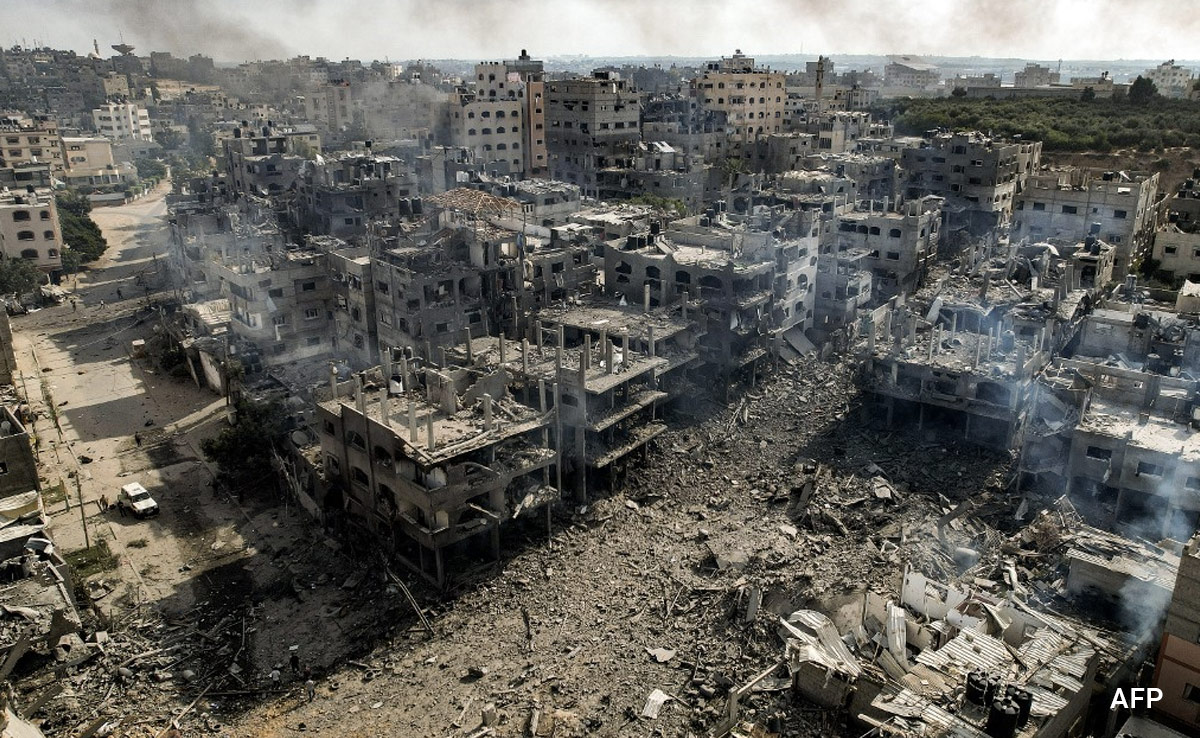
The most obvious example of the changing nature of the Red Sea as a strategic space is the conflict in Gaza. What started as a conflict between Israel and Hamas gradually expanded from the Levantine region to involve other parties in order to show that the security situation in one part of the Red Sea increasingly influences the situation on the other shore.
The Houthis in Yemen, who refer to themselves as members of the “Iranian Axis of Resistance”, justified their attacks on commercial ships in the Red Sea as solidarity with the Palestinians and pressure on Israel and its allies in the West. Even though many of the attacked ships were not connected with Israel at all, the attacks made one of the busiest sea trade routes into a theatre of war.
Companies started to redirect their ships, which eventually raised the price of transporting goods, insurance and travel time, whereas the U.S. and some European countries sent naval forces to escort commercial traffic in the Red Sea. But Yemen is only a small part of a much bigger chain of instability.
In Africa, the civil war in Sudan has emphasised the importance of the western littoral for strategic purposes. Following the outbreak of the civil war between the Sudanese Armed Forces (SAF) and the Rapid Support Forces (RSF) in 2023, the conflict has developed into a battleground of regional rivalry. On one hand, Egypt has sided with the SAF, while on the other hand, the UAE has rejected claims regarding its backing of the RSF. In addition to that, Saudi Arabia has been trying to mediate the dispute and Russia still aims to achieve its long-held ambition of establishing a naval base in Sudan’s Red Sea coastline.
In addition to the resulting humanitarian crisis, the civil war in Sudan has emphasised that ports, logistics, and coastal access have emerged as crucial strategic assets for contemporary wars.
Broader implications
The example of Ethiopia brings out another element of this geopolitical shift. Despite the fact that Ethiopia lost direct access to the Red Sea when Eritrea gained independence, the country’s economy heavily relies on maritime access through other countries. This has made Ethiopia’s search for better maritime access very important in terms of regional diplomacy, bringing into the picture the issue of connectivity and access in relation to geopolitics in the Horn of Africa region.
Right in the middle of all this are the Gulf states. In the past decade, Saudi Arabia, UAE, and Qatar have increased their political, economic, and military relationships with the Horn of Africa region, because they understand that the stability of the African shore directly affects their security interests. Such a trend is connected to the general change in the strategic approaches of the Gulf states.
First, the situation in Yemen has shown how vulnerable the Red Sea is, second, economic diversification has made the ports and corridors the strategic resources for these countries, and third, issues connected to food security have led to investments in the agricultural sector and infrastructure of Africa.
Today, the competition between countries is not determined by the traditional military alliances but by ports, logistic systems, infrastructure projects and business connections. Increasingly, geopolitical rivalry is pursued not just through military coalitions, but also through ports, logistics systems, infrastructure projects and business relationships. Economic connectivity has been made into a tool of strategic leverage.
The Red Sea is no longer a barrier but rather a transmission channel of instability. Conflicts in Gaza affect Yemen; insecurity in Yemen affects international shipping routes; the Sudanese civil war increases competition in Africa’s coasts; and Ethiopia and the Gulf States’ strategies bring all of these into one geopolitical framework. Apparently independent crises are becoming more interconnected, making the Red Sea one of the most important strategic theatres in the world.
Why this matters
The implications of this paradigm shift go well beyond the states of the Red Sea borders. For regional powers, it has become an essential ground to project power through port access, trade routes, and security partnerships. For global powers, it has become a vital chokepoint, where maritime security and great power politics are coming together with access to energy resources. For India, which has come to rely heavily on this region for its trade and energy imports as well as its partnerships in the Gulf and Africa, the Red Sea region is fast becoming an integral part of its strategic neighbourhood.
More broadly, the Red Sea exemplifies a new kind of geographies of conflict. Conflicts no longer happen in nation-states. They take place along maritime chokepoints, supply lines, proxies, and economic connections.