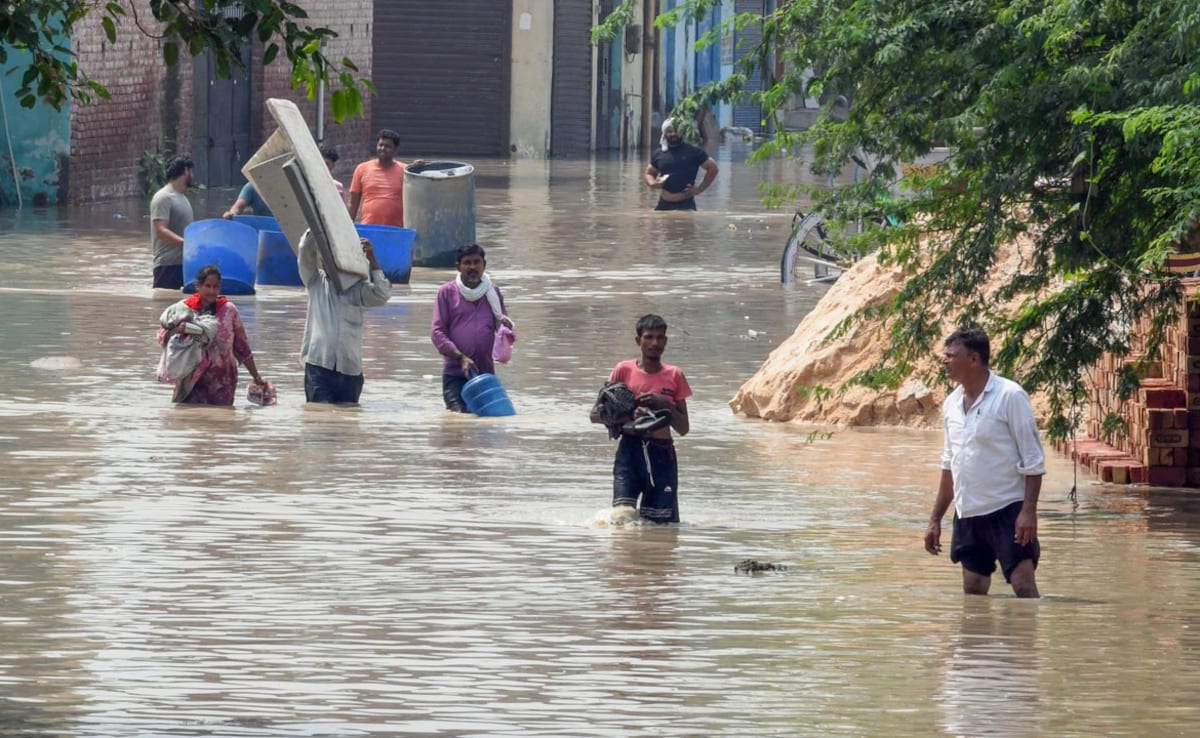







Although disasters continue to strike Kerala, particularly Wayanad, during the monsoon season, the State and Central government agencies appear to have learnt little from past incidents.
| Photo Credit: PTI
Two years after the catastrophic landslides in Wayanad that claimed around 300 lives, accurate weather forecasting continues to remain elusive. The weather conditions in Wayanad on the eve of the latest tragedy were strikingly similar to those preceding the July 2024 disaster.
In the latest incident, the India Meteorological Department (IMD) had issued a yellow alert for the district on Monday. However, Wayanad received a record 264 mm rainfall in the 24-hour period ending at 8.30 a.m. on Tuesday, an amount that falls within the red-alert category.

An offshore trough was active on Monday along the west coast, extending from south Gujarat to north Kerala. The trough and reinvigorated westerly winds brought copious rainfall to the Western Ghats, perhaps marking the first major spell over the ghat regions of Wayanad during the ongoing monsoon season. A similar weather situation had developed in 2024 as well, an issue that was later raised in Parliament, with the State accusing the Central agency of failing to provide an accurate forecast.
Offshore vortices that formed near the ghat regions of Wayanad, along with a portion of the monsoon winds returning after striking the peaks of the Western Ghats, triggered the extreme rainfall event on July 30, 2024.
Speaking to The Hindu, Neetha K. Gopal, Director of the IMD, Thiruvananthapuram, says the prevailing synoptic weather conditions, including the offshore trough, will continue for the next two days and that rainfall activity in the region is expected to decline significantly after July 9 with the weakening of the prevailing system over the Bay of Bengal.

Although disasters continue to strike Kerala, particularly Wayanad, during the monsoon season, the State and Central government agencies appear to have learnt little from past incidents. A weather radar sanctioned for Wayanad after the 2024 disaster is yet to become operational, although were also allegations that the site identified for installing the radar was unsuitable, as it falls within a rain-shadow region of the district.
According to experts, Wayanad requires a permanent weather observatory in Kalpetta equipped with a radar, although such a radar is primarily useful for issuing nowcasts up to three hours before the onset of intense rainfall. “The IMD is hopeful of conducting a trial run of the radar during the ongoing monsoon season,” says Ms. Gopal.
Meanwhile, the latest tragedy has also raised questions about the disaster preparedness of State agencies.
Although the State government had directed the contractor company responsible for the tunnel road project to remove the debris and mud allegedly dumped near the project site, it has remained silent on the enforcement measures to be taken after the contractor failed to comply with the order. If the company fails to carry out the assigned work, the question remains whether the government can afford to wait until disaster strikes before initiating follow-up action, say experts.
Published – July 07, 2026 08:13 pm IST