



Skip to content
  • Facebook
  • X
  • Linkedin
  • WhatsApp
  • YouTube
  • Associate Journalism
  • About Us
  • Privacy Policy
  • 033-46046046
  • editor@artifex.news
Artifex.News

Artifex.News

Stay Connected. Stay Informed.

  • Breaking News
  • World
  • Nation
  • Sports
  • Business
  • Science
  • Entertainment
  • Lifestyle
  • Toggle search form
  • Access Denied Sports
  • Access Denied Sports
  • India initiates anti-dumping probe into imports of solar glass from China, Vietnam
    India initiates anti-dumping probe into imports of solar glass from China, Vietnam Business
  • Lawyer Of Suspect In Taylor Swift Vienna Concert Attack Plot
    Lawyer Of Suspect In Taylor Swift Vienna Concert Attack Plot World
  • Access Denied Business
  • Imran Khan’s ‘vision loss’: Pakistan Supreme Court orders medical board to examine jailed former Premier
    Imran Khan’s ‘vision loss’: Pakistan Supreme Court orders medical board to examine jailed former Premier World
  • Denotified tribes’ anger boiling over amid a stagnating scheme and classification deadlocks
    Denotified tribes’ anger boiling over amid a stagnating scheme and classification deadlocks Nation
  • Jyothi targets full fitness and Asian Games gold
    Jyothi targets full fitness and Asian Games gold Sports
Oldest quasars ever found deepen ‘perplexing’ space mystery

Oldest quasars ever found deepen ‘perplexing’ space mystery

Posted on July 6, 2026 By admin


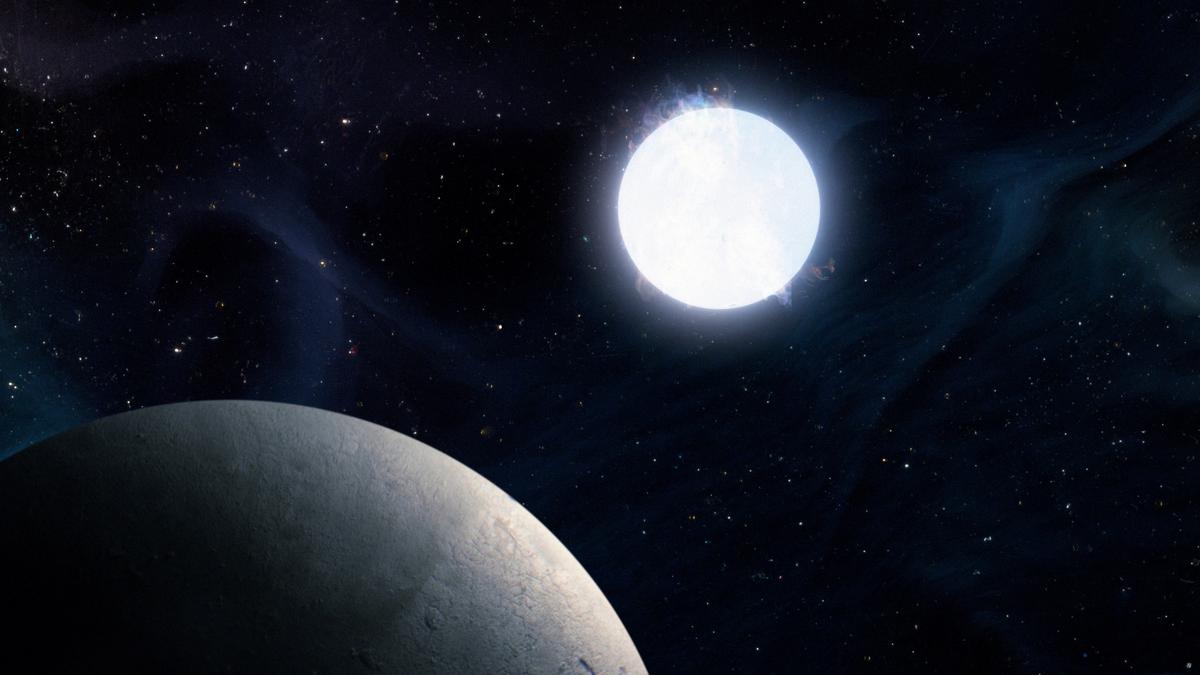
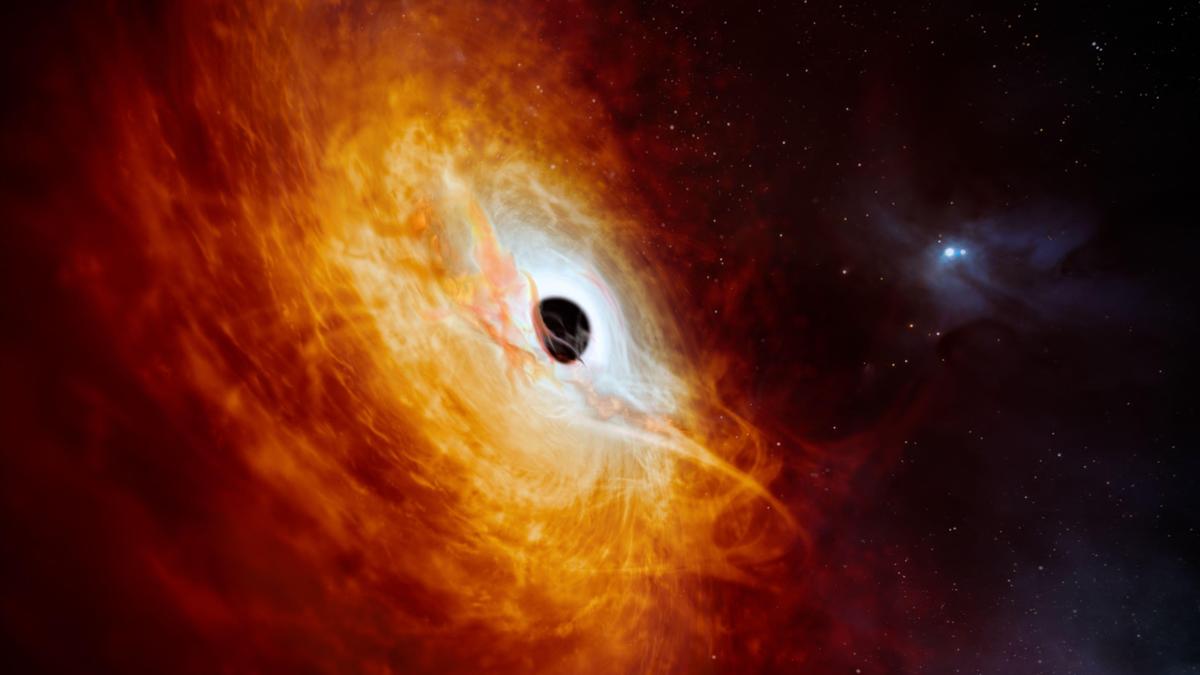
An artist’s impression of the quasar J059-4351, the bright core of a distant galaxy powered by a supermassive black hole.
| Photo Credit: ESA

The Euclid space telescope has spotted the oldest quasars — the brightest objects in the universe — ever discovered, deepening a cosmic mystery that has been puzzling scientists.

A quasar is the intensely luminous core of a distant galaxy powered by a supermassive black hole. As gas spirals into the black hole, extreme amounts of gravitational energy are converted into radiation, making quasars shine with the light of a trillion suns. They provide valuable insights into the early evolution of galaxies and black holes.

Because they are so incredibly bright — and looking deep into space also means looking back in time — scientists have been hunting for ancient quasars to learn more about the little-understood infancy of the universe.

In a study published on Monday, an international team of astronomers announced they had discovered 31 quasars, including the two oldest observed yet, using the European Space Agency’s Euclid telescope, which is at a stable hovering spot around 1.5 million kilometres from the earth.

The light from the oldest pair comes from when the universe was roughly 670 million years old, just five percent of its current age of 13.8 billion years.

This beats the team’s previous record for oldest — and therefore most distant — quasar announced in 2021 by around 20 million years.

Previous quasar hunts were mostly carried out with ground-based telescopes, but the launch of Euclid in 2023 “has transformed this field,” Daming Yang, the lead author of the study in Astronomy & Astrophysics, said.

In just two years, Euclid has doubled the number of ancient quasars known to science, added Yang, a PhD student at Leiden University in the Netherlands.

Cosmic quandary

The newly discovered quasars date back to what is known as the epoch of reionisation. This when the first stars and galaxies began to form, bringing an end to the cosmic dark ages.

“We can use quasars as a lighthouse to study the gas between us and them, so that we can trace how the universe was reionised through this cosmic history,” Daming Yang said.

The quasars are also the latest example of a problem that has been increasingly baffling scientists.

As more powerful telescopes allow us to see further back in time, galaxies and other cosmic objects have turned out to be far bigger than had been thought possible at such an early age.

“Every step further back in time makes the puzzle more perplexing,” study co-author Joseph Hennawi said in a statement about the newly discovered quasars.

“These monsters — weighing billions of times the mass of our sun — somehow already existed when the universe was in its infancy,” he said.

“We don’t yet have a good understanding of how they grew so massive, so fast.”

Hoping to find an answer, the scientists are searching for even older quasars.

The far-seeing James Webb space telescope also recently observed the newly announced quasars, Daming said, and the team will soon begin sifting through the data it collected.

The team eventually hope to stitch together “a quasar chronicle of the first billion years,” Hennawi said.

Published – July 06, 2026 02:00 pm IST



Source link

Science

Post navigation

Previous Post: Brain-dead 7-year-old boy’s organs to give new lease of life to six patients in Kerala
Next Post: Prison clashes in Sri Lanka’s Negombo: At least 19 dead, 72 injured

Related Posts

  • Is Russia testing a new anti-satellite weapon? | Explained
    Is Russia testing a new anti-satellite weapon? | Explained Science
  • What is Bangladesh’s Padma Barrage?
    What is Bangladesh’s Padma Barrage? Science
  • The Science Quiz | Computer viruses
    The Science Quiz | Computer viruses Science
  • How do woodpeckers protect their brains?
    How do woodpeckers protect their brains? Science
  • Scientists turn to sharks for better hurricane predictions
    Scientists turn to sharks for better hurricane predictions Science
  • Earth is getting a new mini-moon, and it won’t be the first or the last
    Earth is getting a new mini-moon, and it won’t be the first or the last Science

More Related Articles

What is the best time to take examinations? What is the best time to take examinations? Science
Long-term study finds COVID-19 increases diabetes risk Long-term study finds COVID-19 increases diabetes risk Science
ISRO releases graph of temperature variation on lunar surface measured by Chandrayaan-3’s payload ISRO releases graph of temperature variation on lunar surface measured by Chandrayaan-3’s payload Science
NASA spacecraft launched to mysterious and rare metal asteroid in first mission of its kind NASA spacecraft launched to mysterious and rare metal asteroid in first mission of its kind Science
What are weights in AI? What are weights in AI? Science
Tetrapod-shaped nanoparticles could make plastics easier to process, finds IIT study Tetrapod-shaped nanoparticles could make plastics easier to process, finds IIT study Science
SiteLock

Archives

  • September 2026
  • August 2026
  • July 2026
  • June 2026
  • May 2026
  • April 2026
  • March 2026
  • February 2026
  • January 2026
  • December 2025
  • November 2025
  • October 2025
  • September 2025
  • August 2025
  • July 2025
  • June 2025
  • May 2025
  • April 2025
  • March 2025
  • February 2025
  • January 2025
  • December 2024
  • November 2024
  • October 2024
  • September 2024
  • August 2024
  • July 2024
  • June 2024
  • May 2024
  • April 2024
  • March 2024
  • February 2024
  • January 2024
  • December 2023
  • November 2023
  • October 2023
  • September 2023
  • August 2023
  • July 2023
  • June 2023
  • May 2023
  • April 2023
  • March 2023
  • February 2023
  • January 2023
  • December 2022
  • November 2022
  • October 2022
  • September 2022
  • August 2022
  • July 2022
  • June 2022
  • May 2022

Categories

  • Business
  • Nation
  • Science
  • Sports
  • World

Recent Posts

  • Free mega medical camp promotes Health and Legal awareness in Gajuwaka
  • After October 1, only smaller 5 or 10 kg LPG refills await non-eKYC households
  • Six companies line up IPOs worth ₹3,825 crore amid brisk primary market activity
  • Pakistan forces kill five terrorists, rescue 23 abductees in Balochistan
  • Asian Games 2026: Smriti Mandhana surpasses Suzie Bates to become women’s T20I cricket’s leading run-scorer

Recent Comments

  1. Glennalbub on UP Teacher Who Asked Students To Slap Muslim Classmate
  2. PhilipLog on UP Teacher Who Asked Students To Slap Muslim Classmate
  3. DennisDum on UP Teacher Who Asked Students To Slap Muslim Classmate
  4. DonaldFrosy on UP Teacher Who Asked Students To Slap Muslim Classmate
  5. DonaldFrosy on UP Teacher Who Asked Students To Slap Muslim Classmate
  • Madras built the engine, Chennai is shifting gears
    Madras built the engine, Chennai is shifting gears Business
  • High Court On Abortion Request
    High Court On Abortion Request Nation
  • Access Denied World
  • “Educate Your Son”: Suryakumar Yadav’s Message Amid Kolkata Rape-Murder Protests
    “Educate Your Son”: Suryakumar Yadav’s Message Amid Kolkata Rape-Murder Protests Sports
  • Access Denied
    Access Denied Nation
  • Access Denied
    Access Denied Nation
  • Not Virat Kohli Or Jasprit Bumrah, Bowling Coach Morne Morkel Names Player To Keep An Eye On In BGT
    Not Virat Kohli Or Jasprit Bumrah, Bowling Coach Morne Morkel Names Player To Keep An Eye On In BGT Sports
  • Access Denied
    Access Denied Nation

Editor-in-Chief:
Mohammad Ariff,
MSW, MAJMC, BSW, DTL, CTS, CNM, CCR, CAL, RSL, ASOC.
editor@artifex.news

Associate Editors:
1. Zenellis R. Tuba,
zenelis@artifex.news
2. Haris Daniyel
daniyel@artifex.news

Photograher:
Rohan Das
rohan@artifex.news

Artifex.News offers Online Paid Internships to college students from India and Abroad. Interns will get a PRESS CARD and other online offers.
Send your CV (Subjectline: Paid Internship) to internship@artifex.news

Links:
Associate Journalism
About Us
Privacy Policy

News Links:
Breaking News
World
Nation
Sports
Business
Entertainment
Lifestyle

Registered Office:
72/A, Elliot Road, Kolkata - 700016
Tel: 033-22277777, 033-22172217
Email: office@artifex.news

Editorial Office / News Desk:
No. 13, Mezzanine Floor, Esplanade Metro Rail Station,
12 J. L. Nehru Road, Kolkata - 700069.
(Entry from Gate No. 5)
Tel: 033-46011099, 033-46046046
Email: editor@artifex.news

Copyright © 2023 Artifex.News Newsportal designed by Artifex Infotech.