



Skip to content
  • Facebook
  • X
  • Linkedin
  • WhatsApp
  • YouTube
  • Associate Journalism
  • About Us
  • Privacy Policy
  • 033-46046046
  • editor@artifex.news
Artifex.News

Artifex.News

Stay Connected. Stay Informed.

  • Breaking News
  • World
  • Nation
  • Sports
  • Business
  • Science
  • Entertainment
  • Lifestyle
  • Toggle search form
  • US Military Strikes ‘Iranian-Backed Groups’ In Syria
    US Military Strikes ‘Iranian-Backed Groups’ In Syria World
  • Xi, Lula meet in Brasilia to ‘enhance ties’
    Xi, Lula meet in Brasilia to ‘enhance ties’ World
  • Jimmy Lai: A Hong Kong rags-to-riches media tycoon who became fierce critic of Beijing
    Jimmy Lai: A Hong Kong rags-to-riches media tycoon who became fierce critic of Beijing World
  • Kamala Harris’ Husband Doug Emhoff Tests Positive For Covid-19, She Is Negative
    Kamala Harris’ Husband Doug Emhoff Tests Positive For Covid-19, She Is Negative World
  • Did Dimple Yadav Take Dip at Maha Kumbh Mela? A Fact-Check
    Did Dimple Yadav Take Dip at Maha Kumbh Mela? A Fact-Check Nation
  • “Why KL Rahul All The Time…”: Ex-India Opener Name-Drops ‘Virat Kohli, Rohit Sharma’ To Drill Home Point Over World Cup 2023 Selection Debate
    “Why KL Rahul All The Time…”: Ex-India Opener Name-Drops ‘Virat Kohli, Rohit Sharma’ To Drill Home Point Over World Cup 2023 Selection Debate Sports
  • Access Denied Business
  • Akali Dal Chief Sukhbir Singh Badal Forms Parliamentary Board
    Akali Dal Chief Sukhbir Singh Badal Forms Parliamentary Board Nation
The discoverers of radio emissions from Jupiter

The discoverers of radio emissions from Jupiter

Posted on April 5, 2026 By admin


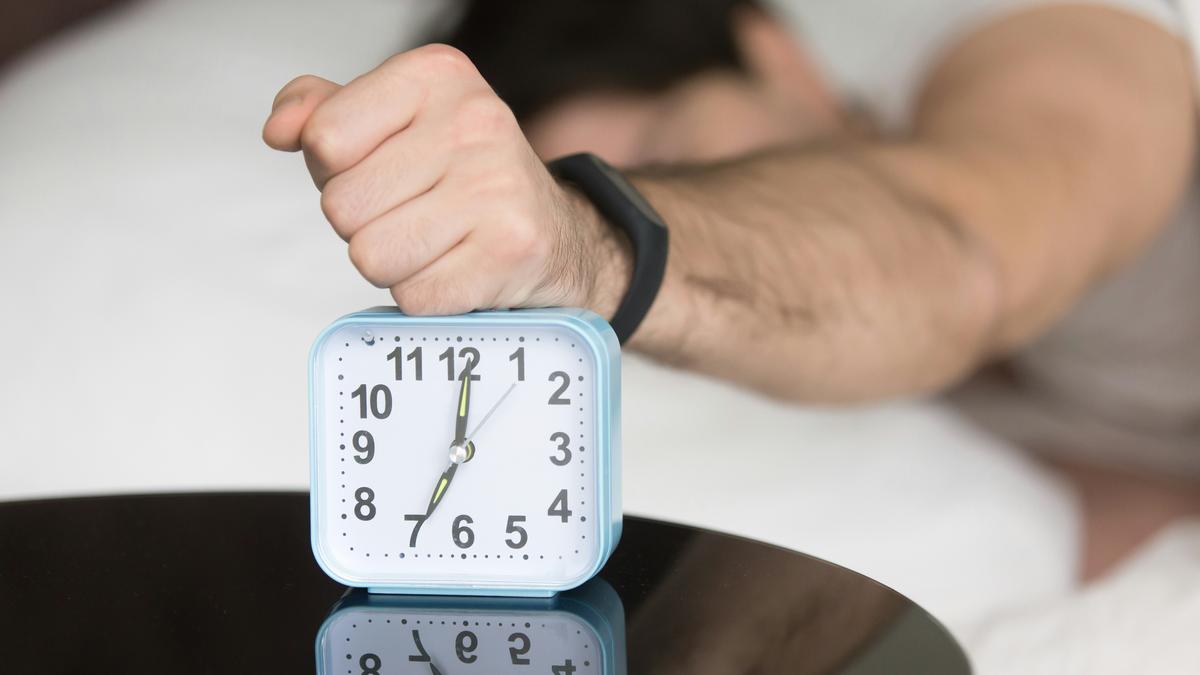
Does Jupiter have a “voice”?

When we say discovery of Jupiter’s “voice”, it corresponds to the discovery that the planet Jupiter is a strong source of radio waves. This discovery was made in the 1950s by two scientists at the Carnegie Institution in Washington D.C. – Bernard F. Burke and Kenneth Linn Franklin – when the idea of using radio for astronomical research was still relatively new. 

By the time Burke and Franklin got together for their work, astronomers were privy to the fact that several sources in the sky emitted radio waves. With receivers in the rural 96-acre Mills Cross field near Washington, the duo set out to map the northern sky using their radio antenna array. 

In order to test how their array was working, they picked Crab Nebula – a supernova remnant and pulsar wind nebula – in the constellation of Taurus. The tests went well and with the passing weeks, they progressively changed the pointing direction towards the south. 

When there were some aberrations that they couldn’t identify, they initially suspected terrestrial interference, probably from a passing vehicle. But by observing it more carefully over the nights that followed and noticing that it not only occurred around the same time period, but was also consistently occurring four minutes earlier each night, they realised it had to be a celestial object. 

Once they had a few more months of data, they could rule out stars as the source of the radio emissions didn’t move like those that come from stars. This not only eliminated stars, but also nebula or galaxy as they all move across the sky at about the same rate. 

Finding that the object that happened to be near Crab Nebula in the sky was Jupiter and checking its rate of movement to match with the data they had, the duo were able to zero in on Jupiter. On April 5-6, 1955, Burke and Franklin announced their discovery at a meeting of the American Astronomical Society. A lot of noise followed as it was the first ever noise to have been identified as coming from a specific planet.  

How has it helped?

The detection of the first non-thermal radio noise from a planet provided astronomers and scientists a new tool for exploring the solar system. Immediately after the announcement, in fact, astronomers went back to their own existing data, to see if they had a match as well. 

Australian radio astronomer Charles Alexander Shain was actually able to recognise Jovian radio bursts in his own data set. Looking back following the announcement in 1955, Shain found observations he had taken five years earlier to correspond to radio emissions from Jupiter. This meant that immediately after the discovery, there was already five years worth of data to begin work with. Another 70-plus years worth of data has since been added to this repository. 

As far as Jupiter is concerned, the bursts of radio emissions served as the first evidence for a Jovian magnetic field. Most radio waves from Jupiter are polarised, implying that wherever these waves were originating from, there’s a magnetic field present.

The radio emissions observed by Burke and Franklin were in the form of noise bursts with peak intensities so great that Jupiter is the most prominent source in the sky at this wavelength, behind only the sun. These emissions are called decametre radiation, based on the characteristic wavelength. 

Subsequent observations were at shorter wavelengths, revealing that the solar system’s biggest planet is also a source of steady radio emissions. These are called decimetre radiation, again, based on the characteristic wavelength.

Here’s more about the two men who made the discovery:

Burke’s baseline

Born in Brighton, Massachusetts, U.S. on June 7, 1928, Bernard F. Burke enjoyed maths from a rather young age. This didn’t surprise those around him as his mother Clare was a typist who worked with statistics and therefore came up with her own method to type complex maths formulae manually, and his father Vincent was the head of the maths department at a high school. 

Interest for what lay beyond was also evident from an early age as he purchased a large piece of glass along with a friend at the age of 16 with the objective of grinding it into a telescope’s lens. 

After graduating from high school, Burke received a full scholarship to study the violin. He turned it down and decided to study at the Massachusetts Institute of Technology (MIT). Studying physics and astrophysics, Burke received his PhD in 1953, 

Following his PhD, Burke joined the Carnegie Institution of Washington’s Department of Terrestrial Magnetism (DTM) and it was during his time here that he co-discovered radio noise from Jupiter in 1955. He was at DTM for another decade, before heading back to MIT in 1965 as a professor of physics. 

The blue horseshoe shape that circumscribes the red galaxy is the real prize in this image – an Einstein ring. This blue horseshoe is a distant galaxy that has been magnified and warped into a nearly complete ring by the strong gravitational pull of the massive foreground Luminous Red Galaxy.
| Photo Credit:
ESA/HUBBLE & NASA

Once in MIT, his work shifted, focussing on the detection of gravitational lensing and in the development of Very Long Baseline Interferometry (VLBI). In 1988, he discovered what is considered the first Einstein ring. A rare astronomical phenomenon predicted by theoretical physicist Albert Einstein’s theory of relativity, Einstein ring is the deformation of light in the form of a ring due to gravitational lensing around a massive cosmic object. 

In addition to his own research, Burke was also well-respected as a professor, challenging students both on and off campus. He passed away on August 5, 2018, aged 90. 

Facts about Franklin

Kenneth Linn Franklin was born in Alameda, California, U.S. on March 25, 1923. Franklin set his sights at the distance much earlier than most as one of his earliest memories was looking up at the moon and asking his mother what it was. He never got his answer then as his mother was blind. It left him seeking answers and explaining astronomical phenomena as best he could for a lifetime. 

After earning his doctorate in astronomy from the University of California, Berkeley, Franklin joined DTM. Along with Burke, Franklin detected Jupiter’s “voice” in 1955 and went on to accept an astronomer’s position at the Hayden Planetarium the following year. 

In addition to studying astronomical phenomena, Franklin became an expert communicating these as he had a talent for putting the right things in focus. This helped not just those around him, but also the journalists, who often quoted him. He provided astronomical information to The New York Times for years, including the hour of sunrise and sunset, and served as a consultant for Scientific American, and television networks NBC and CBS.

It wasn’t just the times on Earth that he was good at, as is evident from the fact that he invented a watch for moon walkers in 1970. With moon missions on the rise then, Franklin’s watch measured time on the moon based on lunations – a lunar month of 29.53 Earth days during which the moon completes a full cycle of phases. While the watch never really caught on, his methodology for calculating time there is very close to the solutions thought off in the current decade when interest in moon missions is again on the rise.  

Apart from being a popular lecturer, Franklin also produced his own radio programme. He never missed a chance to encourage his students to analyse radio waves coming from Jupiter, striving to kindle curiosity as an educator. He passed away on June 18, 2007, aged 84.


Source link

Science Tags:all about jupiter, an eye for an i

Post navigation

Previous Post: Access Denied
Next Post: Access Denied

Related Posts

  • Why does an elevator need three electrical phases to operate?
    Why does an elevator need three electrical phases to operate? Science
  • VELC payload aboard Aditya-L1 will send 1,440 images of sun in a day
    VELC payload aboard Aditya-L1 will send 1,440 images of sun in a day Science
  • Twisted magnetic field observed around Milky Way’s central black hole
    Twisted magnetic field observed around Milky Way’s central black hole Science
  • Small study hints that revving up immune cells might help fight HIV
    Small study hints that revving up immune cells might help fight HIV Science
  • Nobel Prize 2023 in Chemistry is awarded to
    Nobel Prize 2023 in Chemistry is awarded to Science
  • What sleep deprivation does to your brain and body
    What sleep deprivation does to your brain and body Science

More Related Articles

Trump is pulling the US out of the UN FCCC. What does it mean? Trump is pulling the US out of the UN FCCC. What does it mean? Science
Peter Higgs, who proposed existence of Higgs boson particle, has died at 94, university says Peter Higgs, who proposed existence of Higgs boson particle, has died at 94, university says Science
Neural circuitry of mouse mothers to pups’ calls deciphered Neural circuitry of mouse mothers to pups’ calls deciphered Science
Trump administration fires entire National Science Board Trump administration fires entire National Science Board Science
India’s cities are expanding – often into flood-prone areas | Explained India’s cities are expanding – often into flood-prone areas | Explained Science
As the summer sun cranks up the temperature, it increases the risk of heatstroke. It’s not just about feeling uncomfortable; it’s about staying safe. Heatstroke can sneak up on anyone, but it poses a particular threat to kids and parents hustling through their summer adventures. As the summer sun cranks up the temperature, it increases the risk of heatstroke. It’s not just about feeling uncomfortable; it’s about staying safe. Heatstroke can sneak up on anyone, but it poses a particular threat to kids and parents hustling through their summer adventures. Science
SiteLock

Archives

  • May 2026
  • April 2026
  • March 2026
  • February 2026
  • January 2026
  • December 2025
  • November 2025
  • October 2025
  • September 2025
  • August 2025
  • July 2025
  • June 2025
  • May 2025
  • April 2025
  • March 2025
  • February 2025
  • January 2025
  • December 2024
  • November 2024
  • October 2024
  • September 2024
  • August 2024
  • July 2024
  • June 2024
  • May 2024
  • April 2024
  • March 2024
  • February 2024
  • January 2024
  • December 2023
  • November 2023
  • October 2023
  • September 2023
  • August 2023
  • July 2023
  • June 2023
  • May 2023
  • April 2023
  • March 2023
  • February 2023
  • January 2023
  • December 2022
  • November 2022
  • October 2022
  • September 2022
  • August 2022
  • July 2022
  • June 2022
  • May 2022

Categories

  • Business
  • Nation
  • Science
  • Sports
  • World

Recent Posts

  • African public health agency announces new Ebola outbreak in Congo, 65 suspected deaths
  • North Corporation conducts ‘street-view videography’ to know footpath conditions; float tenders for maintenance
  • Press Club of India urges Uttar Pradesh govt. to withdraw NSA against journalist Satyam Verma
  • All eyes on Congress equations in Satheesan’s home turf ahead of Cabinet formation
  • Seminar highlights role of technology in sustainable tribal development

Recent Comments

  1. Alvinamuth on UP Teacher Who Asked Students To Slap Muslim Classmate
  2. Jamesaidet on UP Teacher Who Asked Students To Slap Muslim Classmate
  3. JamesPreds on UP Teacher Who Asked Students To Slap Muslim Classmate
  4. Hectortek on UP Teacher Who Asked Students To Slap Muslim Classmate
  5. Davidcag on UP Teacher Who Asked Students To Slap Muslim Classmate
  • Russia Warns Against “Hypotheses” In Azerbaijan Airlines Crash
    Russia Warns Against “Hypotheses” In Azerbaijan Airlines Crash World
  • Customers can use FASTag using available balance, says Paytm Payments Bank
    Customers can use FASTag using available balance, says Paytm Payments Bank Business
  • Access Denied World
  • Paris Olympics – Every Athlete Is India’s Pride: PM Narendra Modi
    Paris Olympics – Every Athlete Is India’s Pride: PM Narendra Modi Sports
  • The Hindu Morning Digest: May 30, 2024
    The Hindu Morning Digest: May 30, 2024 World
  • Sensex, Nifty climb on firm trend in global markets
    Sensex, Nifty climb on firm trend in global markets Business
  • India vs Pakistan Asia Cup 2023 Clash Faces Tough Hosting Challenge On September 2? Report Claims So Due To This Factor
    India vs Pakistan Asia Cup 2023 Clash Faces Tough Hosting Challenge On September 2? Report Claims So Due To This Factor Sports
  • Praveer Ranjan takes charge as CISF DG; Praveen Kumar appointed ITBP chief
    Praveer Ranjan takes charge as CISF DG; Praveen Kumar appointed ITBP chief Nation

Editor-in-Chief:
Mohammad Ariff,
MSW, MAJMC, BSW, DTL, CTS, CNM, CCR, CAL, RSL, ASOC.
editor@artifex.news

Associate Editors:
1. Zenellis R. Tuba,
zenelis@artifex.news
2. Haris Daniyel
daniyel@artifex.news

Photograher:
Rohan Das
rohan@artifex.news

Artifex.News offers Online Paid Internships to college students from India and Abroad. Interns will get a PRESS CARD and other online offers.
Send your CV (Subjectline: Paid Internship) to internship@artifex.news

Links:
Associate Journalism
About Us
Privacy Policy

News Links:
Breaking News
World
Nation
Sports
Business
Entertainment
Lifestyle

Registered Office:
72/A, Elliot Road, Kolkata - 700016
Tel: 033-22277777, 033-22172217
Email: office@artifex.news

Editorial Office / News Desk:
No. 13, Mezzanine Floor, Esplanade Metro Rail Station,
12 J. L. Nehru Road, Kolkata - 700069.
(Entry from Gate No. 5)
Tel: 033-46011099, 033-46046046
Email: editor@artifex.news

Copyright © 2023 Artifex.News Newsportal designed by Artifex Infotech.