


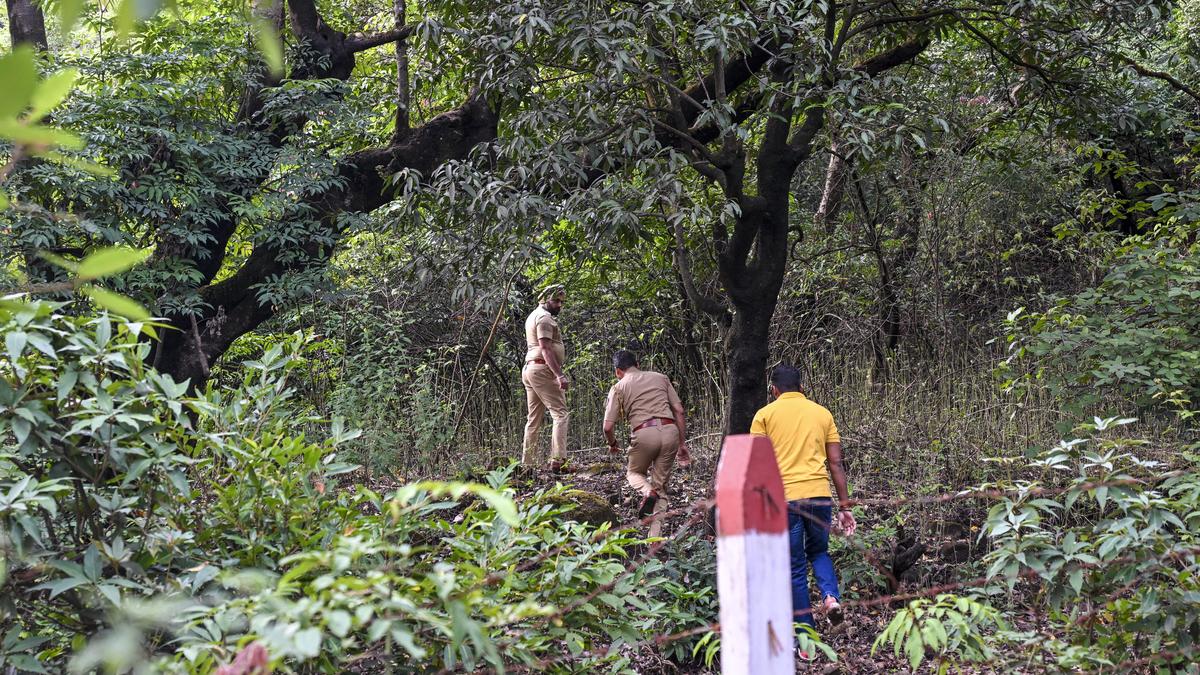
The story so far: A Pune court has extended the custody of Siya Goyal and Chetan Chaudhary, the two accused in the Ketan Agarwal murder case, until July 3, 2026. The court acquiesced to the investigators, who said several aspects of the probe are ongoing, including a forensic study of Mr. Chaudhary’s gait. According to media reports, the police plan to compare the way he walks with CCTV footage showing a hooded individual near the crime scene at Lohagad Fort, arguing that the analysis could help determine whether the person in the footage was Mr. Chaudhary.
What is gait analysis?
Gait analysis is the scientific study of how a human walks or runs. Walking (or running) is a complex activity where the body has to coordinate continuously between muscles, bones, and the nervous system. Gait analysis breaks down these activities to piece together how a particular person walks.
In clinical settings, this analysis can be used to understand why someone is in pain or how a specific medical condition is progressing. Sportspersons use it to understand how they can run faster.
Likewise, forensic gait analysis has been used to assess whether the way a person walks — as recorded live or seen on CCTV footage — is consistent with that of a known individual. It is generally used as the sole piece of evidence and is usually considered to corroborate other findings, such as DNA data and/or eyewitness accounts.

In most instances, experts use the analysis to identify abnormalities in an individual’s pattern of movement. For example, sometimes a person’s back pain may be related to the way their foot strikes the ground. Doctors also use gait analysis to manage symptoms in people with cerebral palsy and Parkinson’s disease and as part of post-stroke care.
In fact, in Parkinson’s disease, Alzheimer’s disease, dementia with Lewy bodies, and multiple sclerosis at least, research has found that changes in gait can appear years before their more obvious symptoms.
What is a gait cycle?
To understand the way a person moves, experts begin with looking at the gait cycle — the series of events starting from the moment one foot touches the ground until the same foot returns to the ground again.
The cycle has two broad phases. In the stance phase, your foot is in contact with the ground and ends when the toes push off. The body absorbs the shock of hitting the surface while supporting your whole body weight in this phase. In the swing phase, the foot is off the ground but also moving towards it, to take the next step. In this duration, the body’s focus is on ensuring the toes don’t drag on the floor while positioning the foot for its landing.

During gait analysis, an individual makes multiple gait cycles while experts use instruments to track the steps per minute, step length, stride length, the angles of the legs’ joints, ankle rolls, and the force with which the foot strikes the ground. Sometimes, the instruments are just a clinician’s eyeballs and a notepad, so as you walk back and forth, they record different aspects of your movement.
These days, experts also record a person’s gait cycles on video and analyse it with a computer later, use sensors called pressure mats and force plates to track where your feet apply the most pressure, and wearable sensors attached to the person’s body to track their movement in a real-world setting, like at a crime scene or on a sports field.
How is forensic gait analysis different?
In forensic gait analysis, experts may be able to use a person’s walk to identify them in a video the same way a person’s fingerprint can be used to identify if they have touched a surface.

In the case of Ketan Agarwal’s death, the police have said they have a video of an individual near the scene of the crime and that it could be one of the suspects, Chetan Chaudhary. The person’s face in the video is obscured by a hoodie, however, so the police hope to confirm if that is indeed Mr. Chaudhary using gait analysis, among other methods.
In such cases, typically, experts such as podiatrists or human movement specialists compare two sets of videos: the footage being investigated and footage showing the suspect walking at a different place/time. They pay close attention to the rhythm of the steps, the angle of the feet, the way the arms swing, idiosyncratic movements like a slight limp or a peculiar tilt of the head, and so on.
The experts may conclude — for example — the person in both videos is the same if they both have a specific outward rotation of the right knee and an unusually short stride.
What are police doing in the Ketan Agarwal case?
Indian Express quoted an unnamed senior police officer as saying investigating officials will have Mr. Chaudhary dress “in his original hoodie attire” and then “walk again at the same spot at Lohagad Fort”. Then, the officer added, “the new video-recorded walk will be compared with that of CCTV footage recorded on June 18”.
According to the officer, the police will use “AI tools” to “analyse the similarity” and “help confirm his presence”.
Going by published research, here, the investigators might isolate the suspect’s gait from the CCTV footage on June 18 and — depending on the video quality — assess the relative movements of the hips, knees, ankles, shoulders, etc. and/or evaluate the silhouette.
Then, when the suspect is made to walk near the crime scene in the same attire, the gait will be recorded again and evaluated. By doing this at the scene of interest itself, the experts may be able to reproduce the effects of factors such as the camera angle, perspective, slope, and lighting.
Finally, experts may compare the gait between the original footage and the new footage to score the similarities — a task for which the unnamed police officer said artificial intelligence (AI) tools will be used.
What are the challenges in gait analysis?
Researchers have already pointed to some pitfalls in this technique. One example is quality issues in the CCTV footage. Another is that most published gait-recognition systems calculate a similarity score or ranking. However, a high score only means the movements resemble each other according to some model; it does not establish that the same person appears in both videos.
The act of asking someone to recreate a walk may also change the walk. People generally can’t reproduce an earlier gait exactly. And if they know they are being compared to CCTV footage, they may consciously or unconsciously alter their speed, stride length, posture, arm swing, etc.
Researchers have also called for larger studies that quantify error rates in CCTV footage recorded in realistic conditions, including when AI models are used as part of criminal investigations. These models could produce misleading scores if the use case differs from the typical ones in the models’ training data.
There is also ongoing debate about how unique a person’s gait could really be and the ability of different instruments to identify that uniqueness. For example, cameras recording at different frequencies, say 30 Hz versus 250 Hz, the latter will be better able to capture some motion that happens within 20 milliseconds as the other will have a frame delay of 33.3 milliseconds.
Depending on the gap between the crime and the investigation, experts may also have to account for differences in gait due to age, sex, height and leg length, and body mass changes.
These are just some of the reasons gait analysis by itself is not used as dispositive evidence to identify a person. Forensic researchers generally recommend gait analysis or comparison be interpreted together with independent evidence such as location data, witness testimony, DNA, fingerprints, and/or other forensic findings.