
Skip to content
  • Facebook
  • X
  • Linkedin
  • WhatsApp
  • YouTube
  • Associate Journalism
  • About Us
  • Privacy Policy
  • 033-46046046
  • editor@artifex.news
Artifex.News

Artifex.News

Stay Connected. Stay Informed.

  • Breaking News
  • World
  • Nation
  • Sports
  • Business
  • Science
  • Entertainment
  • Lifestyle
  • Toggle search form
  • On England’s Cricket World Cup 2023 Disaster, Gautam Gambhir Points Out ‘Most Damaging Thing’
    On England’s Cricket World Cup 2023 Disaster, Gautam Gambhir Points Out ‘Most Damaging Thing’ Sports
  • World Test Championship Makes For ‘Bigger Carrot’: New Zealand Captain Tom Latham
    World Test Championship Makes For ‘Bigger Carrot’: New Zealand Captain Tom Latham Sports
  • Access Denied
    Access Denied Nation
  • Petition Seeks Live Broadcast of Surgeries, Supreme Court Seeks Centre’s Response
    Petition Seeks Live Broadcast of Surgeries, Supreme Court Seeks Centre’s Response Nation
  • Access Denied Business
  • Access Denied World
  • Access Denied
    Access Denied Nation
  • Israel says Netanyahu will meet with Trump about Iran talks on February 11
    Israel says Netanyahu will meet with Trump about Iran talks on February 11 World
Milk production in Gangetic plains has nosedived due to climate change

Milk production in Gangetic plains has nosedived due to climate change

Posted on July 5, 2026 By admin


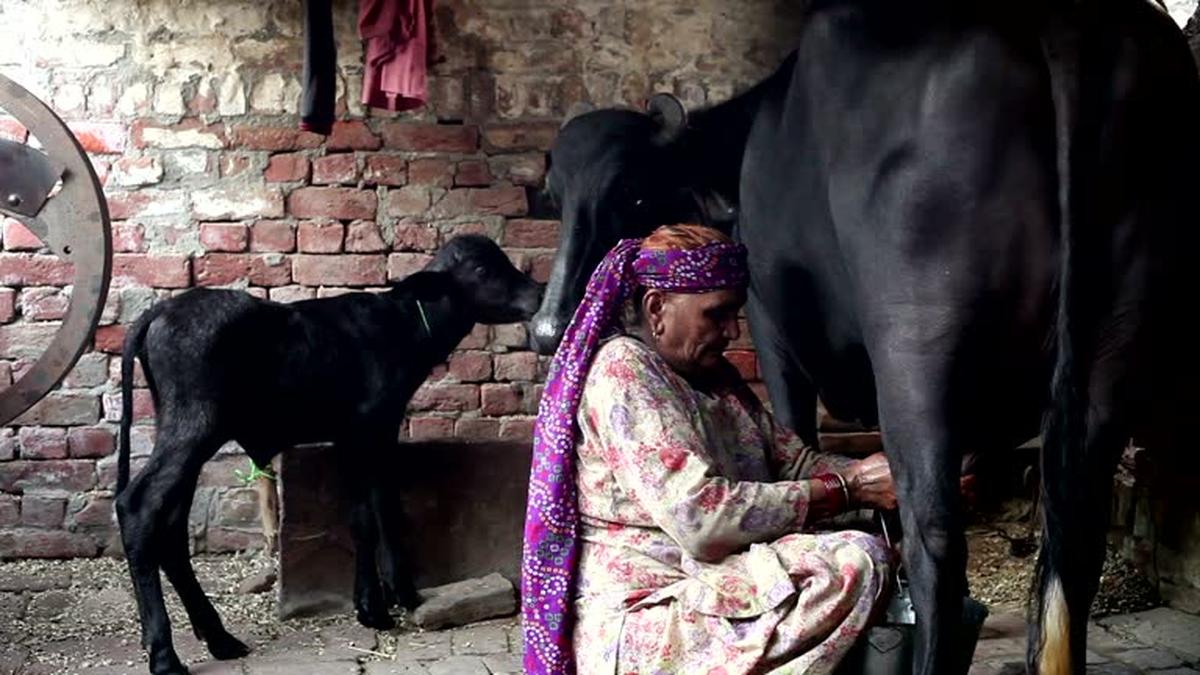
A massive decline in bovine milk production in India, especially among buffaloes in the trans-Gangetic plains of northwestern India — one of the country’s biggest sources of milk — has now been attributed to climate change. The phenomenon has a profound impact on the milk industry that caters to consumers every day.

While climate change significantly undermines livestock productivity worldwide, a new study published in Scientific Reports has found that global warming acutely affects dairy production across the global south, especially “the high milk production tract of Haryana.”

India is the world’s largest milk producer. Scientists studied data to assess the impact of climatic variables — including yearly minimum, maximum, and mean temperatures, heavy rainfall, temperature-humidity index — and evapotranspiration on milk yield and production in buffaloes, indigenous cattle, and cross-bred cattle in Haryana, spanning over a decade, from 2004 to 2019.

They studied livestock populations across 1,148 villages, which included 4.66 million cross-bred cattle, 2.86 million indigenous cattle and 35.56 million buffaloes. The study documented milk yield in these three bovine categories and found that high temperatures (over 38 °C), in combination with high humidity (over 70%) during July and August (summer and monsoon when humidity peaks) “significantly reduce milk production.” Interestingly temperatures in winters had a negligible effect.

Adaptive strategies

Critically, evapotranspiration in May and June was an important factor, as was the temperature-humidity index and heatwaves. Solar radiation, ambient temperature, and vapour pressure were part of the climate impact assessments. In light of the fact that agrarian livelihood is likely to be affected profoundly with global warming, “these results underscore [potential evapotranspiration’s] role in shaping adaptive strategies for sustainable livestock production,” the paper said.

Buffaloes, with their darker hue and bare skin are particularly vulnerable to absorb solar radiation. They also have fewer sweat glands than cattle: so, a unit increase in potential evapotranspiration (mm/day) reduces milk yield by around 1.4 litres per buffalo per day, the paper says. Likewise, cross-bred cattle showed a significant decline in productivity during heatwaves too; but not indigenous cattle breeds such as Sahiwal and Hariana, perhaps because of their adaptation, such as loose skin, efficient sweating and lower metabolic heat production.

The higher the temperature-humidity index the greater is the impact on livestock physiology and productivity: they eat less, and the heat triggers homeostatic responses “in the form of panting, sweating and reduced activity,” the paper said. The stress hormones and raised cortisol levels “impairs milk ejection and thereby causes a drop in milk yield and, in severe cases, livestock mortality,” says the paper.

Indigenous cattle

Fodder also becomes a casualty of rising surface temperature, affecting the livestock production system: changes are triggered in the quantity, quality and seasonal availability of feed and fodder. The paper estimates that such stressors in India lead to a loss of 3.2 million tonnes of milk, which is worth Rs. 2,661 crore in monetary losses that could rise to 15 million tonnes by 2050s.

Abhinav Gaurav, ⁠lead advisor for sustainable dairy at Environmental Defense Fund India, a Delhi-based non-profit, told The Hindu that heat stress has a significant impact on the milk productivity, health, and well-being of cattle and buffaloes.

“During the intense summer months, the lactating animals are more vulnerable to heat stress, given that animals divert energy from milk production to regulate body temperature, resulting in a 20–30% decline in milk yield.”

Beyond the direct impact of climate change on animals’ health, production and wellbeing, increasing temperatures and prolonged summers are also affecting the broader dairy production system, like reduced production and availability of fodder and feed, increasing water scarcity, raising instances of pest and disease attacks and compromised animal immune system.

‘Long-term climate resilience should prioritise thermo-tolerant breeding programs that leverage Bos indicus traits’

‘Long-term climate resilience should prioritise thermo-tolerant breeding programs that leverage Bos indicus traits’
| Photo Credit:
Getty Images/iStockphoto

Dr. Gaurav quoted a report in The Lancet that estimates that climate change-induced temperature rise can reduce Indian milk production by 25% by 2085.

“Given that India is the largest milk producer and consumer of the world, these production losses will put the livelihoods and nutrition of millions at risk, especially the 80 million smallholder dairy farmers who contribute 85% of the total milk production,” he said.

Haryana’s farmers, interestingly, “were not only well aware of … technologies and practices but implemented them in the summer season (provided wallowing ponds to buffalo, agroforestry, keeping livestock in shed, alteration of microclimate via sprinklers, foggers, mist, etc., feeding management), and reduced the negative effects of the extremes [of] summer months,” the paper, which was authored by researchers from the ICAR-National Dairy Research Institute and other collaborating institutions, concluded.

Traits to tolerate heat

Indigenous cattle are more tolerant to heat stress, and maintain homeostasis (that is, they are better at regulating their internal environment), with more advanced evaporative cooling compared to buffaloes. Besides, “Indigenous breeds show stronger immunity against local parasites and pathogens. This resilience indirectly supports climate tolerance, since heat stress often compromises immune function,” the authors wrote.

The National Bureau of Animal Genetic Resources has identified heat-tolerance traits in cattle, such as heat shock proteins, coat colour, and hair characteristics, said Dr, Gaurav.

“And the research showed that the Sahiwal breed of cattle is significantly more heat-tolerant than exotic breeds with comparable milk productivity.

“The findings underscore the need for a strategic shift toward resilience oriented livestock management. We recommend the integration of potential evapotranspiration and temperature-humidity index … into regional early warning systems to allow for proactive management,” it added. “Furthermore, long-term climate resilience should prioritise thermo-tolerant breeding programs that leverage Bos indicus traits.”

The text concluded that indigenous breeds should be conserved as “reservoirs of climate-resilient traits,” and policies must prioritise in-situ conservation and farmer-led breed improvement programmes.

“The larger challenge now lies in scaling these solutions for millions of smallholder farmers, who often face limited awareness, inadequate financial resources, and the absence of a coordinated national climate-smart dairy strategy,” Dr. Gaurav said.

divya.gandhi@thehindu.co.in



Source link

Science

Post navigation

Previous Post: Puducherry plans AI Centre of Excellence
Next Post: Name Kochi airport after K. Karunakaran, says Congress leader V.M. Sudheeran

Related Posts

  • From Western disturbances to El Niño, climate change is affecting India’s food security
    From Western disturbances to El Niño, climate change is affecting India’s food security Science
  • What next for ISRO after Chandrayaan-3 mission?
    What next for ISRO after Chandrayaan-3 mission? Science
  • Frequent mass wasting in Tibet a cause for worry in India
    Frequent mass wasting in Tibet a cause for worry in India Science
  • Is it possible in mice to restore walking after paralysis from spinal cord injury?
    Is it possible in mice to restore walking after paralysis from spinal cord injury? Science
  • The Science Quiz: Scientific terms beginning with ‘X’
    The Science Quiz: Scientific terms beginning with ‘X’ Science
  • India home to 191 species of cockroaches, 60% of them are endemic, says ZSI study
    India home to 191 species of cockroaches, 60% of them are endemic, says ZSI study Science

More Related Articles

Ground control: On ISRO, policy and and its focus Ground control: On ISRO, policy and and its focus Science
IMF chief warns global monetary system not ready for AI cyber threats IMF chief warns global monetary system not ready for AI cyber threats Science
ISRO’s ‘zero orbital debris’ milestone & the space debris crisis | Explained ISRO’s ‘zero orbital debris’ milestone & the space debris crisis | Explained Science
Indian Institute of Astrophysics astronomers find new method to predict amplitude of upcoming solar cycle Indian Institute of Astrophysics astronomers find new method to predict amplitude of upcoming solar cycle Science
Tech billionaire pulls off first private spacewalk high above Earth Tech billionaire pulls off first private spacewalk high above Earth Science
Climate change could become the main driver of biodiversity decline by mid-century: report Climate change could become the main driver of biodiversity decline by mid-century: report Science
SiteLock

Archives

  • September 2026
  • August 2026
  • July 2026
  • June 2026
  • May 2026
  • April 2026
  • March 2026
  • February 2026
  • January 2026
  • December 2025
  • November 2025
  • October 2025
  • September 2025
  • August 2025
  • July 2025
  • June 2025
  • May 2025
  • April 2025
  • March 2025
  • February 2025
  • January 2025
  • December 2024
  • November 2024
  • October 2024
  • September 2024
  • August 2024
  • July 2024
  • June 2024
  • May 2024
  • April 2024
  • March 2024
  • February 2024
  • January 2024
  • December 2023
  • November 2023
  • October 2023
  • September 2023
  • August 2023
  • July 2023
  • June 2023
  • May 2023
  • April 2023
  • March 2023
  • February 2023
  • January 2023
  • December 2022
  • November 2022
  • October 2022
  • September 2022
  • August 2022
  • July 2022
  • June 2022
  • May 2022

Categories

  • Business
  • Nation
  • Science
  • Sports
  • World

Recent Posts

  • Keralam minister K.M. Shaji faces controversy over use of ‘loaned’ luxury car as official vehicle
  • Russian election, cast as test of support for Ukraine war, enters final day
  • Mass drone barrage on Moscow kills two
  • Bengal police arrest Rejinagar bypoll candidate days after Nandigram candidate Milan Pradhan’s arrest
  • Three killed, one critically injured after speeding BMW crashes on Mumbai Coastal Road

Recent Comments

  1. Glennalbub on UP Teacher Who Asked Students To Slap Muslim Classmate
  2. PhilipLog on UP Teacher Who Asked Students To Slap Muslim Classmate
  3. DennisDum on UP Teacher Who Asked Students To Slap Muslim Classmate
  4. DonaldFrosy on UP Teacher Who Asked Students To Slap Muslim Classmate
  5. DonaldFrosy on UP Teacher Who Asked Students To Slap Muslim Classmate
  • Iran, Israel say hostilities on hold after first attacks since truce
    Iran, Israel say hostilities on hold after first attacks since truce World
  • Raj Kapoor Established India’s “Soft Power” In World: PM To Kapoor Family
    Raj Kapoor Established India’s “Soft Power” In World: PM To Kapoor Family Nation
  • Are ‘colour molecules’ the key to a room-temperature quantum computer?
    Are ‘colour molecules’ the key to a room-temperature quantum computer? Science
  • Access Denied Sports
  • Access Denied Business
  • Pakistan extends airspace ban for Indian aircraft till September 24
    Pakistan extends airspace ban for Indian aircraft till September 24 World
  • Access Denied
    Access Denied Nation
  • Access Denied Sports

Editor-in-Chief:
Mohammad Ariff,
MSW, MAJMC, BSW, DTL, CTS, CNM, CCR, CAL, RSL, ASOC.
editor@artifex.news

Associate Editors:
1. Zenellis R. Tuba,
zenelis@artifex.news
2. Haris Daniyel
daniyel@artifex.news

Photograher:
Rohan Das
rohan@artifex.news

Artifex.News offers Online Paid Internships to college students from India and Abroad. Interns will get a PRESS CARD and other online offers.
Send your CV (Subjectline: Paid Internship) to internship@artifex.news

Links:
Associate Journalism
About Us
Privacy Policy

News Links:
Breaking News
World
Nation
Sports
Business
Entertainment
Lifestyle

Registered Office:
72/A, Elliot Road, Kolkata - 700016
Tel: 033-22277777, 033-22172217
Email: office@artifex.news

Editorial Office / News Desk:
No. 13, Mezzanine Floor, Esplanade Metro Rail Station,
12 J. L. Nehru Road, Kolkata - 700069.
(Entry from Gate No. 5)
Tel: 033-46011099, 033-46046046
Email: editor@artifex.news

Copyright © 2023 Artifex.News Newsportal designed by Artifex Infotech.