


Skip to content
  • Facebook
  • X
  • Linkedin
  • WhatsApp
  • YouTube
  • Associate Journalism
  • About Us
  • Privacy Policy
  • 033-46046046
  • editor@artifex.news
Artifex.News

Artifex.News

Stay Connected. Stay Informed.

  • Breaking News
  • World
  • Nation
  • Sports
  • Business
  • Science
  • Entertainment
  • Lifestyle
  • Toggle search form
  • Access Denied Sports
  • Access Denied
    Access Denied Nation
  • RBI issues fresh guidelines asking banks, NBFCs not to levy penal interest on borrowers in case of default 
    RBI issues fresh guidelines asking banks, NBFCs not to levy penal interest on borrowers in case of default  Business
  • Sealing drive imminent, PG at Satya Niketan asks all 40 female occupants to move out
    Sealing drive imminent, PG at Satya Niketan asks all 40 female occupants to move out Nation
  • National Cricket League: Suresh Raina, Pragyan Ojha Inspire South Dallas Students With Hands-On Cricket Experience
    National Cricket League: Suresh Raina, Pragyan Ojha Inspire South Dallas Students With Hands-On Cricket Experience Sports
  • Access Denied Sports
  • Access Denied
    Access Denied Nation
  • Access Denied
    Access Denied Nation
Kerala Budget 2026: Despite white paper warning, no plan to cut committed expenditure

Kerala Budget 2026: Despite white paper warning, no plan to cut committed expenditure

Posted on June 20, 2026 By admin


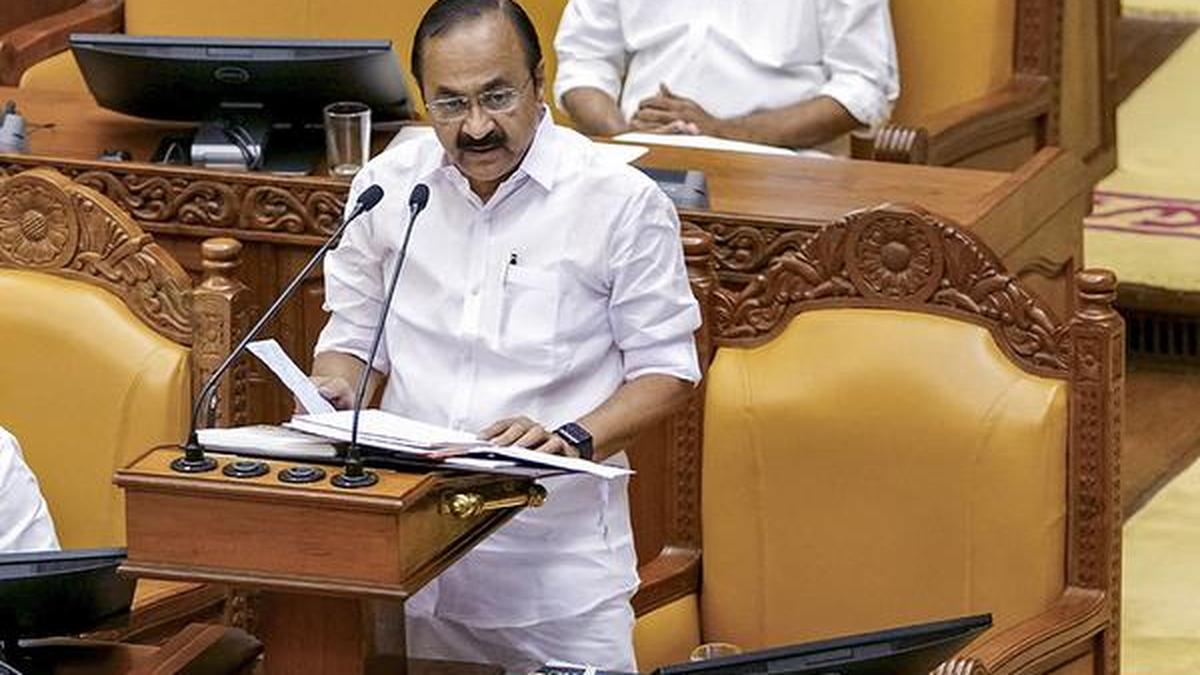
After releasing the “Kerala’s Fiscal Health — A Status Report” (white paper), which raised serious concerns over the State’s rising debt burden while strongly criticising the previous Left government for alleged fiscal mismanagement, the new United Democratic Front (UDF) government on Thursday presented its maiden budget.

The budget estimates the debt-to-GSDP ratio to come down marginally to 33.5% in 2026-27, compared with 34.87% (actuals, 2024-25) or 34.26% (revised estimates, 2025-26).

This is not because debt is expected to fall — the budget in fact projects total outstanding debt to rise 11.6%, from ₹4.89 lakh crore to ₹5.46 lakh crore — but because of its optimistic outlook that GSDP would grow nominally by 14.15% and revenue receipts by 23.8%.

Even if the government’s optimistic projections come true, Kerala will indisputably remain among the States with the highest debt burden. As per the Reserve Bank of India’s (RBI) data, the debt-to-GSDP ratio for all States combined stood at 27.01% in 2024-25. The chart below shows the ten States with the highest debt-to-GSDP ratio in 2024-25.

However, a rather unique Kerala phenomenon, highlighted prominently by the white paper, is its “structural” problem of a high share of “committed expenditure”, which not only leaves little or no room for capital expenditure but also contributes to mounting revenue deficits.

Committed expenditure has three main components: salaries, pensions and interest payments on loans previously taken. The three together account for nearly 78% of the State’s revenue receipts, as per RBI’s data for 2024-25. The share is only 45.4% at the all-India level (excluding Union Territories).

The budget projects it at 72.14% for 2026-27, which would still be the second-highest in the country, after Punjab — whose economy is only about two-thirds the size of Kerala’s. The chart below shows committed expenditure as a share of revenue receipts in States whose GSDP was at least ₹5 lakh crore in 2024-25.

Of the total committed expenditure, salaries and pensions alone account for more than half of the State’s revenue receipts. The budget estimates salary and pension expenditure at ₹88,000 crore in 2026-27, nearly 52% of the estimated revenue receipts of ₹1.7 lakh crore.

chart visualization

The chart below shows how this trend has remained roughly the same in Kerala. The share of committed expenditure in total revenue receipts touched its peak of 81.2% in 2021-22, when the previous government cleared certain backlogs related to salaries and pensions and undertook some one-time COVID-19-related relief measures.

chart visualization

On committed expenditure being a crucial problem, the white paper noted: “The most direct structural explanation for Kerala’s treasury stress is the share of its revenue that is pre-empted before any discretionary decision.”

It further said: “The State spends almost 80% of its resources on salaries, pensions and interest, far more than many other states. It is not right to take taxes from the people and spend most of it on salaries and pensions… Now is the time for hard political decisions,” adding that measures such as increasing the retirement age and limiting pay commission revisions to once every ten years should be considered.

Yet, while the budget speech spelled out either measures or the intent to address most of the problems the white paper had highlighted, it was conspicuously silent on measures to address this “structural problem” — barring the announcement that the government would revamp the National Pension Scheme after reviewing the “ambiguities” in the Assured Pension Scheme announced by the previous government.

The silence is perhaps an acknowledgement of the difficulty in tackling the problem, and of the importance of such high allocations for salaries and pensions in achieving the considerable progress the State has made on human development indicators.

Economist R. Ramakumar cautioned against interpreting the figures solely as evidence of fiscal distress. “If you want to retain a welfare state idea, welfare state requires welfare workers,” he said, pointing out that Kerala employs significantly more teachers, nurses and other public-sector workers than most States.

“Kerala’s achievements are due to this particular kind of salaries that you end up paying,” he said.

Moreover, he said that while the figure of more than 75% highlighted in the white paper has “shock value”, a better parameter would be the share of committed expenditure in the State’s total revenue expenditure, rather than revenue receipts, which would bring the figure down to around 58-60%.

Economist Lekha Chakraborty, meanwhile, said this reflected public expenditure rigidity. “All that we can do is an episodic expenditure (sectoral) compression, given the committed nature of spending. While the state has shown revenue buoyancy, without meaningful public expenditure reforms, this pattern risks perpetuating revenue deficits and constraining Kerala’s ability to sustain its social model,” she added.

As the chart below shows, SOTR and overall revenue receipts have indeed shown notable growth. SOTR has, however, remained below committed expenditure. Moreover, their respective compound annual growth rates (CAGRs) between 2015-16 and the 2026-27 (budget estimates) show that committed expenditure has grown faster than the other two.

chart visualization

Tax buoyancy, meanwhile, has come down in the last few years. The chart below shows SOTR buoyancy, calculated as the ratio between the growth of SOTR and the growth of GSDP. A value above one indicates good buoyancy, while a value below one indicates the State’s inability to raise tax revenues in proportion to economic growth.

chart visualization

The budget speech and the projections for 2026-27 show that the new UDF government is relying on a swift turnaround in tax buoyancy and GSDP growth to help the State come out of the financial distress, while recognising that committed expenditure on salaries and pensions cannot be brought down, at least in the near future.

Published – June 20, 2026 08:13 am IST



Source link

Business Tags:budget 2026, budget 2026 kerala, budget kerala 2026, kerala budget 2024, kerala budget 2025, kerala budget 2026, kerala budget news

Post navigation

Previous Post: World Refugee Day 2026: How refugees transformed Bengali food
Next Post: FIFA World Cup 2026: Cunha scores twice as Brazil win 3-0 and eliminate Haiti

Related Posts

  • Access Denied Business
  • Rupee falls 10 paise to close at all-time low of 83.14 against U.S. dollar
    Rupee falls 10 paise to close at all-time low of 83.14 against U.S. dollar Business
  • Access Denied Business
  • India’s ReNew Energy offered to be taken private in .82 billion deal
    India’s ReNew Energy offered to be taken private in $2.82 billion deal Business
  • Access Denied Business
  • Watch: Budget 2024 | What’s in it for women and children?
    Watch: Budget 2024 | What’s in it for women and children? Business

More Related Articles

Turbulence hits UDAN scheme, 50% routes grounded Turbulence hits UDAN scheme, 50% routes grounded Business
Access Denied Business
CM Patel inaugurates VGRC in Vadodara, calls for investment-led growth CM Patel inaugurates VGRC in Vadodara, calls for investment-led growth Business
Access Denied Business
Rupee rises 11 paise to close at 94.65 against U.S. dollar Rupee rises 11 paise to close at 94.65 against U.S. dollar Business
Access Denied Business
SiteLock

Archives

  • September 2026
  • August 2026
  • July 2026
  • June 2026
  • May 2026
  • April 2026
  • March 2026
  • February 2026
  • January 2026
  • December 2025
  • November 2025
  • October 2025
  • September 2025
  • August 2025
  • July 2025
  • June 2025
  • May 2025
  • April 2025
  • March 2025
  • February 2025
  • January 2025
  • December 2024
  • November 2024
  • October 2024
  • September 2024
  • August 2024
  • July 2024
  • June 2024
  • May 2024
  • April 2024
  • March 2024
  • February 2024
  • January 2024
  • December 2023
  • November 2023
  • October 2023
  • September 2023
  • August 2023
  • July 2023
  • June 2023
  • May 2023
  • April 2023
  • March 2023
  • February 2023
  • January 2023
  • December 2022
  • November 2022
  • October 2022
  • September 2022
  • August 2022
  • July 2022
  • June 2022
  • May 2022

Categories

  • Business
  • Nation
  • Science
  • Sports
  • World

Recent Posts

  • U.S. military says it killed 4 in strike on alleged drug-smuggling boat in Caribbean
  • Davis Cup: Czechs beat USA to qualify for finals
  • Ed Sheeran set to return to stage after Palestinian controversy
  • Asian Games 2026 opens in Japan with 11,000 athletes competing | LIVE updates
  • Union Home Minister Amit Shah falls ill in Hubballi, skips function

Recent Comments

  1. AlvinNet on UP Teacher Who Asked Students To Slap Muslim Classmate
  2. AlvinNet on UP Teacher Who Asked Students To Slap Muslim Classmate
  3. Jamesslits on UP Teacher Who Asked Students To Slap Muslim Classmate
  4. MichaelClear on UP Teacher Who Asked Students To Slap Muslim Classmate
  5. Jamesslits on UP Teacher Who Asked Students To Slap Muslim Classmate
  • Access Denied Business
  • Looking forward to the results of India’s inquiry into Pannun case, says U.S.
    Looking forward to the results of India’s inquiry into Pannun case, says U.S. World
  • Bangladesh Court Opens Murder Case Against Ex-PM Sheikh Hasina
    Bangladesh Court Opens Murder Case Against Ex-PM Sheikh Hasina World
  • NCLAT upholds insolvency proceedings against Nyka Steel guarantor over UCO Bank dues
    NCLAT upholds insolvency proceedings against Nyka Steel guarantor over UCO Bank dues Business
  • Sheikh Hasina will land in jail if she returns: Bangladesh minister
    Sheikh Hasina will land in jail if she returns: Bangladesh minister World
  • In first, Taiwan, U.S. firm to make missile, underwater drone
    In first, Taiwan, U.S. firm to make missile, underwater drone World
  • Access Denied World
  • Access Denied Sports

Editor-in-Chief:
Mohammad Ariff,
MSW, MAJMC, BSW, DTL, CTS, CNM, CCR, CAL, RSL, ASOC.
editor@artifex.news

Associate Editors:
1. Zenellis R. Tuba,
zenelis@artifex.news
2. Haris Daniyel
daniyel@artifex.news

Photograher:
Rohan Das
rohan@artifex.news

Artifex.News offers Online Paid Internships to college students from India and Abroad. Interns will get a PRESS CARD and other online offers.
Send your CV (Subjectline: Paid Internship) to internship@artifex.news

Links:
Associate Journalism
About Us
Privacy Policy

News Links:
Breaking News
World
Nation
Sports
Business
Entertainment
Lifestyle

Registered Office:
72/A, Elliot Road, Kolkata - 700016
Tel: 033-22277777, 033-22172217
Email: office@artifex.news

Editorial Office / News Desk:
No. 13, Mezzanine Floor, Esplanade Metro Rail Station,
12 J. L. Nehru Road, Kolkata - 700069.
(Entry from Gate No. 5)
Tel: 033-46011099, 033-46046046
Email: editor@artifex.news

Copyright © 2023 Artifex.News Newsportal designed by Artifex Infotech.