





Central banks occupy a peculiar position in modern democracies. Governments spend, tax, and borrow. Central banks, through their toolkit of monetary policy, manage inflation, preserve confidence in the currency, and safeguard financial stability. Their credibility rests on maintaining a degree of distance from the fiscal compulsions of the governments they serve.
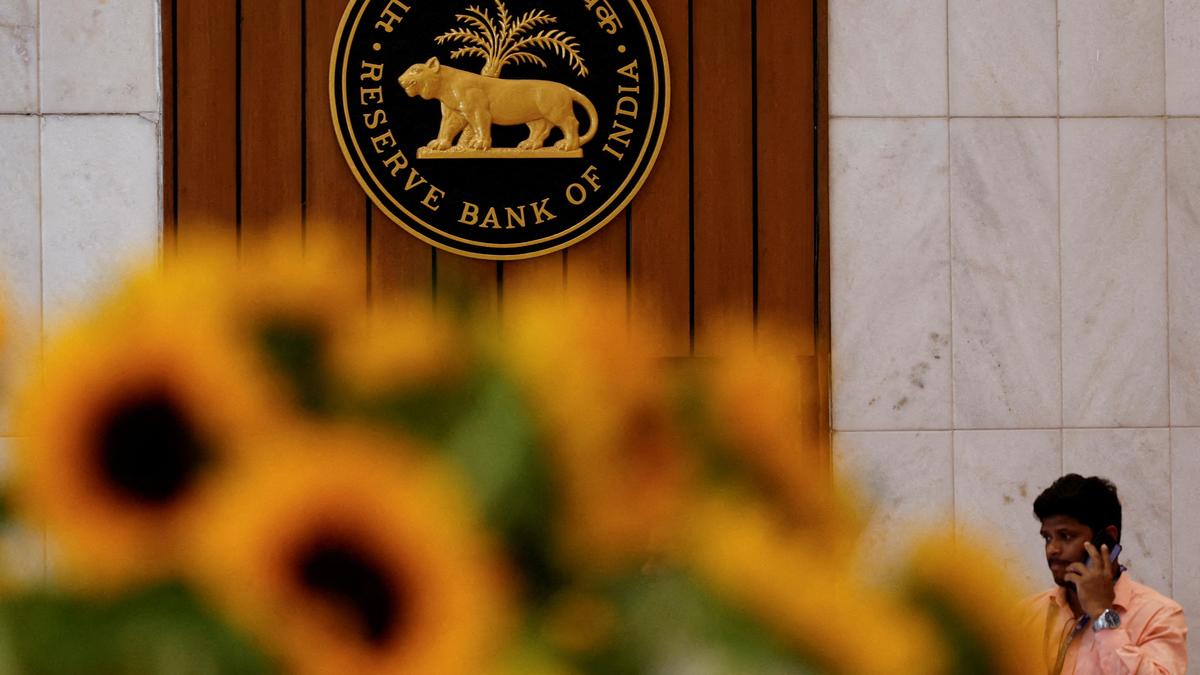
Recent developments surrounding the Reserve Bank of India (RBI) invite a closer examination of that relationship.
Much of the recent discussion has focused on the RBI’s management of foreign exchange reserves, interventions with respect to managing the rupee, including instances of reserve-rebalancing through gold sales, and increased foreign-currency holdings.
Yet, the more consequential story surrounding this is the extent to which the institution may be seen to be becoming more executive or fiscalised in its role to support the government.
In May, the RBI approved a record surplus transfer of ₹2.87 lakh crore to the Union government for FY26. The figure exceeded the previous record of ₹2.11 lakh crore.While fully consistent with the Economic Capital Framework adopted after the Bimal Jalan Committee’s recommendations, its scale raises questions about the evolving role of the central bank within India’s fiscal architecture.
A structural shift
The bigger problem is not the amount of the latest transfer. It is the increasing importance of the RBI’s balance sheet.
Surplus transfers have been around the ₹30,000 crore to ₹65,000 crore level for the past few years. The tipping point was reached in 2019 after the implementation of the revised Economic Capital Framework. The next transfer of ₹1.76 lakh crore changed the expectations altogether.This was not a one-time occurrence.
The transfer stood at ₹87,416 crore for FY23, jumped to ₹2.11 lakh crore for FY24, further increased to approximately ₹2.69 lakh crore for FY25 and is now at a record high of ₹2.87 lakh crore for FY26.
For a long time, it was thought of as a windfall, but it has now become a regular source of non-tax revenue.
This move coincides with the phenomenal growth of the RBI’s balance sheet. It increased by 20.6% in one year to ₹91.97 lakh crore by March 2026. Gross income increased by over 26% during the same period, mainly due to the income from foreign assets, domestic securities, foreign exchange operations and reserve management activities.
These are not insignificant tweaks at the edges. They suggest that fiscal space is being generated more fundamentally.
Traditionally, governments fund expenditure through taxation, borrowing, and revenue growth. There is a different type of accountability for each mechanism.Political consent is needed for taxation. Borrowing is disciplined by markets and future repayment obligations. Economic growth requires real growth in productive capacity.
Central-bank transfers are different. They generate fiscal space without new taxes, new borrowing, or commensurate growth in economic production. The latest transfer alone is bigger than the annual budgets of several Indian States.
This is not a bad practice to make such transfers. However, it does pose an interesting question. When does a stabilising institution start to act as a fiscal instrument?
Monetary operations, fiscal outcomes
The evolution of the RBI’s reserve management is a good example.
The RBI may have sold almost $12 billion worth of gold and bought foreign-currency assets by about $7.5 billion in the face of rupee pressures caused by geopolitical uncertainty, capital outflows, and high oil prices, according to recent reports.
These are standard reserve-management decisions when looked at superficially. Central banks are constantly adjusting their portfolios based on market conditions. Gold is a strategic reserve asset. Foreign-currency assets are the source of liquidity for intervening in exchange-rate markets.
However, the management of reserves has become a financial issue.
The recent surplus transfer included a significant portion of gains from foreign assets, foreign exchange transactions, and interest earned on securities holdings. The activities are mainly being carried out to ensure monetary and financial stability, but are also producing increasingly significant fiscal revenues for the sovereign.
This is where the discussion transcends accounting. The RBI’s balance sheet is now at ₹92 lakh crore. The composition of reserves, intervention in the exchange rate, and asset allocation decisions now impact not just monetary stability, but also the economy’s overall health. They are becoming more and more important for fiscal results as well.
The experience of India is different from that of the advanced economies, where central banks became entangled with fiscal policy by engaging in quantitative easing and buying a large number of bonds. In this case, the link has come about because of the increasing significance of the fiscal value of central-bank earnings.
The federal blind spot
The least talked about part of this debate is fiscal federalism.
The total amount of ₹2.87 lakh crore transfer is non-tax revenue and hence it is a Union government gain. It is not part of the divisible pool of income tax collections or GST revenues which are subject to Finance Commission formulas. There is no automatic share to States.
This, when considered in the context of the other developments in the Indian public finance, poses uncomfortable questions.
States still have significant spending obligations for health, education, agriculture, local welfare delivery, urban infrastructure and public services. Concurrently, they have restrictions on borrowing under Article 293 and have much less fiscal flexibility than the Union government.
However, one of the biggest transfers of resources from the public sector in recent years is still not part of fiscal devolution.
The point isn’t whether States have a legal claim to RBI profits. They do not. The question is whether a central institution acting on behalf of the monetary union as a whole should indirectly support fiscal centralisation, without any mention of accountability, transparency or federal balance.
Dividend transfers, cesses, surcharges and borrowing restrictions are all considered to be individual policy instruments when viewed individually. Together, they show a progressive shift in the fiscal landscape of India towards the centre.
An evolving institution
The debate over the RBI’s record surplus transfer is therefore not ultimately about the dividend itself. It is about how modern states finance themselves.
Over the past decade, India has witnessed a quiet but significant shift. The central bank has evolved from being primarily a guardian of monetary stability into an increasingly important source of fiscal capacity. The latest transfer may have eased borrowing pressures and strengthened the government’s fiscal position, but it also underscores how closely monetary institutions and fiscal outcomes have become intertwined.
The RBI continues to operate within a well-defined framework and retains substantial operational autonomy. Yet central bank independence is not merely a matter of legal design. It is also a question of institutional distance.
As surplus transfers become larger and fiscal pressures intensify, preserving that distance may become more difficult. It may also become more important.
(Deepanshu Mohan is Dean and Professor of Economics at O.P. Jindal Global University. He is a Visiting Professor at LSE and a Visiting Research Fellow at University of Oxford’s Department of International Development. Ankur Singh is a student of economics and a Research Analyst with Centre for New Economics Studies)