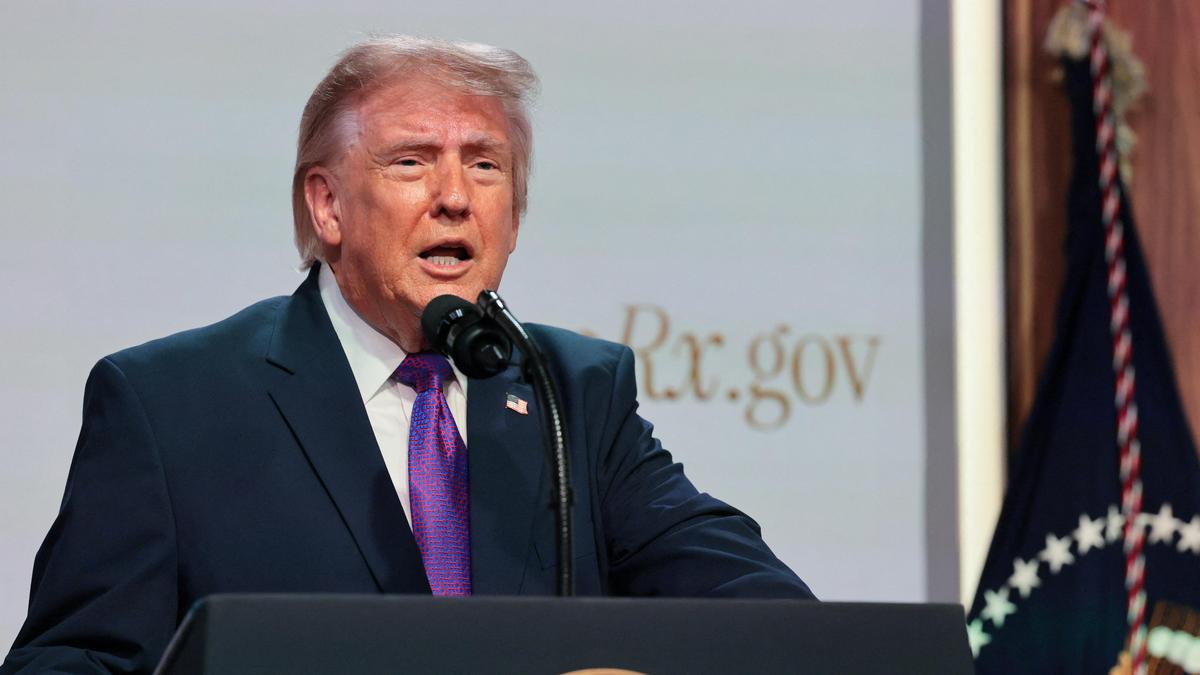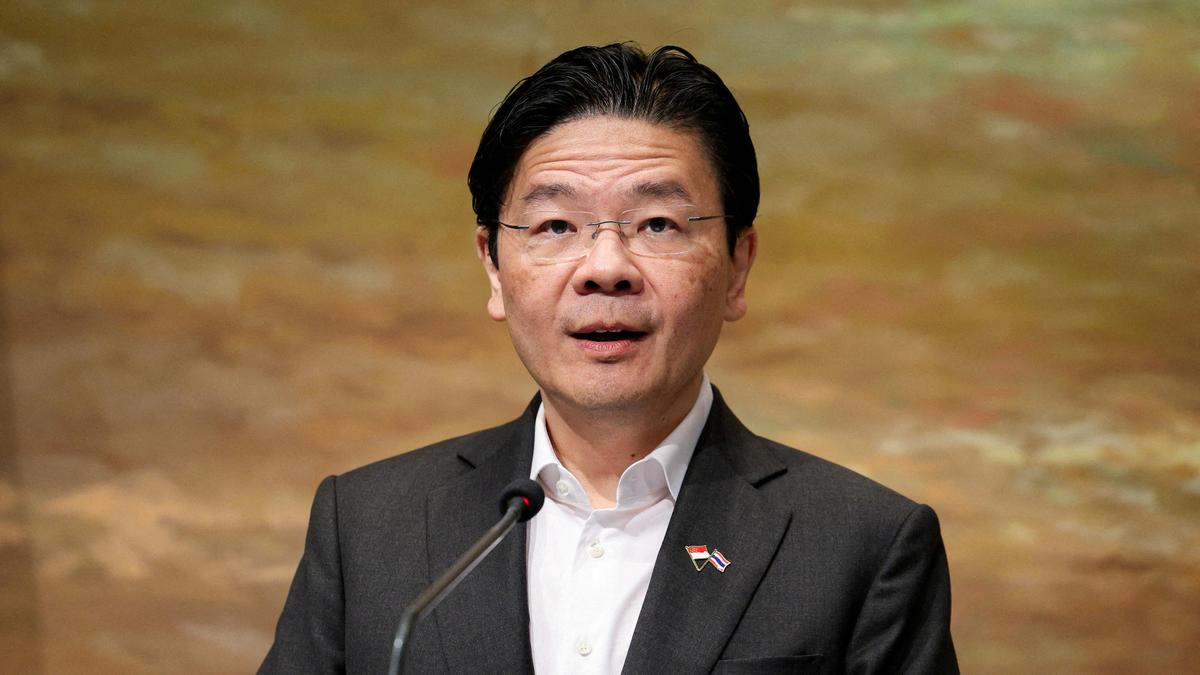




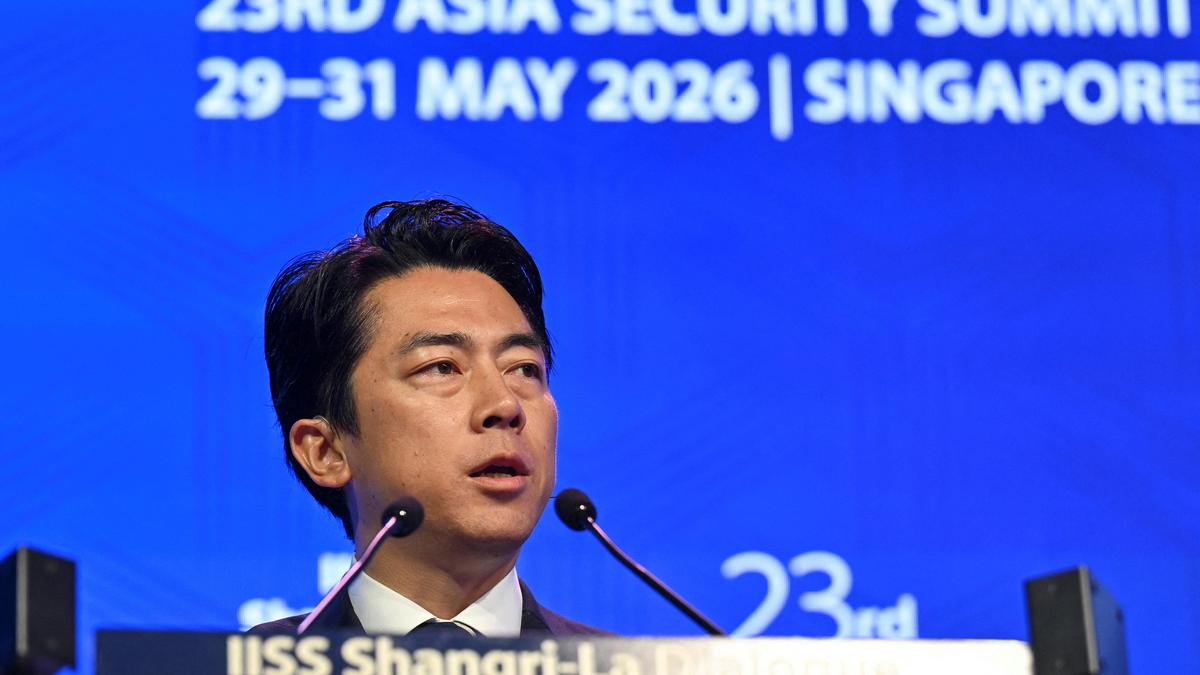
Shinjiro Koizumi, Japan’s defence minister, speaks at the Shangri-La Dialogue security summit in Singapore, on May 31, 2026.
| Photo Credit: Reuters
Japan’s Defence Minister took a veiled swipe at China on Sunday (May 31, 2026), pledging to keep strengthening the military despite Beijing’s criticism of Tokyo’s increasingly muscular security stance.
Under Prime Minister Sanae Takaichi, Japan has quickened its pivot towards a more proactive defence policy, further shaking off — with U.S. encouragement — its pacifist outlook in place since the end of World War II.

The change has drawn frequent rebukes from Beijing, which has accused Tokyo of following a reckless policy of “new militarism” that could destabilise the region.
Japanese Defence Minister Shinjiro Koizumi hit back on Sunday (May 31, 2026), saying “nothing could be further from the truth”.
“Think about it. There is a country that has a huge arsenal of nuclear weapons and strategic bombers,” Koizumi said at the annual Shangri-La Dialogue in Singapore.

“Japan has neither of such weapons. And yet, Japan is labelled (as) ‘new militarism’. Isn’t it strange?” he said, without mentioning China by name.
China is thought to possess hundreds of nuclear warheads and has been rapidly developing its military in recent years.
A diplomatic spat between the Asian rivals has been rumbling since Ms. Takaichi suggested in November that Japan might intervene militarily if China were to attempt to seize Taiwan, the self-ruled island that Beijing claims is part of its territory.
Mr. Koizumi said that China was expanding its military capabilities “without sufficient transparency” and that its military activities were “a matter of serious concern for Japan”.
Tokyo would “steadily build up its defence capabilities and make continuous updates with a high degree of transparency”, including in the fields of artificial intelligence, uncrewed systems as well as cyber and space defence, he said.
“Japan’s past as a peace-loving nation has been valued by the region and by international community. This fact will not be shaken by false claims, because it is a fact,” he said.
In a meeting with his Philippine counterpart Gilberto Teodoro, the two countries confirmed that Japan would aim to transfer Abukuma-class destroyers and TC-90 aircraft to the Southeast Asian nation during Japan’s fiscal year 2027, a Philippine statement said.
Manila has been eyeing the Abukuma-class vessels — which are being retired by Japan — for some time, with the military sending a contingent to examine them in 2025.
The countries have been deepening defence ties in the shadow of China’s naval ambitions, announcing that they will discuss intelligence sharing and open maritime border talks condemned by Beijing as an “illegal” violation of its expansive territorial claims.
The Shangri-La Dialogue is Asia’s top defence forum, bringing together security officials and experts from about 45 countries.
In contrast to Japan — and its ally the United States — China has sent a watered-down delegation that does not include its defence minister, Dong Jun, for the second year running.
Mr. Koizumi said he was “feeling sad that we were unable to have the opportunity to have a meeting this time”.
Published – May 31, 2026 10:45 am IST