


The Strait of Hormuz is no longer just a geopolitical flashpoint; it has become the fault line of the global energy economy. As tensions in West Asia continue to disrupt shipping through one of the world’s most critical maritime corridors, countries across the globe are confronting a harsh reality: energy security is now inseparable from geopolitics. For India, which depends on imports for the overwhelming majority of its crude oil needs, the crisis has exposed both the strength of recent policy interventions and the limits of shielding consumers indefinitely from market realities.
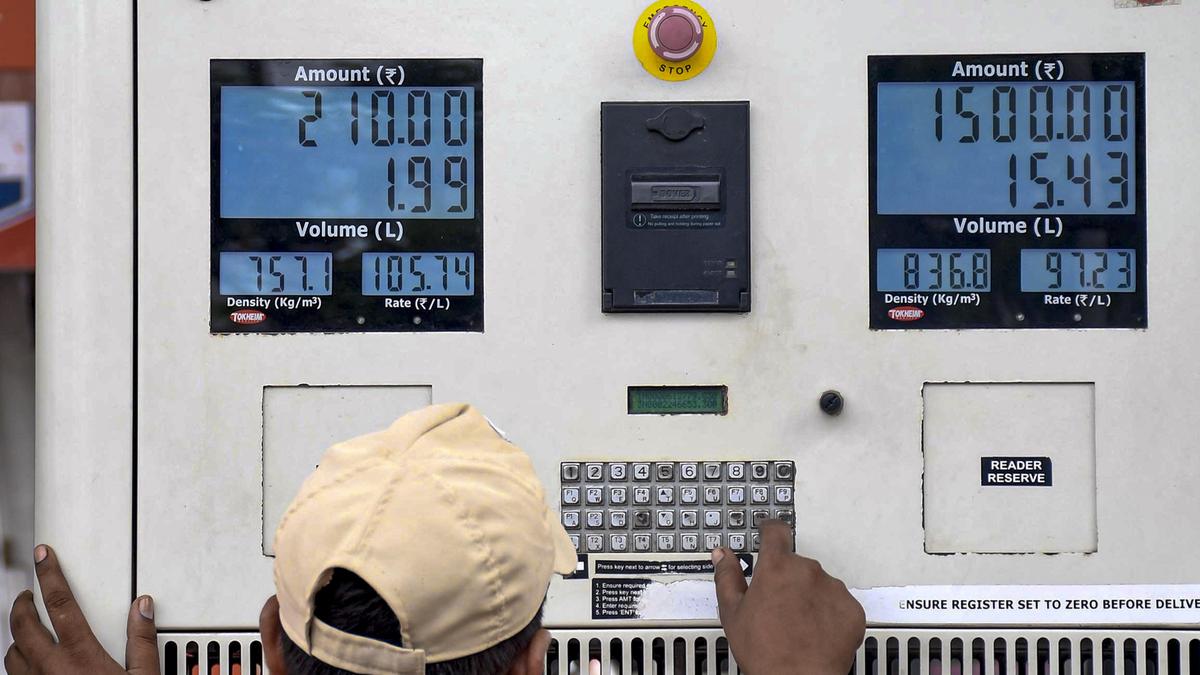
The immediate impact of the conflict has been visible in global crude markets. Brent prices have surged sharply amid fears of prolonged disruption to Gulf supplies, while freight costs and marine insurance premiums have climbed to multi-year highs. Shipping routes are being diverted around the Cape of Good Hope, extending delivery timelines by weeks and significantly increasing transportation expenses. Global gas markets, too, remain under pressure following disruptions linked to the shutdown of key liquefied natural gas export infrastructure in Qatar. Despite this turbulence, the crisis has not hit Indian consumers as ferociously as it should be so far. Petrol and diesel prices at Indian fuel pumps have remained relatively stable, hovering near ₹95 per litre in many cities, even as fuel prices in several advanced economies rose steeply, by about 25% on average. Petrol prices in Germany and the United Kingdom have crossed the equivalent of roughly ₹220 and ₹204 per litre, respectively, while Hong Kong continues to record some of the world’s highest fuel prices at nearly ₹291 per litre. This stability is not a coincidence. It has been achieved through an extraordinary combination of state intervention, supply diversification, and financial absorption by public sector oil companies.
Comment | India’s green transition still runs on coal
Interventions that come at a steep cost
Over the past few years, India has quietly built a more resilient energy architecture. The country expanded its sourcing basket beyond the Gulf, increased strategic reserves, and strengthened ties with suppliers in Russia, the United States, West Africa, and the Atlantic basin. Union Petroleum Minister Hardeep Singh Puri recently reiterated that India’s crude supply position remains secure despite disruptions around the Strait of Hormuz, pointing to the country’s growing ability to source oil from non-Gulf origins and maintain refinery throughput at high levels.
Taking advantage of the exit of the United Arab Emirates (UAE) from the Organization of the Petroleum Exporting Countries, India signed an agreement with the UAE to store 30 millions of crude oil in India’s Strategic Petroleum Reserve. The government’s response since the latest escalation has been swift. Refineries were directed to maximise LPG production to meet rising domestic demand, especially given the dramatic expansion of cooking gas access under the Ujjwala scheme. LPG connections in India have risen from roughly 14.5 crore in 2014 to more than 33 crore today, fundamentally transforming household energy consumption patterns. Gas allocation was prioritised for households, public transport networks, and fertilizer plants to avoid cascading disruptions across essential sectors. Domestic LPG production was reportedly increased by nearly 50% during the peak of the crisis response, while all 25 fertilizer plants continued receiving around 70% of their gas requirements to maintain agricultural supply chains. Naval deployments in the Gulf of Oman, diplomatic engagement with multiple countries, and efforts to secure alternative shipping arrangements underline how seriously India has treated the crisis. These measures have bought the country valuable time. But they have also come at a steep cost.
Also Read | Why India’s generation adequacy plan needs a clear counterfactual
Pressures on oil firms
India’s state-run Oil Marketing Companies (OMC) are now operating under enormous financial stress, selling fuel below market-linked costs in order to protect consumers from inflationary shocks. Mr. Puri recently indicated that under-recoveries could rise sharply if elevated crude prices persist, with some estimates placing daily losses near ₹700 crore-₹800 crore during peak volatility. The government has already reduced excise duties and imposed temporary export restrictions on refined fuels to retain supplies within the domestic market.
This strategy may be politically prudent in the short term, but is economically difficult to sustain over a prolonged period. Energy subsidies of this scale eventually strain public finances, weaken the balance sheets of oil companies, and distort market signals that encourage efficient energy consumption.
The larger challenge is that India’s vulnerability is structural, not temporary. Nearly every major sector of the economy — transport, logistics, aviation, manufacturing, agriculture, and fertilizers — remains heavily dependent on imported fossil fuels. Even if India succeeds in avoiding immediate shortages, it cannot remain permanently insulated from a prolonged global energy shock.
There are already signs that the government recognises this reality. Prime Minister Narendra Modi’s appeals for responsible energy use — including reducing unnecessary travel, conserving fuel, and encouraging remote work where feasible — reflect an administration preparing the public for a period of prolonged uncertainty. Such messaging would have seemed extraordinary only a few years ago. Today, it appears pragmatic. There is a strong argument for calibrated correction. India has managed inflation relatively effectively over the past decade compared to many major economies, creating some room for a measured increase in petroleum prices without triggering runaway inflation. Consumer Price Index inflation remained comparatively moderate in early 2026 — at around 3.2% to 3.5% through the first four months of the year — suggesting that limited price rationalisation may still be economically manageable. A gradual pass-through of global energy costs would reduce the fiscal burden on the state, stabilise oil marketing companies, and encourage more responsible consumption patterns.
For now, India has demonstrated remarkable agility in navigating one of the most serious energy disruptions in modern history. Supplies remain stable, panic has been avoided, and the government has managed to shield ordinary citizens from the worst immediate consequences.
Editorial | Unlearnt lessons: On India’s inadequate strategic petroleum and gas reserves
The realities of a new energy era
But energy shocks of this scale eventually demand economic realism. The true cost of fuel cannot be deferred forever. India’s challenge is no longer merely surviving the crisis; it is preparing the public and the economy for a world in which energy security will remain fragile, contested, and deeply political for years to come.
Recent reports suggest that Indian refiners continue to diversify sourcing aggressively even as global analysts warn that a prolonged Hormuz disruption could widen India’s fiscal deficit and weaken the rupee. That should serve as a reminder that the situation is not a temporary headline cycle. It marks the beginning of a new energy era — one in which resilience, diversification, and conservation will matter as much as diplomacy itself. The government has raised petroleum product prices several times, cumulatively by about 7%. Yet, this piecemeal approach neither matches international crude oil prices adequately nor meaningfully reduces the burden on OMCs. Reports suggest that OMCs continue to incur losses of ₹700 crore to ₹800 crore a day, and that only an additional 13% hike, beyond the existing 7%, would eliminate these losses. It has also been reported that the government has returned to adjusting fuel prices in line with fluctuations in international crude oil prices. However, frequent revisions create uncertainty for consumers trying to manage household and business budgets. Instead of incremental increases, the government should implement a one-time price hike of at least 13% on petroleum products, including petrol, diesel, and aviation turbine fuel. Such a move, though difficult, would reduce uncertainty, stabilise OMC finances, and allow prices to remain steady until there is a significant shift in global crude prices.
Thiruvannathapuram S. Ramakrishnan is a public policy expert
Published – May 27, 2026 12:56 am IST