


Skip to content
  • Facebook
  • X
  • Linkedin
  • WhatsApp
  • YouTube
  • Associate Journalism
  • About Us
  • Privacy Policy
  • 033-46046046
  • editor@artifex.news
Artifex.News

Artifex.News

Stay Connected. Stay Informed.

  • Breaking News
  • World
  • Nation
  • Sports
  • Business
  • Science
  • Entertainment
  • Lifestyle
  • Toggle search form
  • Australia’s “6mm Grass Plan” To Beat India In Adelaide Test, Pitch Curator’s Big Revelation
    Australia’s “6mm Grass Plan” To Beat India In Adelaide Test, Pitch Curator’s Big Revelation Sports
  • Reliance Industries approves bonus share issue in 1:1 ratio
    Reliance Industries approves bonus share issue in 1:1 ratio Business
  • PRIYA trial links teen B12 intake to long-term health in babies
    PRIYA trial links teen B12 intake to long-term health in babies Science
  • Minister’s assurance on Plus One seats brings relief to north Kerala students
    Minister’s assurance on Plus One seats brings relief to north Kerala students Nation
  • The Science Quiz | The science of spice and vice versa
    The Science Quiz | The science of spice and vice versa Science
  • Good Old Times As Rohit Sharma Bats With Ajinkya Rahane In Mumbai’s Ranji Trophy Session. Watch
    Good Old Times As Rohit Sharma Bats With Ajinkya Rahane In Mumbai’s Ranji Trophy Session. Watch Sports
  • What is the Extremely Large Telescope?
    What is the Extremely Large Telescope? Science
  • Gautam Gambhir Spoke ‘Absolute Nonsense’ About Sourav Ganguly: Ex-Teammate Accuses. This Was Dada’s Reply
    Gautam Gambhir Spoke ‘Absolute Nonsense’ About Sourav Ganguly: Ex-Teammate Accuses. This Was Dada’s Reply Sports
Whole body scans: why investors love them but doctors hate them

Whole body scans: why investors love them but doctors hate them

Posted on May 23, 2026 By admin


When doctors express scepticism about whole-body scanning, a predictable counter-argument surfaces on social media within hours. Physicians, the theory goes, have a vested interest in keeping you undiagnosed. Healthy patients don’t fill hospital beds. Early detection threatens the treatment economy and the doctor is the last person you should trust to tell you whether to scan. It is a compelling narrative.

It is also precisely backwards.

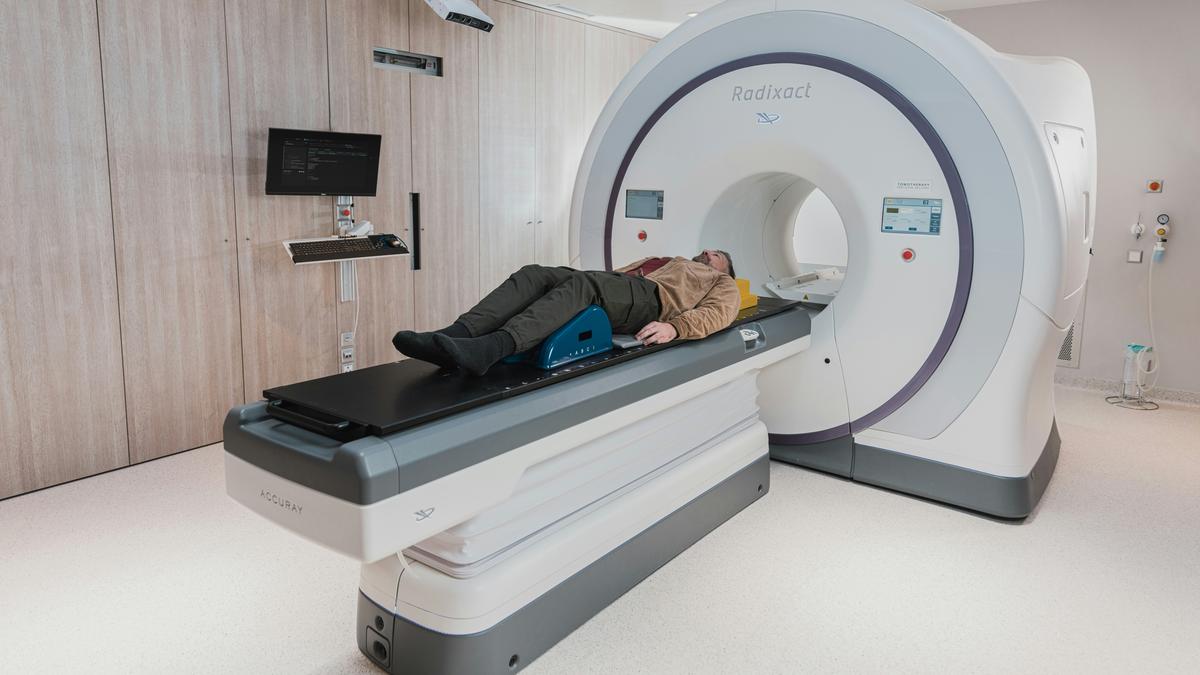
India now has a rapidly growing market for direct-to-consumer body scanning. Providers offer packages combining ultra-low-dose CT, full-body MRI, DEXA scans, blood biomarkers, and AI-generated health scores — all without a clinical referral, all marketed to urban professionals who want to know if something is wrong before a health calamity hits. The incentive structure is not to keep you healthy and out of the system. It is to bring you into a parallel one, charge you at the door, and generate findings that justify further investigation.

The metric these companies report is the number of abnormalities identified — not disease states confirmed, not findings that were clinically actionable, not conditions that required treatment. No company publishes outcome data showing their customers live longer. Yet all are growing rapidly.

The public conspiracy theory gets the incentives wrong in another way, too. When a scan returns an ambiguous finding — a nodule, a cyst or a vascular irregularity, say — the patient does not stay home. They see specialists, undergo follow-up imaging, possibly biopsies, occasionally surgery. Every step generates clinical revenue. The scanning industry does not threaten the treatment economy; it feeds it.

What the evidence says

Earlier this month, two radiologists from leading American universities published an editorial in JAMA making the profession’s collective unease plain. Elective whole-body MRI screening lacks evidence of mortality or quality-of-life benefit and may cause harm through overdiagnosis, unnecessary procedures, and psychological distress. No major medical society recommends it for the general population.

But despite a similar warning three years prior, the commercial sector has only grown. Roughly three in ten people who undergo these scans will require follow-ups, most of which will resolve in a finding that needs no treatment.

Patients who enter the scanner feeling well leave feeling like patients, anchored to findings of uncertain significance that may shadow them for years. In effect, the scan has not caught a disease. It has manufactured a worry. This is the paradox at the heart of the industry.

Medicine has always known that oversimplification provides only temporary relief. It does not resolve uncertainty. Anxiety rooted in the complexity of the body cannot be treated with a protocol that flattens that complexity into a single report.

Double-edged sword

The standard criticism of whole-body scanning is overdiagnosis, i.e. detecting conditions that would never have caused harm. But there is an opposite failure as well. Covering the entire body in a clinically acceptable scan time requires compromises. Sequences are chosen for breadth, not precision. A dedicated brain MRI with sequences tuned for cerebral arteries is a fundamentally different investigation from the neurological portion of a whole-body scan. One is optimised for what it is looking at. The other is optimised for coverage.

There is currently an active malpractice case in which a patient received a clean whole-body MRI report and suffered a deadly stroke months later. Independent neurologists have alleged that significant narrowing of a major cerebral artery was present but undocumented — i.e. it was treatable but the scan had missed it. The defendants deny the allegations. Whatever the case’s legal outcome, it raises a question the industry has not answered: when a whole-body scan tells you nothing is wrong, what exactly has been excluded, and with what confidence?

Any test’s usefulness depends almost entirely on whom it is applied to. A test that is 95% sensitive and 95% specific applied to a population of 10,000, where true disease prevalence is 1%, will generate roughly five false positives for every genuine finding. This is the pre-test probability: the likelihood that disease is present before any test is ordered, estimated from symptoms, history, and risk factors. In a healthy, self-selected population, that probability is lower for nearly everything the scanner is looking for. An industry built on scanning the well is, by definition, built on this gap.

Overdiagnosis trap

There is a third failure: finding conditions that are real, accurately identified, and still best left undiscovered. Not all diseases require treatment. Autopsy studies from Finland found occult papillary thyroid cancers in up to 36% of adults who died of entirely unrelated causes — tumours that would never have surfaced clinically. In South Korea, fee-for-service providers began offering thyroid ultrasound as a cheap add-on to government cancer screening visits, though it was never part of official policy.

Thyroid cancer diagnoses rose fifteen-fold between 1993 and 2011. Surgical rates followed. Yet mortality did not budge. Tens of thousands underwent thyroidectomies and acquired lifelong hypothyroidism for a disease that was never going to shorten their lives. The pattern recurs in prostate and kidney cancer. Detecting subclinical disease and treating it is not always medicine — sometimes it is the harm.

Where the evidence points

The U.S. National Lung Screening Trial showed that annual low-dose CT reduced lung cancer deaths by roughly 20% compared with chest X-ray in a tightly defined population of heavy smokers. The Dutch-Belgian NELSON trial found a similar benefit against no screening at all. Cardiac calcium scoring carries guideline endorsement from major cardiology societies for adults at intermediate cardiovascular risk, where it resolves genuine uncertainty about whether to start statin therapy.

What all these checks share is specificity: a well-defined disease, a well-defined population, and a protocol built to answer a particular clinical question.

Scanning everyone for everything simultaneously answers no question well. The doctors raising concerns are not protecting a treatment monopoly. They are asking for the same standard applied to any other medical intervention: evidence that the thing being sold actually helps the people buying it. That is not a conflict of interest. It’s the job.

Narayana Subramanian is Lead Consultant, Head and Neck Surgery and Oncology, Aster Hospitals, and Adjunct Faculty, Indian Institute of Science, Bengaluru.

Published – May 28, 2026 07:30 am IST



Source link

Science

Post navigation

Previous Post: Dog brains shrank significantly by 5,000 years ago, thanks to humans
Next Post: Dheeraj murder accused Nikhil Paily nominated to Idukki District Congress Committee

Related Posts

  • Indian scientists build breakthrough gene-editor, aim for patent
    Indian scientists build breakthrough gene-editor, aim for patent Science
  • How do airbags work? – The Hindu
    How do airbags work? – The Hindu Science
  • Peter Higgs, whose success as a physicist depends on whom you ask
    Peter Higgs, whose success as a physicist depends on whom you ask Science
  • INSAT-3DS commences Earth imaging operations
    INSAT-3DS commences Earth imaging operations Science
  • The Science Quiz: Happy Children’s Day
    The Science Quiz: Happy Children’s Day Science
  • India-made typhoid vaccine efficacy lasts for four years: study
    India-made typhoid vaccine efficacy lasts for four years: study Science

More Related Articles

Inside a scientific experiment that transformed skin cells into embryo-forming eggs Inside a scientific experiment that transformed skin cells into embryo-forming eggs Science
Moon was formed around 4.51 billion years ago: study Moon was formed around 4.51 billion years ago: study Science
Why did menopause evolve? New study of whales gives some clues Why did menopause evolve? New study of whales gives some clues Science
Invasive species may be the wrong enemy in a changing subcontinent Invasive species may be the wrong enemy in a changing subcontinent Science
How do we know climate science is credible? How do we know climate science is credible? Science
Anxiety is faced by 58 genetic variants, not single gene, says study Anxiety is faced by 58 genetic variants, not single gene, says study Science
SiteLock

Archives

  • May 2026
  • April 2026
  • March 2026
  • February 2026
  • January 2026
  • December 2025
  • November 2025
  • October 2025
  • September 2025
  • August 2025
  • July 2025
  • June 2025
  • May 2025
  • April 2025
  • March 2025
  • February 2025
  • January 2025
  • December 2024
  • November 2024
  • October 2024
  • September 2024
  • August 2024
  • July 2024
  • June 2024
  • May 2024
  • April 2024
  • March 2024
  • February 2024
  • January 2024
  • December 2023
  • November 2023
  • October 2023
  • September 2023
  • August 2023
  • July 2023
  • June 2023
  • May 2023
  • April 2023
  • March 2023
  • February 2023
  • January 2023
  • December 2022
  • November 2022
  • October 2022
  • September 2022
  • August 2022
  • July 2022
  • June 2022
  • May 2022

Categories

  • Business
  • Nation
  • Science
  • Sports
  • World

Recent Posts

  • Karnataka CM Siddaramaiah resigns, but won’t budge from State politics
  • Thailand court acquits progressive political leader Thanathorn on charges of royal defamation
  • Four Indians in ICC’s all-female panel of match officials for Women’s T20WC
  • Indian national living illegally in U.S. held by Federal authorities for ‘assaulting man with baseball bat’
  • Congress leader slams NDA over delay in completion of Cabinet formation in Puducherry

Recent Comments

  1. PatrickFek on UP Teacher Who Asked Students To Slap Muslim Classmate
  2. WesleyCow on UP Teacher Who Asked Students To Slap Muslim Classmate
  3. BradyNar on UP Teacher Who Asked Students To Slap Muslim Classmate
  4. EdwardRouct on UP Teacher Who Asked Students To Slap Muslim Classmate
  5. Georgelaf on UP Teacher Who Asked Students To Slap Muslim Classmate
  • Access Denied
    Access Denied Nation
  • Access Denied
    Access Denied Nation
  • Access Denied
    Access Denied Nation
  • Manmohan Singh Blended Growth With Green Goals
    Manmohan Singh Blended Growth With Green Goals Nation
  • Access Denied
    Access Denied Nation
  • Access Denied Sports
  • Access Denied
    Access Denied Nation
  • Thief Returns Valuables After Realising House Belonged To Renowned Poet
    Thief Returns Valuables After Realising House Belonged To Renowned Poet Nation

Editor-in-Chief:
Mohammad Ariff,
MSW, MAJMC, BSW, DTL, CTS, CNM, CCR, CAL, RSL, ASOC.
editor@artifex.news

Associate Editors:
1. Zenellis R. Tuba,
zenelis@artifex.news
2. Haris Daniyel
daniyel@artifex.news

Photograher:
Rohan Das
rohan@artifex.news

Artifex.News offers Online Paid Internships to college students from India and Abroad. Interns will get a PRESS CARD and other online offers.
Send your CV (Subjectline: Paid Internship) to internship@artifex.news

Links:
Associate Journalism
About Us
Privacy Policy

News Links:
Breaking News
World
Nation
Sports
Business
Entertainment
Lifestyle

Registered Office:
72/A, Elliot Road, Kolkata - 700016
Tel: 033-22277777, 033-22172217
Email: office@artifex.news

Editorial Office / News Desk:
No. 13, Mezzanine Floor, Esplanade Metro Rail Station,
12 J. L. Nehru Road, Kolkata - 700069.
(Entry from Gate No. 5)
Tel: 033-46011099, 033-46046046
Email: editor@artifex.news

Copyright © 2023 Artifex.News Newsportal designed by Artifex Infotech.