
Skip to content
  • Facebook
  • X
  • Linkedin
  • WhatsApp
  • YouTube
  • Associate Journalism
  • About Us
  • Privacy Policy
  • 033-46046046
  • editor@artifex.news
Artifex.News

Artifex.News

Stay Connected. Stay Informed.

  • Breaking News
  • World
  • Nation
  • Sports
  • Business
  • Science
  • Entertainment
  • Lifestyle
  • Toggle search form
  • “How Do We Maintain Composure…”: As Virat Kohli Mania Grips Delhi In Ranji Trophy, Rival Captain’s Honest Feedback
    “How Do We Maintain Composure…”: As Virat Kohli Mania Grips Delhi In Ranji Trophy, Rival Captain’s Honest Feedback Sports
  • S Jaishankar Meets US Congressional Delegation, Hails Their Support For Strategic Ties
    S Jaishankar Meets US Congressional Delegation, Hails Their Support For Strategic Ties Nation
  • Manufacturing PMI at 2-year low in December 2025 on easing new orders, output and employment
    Manufacturing PMI at 2-year low in December 2025 on easing new orders, output and employment Business
  • Access Denied
    Access Denied Nation
  • North Korea launches ballistic missiles toward the sea after U.S. flies bomber during drills
    North Korea launches ballistic missiles toward the sea after U.S. flies bomber during drills World
  • 81-Year-Old US Man, Confused After Scam Call, Shoots Dead Uber Driver
    81-Year-Old US Man, Confused After Scam Call, Shoots Dead Uber Driver World
  • Access Denied Sports
  • Russia Adds Nobel Prize Winning Journalist Dmitry Muratov To List Of ‘Foreign Agents’
    Russia Adds Nobel Prize Winning Journalist Dmitry Muratov To List Of ‘Foreign Agents’ World
Should the rupee be left to depreciate?

Should the rupee be left to depreciate?

Posted on May 21, 2026 By admin


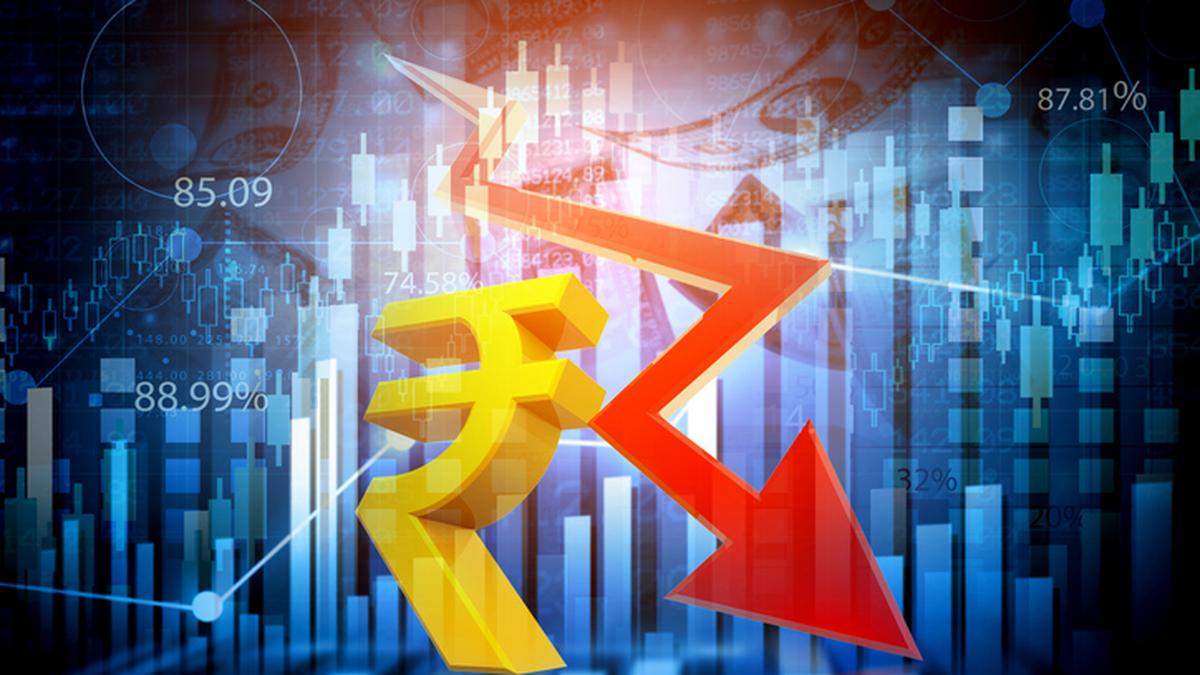
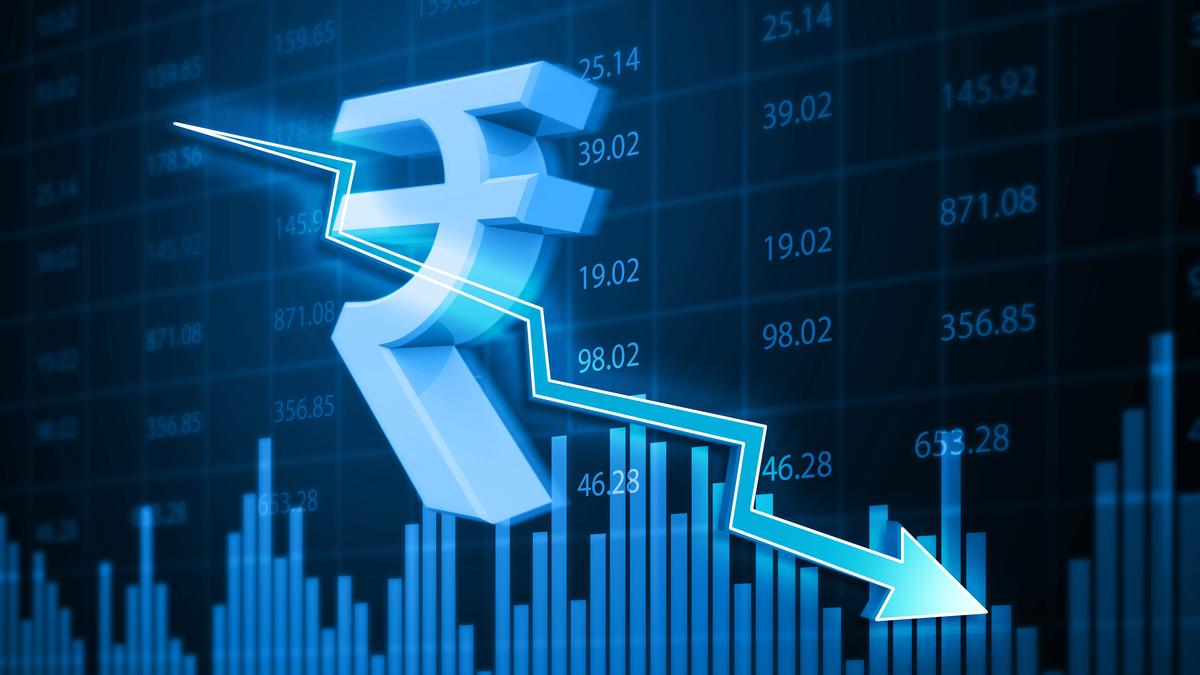
Continuous days of sustained losses has seen the rupee close at almost ₹97 to the dollar, with no indication that the slide has been arrested. Rising oil prices and the threat of external inflation will put further pressure on the rupee in the days to come. This has prompted calls for intervention to prevent further falls.

Some writers, like Harvard professor Gita Gopinath, have resisted calls for intervention by the RBI, advocating for letting the rupee find its own level. A weaker rupee would automatically curtail imports and boost exports. Intervention would only obstruct the free flow of market forces.

While intervention does have its challenges, there is danger in letting the process of depreciation continue unabated, especially when much of it is being driven by speculative finance. With foreign interest rates bound to rise, capital will flow out faster, leading to stronger negative pressures on the rupee. In such a scenario, it might take inordinately long for the rupee to ‘find its level’, and the inflationary dangers of a weak rupee will exert even more stresses on a populace already exposed to hardship as a result of worldwide spikes in energy prices.

Can intervention deepen volatility?

A current account deficit implies more imports than exports, and hence a greater need for foreign currency. If this is adequately met by foreign capital inflow to purchase assets like stocks, the rupee’s value relative to the dollar will not change.

If the economy experiences a deficit without sufficient inflow of foreign capital, it faces a problem, with demand for foreign exchange exceeding available supply. Mainstream models dictate that in such a situation, the rupee must depreciate. The weaker rupee makes exports more affordable and imports more expensive, leading to an automatic adjustment of the current account deficit relative to the available inflow of foreign capital.

In such a scenario, intervening to artificially prop up the value of the rupee only delays the inevitable. It inhibits adjustment by ensuring import demand does not fall, because the rupee has not depreciated enough to naturally shut off higher import demand, the cause of the widening deficit in the first place.

What is the difference between a weak rupee and a falling rupee?

Arguments for non-intervention, however, conflate a falling rupee with a weak rupee. A fall in the rupee value would not automatically increase export demand if the market expects a further fall. Exports might be higher when the rupee is weak, but may not rise when the rupee is falling if foreign buyers expect the price to fall even further and for goods to become cheaper at a later date.

At the same time, if the economy imports essential goods like oil, demand may not automatically reduce sufficiently as the rupee falls. If people expect the rupee to fall further, and for the prices to rise even more tomorrow, they may front-load purchases today and increase import demand in the short run. This can be seen in the rush to buy petrol when prices were raised, as consumers expected further increases in the future.

A falling rupee would see higher import values, but no necessary increase in exports, ensuring that the deficit is not curtailed. The very problem that required a depreciation might just perpetuate itself. One might argue that exports would pick up and imports reduce when the process eventually works itself out. But the adjustment process is rarely painless. Rising import values of essential goods will lead to rising inflation in the domestic economy that has already experienced reverse migration and real wage squeezes.

What is the role of capital flows?

For the sake of argument, one can posit an equilibrium value of the rupee driven by fundamental values, such as export and import demands that exhibits uniform and predictable behaviour as the rupee changes value. The process may be long, but the economy might eventually settle at this value, driven by fundamental changes in the current account. However, this assumption neglects the role of speculative foreign capital.

Much of the fall in the rupee has been driven by speculative outflows of foreign institutional investment that, for whatever reason, does not see Indian assets as being sufficiently remunerative. Perhaps investors think returns on Indian stocks will not be high in the future, that growth is not sustainable, or that interest rates will rise in developed country markets. Whatever the reason, these speculative expectations of foreign investors can lead to capital outflow and depreciation, necessitating current account adjustments based on the sentiments of foreign investors.

In such a situation, the ‘actual’ value of the rupee is determined not by consumption demand but by speculation. There are no fundamentals or technical values underpinning the pure speculation of financial markets. With indications that foreign Central Banks may soon raise interest rates, the rupee could come under further pressure.

Intervention is one amongst many policies that must be considered, and one that even developed economies have resorted to. As the yen slid against the dollar in April this year, Japanese Finance Minister Satsuki Katayama signalled that the government would take ‘decisive action’ in financial markets to maintain the yen. This announcement did lead to the yen recovering some losses initially after the announcement, though it continues to lose ground due to limited actual intervention.

Intervention to stem speculative capital flows is extremely hard to manage, and can lead to negative outcomes if the force of speculation is too great, or if governments do not – or cannot – show enough commitment in markets. However, we must not assume that the rupee can find an equilibrium value soon, for its fall is being driven by speculation rather than any fundamental economic behaviour. It is time to have a serious conversation regarding the role and place of foreign capital in India’s growth story. 

(Rahul Menon is associate professor at O.P. Jindal Global University.)

Published – May 22, 2026 07:30 am IST


Source link

Business Tags:current account deficit, Depreciation, inflation, rupee

Post navigation

Previous Post: India great partner, ready to expand energy cooperation: Rubio
Next Post: IT-based skill training launched for inmates at Visakhapatnam Central Jail

Related Posts

  • Access Denied
    Access Denied Business
  • Access Denied Business
  • Daily working hours allowed to go up from 9 to 10 hours in Maharashtra’s private sector as State cabinet plans to amend laws
    Daily working hours allowed to go up from 9 to 10 hours in Maharashtra’s private sector as State cabinet plans to amend laws Business
  • India’s Russian oil imports at 6-month high in November 2025, U.S. imports jump too
    India’s Russian oil imports at 6-month high in November 2025, U.S. imports jump too Business
  • Panasonic India Chairman Manish Sharma steps down after leading company for 13 years
    Panasonic India Chairman Manish Sharma steps down after leading company for 13 years Business
  • This Website Lets You Access Jeffrey Epstein’s Mails With Elon Musk, Bill Gates And Others Business

More Related Articles

Government to launch focused scheme for footwear, leather sectors: Sitharaman Government to launch focused scheme for footwear, leather sectors: Sitharaman Business
Rupee falls 14 paise to close at all-time low of 85.08 against U.S. dollar Rupee falls 14 paise to close at all-time low of 85.08 against U.S. dollar Business
Access Denied Business
Reliance seeks premium for oil from KG block Reliance seeks premium for oil from KG block Business
Uday Kotak resigns as CEO of Kotak Mahindra Bank Uday Kotak resigns as CEO of Kotak Mahindra Bank Business
Petrol, diesel sales fall as monsoon ebbs demand Petrol, diesel sales fall as monsoon ebbs demand Business
SiteLock

Archives

  • May 2026
  • April 2026
  • March 2026
  • February 2026
  • January 2026
  • December 2025
  • November 2025
  • October 2025
  • September 2025
  • August 2025
  • July 2025
  • June 2025
  • May 2025
  • April 2025
  • March 2025
  • February 2025
  • January 2025
  • December 2024
  • November 2024
  • October 2024
  • September 2024
  • August 2024
  • July 2024
  • June 2024
  • May 2024
  • April 2024
  • March 2024
  • February 2024
  • January 2024
  • December 2023
  • November 2023
  • October 2023
  • September 2023
  • August 2023
  • July 2023
  • June 2023
  • May 2023
  • April 2023
  • March 2023
  • February 2023
  • January 2023
  • December 2022
  • November 2022
  • October 2022
  • September 2022
  • August 2022
  • July 2022
  • June 2022
  • May 2022

Categories

  • Business
  • Nation
  • Science
  • Sports
  • World

Recent Posts

  • Ahead of SIR, 75% of voters mapped with 2003 rolls in Jharkhand: CEO
  • Lens lift French Cup for the first time after beating Nice in final
  • Rain in parts of Delhi, strong winds bring respite from heat
  • UN nuclear non-proliferation talks fail
  • Trump weighs fresh Iran strikes, says report | LIVE

Recent Comments

  1. Rogershavy on UP Teacher Who Asked Students To Slap Muslim Classmate
  2. LeroyClins on UP Teacher Who Asked Students To Slap Muslim Classmate
  3. CyrusKikem on UP Teacher Who Asked Students To Slap Muslim Classmate
  4. Michaeldix on UP Teacher Who Asked Students To Slap Muslim Classmate
  5. RobertLet on UP Teacher Who Asked Students To Slap Muslim Classmate
  • “Team Takes Precedence Over Natural Game”: Coach Gautam Gambhir’s Stern Message
    “Team Takes Precedence Over Natural Game”: Coach Gautam Gambhir’s Stern Message Sports
  • Crystal Meth Worth Rs 180 Crore Seized From Madurai Station, Chennai Dump Yard, Couple Detained
    Crystal Meth Worth Rs 180 Crore Seized From Madurai Station, Chennai Dump Yard, Couple Detained Nation
  • Access Denied World
  • Virat Kohli’s Big Captaincy ‘Decision’ Ahead Of Ranji Trophy Return, Hits Nets With Delhi Team
    Virat Kohli’s Big Captaincy ‘Decision’ Ahead Of Ranji Trophy Return, Hits Nets With Delhi Team Sports
  • Droupadi Murmu Completes 2 Years As President, Becomes Teacher For A Day
    Droupadi Murmu Completes 2 Years As President, Becomes Teacher For A Day Nation
  • Access Denied
    Access Denied Nation
  • Access Denied
    Access Denied Nation
  • IPL-17 | Shubman Gill has embraced captaincy, he’ll learn to make tactical decisions: Gary Kirsten
    IPL-17 | Shubman Gill has embraced captaincy, he’ll learn to make tactical decisions: Gary Kirsten Sports

Editor-in-Chief:
Mohammad Ariff,
MSW, MAJMC, BSW, DTL, CTS, CNM, CCR, CAL, RSL, ASOC.
editor@artifex.news

Associate Editors:
1. Zenellis R. Tuba,
zenelis@artifex.news
2. Haris Daniyel
daniyel@artifex.news

Photograher:
Rohan Das
rohan@artifex.news

Artifex.News offers Online Paid Internships to college students from India and Abroad. Interns will get a PRESS CARD and other online offers.
Send your CV (Subjectline: Paid Internship) to internship@artifex.news

Links:
Associate Journalism
About Us
Privacy Policy

News Links:
Breaking News
World
Nation
Sports
Business
Entertainment
Lifestyle

Registered Office:
72/A, Elliot Road, Kolkata - 700016
Tel: 033-22277777, 033-22172217
Email: office@artifex.news

Editorial Office / News Desk:
No. 13, Mezzanine Floor, Esplanade Metro Rail Station,
12 J. L. Nehru Road, Kolkata - 700069.
(Entry from Gate No. 5)
Tel: 033-46011099, 033-46046046
Email: editor@artifex.news

Copyright © 2023 Artifex.News Newsportal designed by Artifex Infotech.