



Skip to content
  • Facebook
  • X
  • Linkedin
  • WhatsApp
  • YouTube
  • Associate Journalism
  • About Us
  • Privacy Policy
  • 033-46046046
  • editor@artifex.news
Artifex.News

Artifex.News

Stay Connected. Stay Informed.

  • Breaking News
  • World
  • Nation
  • Sports
  • Business
  • Science
  • Entertainment
  • Lifestyle
  • Toggle search form
  • G20 Sherpa Lists Hard Work Behind Delhi Consensus
    G20 Sherpa Lists Hard Work Behind Delhi Consensus Nation
  • Access Denied Sports
  • Tata Motors introduces all-new Winger Plus at ₹20.60 lakh 
    Tata Motors introduces all-new Winger Plus at ₹20.60 lakh  Business
  • Access Denied
    Access Denied Nation
  • Access Denied World
  • Hardik Pandya Shares Wholesome Video With Son Agastya On Father’s Day. Fans React – Watch
    Hardik Pandya Shares Wholesome Video With Son Agastya On Father’s Day. Fans React – Watch Sports
  • Top 10 Guinness World Records Broken In 2024
    Top 10 Guinness World Records Broken In 2024 World
  • Shubman Gill, and the evolution of a batter and captain
    Shubman Gill, and the evolution of a batter and captain Sports
Improving efficiency of fertilizer use in India

Improving efficiency of fertilizer use in India

Posted on May 19, 2026 By admin


The ongoing war in West Asia and the rising costs of fuel and fertilizers give India an opportunity to enhance fertilizer use efficiency and moderate demand. India produces 80% of its urea requirement domestically and imports the rest while also boosting domestic production capacities to become fully self-reliant. But India’s urea industry relies too heavily on imported fuel. While green ammonia produced from the electrolysis of water using solar energy is an option, it is not sustainable in water-stressed areas. The situation is worse for phosphatic fertilizers, as India lacks mineral rock phosphate and therefore has to import such fertilizers almost entirely.

Together, both the nitrogen (mostly urea) and phosphorus components of fertilizers define India’s food security. While the government has been enhancing subsidies to maintain fertilizer prices for farmers, over two-thirds of the ₹2 lakh crore spent on annual subsidies is not harvested as food, and is lost to pollution.

The fertilizer trap

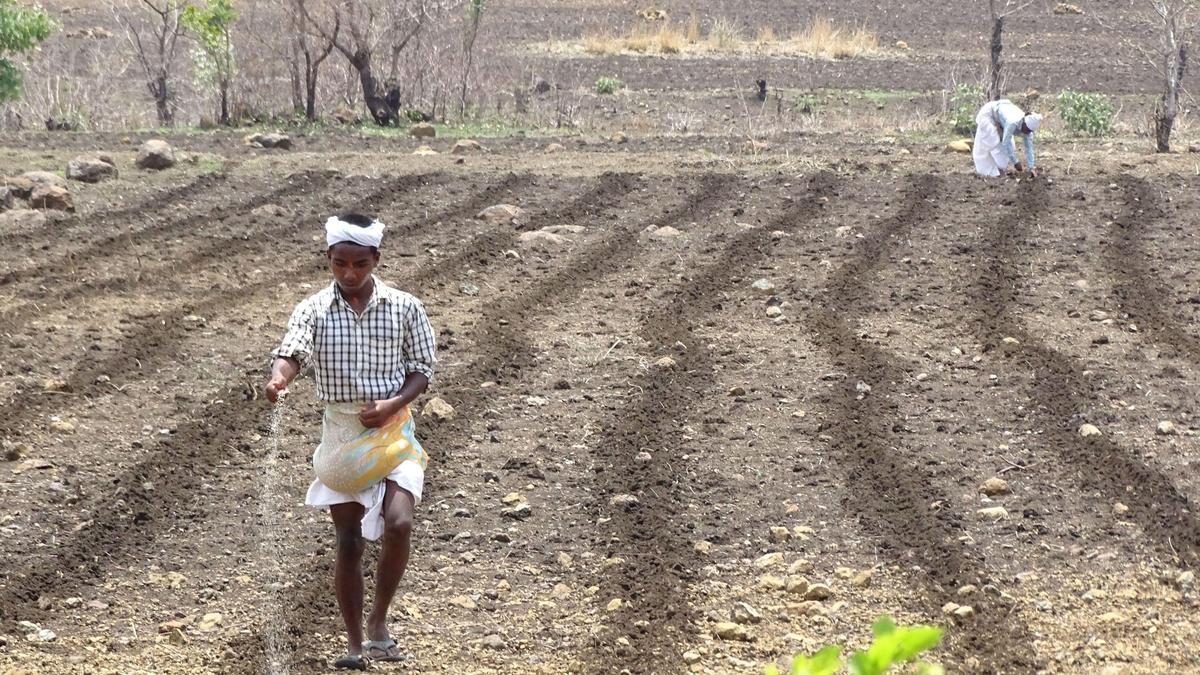
Inefficient, excessive or unbalanced use of fertilizer nutrients not only wastes money but also damages the soil, water, air, human health, biodiversity, and causes climate change and global warming. The more fertilizers we use, the more they deplete the soil’s organic matter and its holding capacity for water and nutrients, threatening crop yields and pushing farmers to add more fertilizers. This ‘fertilizer trap’ explains why India’s national demand for fertilizers never saturates, even as supply has increased over the decades.

Therefore, it is high time to move beyond supply side management and boost fertilizer use efficiency to moderate demand. Efficiency means producing more crop per kg of fertilizer used, or maintaining yields while reducing fertilizer input. The government’s ‘nutrient-based subsidy’ did not improve efficiencies or reduce demand as urea was not included in the scheme. While neem-coated urea was meant to improve nitrogen-use efficiency, it could not stop the loss of most of the urea as ammonia to air pollution.

Similarly, most of the phosphatic fertilizers are also lost to water pollution.

Lack of coordination

While pulses, other leguminous cover crops, manures, composts and biochar could reduce fertilizers to a large extent, they are no longer the mainstay of our farming systems. Last month, the Union government directed the State governments to promote green manure but did not emphasise on fertilizer savings.

In November 2017, the Prime Minister had, in his Man ki Baat address to the nation, called for halving fertilizer usage within five years. However, fertilizer consumption has only increased due to the lack of inter-ministerial and interdepartmental coordination to address farming systems in an integrated manner. For example, though the government announces Minimum Support Prices (MSPs) for over 20 crops, actual government procurement is limited to rice, wheat and sugarcane, which is why farmers prefer to grow only these three crops. These crops consume over two-thirds of all the urea in India. This destroys traditional crop rotations involving pulses/legumes and pushes farmers into the fertilizer trap.

As a result, we produces twice the amount of rice we needs for domestic consumption. Of this, India exports 40% and diverts another 9% to the fermentation industry to produce bioethanol for blending with petrol. We also produce more sugarcane and wheat than what we need. India accounts for 4% of the global export of wheat and sugarcane. The country needs to disincentivise grain-based bioethanol and allow only molasses or wasted biomass to be fermented to prevent food versus fuel competition for land, water, fertilizers and subsidies.

Pulse-cereal rotations sustained agriculture for thousands of years before fertilizers were invented, as most pulses leave behind some of the fixed nitrogen in the soil for the next crop. The only legume whose production grew significantly with low urea is soybean, but it does not leave behind any fixed nitrogen for the next crop. India must incentivise pulses/legume-based crop rotations or multicropping, as legumes fix atmospheric nitrogen, and need no urea or only 10% of the urea used for cereals. They are also ideal for rain-fed areas facing deficit monsoons (as predicted this year).

Further, India badly needs pulses to address its chronic protein malnutrition. India has the world’s largest vegetarian population dependent on pulses for protein. Yet, cereal-centric policies caused a shortage of pulses, as their cultivation has declined, stagnated, or shifted to marginal lands affecting yields. Telangana has witnessed a halving of its pulses production since its Statehood. Today the country imports about 20% of its pulses. Shifting 20% of rice area to pulses can save urea, water and malnutrition.

The Dalhan Aatmanirbharta Mission launched in October 2025 promised 100% procurement of Tur, Urad, and Masoor at MSP for four years. Under it, ₹11,440 crore was allocated to scale up production to 350 lakh tonnes per year in five years by expanding the area under cultivation. But according to the April 2026 data released by the government, the area for sowing pulses grew only 1.26% over last year. This is negligible compared to the 10% fall in area between 2021-22 to 2024-25. Groundnut sowing increased by mere 1.3%, indicating that leguminous oilseeds fare no better. This calls for better implementation, as recommended by the Supreme Court in March.

Enhancing efficiency

India must also triple the recycling of manure, compost and biochar (residue from biogas plants) to replace fertilizers and boost soil health. Fertilizer recommendations need to be revised in order to ensure that organics form the basal dose and fertilizers are used only as a top-up to meet any shortfall, after exhausting all locally available organic sources. Coordinated crop trials across India showed that upto half of the recommended doses of fertilizers can be replaced with manure, biochar or compost with no loss of crop yield.

There should also be investment when it comes to alternatives for efficient nitrogen/phosphorus sources for crop improvement. The adoption of an improved but existing variety is what the farmer needs — not fancy capital-intensive technologies or drones. India’s own research shows that the rice germplasm alone has the potential to double nitrogen use efficiency, in terms of grain yield per unit urea supplied. To ensure the inter-sectoral coordination required to implement the above, the Union government should revive the Interministerial National Nitrogen Steering Committee. Its tenure expired before any of its recommendations were acted upon.

Nandula Raghuram is Professor and Founder, Centre for Sustainable Nitrogen and Nutrient Management, Guru Gobind Singh Indraprastha University, New Delhi, President, Sustainable India Trust and Society for Conservation of Nature, New Delhi, and Emeritus Chair, International Nitrogen Initiative. Views expressed are personal

Published – May 19, 2026 01:14 am IST



Source link

Science Tags:India fertilizer use, Land, Soil organic matter

Post navigation

Previous Post: ‘Offer prayers in shifts’: Adityanath warns against namaz on roads, tells Muslims to ‘control’ population numbers
Next Post: U.S. to host G20 foreign ministers’ meet in Atlanta on October 30-31

Related Posts

  • How is Asia-like artemisinin resistance emerging in Africa?
    How is Asia-like artemisinin resistance emerging in Africa? Science
  • A machine has verified the maths that won a Fields Medal: why it matters
    A machine has verified the maths that won a Fields Medal: why it matters Science
  • Haemoglobin isn’t used only in blood, scientists find in major discovery
    Haemoglobin isn’t used only in blood, scientists find in major discovery Science
  • No direct evidence to show plastics cause autism, but what does BPA do?
    No direct evidence to show plastics cause autism, but what does BPA do? Science
  • Study shows video games can improve mental wellbeing — up to a point
    Study shows video games can improve mental wellbeing — up to a point Science
  • Anxiety is faced by 58 genetic variants, not single gene, says study
    Anxiety is faced by 58 genetic variants, not single gene, says study Science

More Related Articles

South Korean teen activist hopes for landmark court ruling on climate change South Korean teen activist hopes for landmark court ruling on climate change Science
Scientists and astronomers meet at Raman Research Institute to explore moon as vantage point for studying the Universe  Scientists and astronomers meet at Raman Research Institute to explore moon as vantage point for studying the Universe  Science
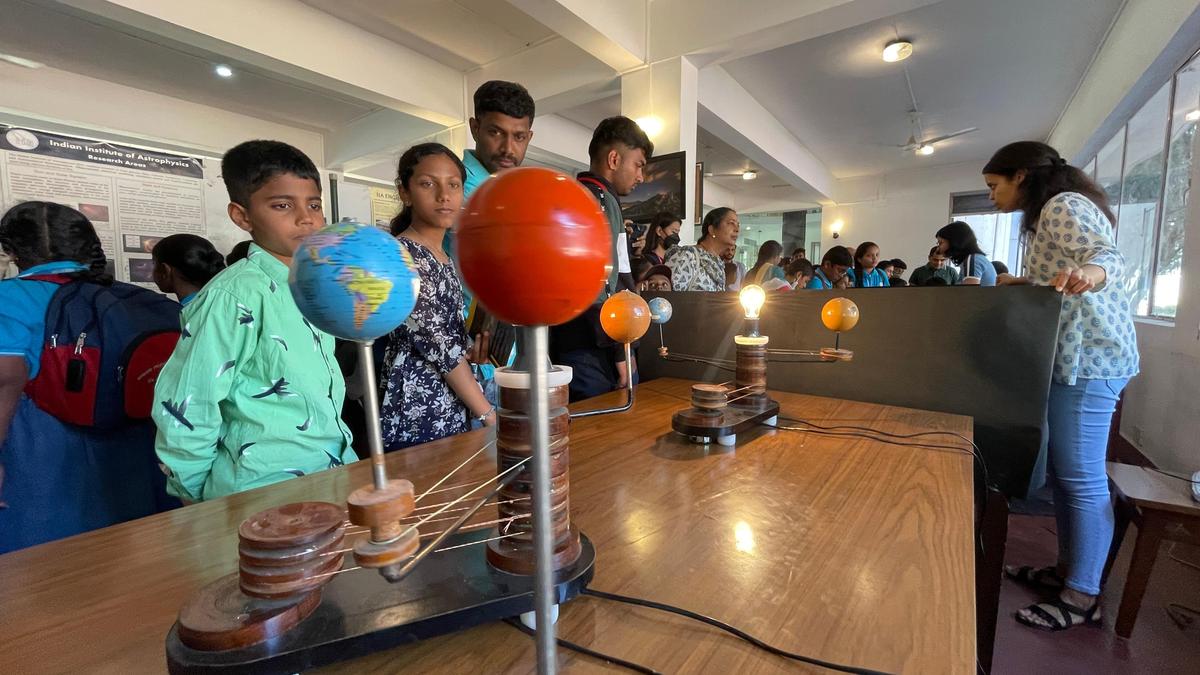
Open Day at Institute of Astrophysics in Bengaluru on February 25 Open Day at Institute of Astrophysics in Bengaluru on February 25 Science
Electrifying industrial heat as a path to India’s thermal independence Electrifying industrial heat as a path to India’s thermal independence Science
Experts underscore the importance of extracting only relevant data Experts underscore the importance of extracting only relevant data Science
The physics and maths of keeping elections fair and representative | Explained The physics and maths of keeping elections fair and representative | Explained Science
SiteLock

Archives

  • May 2026
  • April 2026
  • March 2026
  • February 2026
  • January 2026
  • December 2025
  • November 2025
  • October 2025
  • September 2025
  • August 2025
  • July 2025
  • June 2025
  • May 2025
  • April 2025
  • March 2025
  • February 2025
  • January 2025
  • December 2024
  • November 2024
  • October 2024
  • September 2024
  • August 2024
  • July 2024
  • June 2024
  • May 2024
  • April 2024
  • March 2024
  • February 2024
  • January 2024
  • December 2023
  • November 2023
  • October 2023
  • September 2023
  • August 2023
  • July 2023
  • June 2023
  • May 2023
  • April 2023
  • March 2023
  • February 2023
  • January 2023
  • December 2022
  • November 2022
  • October 2022
  • September 2022
  • August 2022
  • July 2022
  • June 2022
  • May 2022

Categories

  • Business
  • Nation
  • Science
  • Sports
  • World

Recent Posts

  • Gujarat Titans faces Chennai Super Kings, hopes to strengthen top-two chances
  • Zuckerberg says he feels ‘weight’ of Meta layoffs
  • Bihar cabinet approves ₹10.40 cr VGF to operate direct flight between Gaya Ji-Bangkok
  • Myanmar military claims recapture of Thai border town
  • New worm-eating snake named after Mizoram herpetologist

Recent Comments

  1. Williamhibly on UP Teacher Who Asked Students To Slap Muslim Classmate
  2. Philiprom on UP Teacher Who Asked Students To Slap Muslim Classmate
  3. Albertmob on UP Teacher Who Asked Students To Slap Muslim Classmate
  4. Albertmob on UP Teacher Who Asked Students To Slap Muslim Classmate
  5. Marcusprefe on UP Teacher Who Asked Students To Slap Muslim Classmate
  • Access Denied Business
  • Access Denied Sports
  • Thailand Open badminton: Satwik-Chirag save four championship points before settling for runner-up finish
    Thailand Open badminton: Satwik-Chirag save four championship points before settling for runner-up finish Sports
  • Access Denied
    Access Denied Nation
  • Joe Biden pulls out of U.S. presidential race, endorses Kamala Harris
    Joe Biden pulls out of U.S. presidential race, endorses Kamala Harris World
  • IndiGo grapples with flight delays, cancellations amidst pilot shortage
    IndiGo grapples with flight delays, cancellations amidst pilot shortage Business
  • Adani to invest ₹1 lakh crore in airports; eyes aggressive bids in next privatisation round
    Adani to invest ₹1 lakh crore in airports; eyes aggressive bids in next privatisation round Business
  • France vs Spain Live Streaming, Men’s Football Final Olympics 2024 Live Telecast: When And Where To Watch?
    France vs Spain Live Streaming, Men’s Football Final Olympics 2024 Live Telecast: When And Where To Watch? Sports

Editor-in-Chief:
Mohammad Ariff,
MSW, MAJMC, BSW, DTL, CTS, CNM, CCR, CAL, RSL, ASOC.
editor@artifex.news

Associate Editors:
1. Zenellis R. Tuba,
zenelis@artifex.news
2. Haris Daniyel
daniyel@artifex.news

Photograher:
Rohan Das
rohan@artifex.news

Artifex.News offers Online Paid Internships to college students from India and Abroad. Interns will get a PRESS CARD and other online offers.
Send your CV (Subjectline: Paid Internship) to internship@artifex.news

Links:
Associate Journalism
About Us
Privacy Policy

News Links:
Breaking News
World
Nation
Sports
Business
Entertainment
Lifestyle

Registered Office:
72/A, Elliot Road, Kolkata - 700016
Tel: 033-22277777, 033-22172217
Email: office@artifex.news

Editorial Office / News Desk:
No. 13, Mezzanine Floor, Esplanade Metro Rail Station,
12 J. L. Nehru Road, Kolkata - 700069.
(Entry from Gate No. 5)
Tel: 033-46011099, 033-46046046
Email: editor@artifex.news

Copyright © 2023 Artifex.News Newsportal designed by Artifex Infotech.