


For almost 25 summers, Sunita (name changed) gets a severe ‘sweat rash’ on her neck in the hot and humid weather of Mumbai. The rash turns black, looks almost burnt, and stays that way until the monsoons arrive. Then, as if miraculously, the dead skin is shed and her neck looks just fine all over again.
Doctors have told her she needn’t worry too much about it and that she just tries to keep her neck bare and dry. Sunita, however, is embarrassed every time this happens and becomes anxious about hiding the rash or explaining it to puzzled and concerned onlookers. She has been self-medicating with a popular anti-fungal powder plus time under an air-conditioner to tame the rash on sweaty summer days. So far this year, her neck has been clear.
Sunita’s situation may be familiar to the increasing number of people who suffer fungal infections in India. The World Health Organization released a priority list of fungal pathogens in 2022 while also saying data of fungal diseases and their morbidity are lacking. A 2024 review in The Lancet Infectious Diseases estimated 3.8 million people die every year due to fungal diseases, compounded by public fears about antimicrobial resistance and concerns about whether antifungal drugs will work.
For this situation, however, India lacks expertise on the genesis and effects of fungal pathogens as well as a paucity of institutes dedicated to fungal outbreaks, like it does for viral and bacterial infections (such as tuberculosis).
Mindset, investment problem
Fungi grow well in hot and humid conditions, putting tropical countries at higher risk than those in temperate regions.
“In the western world, especially in temperate conditions, ophthalmologists see one to a couple of cases per year,” Prashant Garg, executive chair of the L.V. Prasad Eye Institute (LVPEI), Hyderabad, said. “These numbers are way higher in tropical countries. We see three to four cases of fungal eye infections in our hospital daily.”
According to one estimate published by scientists from India and the U.K. in the Open Forum Infectious Diseases in 2022, more than 5 crore Indians likely suffer from fungal diseases — one of the highest national burdens worldwide. These diseases are generally called mycoses; they affect the eyes, skin, lungs, vagina, and brain and cause blood infections. During the COVID-19 pandemic, an opportunistic infection called mucormycosis captured the public imagination. Caused by black fungus, its prevalence is about 80-times higher in India than in the economically developed countries.
Despite the burden of fungal diseases in India, clinicians are often not equipped to deal with them. Most clinicians prescribe antibacterial medications first. When those don’t work, they try antifungals. This delay allows the fungi to intrude deeper into a patient’s body and becomes harder to get rid of.
‘A dying art’
Anuradha Chowdhary, director professor at the Vallabhbhai Patel Chest Institute in the University of Delhi, said, “Many cases that test negative for Mycobacterium tuberculosis are still called tuberculosis and treated with anti-tuberculosis drugs. Our country’s microbiology departments do not test them for common respiratory fungal conditions like aspergillosis or the rarely identified histoplasmosis.”
“Fungal testing must begin at the same time as bacterial testing in a microbiology lab,” Dr. Chowdhary added.
Fungi are present everywhere. When an individual tests positive for a fungal infection, there is sometimes a doubt as to whether the fungus came from the patient’s sample or if it is a contaminant that entered the sample from the testing facility or the tester. The most trusted way to confirm a fungal infection is to have it grow on microbiology culture plates.
“We lightly scrape a sample from an infected region of the eye, place it on various culture media. Some allow growth of bacteria and some of fungi,” LVPEI head of microbiology Joveeta Joseph explained. “We sometimes have to wait for days to see if a fungus grows where we placed the patient sample on the culture plate. If a fungus grows elsewhere on the plate, that is because of contamination.”
Identifying the actual pathogen can take longer than just confirming a fungus’s presence. Here, the details of fungal spore morphology matter. Fungal spores come in different colours, shapes, and sizes. And microbiologists use fungal handbooks and databases to identify the spores.
“It is a dying art,” Dr. Chowdhary said.
“Plus, some fungi do not form spores in lab cultures. Or the entire procedure can take up to a month,” Dr. Joseph added. “Very few medical setups invest in that kind of investigation. It is expensive for the patient and technically demanding for the healthcare providers.”
Treating animals
These challenges aren’t confined to human medicine. The chytrid fungus causes an infection called chytridiomycosis, and it has been annihilating frogs and salamanders in many parts of the world. Chytrids grow on the animals’ skin — an organ crucial for respiration among these amphibious animals. To make matters worse, it is very difficult to outwardly distinguish an infected animal from an uninfected one in the earlier stages of infection, when the animal can still be saved.
“Culturing chytrid fungus in the lab is almost a fluke since they are present in low numbers,” CSIR-Centre for Cellular and Molecular Biology scientist Karthikeyan Vasudevan said. “Some add hair to their culture, some snake skin since keratin helps in growing this fungus. But details such as how much to add or when are often not shared in research papers.”
Of course, more advanced tests are more helpful. They help reduce contamination as well as accelerate the reactions required to identify specific species. For example, a test called MALDI-TOF — short for matrix-assisted laser desorption/ionisation time-of-flight mass spectrometry — has an automated technique that can identify the proteins on the pathogens’ surfaces. It does this by creating a surface protein signature of the sample and compares that with an existing database of pathogens.
While MALDI-TOF can identify fungi in about 30 minutes, it remains in the dark about new pathogens emerging in tropical countries, and which are not reflected in the prevailing fungi databases. MALDI-TOF is also very expensive. New units can cost upwards of Rs 1.5 crore apiece; even refurbished ones can cost Rs 10 lakh or more.
The PCR tests that check for pathogen’s genetic material, and which were widely used during the COVID-19 pandemic, are one alternative. But while they worked well for the coronavirus, they’re not well-suited for fungi. This is because fungal cells have tough cell walls that need to be broken open first to extract the fungal DNA. (PCR works by creating numerous copies of DNA material, then checking them for species signatures.)
Timely diagnostics
Some work here is underway — such as that of BRIC-Centre for DNA Fingerprinting and Diagnostics, Hyderabad, staff scientist Rupinder Kaur. However, these lab-level processes have yet to be standardised for clinical settings. One major challenge is the small quantity of pathogenic material when working with patient samples.
“For fungal infection diagnostics to work in clinical settings, lab protocols usually need improvements in specimen handling, volume, transport and storage, standardization, speed, and proper contamination controls,” Dr. Kaur said. “It is always helpful if lab protocols utilise at least a small set of complex, varied clinical samples to optimise concentrations of primers, cell wall-digesting enzymes, time duration for mechanical cell lysis using bead-beater etc., for developed procedures.“
She added that more advanced PCR tests have not been tested enough for use in fungal contexts.
Timely diagnostics help clinicians decide the appropriate next steps, such as choosing the right antifungal drugs to treat a particular infection. This said, the number of antifungal options available is limited. Fungal cells are eukaryotic cells, like our own cells. So molecules that kill fungus can also be harmful to us.
To make matters worse, many antifungals have also been rendered less effective thanks to rampant self-medication by patients, over-the-counter sales, and use in plant agriculture. When fungi are repeatedly exposed to antifungal compounds in the environment, they develop resistance. From her own experience at LVPEI, Dr. Joseph recalled how identifying pathogens has allowed her to help her clinician colleagues about when they can rely on an antifungal to work.
Limited understanding
Candida infections among a small group of fungal infections that have received sustained research attention. Most fungus biologists in India use fungi as a model system to understand eukaryotic cell processes such as how genes are expressed in cells and how cells divide. But these experiments are done with baker’s yeast (Saccharomyces cerevisiae) and the results don’t always lead to clinically relevant findings. That said, Candida is structurally similar to baker’s yeast, and the technical know-how from one species can be translated to the other.
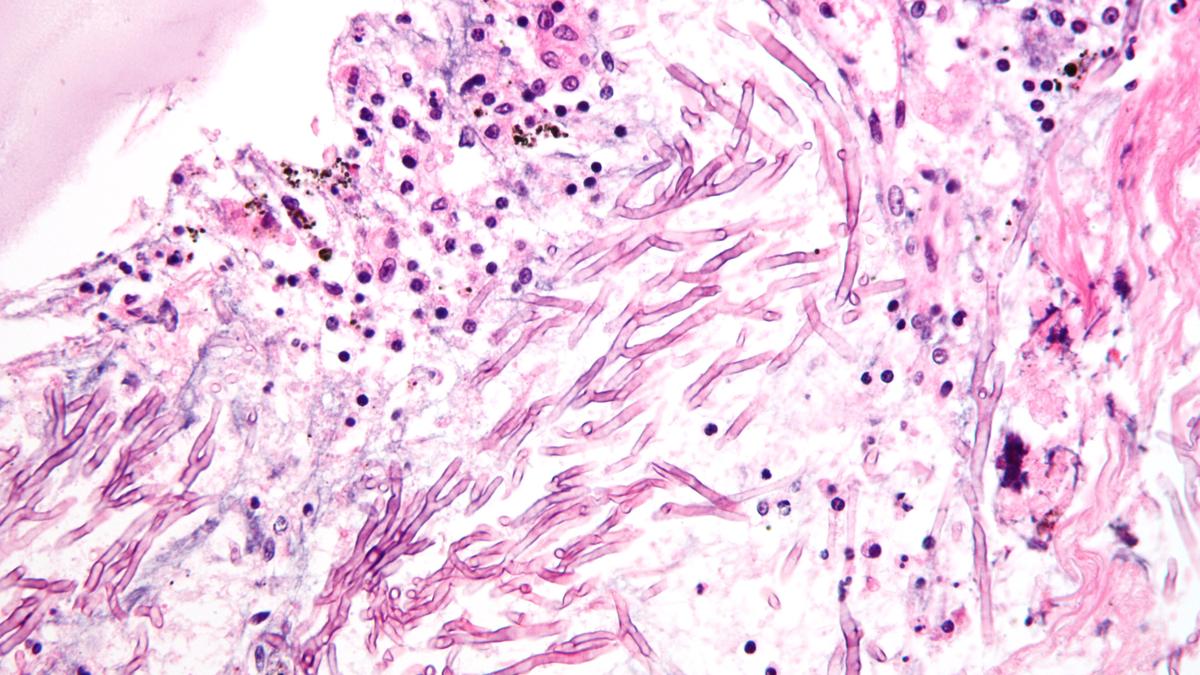
“Fungal cells exist morphologically in two forms — roundish forms called yeast and long filamentous forms called molds,” Dr. Garg said. “India has many moldy infections due to pathogens like Aspergillus and Fusarium.”
“We do not have enough people looking into the biology of filamentous fungi,” Dr. Kaur added. “Even with Candida, basic questions like what turns this fungus, which is often found on human skin, suddenly pathogenic is not well-understood.”
“We need to also study the fungus in its native state and understand its relationship with its host,” Dr. Vasudevan said. He also highlighted the importance of skilled taxonomists who can painstakingly grow, identify, and maintain fungal cultures.
Just like the medical community, the wildlife biology community will also benefit from fungal expertise within the country because samples can’t be out of the country, limiting access to skilled personnel elsewhere.
The good news is that researchers in India are working to identify priority fungal pathogens circulating within its borders, both including and beyond a list of species the World Health Organization released in 2022. They are also working to map antifungal resistance in pathogens in the environment and develop newer therapeutics such as antimicrobial peptides. Better-equipped hospitals are also training others in the medical community to pay attention to the fungal infection crisis.
Somdatta Karak heads science communication at CSIR-CCMB.