
Skip to content
  • Facebook
  • X
  • Linkedin
  • WhatsApp
  • YouTube
  • Associate Journalism
  • About Us
  • Privacy Policy
  • 033-46046046
  • editor@artifex.news
Artifex.News

Artifex.News

Stay Connected. Stay Informed.

  • Breaking News
  • World
  • Nation
  • Sports
  • Business
  • Science
  • Entertainment
  • Lifestyle
  • Toggle search form
  • Trump administration asks Supreme Court to allow deployment of National Guard in Chicago area
    Trump administration asks Supreme Court to allow deployment of National Guard in Chicago area World
  • Challenges facing the upcoming income survey | Explained
    Challenges facing the upcoming income survey | Explained Business
  • Public Accounts Committee flags failure to transfer ₹9,222 crore in cess collections to designated reserve funds
    Public Accounts Committee flags failure to transfer ₹9,222 crore in cess collections to designated reserve funds Business
  • Access Denied Sports
  • At Least 10 Flights To Delhi Diverted Amid Heavy Rain, Many Areas Waterlogged
    At Least 10 Flights To Delhi Diverted Amid Heavy Rain, Many Areas Waterlogged Nation
  • Leaders of South Korea, China and Japan to meet for first time in 5 years on May 26
    Leaders of South Korea, China and Japan to meet for first time in 5 years on May 26 World
  • Access Denied
    Access Denied Nation
  • Access Denied World
The toll of structural adjustments on the global South and a case for accountability

The toll of structural adjustments on the global South and a case for accountability

Posted on May 12, 2026 By admin


Jason Hickel, Salmaan Keshavjee, Maxine Burkett and Eugene T. Richardson, “Structural adjustment: damages, reparations and pathways to non-recurrence”, BMJ Global Health, March 2026.

The 1970s were a good decade for the global South. Between 1960 and 1980, real per capita income grew across Asia, Africa, and Latin America. Countries that had recently thrown off colonial rule were investing in public healthcare and education, protecting their industries, and organising production around national development.

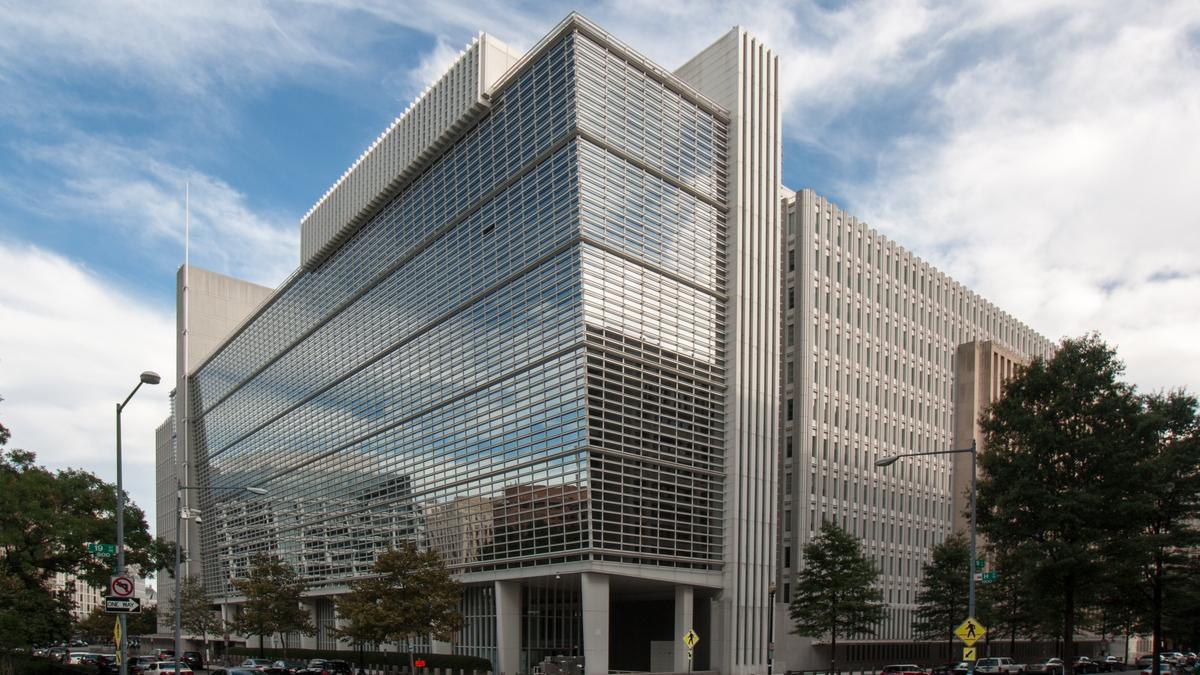
Then, beginning in the 1980s, the International Monetary Fund (IMF) and the World Bank began structural adjustment programmes across Asia, Africa and Latin America. Decades later, many countries in the impact regions continue to struggle with weak public health systems, stagnant incomes and high levels of poverty.

In a recent paper published in BMJ Global Health, economists and public health researchers Jason Hickel, Salmaan Keshavjee, Maxine Burkett, and Eugene T. Richardson argue that the institutions that implemented these programmes now owe reparations.

The repayment burden

Structural adjustment programmes emerged during the debt crises of the late 1970s and 1980s. Many developing countries had borrowed heavily in foreign currencies to finance imports and industrial development. When the United States Federal Reserve raised interest rates in the late 1970s, debt repayments became far more expensive for poorer countries, causing decades-long progress to unravel.

Countries that had borrowed in U.S. dollars suddenly faced ballooning repayments in a currency they had no control over. To prevent governments in the global South from defaulting on loans owed to American banks, the U.S. worked through the IMF and World Bank to roll over those debts, attaching a set of sweeping economic reforms as conditions that would come to be known as structural adjustment programmes, or SAPs.

SAPs typically demanded three things. First, austerity: slash public spending on healthcare, education, food subsidies, and social security, so that the money saved could flow back to creditors. Second, privatisation; by transfering public services and state-owned industries to private capital. And, third, by deregulating industrial policy, tariffs, capital controls, and labour protections.

Countries had limited room to refuse. Defaulting on loans was risky, and the institutions pushing these conditions controlled international finance.

These SAPs should also be viewed in a longer historical context. After independence, many governments in the global South had used industrial policy and public investment to break away from colonial economic arrangements that kept labour and resources cheap for Western firms. The SAPs effectively reversed these gains, re-cheapening southern labour and re-opening vulnerable markets to the global North.

Social and economic setback

Economic growth in the global South before SAPs averaged around 3.2% annually. But growth slowed sharply, falling to a mere 0.7% during the era of structural adjustment in the 1980s and 1990s. The South collectively lost an average of $480 billion per year in potential national income during this period.

In Latin America, real income per adult fell nearly 15% after 1980 and did not recover to previous levels until 2006. In Sub-Saharan Africa, incomes fell nearly 20% before eventually recovering decades later. In Jamaica, trade and exchange-rate liberalisation in the early 1990s caused food prices to rise sharply after currency depreciation. In China, extreme poverty rose during a phase of market-oriented reforms linked to World Bank adjustment policies.

The effects on health were also severe. A 2017 review found that SAPs imposed by the IMF, World Bank, and African Development Bank had a strong negative impact on child and maternal health. Studies on Sub-Saharan Africa linked adjustment to an additional 85.62 child deaths per 1,000 children and an additional 360 maternal deaths per 1,00,000 live births. In Kenya, the authors calculate, 3,05,000 excess infant deaths occurred between 1986 and 2010 relative to the pre-adjustment trend.

The mechanisms are not hard to trace. SAPs cut government spending on health, led to the closure of facilities, and limited the hiring of doctors and nurses. Currency devaluation made imported drugs and medical supplies more expensive. Privatisation and user fees reduced access to essential services, and wage losses made families more vulnerable to disease in the first place.

Structural adjustment also enabled large financial outflows from the global South. The removal of capital controls allowed foreign companies to repatriate profits at up to $250 billion a year. Trade deregulation enabled further outflows exceeding $1 trillion per year, mostly to evade taxes. These were surpluses generated within developing countries that were no longer available for reinvestment in public services or domestic development.

Responsibility for repair

The IMF and World Bank, as the primary architects of these programmes, should bear responsibility for repair. One approach the authors outline would be to quantify wage losses, cuts to public services, and capital outflows attributable to SAPs, adjusted for inflation and due interest. Another mechanism would be to calculate losses to national income against a counterfactual in which the adjustments were never imposed. A third would focus specifically on welfare impacts, such as poverty and mortality, to provide compensation that restores people to the social indicators they would have reached had SAPs never existed.

But reparations face procedural obstacles, put in place by design. The IMF and World Bank enjoy sovereign immunity, shielding them from lawsuits through normal channels. Their governance structure compounds the problem. The Global North, with a mere 15% of the world’s population, controls nearly 60% of the voting power in both institutions. The U.S. alone holds a veto.

Beyond reparations, the paper calls for a guarantee of non-recurrence by abolishing structural adjustment conditions on all future lending, democratising both institutions so that aid recipients have a meaningful say in policy, and ending their sovereign immunity status.

If such transformative changes cannot happen from within, these institutions should be replaced entirely. Alternatives are already emerging, including the BRICS New Development Bank and the Asian Infrastructure Investment Bank, established by and for the global South. Neither attaches structural adjustment conditions to finance.

Published – May 13, 2026 08:00 am IST


Source link

World Tags:Global South, International Monetary Front, Post-colonialism, Structural Accountability Programme, World Bank

Post navigation

Previous Post: BJP MLA Tapas Roy sworn in as Pro-tem Speaker of West Bengal Assembly
Next Post: India-Oman FTA on track for June 1 start even as deal with Chile hits hurdles, says Commerce Minister

Related Posts

  • Gaza’s Only Cancer Hospital Goes Out Of Service
    Gaza’s Only Cancer Hospital Goes Out Of Service World
  • Access Denied World
  • Nancy Pelosi endorses Kamala Harris as Democratic Party’s presidential candidate
    Nancy Pelosi endorses Kamala Harris as Democratic Party’s presidential candidate World
  • Chroniclers of Uyghur life disappear in Xi’s China
    Chroniclers of Uyghur life disappear in Xi’s China World
  • Climate change ‘dystopian future already here’, says UN rights chief
    Climate change ‘dystopian future already here’, says UN rights chief World
  • Access Denied World

More Related Articles

Auroras Dazzle In Parts Of Latin America As Solar Storm Causes Rare Displays Auroras Dazzle In Parts Of Latin America As Solar Storm Causes Rare Displays World
UK Drug Dealer Tosses Rs 3 Crore Of Heroin From His Truck During Desperate Police Chase UK Drug Dealer Tosses Rs 3 Crore Of Heroin From His Truck During Desperate Police Chase World
Russia passes decree to allow seizure of U.S. assets Russia passes decree to allow seizure of U.S. assets World
Watch: Why Indian students face higher visa rejection rates in Australia Watch: Why Indian students face higher visa rejection rates in Australia World
Aerial view of the devastating Nepal flash floods | Graphics Aerial view of the devastating Nepal flash floods | Graphics World
At least 20 migrants die in shipwreck off Italy’s Lampedusa island: U.N. At least 20 migrants die in shipwreck off Italy’s Lampedusa island: U.N. World
SiteLock

Archives

  • September 2026
  • August 2026
  • July 2026
  • June 2026
  • May 2026
  • April 2026
  • March 2026
  • February 2026
  • January 2026
  • December 2025
  • November 2025
  • October 2025
  • September 2025
  • August 2025
  • July 2025
  • June 2025
  • May 2025
  • April 2025
  • March 2025
  • February 2025
  • January 2025
  • December 2024
  • November 2024
  • October 2024
  • September 2024
  • August 2024
  • July 2024
  • June 2024
  • May 2024
  • April 2024
  • March 2024
  • February 2024
  • January 2024
  • December 2023
  • November 2023
  • October 2023
  • September 2023
  • August 2023
  • July 2023
  • June 2023
  • May 2023
  • April 2023
  • March 2023
  • February 2023
  • January 2023
  • December 2022
  • November 2022
  • October 2022
  • September 2022
  • August 2022
  • July 2022
  • June 2022
  • May 2022

Categories

  • Business
  • Nation
  • Science
  • Sports
  • World

Recent Posts

  • New party emerges as a frontrunner as Israel goes to polls amid Netanyahu’s waning appeal
  • Crime branch to probe IIT-Bombay student death case; faculty forum backs professor named in FIR
  • Ebola vaccine being tested in DR Congo outbreak zone
  • Woman killed, husband and daughter injured as lorry hits motorcycle on Yellandu-Kothagudem main road
  • Stomach pain leads to discovery of teenager’s pregnancy; man held under POCSO

Recent Comments

  1. Josephjab on UP Teacher Who Asked Students To Slap Muslim Classmate
  2. LarryKef on UP Teacher Who Asked Students To Slap Muslim Classmate
  3. Jasonnekly on UP Teacher Who Asked Students To Slap Muslim Classmate
  4. Jasonnekly on UP Teacher Who Asked Students To Slap Muslim Classmate
  5. Frankenrib on UP Teacher Who Asked Students To Slap Muslim Classmate
  • Congress As Naveen Jindal Joins BJP
    Congress As Naveen Jindal Joins BJP Nation
  • Centre announces winners of Bhatnagar Prize after a year’s delay
    Centre announces winners of Bhatnagar Prize after a year’s delay Science
  • Trial for Bundibugyo Ebola treatment starts in DRC, WHO says
    Trial for Bundibugyo Ebola treatment starts in DRC, WHO says World
  • 10 Key Moments In Israel-Hamas War
    10 Key Moments In Israel-Hamas War World
  • Access Denied Sports
  • Ben Stokes Makes History, Becomes 3rd Player Ever To Achieve Sensational Feat
    Ben Stokes Makes History, Becomes 3rd Player Ever To Achieve Sensational Feat Sports
  • Bayer Leverkusen Eye ‘Immortality’ As Union Berlin Fight For Final Day Survival
    Bayer Leverkusen Eye ‘Immortality’ As Union Berlin Fight For Final Day Survival Sports
  • “Deep Down, Rohit Sharma Is…”: Ravi Shastri Reveals Captain’s Mentality After NZ Series Loss
    “Deep Down, Rohit Sharma Is…”: Ravi Shastri Reveals Captain’s Mentality After NZ Series Loss Sports

Editor-in-Chief:
Mohammad Ariff,
MSW, MAJMC, BSW, DTL, CTS, CNM, CCR, CAL, RSL, ASOC.
editor@artifex.news

Associate Editors:
1. Zenellis R. Tuba,
zenelis@artifex.news
2. Haris Daniyel
daniyel@artifex.news

Photograher:
Rohan Das
rohan@artifex.news

Artifex.News offers Online Paid Internships to college students from India and Abroad. Interns will get a PRESS CARD and other online offers.
Send your CV (Subjectline: Paid Internship) to internship@artifex.news

Links:
Associate Journalism
About Us
Privacy Policy

News Links:
Breaking News
World
Nation
Sports
Business
Entertainment
Lifestyle

Registered Office:
72/A, Elliot Road, Kolkata - 700016
Tel: 033-22277777, 033-22172217
Email: office@artifex.news

Editorial Office / News Desk:
No. 13, Mezzanine Floor, Esplanade Metro Rail Station,
12 J. L. Nehru Road, Kolkata - 700069.
(Entry from Gate No. 5)
Tel: 033-46011099, 033-46046046
Email: editor@artifex.news

Copyright © 2023 Artifex.News Newsportal designed by Artifex Infotech.