




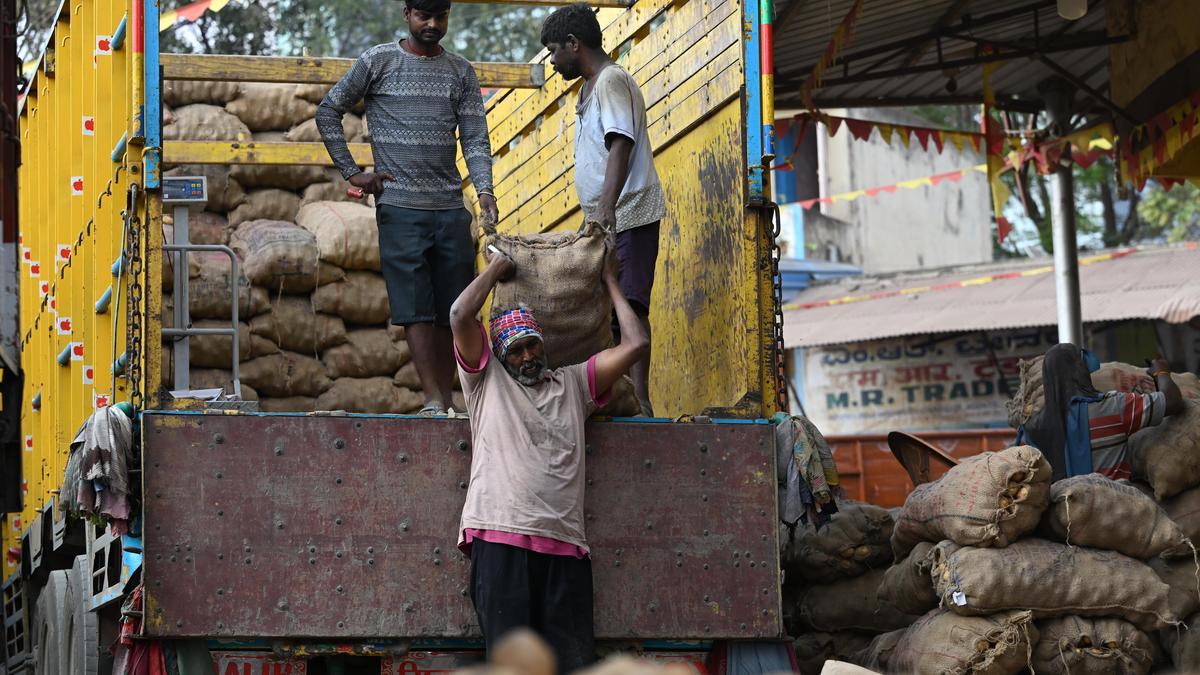
Many unions demanded that housing rent calculations under minimum wages be based on current rental rates in industrial areas.
| Photo Credit: ALLEN EGENUSE J.
Karnataka is expected to fully implement the four labour codes from July 1. One of the major changes that could come under the wage code is in the way housing rent is calculated while fixing minimum wages, according to officials.
At present, housing rent is calculated as 10% of food and clothing expenditure. However, trade unions, which are included in the labour codes, have called for it to be based on actual market rents in ‘industrial’ zones, if not in all regions.
The new framework will replace 29 existing labour laws that currently deal with social security, working hours, retirement benefits and trade union rights. The Centre has already released the rules at the national level.
Many unions demanded that housing rent calculations under minimum wages be based on current rental rates in industrial areas. Union representatives pointed out that as Karnataka tracks the Consumer Price Index (CPI) for industrial workers across 16 centres, wage calculations should reflect the real rental conditions workers face in industrial clusters.
Trade unions have also demanded changes in the rules for recognising unions. They said that if more than one union is competing for recognition, the decision should be made through a secret ballot instead of physical membership verification to make the process transparent and fair.
Another key demand is to retain the existing provisions related to the right to strike. Trade unions argued that the current labour codes make the ‘Right to Strike’ difficult and could make most strikes illegal. “We have urged the State government to retain the existing provisions governing strikes,” an AITUC member said.
According to the draft rules, a strike notice must be given to the employer and signed by the union secretary and five elected union representatives. Copies must also be sent to the conciliation officer, Labour Commissioner and the State government. The draft also says the notice should be backed by a resolution passed by a majority of workers who are union members.
After strong objections from trade unions, which argued that the draft rules mirror the Centre’s framework without enough state-specific changes, the Labour Department formed four committees — one for each labour code — wages, social security, industrial relations, and occupational safety, health and working conditions (OSH) code.
Trade union members told The Hindu that while Labour Minister Santosh Lad was open to hearing their suggestions, some labour department officials were inclined towards industry interests on issues such as housing rent and secret ballot provisions. They said committees with union representation were formed after these concerns were raised with the Minister.
The unions also criticised the Centre’s decision to remove the criteria for fixing minimum wages from the final rules, saying that these will be notified separately.
Additional Labour Commissioner G. Manjunath said four committees have been formed to review the four codes. He said trade unions had initially not given state-specific suggestions, but are now actively participating. He added that after the final review and considerations, Karnataka will notify its own rules.
Published – May 11, 2026 09:38 pm IST