


The Rastriya Swatantra Party’s stunning sweep in the March 2026 elections, securing an absolute majority in the House of Representatives and a majority of votes in the proportional representation system as well, marks a new rupture in Nepali politics. Rapper-turned-politician Balendra Shah, who resigned as Kathmandu’s mayor to lead the RSP’s campaign since January 2026, defeated former Prime Minister K.P. Sharma Oli of the Communist Party of Nepal-Unified Marxist Leninist in the latter’s own constituency of Jhapa-5, a result symbolising the defeat and rejection of the political old guard in the country.
The RSP, founded only in 2022 by television personality Rabi Lamichhane, had ridden a wave of anti-establishment sentiment, fuelled by the Gen Z uprising of September 2025, to deliver Nepal’s first parliamentary majority in 27 years. The three parties that had dominated Nepali politics since the 1990s — the Nepali Congress, CPN-UML, and CPN (Maoist Centre) — were reduced to 38, 25, and 17 seats respectively, their worst-ever collective performance. At just 35, Shah is poised to become Nepal’s youngest Prime Minister, set to govern a country that is still counted among the world’s least developed.
This article is a part of The Hindu’s e-book: Nepal’s new political moment
The scale of the RSP’s victory, in a way, matched the depth of the anger that produced it. Six months before the election, Nepal had witnessed its most violent popular upheaval since the civil war of the 1990s/2000s – an uprising that lasted barely a couple of days but destroyed government buildings, toppled the Oli government, and left dozens dead.
The Run-Up: The Gen Z protests
What began on September 8, 2025 as a youth-led protest against the Oli government’s ban on 26 social media platforms rapidly metamorphosed into a nationwide uprising. The government’s argument that the platforms failed to comply with registration requirements following a Supreme Court ruling on content monitoring was not accepted by young internet connected Nepalis who saw it as an attempt to suppress dissent against a political class of the elite.
But the anger went well beyond the social media ban. It extended to opposing corruption, political instability, and economic mismanagement. This is borne out by Nepal’s numbers that tell a stark story. It has had 30 changes of government since 1990 with no Prime Minister completing a full term, unemployment among 15-24 year-olds reached 22.7% in 2022-23, personal remittances account for over 33% of GDP, and roughly one in four males is a migrant working in another country.
The security forces’ killing of at least 19 demonstrators on the very first day transformed what was initially Kathmandu-based dissent into a nationwide outrage. On September 9, demonstrators defied an army imposed curfew and attacked multiple government buildings such as the Federal Parliament, the Supreme Court, and the Prime Minister’s office complex. Politicians’ homes were targeted: five-time former PM Sher Bahadur Deuba and his wife were assaulted, former PM Jhala Nath Khanal’s home was set ablaze, with his wife suffering severe burns. Prisons were raided, freeing among others, the RSP’s Rabi Lamichhane. By the time the dust settled, close to 76 people were dead and over 2,000 had been injured.
Following Oli’s resignation and a three-day power vacuum, former Chief Justice Sushila Karki was appointed interim PM on September 12. She dissolved Parliament and announced elections for March 5, 2026. The major parties condemned this as unconstitutional, but their protests carried no weight. The momentum of the uprising and the thorough discrediting of the established political class had seen to that.
Other upheavals in Nepal’s history
A student of Nepal’s modern political history would recognise the September 2025 uprising and what followed in March 2026 as the latest in a series of decisive moments that have reshaped the country’s political order. Three earlier pivotal periods, 1950, 1990, and 2005-07, each brought about fundamental breaks from the governing order that preceded them. The question that needs asking is whether 2025-26 represents a similar structural transformation or is merely a generational changing of the guard within an unreformed system.
The End of Ranacracy, 1950-51
The Rana oligarchy, which had reduced the monarchy to a titular role since 1846, was among South Asia’s most long-lasting feudal regimes. As the historian M.C. Regmi noted in his many works on the country, the Rana political system was essentially a military despotism in which the government functioned as an instrument for the enrichment of the prime minister and his family. The regime survived through a system of patrilineal succession and an elaborate hierarchy – the A, B, and C class system based on birth and marital status – designed to manage internal power struggles. But it ultimately bred resentment and constant intrigue within the ruling elite itself.
The Ranas presided over what was a stagnant, extractive political economy. Land grants under various tenurial systems created layers of rent-receiving intermediaries between the actual cultivator and the state, consolidating what Baburam Bhattarai, writing as a PhD scholar and who later went on to become the country’s Prime Minister, characterised as incipient feudalism. While cultivable land did expand, particularly through the massive clearance of Terai forests for commercial farming from the late 19th century onward, there was virtually no investment in improving agricultural productivity or in industrial development. The Ranas were ideologically opposed to modernisation and their deliberate isolationism, permitting trade and outside linkages only to the extent they benefitted the ruling elite, kept the economy overwhelmingly agrarian and underdeveloped.
Central to the perpetuation of this order was the Muluki Ain, the civil code promulgated by Jang Bahadur Rana in 1854, which codified a caste hierarchical structure across all of Nepali society. The Ain accorded primacy to the hill castes and especially to the Bahun (Brahmin)-Chhetri elite, to whom the hill tribes and the Madhesis of the plains were rendered formally subservient. It is important to note that this was not merely a social code but also an economic instrument: the combination of caste-based privileges with a system of agrarian dues and land grants provided the legal architecture for the feudal order. The otherwise powerless monarchy served to sanctify this structure through religious legitimacy, lending the weight of Hindu tradition to what was, at bottom, an extractive oligarchic regime.
The contradictions that undermined this system were both internal and external. The exposure of educated Nepalis, particularly those involved in trade and those who studied abroad, to the Indian nationalist movement created a class of discontents who sought to organise against feudal rule. The Nepali National Congress, formed in 1947 in Benares, merged with the Nepal Democratic Congress (itself an organisation of discontented C-Class Ranas) in 1950 to form the Nepali Congress, led by the socialist B.P. Koirala.
The Nepali Congress represented a qualitatively different kind of threat to the Ranas: it sought not just to end Ranacracy but to change the political system along modern parliamentary lines. This was enabled by the weakening of the Ranas’ chief external patron, the British colonial state, and the tacit support of the newly independent Indian government for the Nepali Congress’s armed volunteers.
Yet as author Martin Whelpton noted, the final collapse of the Rana regime resulted not from a broadly based popular movement but from divisions within the political elite and the policy adopted by newly independent India. The lack of substantive mass mobilisation meant that the deposing of the Ranas did not bring about definitive changes in the political economy.
The Brahmin-Chhetri elite remained dominant and the Muluki Ain’s caste structure persisted in practice even after it was formally replaced only in 1963. Nepal moved from Ranacracy back to absolute monarchy, and the constituent assembly that the democracy movement had promised never materialised. It would take nearly six decades and two more upheavals before that promise was fulfilled.
The Panchayat Era and the First Jan Andolan
King Mahendra’s usurpation of full powers in 1960, which ended the brief Nepali Congress government, inaugurated nearly three decades of absolute monarchy disguised as “Panchayat democracy.” The Rashtriya Panchayat, a quasi-legislative body with nominated members and no real power, was dominated by elites from the earlier regimes, including various members of the Rana aristocracy. Political parties were banned. The king, for his part, sought legitimacy through a combination of abstract nationalism (counterbalancing India with China, diversifying foreign aid relationships), symbolic appeals to Hindu divine kingship, and minimal reforms that changed land tenure forms without altering underlying patterns of ownership.
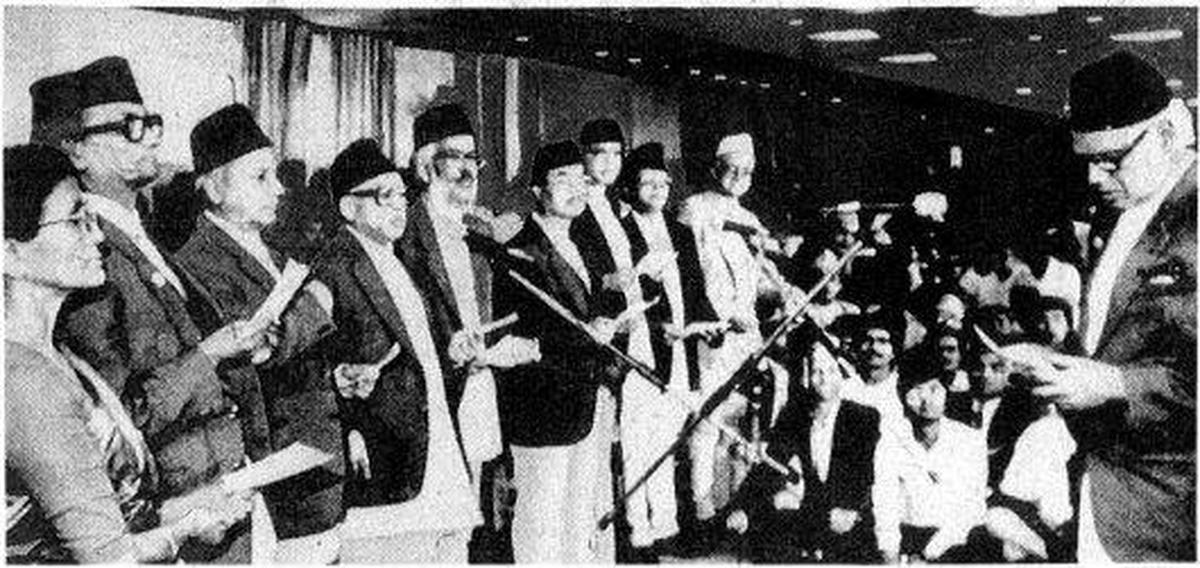
The Nepalese Prime Minister, Mr. Krishna Prasad Bhattarai (extreme right) administering the oath of office to his Cabinet in Kathmandu on Thursday. A pro-democracy campaign launched by his Nepali Congress party in collaboration with the United Left Front put an end to the partyless panchayat system. The Cabinet has four men from the Nepali Congress and among others, three from the United Left Front led by Mrs. Sahana Pradhan (extreme left), the lone woman in the Government.
| Photo Credit:
The Hindu archives
The slow unravelling of this system was driven by structural changes that the monarchy simply could not contain. By the late 1960s, roads, radio, and cinema were penetrating Nepal. More significantly, the steady expansion of secondary and higher education was creating a population that began to question the existing order and that had expectations the economy could not fulfill. As Hoftun, Raeper, and Whelpton (1999) observed, the monarchy’s traditional legitimacy and powers of patronage provided some protection but could not sustain a “Panchayat ideology which few even amongst its own nominal adherents really believed in.”
The decisive catalyst for the 1990 Jan Andolan, however, was external: the Indian trade embargo imposed in March 1989 following the expiry of trade and transit treaties. The blockade choked the movement of goods into landlocked Nepal, triggering a crisis of availability in essential commodities that turned public anger, initially directed at the Indian establishment, toward the Panchayat regime itself.
What followed was unprecedented. The Nepali Congress and various communist factions forged an alliance, and mass rallies beginning in January 1990 escalated in February and March into violent confrontations across the Kathmandu valley and the Terai. By April, the monarch, King Birendra (Mahendra’s son), relented, lifting the ban on political parties and dismantling the entire Panchayat system by the 16th. An interim coalition government of the Nepali Congress and the United Left Front was formed, with the NC’s Krishna Prasad Bhattarai at the helm.
The Maoist Insurgency, the Second Jan Andolan
The post-1990 democratic order, however, failed to resolve the fundamental contradictions that had sustained monarchic rule. Property relations in the largely agrarian country remained essentially intact. Land reform went unfulfilled. The constitutional monarchy’s parliamentary system produced the same instability that would later characterise the republic: governments formed and fell with swift frequency, driven by the same pattern of opportunistic coalition-making and falling that the Gen Z protesters would later decry.
More critically, the 1990 Constitution, while guaranteeing fundamental rights and expanding political freedoms, made no provision whatsoever for affirmative action or meaningful representation of the many marginalised sections of Nepali society. The Bahun-Chhetri hill elite, accounting for roughly 31% of the population but dominating virtually all state organs, continued to set the terms of political and cultural life. They promoted the Hindu religion, the Nepali language, and hill-caste norms as the default national identity.
Indigenous nationalities (janajatis), who comprised around 36% of the population, faced pervasive linguistic, religious and socio-cultural discrimination along with unequal access to resources. The Madhesis of the Terai plains, sharing cultural and linguistic ties with North India and comprising over 30% of the population when all sub-groups are included, were similarly marginalised. Now, ethnic organisations had existed since the 1950s, but it was only after 1990 that ethnic mobilisation became institutionalised, even as the democratic parties remained apathetic to these aspirations. The constitution did not allow parties to be formed on ethnic or caste lines. Languages such as Maithili and Newari were barred from use in municipalities.
It was in this context of unreformed social structures and unmet aspirations that the Communist Party of Nepal (Maoist) launched its “People’s War” in 1996. The Maoists’ 40-point demand charter combined calls to end stark economic inequality with demands for ethnic and linguistic self-determination, framed as a “nationality question.” Their guerrilla campaign, focused on building base areas in the janajati-dominated hilly districts of western and mid-western Nepal, drew its social base precisely from the communities that the post-1990 democratic order had failed. The Maoists made the demands of these marginalised groups their own, calling for the right of self-determination, ethnic autonomy, and even forming ethnic fronts and declaring autonomous regions during the course of the insurgency. The People’s War lasted a decade, claimed over 13,000 lives, and created a three-way conflict between the Maoists, the parliamentary parties, and the monarchy.
The royal massacre at Narayanhiti palace in 2001, where Crown Prince Dipendra shot dead his father, King Birendra, mother, Queen Aishwarya, and several other members of the royal family before turning the gun on himself, led to King Birendra’s brother Gyanendra ascending to the throne. The massacre and its aftermath saw a major drop in support for the monarchy among the Nepali people, a decline that was only exacerbated when King Gyanendra seized absolute power in 2005, justifying his actions as necessitated by the failure of democratic parties to contain the Maoist insurgency. But this proved to be the catalyst for the second Jan Andolan in 2006. The Maoists and the mainstream democratic parties, later backed by the Indian establishment, forged a comprehensive peace agreement that ended the insurgency and ultimately led to the fall of monarchy.
Following this were massive protests in and around Kathmandu valley and in other parts of the country against the monarchy resulting in the demand for a constituent assembly (CA) and a republican constitution. The king was forced to restore the Parliament he had dismissed. The Maoists gave up armed struggle and a popularly elected CA, with the Maoists emerging as the single largest party in elections held in 2008, was constituted. The CA declared Nepal a republic in its very first sitting, and did so with near-consensus across all political parties.
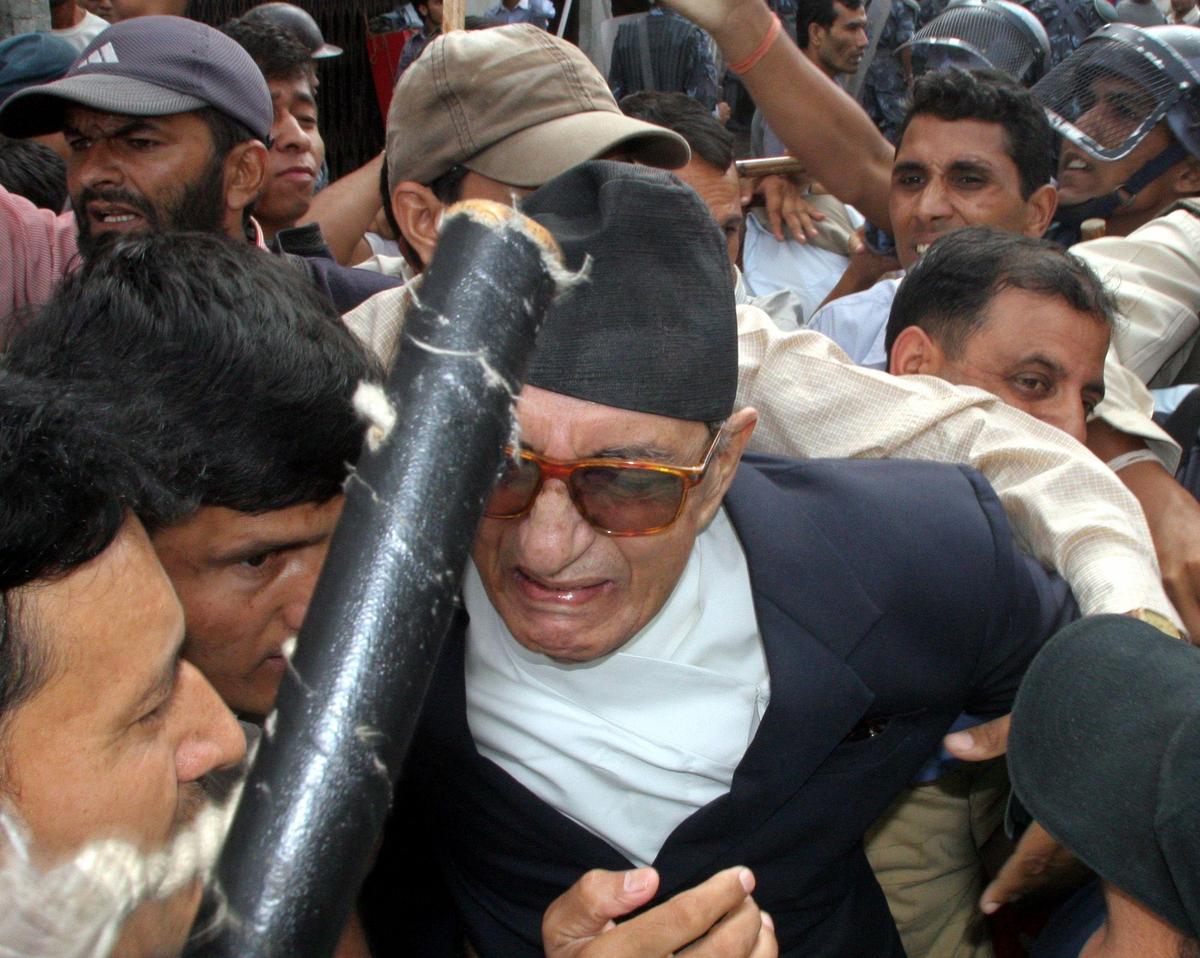
Nepali Congress leader and former prime minister Girija Prasad Koirala (C) tussles with Nepali police while trying to break into a restricted area at New Road in the capital Kathmandu September 4, 2005. Members and supporters of major political parties took part in a protest demanding the re-establishment democracy.
| Photo Credit:
REUTERS
Yet even as the peace process brought the Maoists into the mainstream, the Madhesis led fresh protests in the Terai demanding regional autonomy and non-discrimination, angered that the seven-party-Maoist alliance had inadequately addressed their aspirations. Meanwhile, the forces of the status quo across parties – the UML, the Nepali Congress, and even factions within the Maoists – were powerful enough to prevent the comprehensive state restructuring that was promised. The first CA broke down in 2012, unable to reach consensus on federalism.
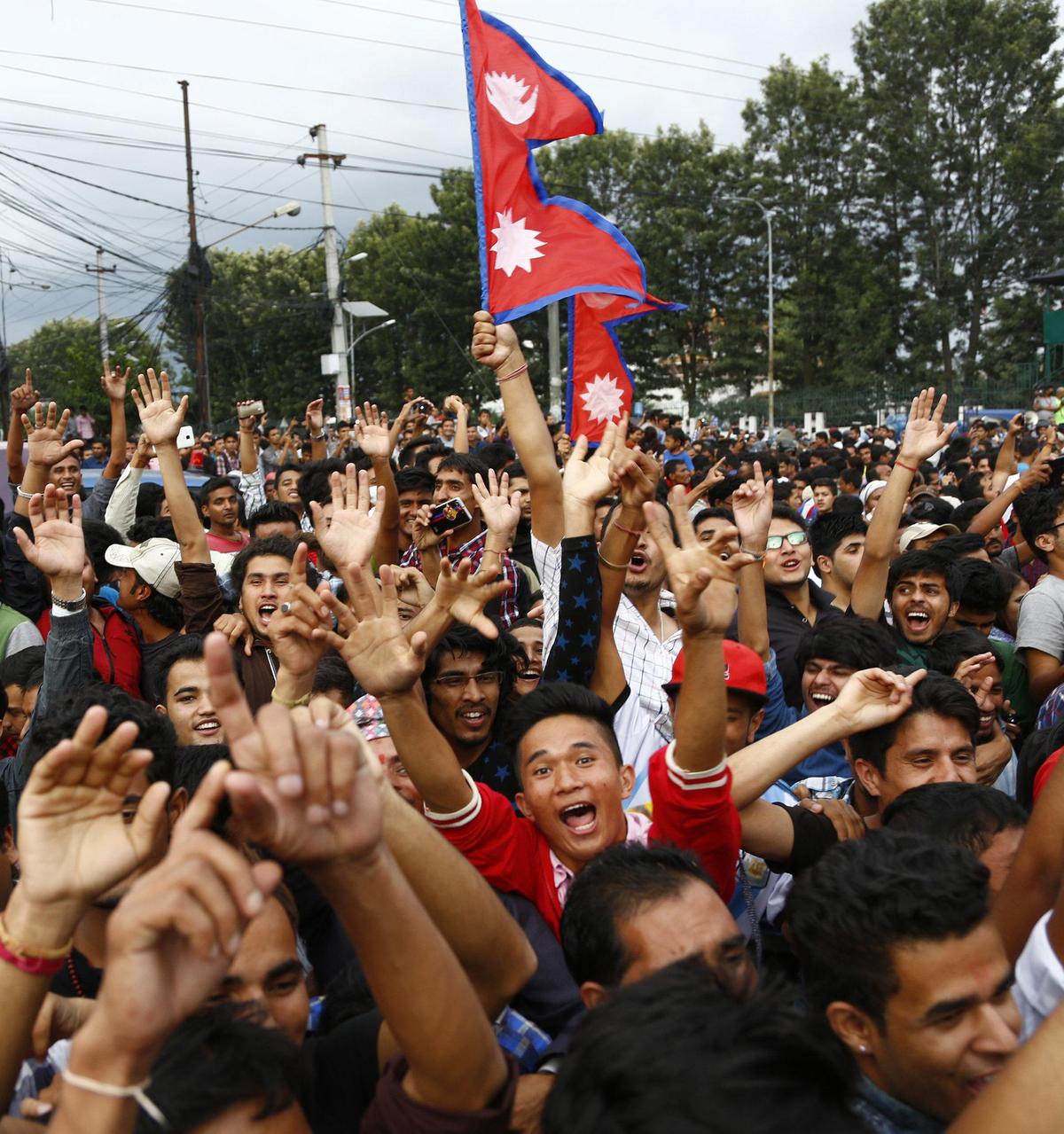
Nepali people gather to celebrate the adoption of the country’s new constitution, outside the constituent assembly hall in Kathmandu, Nepal, Sunday, Sept. 20, 2015. Nepali President Ram Baran Yadav signed the constitution and made the proclamation announcement, setting off a roar of applause from members of the Constituent Assembly in Kathmandu. The new constitution replaced an interim one that was supposed to be in effect for only a couple of years but had governed the nation since 2007.
| Photo Credit:
AP
In the elections to a second CA, the “status quoists” led by the CPN(UML)’s K.P. Oli and the Nepali Congress’s Sher Bahadur Deuba fared much better than the Maoists. This new CA promulgated a Constitution in 2015 that had watered-down provisions for federalism, to the strong displeasure of the Madhesis and janajatis, who launched fresh agitations in which over 50 people died. But the new Constitution retained substantial features such as secularism and proportional representation.
So while a popularly written constitution was finally realised in Nepal, something that had been denied since the 1950s, the structure of political power, dominated as it was by status quoists, resulted in no significant socio-economic change of the kind that the agitations leading up to the CAs had promised. What followed was a three-way rotation of power between Oli, Deuba, and the Maoist leader Pushpa Kamal Dahal. It was this dysfunctional carousel that set the stage for the Gen Z uprising a decade later.
Continuities and Differences
Each of Nepal’s previous upheavals produced a clear institutional break. The tumult in 1950 ended feudal aristocratic rule. Jan Andolan 1 in 1990 ended absolute monarchy and Jan Andolan II 2006-08 ended the monarchy altogether and established a republic through a constituent assembly.
In a way, the Gen Z protests and the RSP’s 2026 landslide represent a decisive popular verdict against the post-2015 political leadership— the Oli, Deuba, and Dahal triumvirate who rotated power among themselves through changing alliances while presiding over economic stagnation and mass out-migration. In this sense, the 2026 verdict is a more democratically expressed one than the transition of 1950 (which was largely elite-driven), and carries a clearer popular mandate than the Jan Andolans (which, being agitations, did not end up favouring any one political formation once the old order was removed). Nepal has, for the first time in its history, produced a parliamentary majority through a genuine multi-party election held in the wake of a popular uprising, something that none of its earlier transitions achieved so cleanly.
Yet the limitations of this moment are also apparent, and they need to be acknowledged. The Gen Z movement that catalysed it was largely an urban phenomenon concentrated in Kathmandu, led by a cohort that has remained largely silent on or was actively hostile to the federalism agenda that was central to the 2006 movement and the peace process. Some Gen Z activists and RSP-aligned leaders had spoken openly about rolling back federal provisions, threatening to negate hard-earned gains for Madhesi and Janajati communities. In the run-up to the elections, they appeared to realise the irreversibility of the federalism process in the country and toned down their rhetoric.
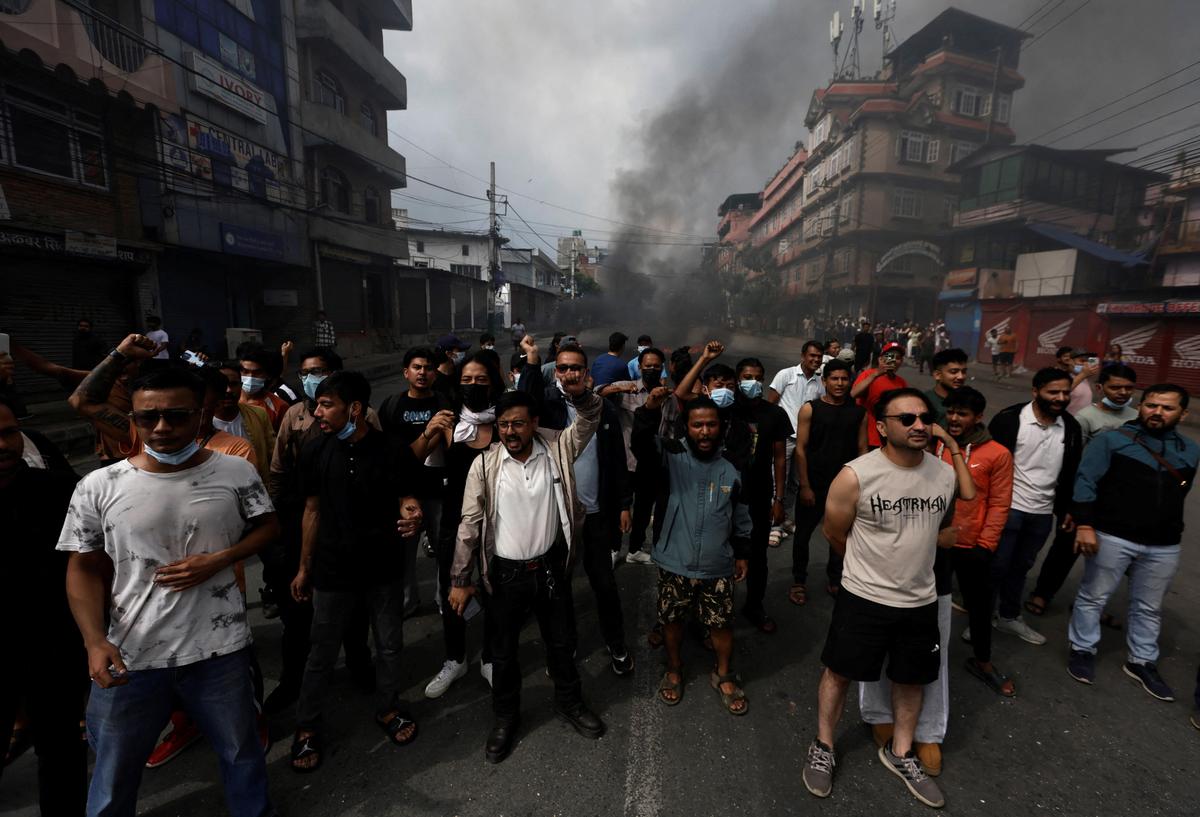
Demonstrators shout slogans as they gather to protest against Monday’s killing of 19 people after anti-corruption protests that were triggered by a social media ban which was later lifted, during a curfew in Kathmandu.
| Photo Credit:
REUTERS
The deeper structural question is whether the RSP government, inheriting as it does a poor country where productive forces remain unreleased for want of investment, an economy dependent on remittances, and economic losses from the September destruction running into billions of dollars, can break from the pattern of reform falling short of promises that has characterised every previous transition in Nepal’s modern history.
From the Rana era through the Panchayat period to the post-1990 democratic dispensation, each new political order left the fundamental constraints relatively untouched. An agrarian economy with negligible industrialisation. This, despite the country possessing enormous hydropower potential that has been discussed for decades but remains largely undeveloped. A domestic market that is limited and has lacked sustained private investment. A state apparatus whose key economic function has been the distribution of foreign aid and development contracts rather than promoting productive enterprise. These constraints have remained even as education has expanded and exposure to the outside world has raised Nepali aspirations, producing mass out-migration as the primary economic strategy of the young, with remittance dependence deepening in the absence of domestic opportunity.
Whether Balendra Shah and the RSP can deliver on what the democratic polity since 1990 could not is the central question. There are reasons for caution about the kind of change the RSP represents. Shah’s record as Kathmandu mayor was problematic. During his tenure, there was a distinctly anti-poor posturing with forcible evictions of landless people from the Bagmati riverbank without providing alternative housing and a crackdown on street vendors. These drew criticism from human rights activists. His tenure and working style also featured a confrontational, social-media driven approach that prioritised dramatic gestures over structural solutions.
His appeal rests on charisma, on grievance, and on a non-ideological anti-establishment posture, rather than on any programme for addressing the inequalities in Nepali society. The parallels with the Aam Aadmi Party in Delhi are worth noting here. It was also a movement born of anti-corruption anger that rode popular frustration and a leader’s charisma to power but was unable to offer structural change.
The RSP’s record between 2022 and 2024 only adds weight to scepticism. Despite positioning itself as an alternative to Nepal’s corrupt political class, the party twice joined coalition governments, first under the Maoists, then briefly under the CPN-UML. This tendency to seek power even without full mandate is a structural problem in Nepali politics. In an underdeveloped economy with an overdeveloped state apparatus, political power becomes the primary way to access foreign aid and contracts that help sustain the elite. Controlling ministries is necessary for controlling the flow of development funds, construction tenders, and foreign aid disbursements, which, in an economy with little private sector activity, constitute the most reliable source of accumulation.
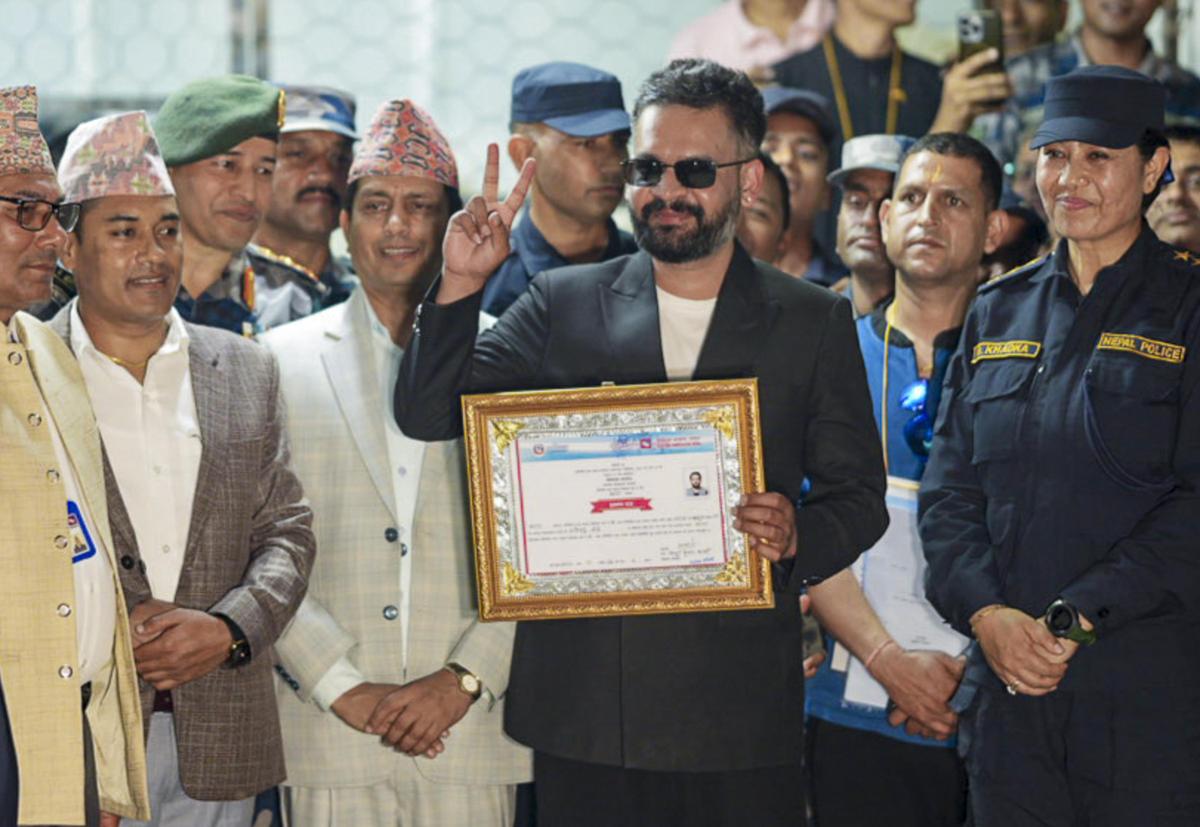
Balendra Shah, a candidate of the Rastriya Swatantra Party (RSP) from Jhapa Constituency-5, shows a certificate at the Election Commission premises after winning the constituency in the Nepal general elections, in Jhapa, Nepal, Saturday, March 7, 2026. Balendra Shah ‘Balen’ defeated four-time prime minister K P Sharma Oli by a huge margin of about 50,000 votes.
| Photo Credit:
PTI
This is precisely the reason why Nepal saw 30 changes of government since 1990. The stakes of holding office are extraordinarily high because the state is, in effect, the economy’s principal allocator of resources. Unless reforms generate economic activity beyond this governmentalism by freeing productive forces, by attracting investment, by creating employment that reduces the crushing dependence on remittances, the incentive structure that drives patronage politics will remain regardless of which party holds office.
The RSP does, however, hold one decisive advantage that no government since the 1990s has enjoyed, and it is one worth noting. It has a strong majority that guarantees stability without the need for coalition partners, freeing it from the dynamic of opportunistic alliances that has been Nepal’s bane. It must use this advantage for the structural reforms that every previous dispensation has promised but could not deliver. If the RSP ends up governing in the same manner it did as a junior coalition partner between 2022 and 2024, the result will not be transformation but a fresh cycle of disenchantment. And Nepal’s long struggle between democratic aspiration and structural change will continue unresolved.
Srinivasan Ramani is deputy national editor/ senior associate editor with The Hindu