Skip to content
  • Facebook
  • X
  • Linkedin
  • WhatsApp
  • YouTube
  • Associate Journalism
  • About Us
  • Privacy Policy
  • 033-46046046
  • editor@artifex.news
Artifex.News

Artifex.News

Stay Connected. Stay Informed.

  • Breaking News
  • World
  • Nation
  • Sports
  • Business
  • Science
  • Entertainment
  • Lifestyle
  • Toggle search form
  • Vote counting begins in tight Irish election
    Vote counting begins in tight Irish election World
  • Rohit Sharma, Gautam Gambhir Face Heat Over ‘Defensive’ Call, Dinesh Karthik Doesn’t Mince Words
    Rohit Sharma, Gautam Gambhir Face Heat Over ‘Defensive’ Call, Dinesh Karthik Doesn’t Mince Words Sports
  • Kedaara backed Ajax Engineering files for OFS with SEBI
    Kedaara backed Ajax Engineering files for OFS with SEBI Business
  • Cong releases second list of 23 candidates for Assam polls
    Cong releases second list of 23 candidates for Assam polls Nation
  • 2 Soldiers Injured In Gunfight With Terrorists In Jammu And Kashmir, Encounter On
    2 Soldiers Injured In Gunfight With Terrorists In Jammu And Kashmir, Encounter On Nation
  • Mattia Zaccagni Rescues Italy Leaving Croatia In Euro 2024 Limbo
    Mattia Zaccagni Rescues Italy Leaving Croatia In Euro 2024 Limbo Sports
  • ‘Free’ vaccines, single-dose nudge pushes India-made HPV vaccine to back of the line
    ‘Free’ vaccines, single-dose nudge pushes India-made HPV vaccine to back of the line Science
  • U.N. chief says people are looking to leaders for action and a way out of the current global ‘mess’
    U.N. chief says people are looking to leaders for action and a way out of the current global ‘mess’ World
Ice patches on melting glaciers greater threat than thought: ISRO scientists

Ice patches on melting glaciers greater threat than thought: ISRO scientists

Posted on March 15, 2026 By admin


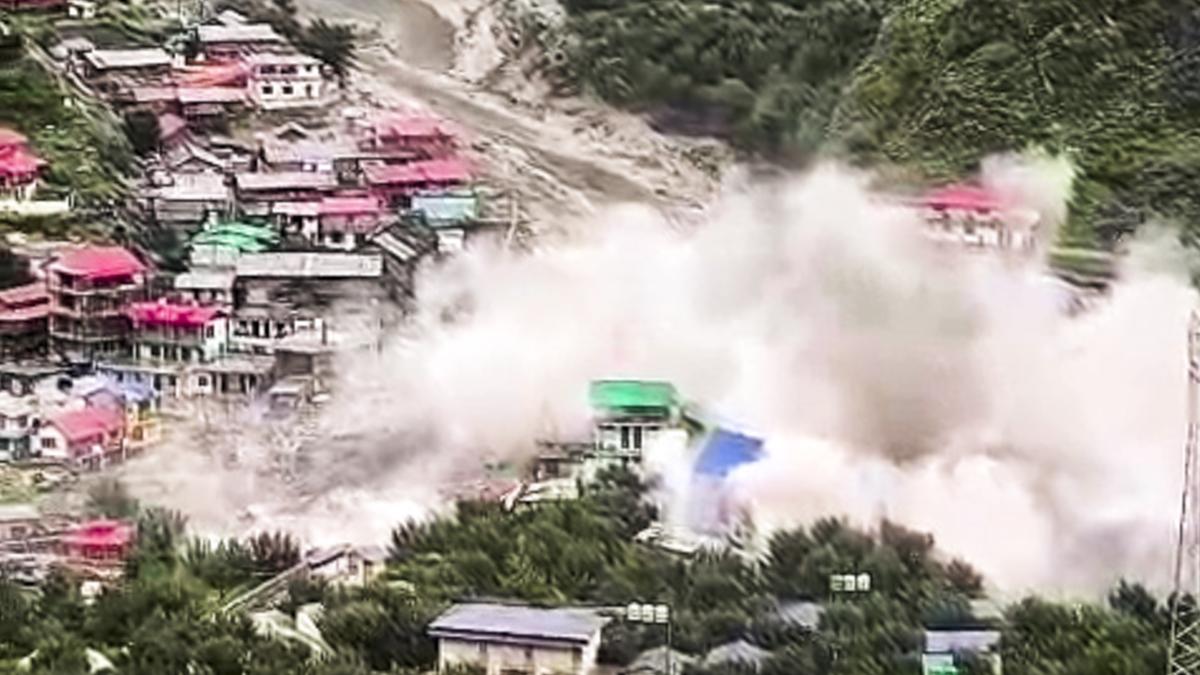
A new study by scientists from the Indian Space Research Organisation (ISRO), published in NPJ Natural Hazards, examines the August 5, 2025 flash flood that destroyed Dharali village in Uttarakhand and killed six people. It sheds light on how warming temperatures affect glaciers, especially exposed ice patches on retreating glaciers, and highlights the need to monitor glaciers using satellite images to provide early warnings of possible disasters.

The study, titled ‘Ice-patch collapse and early-warning implications from a Himalayan flash flood: emerging cryo-hydrological hazards under deglaciation’, concludes that the collapse of an ice patch on the glacier above Dharali is linked to deglaciation in the Himalaya.

The authors say the findings could help improve understanding of climate risk and disaster preparedness. The study shows that the flash flood was triggered by the collapse of an ice patch in the nivation area of the Srikanta glacier.

Nivation is defined as the erosion of the ground beneath and around a snow bank, primarily as a result of alternate freezing and thawing. This can form a nivation hollow, which gradually becomes deeper when snow repeatedly accumulates in the same place.

History of extreme events

The study area lies in the upper Bhagirathi river basin in Uttarkashi district of Uttarakhand. It covers the ridge-to-valley system from the Srikanta glacier to Dharali village, located at a height of 2,650-2,700 m along the Bhagirathi river. The village lies downstream of the glacier-fed Khir Gad stream, which originates from the Srikanta glacier, flows through Dharali, and then joins the Bhagirathi river. The Khir Gad divides Dharali into right- and left-hand bank settlements, increasing its risk of flash floods.

The region has a documented history of extreme events, including the large landslides that brought down massive boulders during the June 2013 Himalayan floods. The researchers used satellite observations, high-resolution topographic analysis, and visual records to reconstruct the sequence of events linking unstable glacier ice to the sudden flood.

The findings expand the range of recognised glacier-related hazards in the Himalaya and identify exposed ice patches as an under-recognised risk from glacier melt.

The Dharali event also shows how instability in the cryosphere can create hazards downstream in high-altitude regions.

Exposed ice patches

The study calls for closer monitoring of glaciers and argues that the focus should extend beyond glacial lake outburst floods (or GLOFs) to include smaller, often overlooked instabilities in the cryosphere. The exposure of ice patches in the Srikanta glacier before the flood represents a transitional state in the snow-ice regime.

“Pre-event imagery during the ablation period revealed exposed ice patches on steep north- to northeast-facing slopes, indicating thinning seasonal snow and firn cover consistent with ongoing deglaciation,” the authors wrote in the paper.

Such exposure indicates thinning seasonal snow and firn, which is ice that lies between snow and fully formed glacial ice.It usually occurs when warmer conditions reduce the insulating snow layer that stabilises the ice beneath.

Ice patches covered by firn and seasonal snow are relatively resistant to short-term temperature changes whereas exposed ice is more likely to shift or loosen. Because exposed ice responds more quickly to temperature changes or heavy rainfall, it can melt, fragment or collapse more easily, releasing ice, meltwater, and debris that can trigger flash floods.

Therefore, the study finds that the presence of exposed ice patches on the Srikanta Glacier immediately before the floods of August 5 was a signal of ongoing deglaciation and a direct indicator in the landscape that increased the likelihood of such floods.

Satellite observations

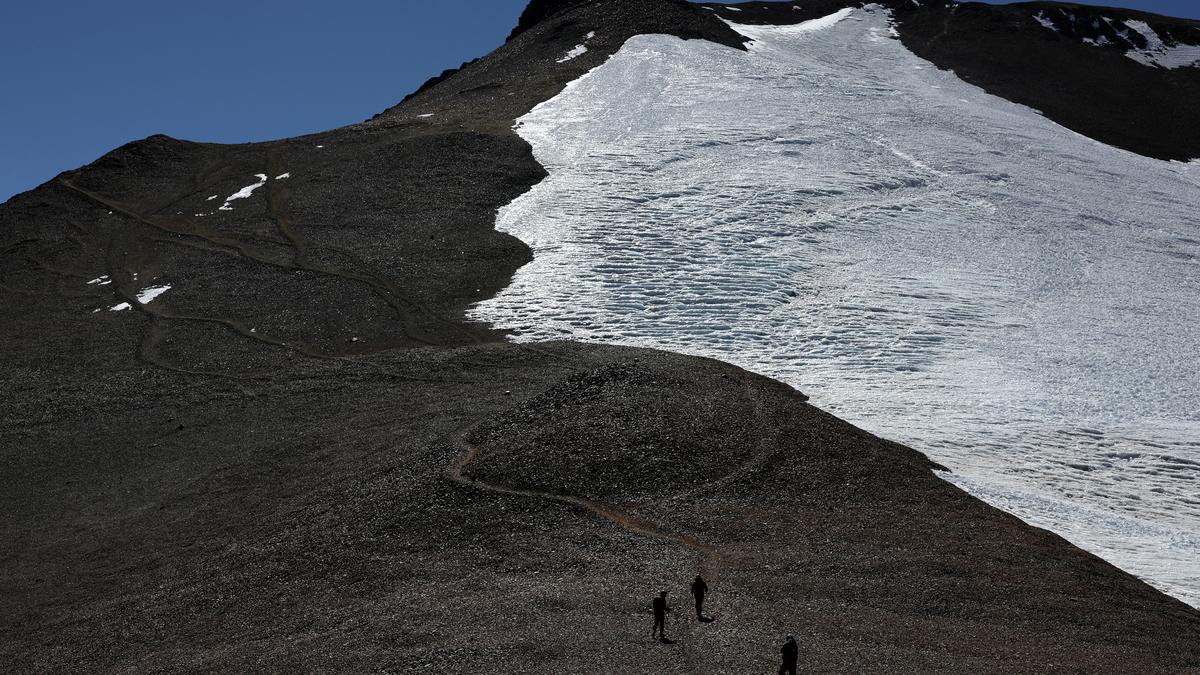
Srikanta Glacier is a small- to medium-sized valley glacier with a height of 6,133 m, around 9.8 km upstream of Dharali. The glacier has steep accumulation and ablation zones, seasonal snow cover, and extensive nivation areas. Mountaineering and expedition reports describe unstable ice surfaces, steep slopes, avalanche-prone terrain, and persistent nivation zones beneath the ridge below the Srikanta peak, the paper said.

A key implication of the study is that it shows the value of pre-event satellite observations for early warning. Satellite images showed exposed ice patches persisting in the nivation zone during the ablation period, when the glacier loses ice and snow. This indicated that the seasonal snow and firn cover had thinned.

Studies from other cold regions, including the Canadian Arctic and Greenland, also show that the collapse of ice patches can trigger hazards as glaciers lose more ice and snow due to regional warming.

Identifying nivation hollows

Although rarely reported from the Himalaya, events such as the February 2021 Chamoli rock-ice avalanche demonstrate the growing prominence of cryospheric hazards in deglaciating terrain, the study said. In steep nivation hollows, such instability can suddenly release ice, meltwater, and debris, triggering downslope mass movement and related cryo-hydrological hazards.

The Dharali flash flood illustrates how cryospheric instability can trigger geomorphic changes and create hazards downstream in high-altitude Himalayan regions. The study finds that the rapid disintegration of an exposed ice patch in the nivation zone of the Srikanta glacier was the main cause of the event.

The reconstructed sequence, from the exposure of the ice patch during the ablation period to its disappearance and the resulting downstream impacts, shows how earth-observation data can help identify and reconstruct such extreme events in remote mountain terrain.

“A broader implication of this analysis is the identification of nivation hollows as geomorphologically sensitive zones for cryospheric instability,” the authors concluded.

“Persistent snow and ice retention on north- to northeast-facing slopes below the Srikanta ridge created conditions conducive to ice-patch exposure and subsequent failure during the ablation season. Similar settings are widespread across the Himalaya, suggesting that systematic identification and monitoring of such zones should form part of regional hazard assess- ment and disaster-risk reduction strategies in the context of ongoing deglaciation

Meena Menon is an independent journalist, researcher and author. She has a PhD from the University of Leeds.

Published – March 16, 2026 07:15 am IST


Source link

Science

Post navigation

Previous Post: Access Denied
Next Post: French Mayoral elections gauge far-right strength before Presidential ballot

Related Posts

  • Scientists discover new fungus species in Thrissur
    Scientists discover new fungus species in Thrissur Science
  • ‘Publication retractions from India have skyrocketed since 2022’
    ‘Publication retractions from India have skyrocketed since 2022’ Science
  • Retinal diseases: RNA therapeutics show promise but is India ready?
    Retinal diseases: RNA therapeutics show promise but is India ready? Science
  • Black hole is observed snacking on sun-like star, bite by bite
    Black hole is observed snacking on sun-like star, bite by bite Science
  • Cows can use tools, and one Austrian cow has now shown it clearly
    Cows can use tools, and one Austrian cow has now shown it clearly Science
  • Rain inside the house – The Hindu
    Rain inside the house – The Hindu Science

More Related Articles

Science Quiz | The obscure mathematics of string theory Science Quiz | The obscure mathematics of string theory Science
IPR Gandhinagar team proposes roadmap for India’s fusion power plans IPR Gandhinagar team proposes roadmap for India’s fusion power plans Science
Significance of quantum dots in nanotechnology | Explained Significance of quantum dots in nanotechnology | Explained Science
Cyclone frequency may rise over Indian coast from the warming of Pacific: study Cyclone frequency may rise over Indian coast from the warming of Pacific: study Science
Why do so many contemporary vaccines have low durability? | Explained Why do so many contemporary vaccines have low durability? | Explained Science
Brains that don’t see in greyscale first over-rely on colours: Project Prakash study Brains that don’t see in greyscale first over-rely on colours: Project Prakash study Science
SiteLock

Archives

  • May 2026
  • April 2026
  • March 2026
  • February 2026
  • January 2026
  • December 2025
  • November 2025
  • October 2025
  • September 2025
  • August 2025
  • July 2025
  • June 2025
  • May 2025
  • April 2025
  • March 2025
  • February 2025
  • January 2025
  • December 2024
  • November 2024
  • October 2024
  • September 2024
  • August 2024
  • July 2024
  • June 2024
  • May 2024
  • April 2024
  • March 2024
  • February 2024
  • January 2024
  • December 2023
  • November 2023
  • October 2023
  • September 2023
  • August 2023
  • July 2023
  • June 2023
  • May 2023
  • April 2023
  • March 2023
  • February 2023
  • January 2023
  • December 2022
  • November 2022
  • October 2022
  • September 2022
  • August 2022
  • July 2022
  • June 2022
  • May 2022

Categories

  • Business
  • Nation
  • Science
  • Sports
  • World

Recent Posts

  • Oil Minister Puri dispels any fuel supply concerns; LPG production ramped up to 54,000 tonnes/day
  • Tamil Nadu CM Vijay gives maiden speech in Assembly after TVK win
  • India declines Russian LNG under sanctions, talks continue on permitted cargoes, sources say
  • Elon Musk, Apple’s Tim Cook to head to China with Trump, per White House
  • Jeffrey Epstein files go on display at New York pop-up exhibit featuring 3.5 million pages

Recent Comments

  1. JeffryFok on UP Teacher Who Asked Students To Slap Muslim Classmate
  2. MiguelWhato on UP Teacher Who Asked Students To Slap Muslim Classmate
  3. Richardsally on UP Teacher Who Asked Students To Slap Muslim Classmate
  4. MatthewUsalf on UP Teacher Who Asked Students To Slap Muslim Classmate
  5. Brucetrura on UP Teacher Who Asked Students To Slap Muslim Classmate
  • “On Certain Days They Will Have…”: India Batting Coach’s Blunt Take On Pakistan Pacers
    “On Certain Days They Will Have…”: India Batting Coach’s Blunt Take On Pakistan Pacers Sports
  • “We Were Expecting MS Dhoni To Come Out But…”: CSK Coach Michael Hussey Confirms Thala’s Role
    “We Were Expecting MS Dhoni To Come Out But…”: CSK Coach Michael Hussey Confirms Thala’s Role Sports
  • India vs Bangladesh live score over Match 17 ODI 21 25 updates
    India vs Bangladesh live score over Match 17 ODI 21 25 updates Sports
  • UN approves resolution to commemorate the 1995 Srebrenica genocide annually over Serb opposition
    UN approves resolution to commemorate the 1995 Srebrenica genocide annually over Serb opposition World
  • Zomato CEO Deepinder Goyal Says He Was Stopped From Using Gurugram’s Ambience Mall Lift While Collecting Order
    Zomato CEO Deepinder Goyal Says He Was Stopped From Using Gurugram’s Ambience Mall Lift While Collecting Order Nation
  • Virat Kohli Explains 2-Month Paternity Break As Wife Anushka Sharma Gave Birth To Son Akaay
    Virat Kohli Explains 2-Month Paternity Break As Wife Anushka Sharma Gave Birth To Son Akaay Sports
  • From Ex-Chief Justice To Grammy Winner, Full List Of Padma Awardees
    From Ex-Chief Justice To Grammy Winner, Full List Of Padma Awardees Nation
  • 12 Trump Picks Trusted To Deliver Republican’s 6 Big Poll Promises
    12 Trump Picks Trusted To Deliver Republican’s 6 Big Poll Promises World

Editor-in-Chief:
Mohammad Ariff,
MSW, MAJMC, BSW, DTL, CTS, CNM, CCR, CAL, RSL, ASOC.
editor@artifex.news

Associate Editors:
1. Zenellis R. Tuba,
zenelis@artifex.news
2. Haris Daniyel
daniyel@artifex.news

Photograher:
Rohan Das
rohan@artifex.news

Artifex.News offers Online Paid Internships to college students from India and Abroad. Interns will get a PRESS CARD and other online offers.
Send your CV (Subjectline: Paid Internship) to internship@artifex.news

Links:
Associate Journalism
About Us
Privacy Policy

News Links:
Breaking News
World
Nation
Sports
Business
Entertainment
Lifestyle

Registered Office:
72/A, Elliot Road, Kolkata - 700016
Tel: 033-22277777, 033-22172217
Email: office@artifex.news

Editorial Office / News Desk:
No. 13, Mezzanine Floor, Esplanade Metro Rail Station,
12 J. L. Nehru Road, Kolkata - 700069.
(Entry from Gate No. 5)
Tel: 033-46011099, 033-46046046
Email: editor@artifex.news

Copyright © 2023 Artifex.News Newsportal designed by Artifex Infotech.