



Skip to content
  • Facebook
  • X
  • Linkedin
  • WhatsApp
  • Associate Journalism
  • About Us
  • Privacy Policy
  • 033-46046046
  • editor@artifex.news
Artifex.News

Artifex.News

Stay Connected. Stay Informed.

  • Breaking News
  • World
  • Nation
  • Sports
  • Business
  • Science
  • Entertainment
  • Lifestyle
  • Toggle search form
  • Access Denied
    Access Denied Nation
  • West Indies Legend Dwayne Bravo Announces Retirement From All Forms Of Cricket
    West Indies Legend Dwayne Bravo Announces Retirement From All Forms Of Cricket Sports
  • GDP to grow at 7.4% in 2025-26, government predicts in first advance estimates for the year
    GDP to grow at 7.4% in 2025-26, government predicts in first advance estimates for the year Business
  • Access Denied
    Access Denied Nation
  • We wanted to put fear in the opposition bowlers: Tilak
    We wanted to put fear in the opposition bowlers: Tilak Sports
  • Not Gautam Gambhir, This India Great Likely To Guide Team In Next Series: Report
    Not Gautam Gambhir, This India Great Likely To Guide Team In Next Series: Report Sports
  • Patna-Ahmedabad IndiGo Flight Diverted To Indore Due To Medical Emergency
    Patna-Ahmedabad IndiGo Flight Diverted To Indore Due To Medical Emergency Nation
  • Vijay Mallya On Banks Recovering Rs 14,131 Crore Assets
    Vijay Mallya On Banks Recovering Rs 14,131 Crore Assets Nation
Experiencing heat during pregnancy results in fewer male babies: study

Experiencing heat during pregnancy results in fewer male babies: study

Posted on March 5, 2026 By admin


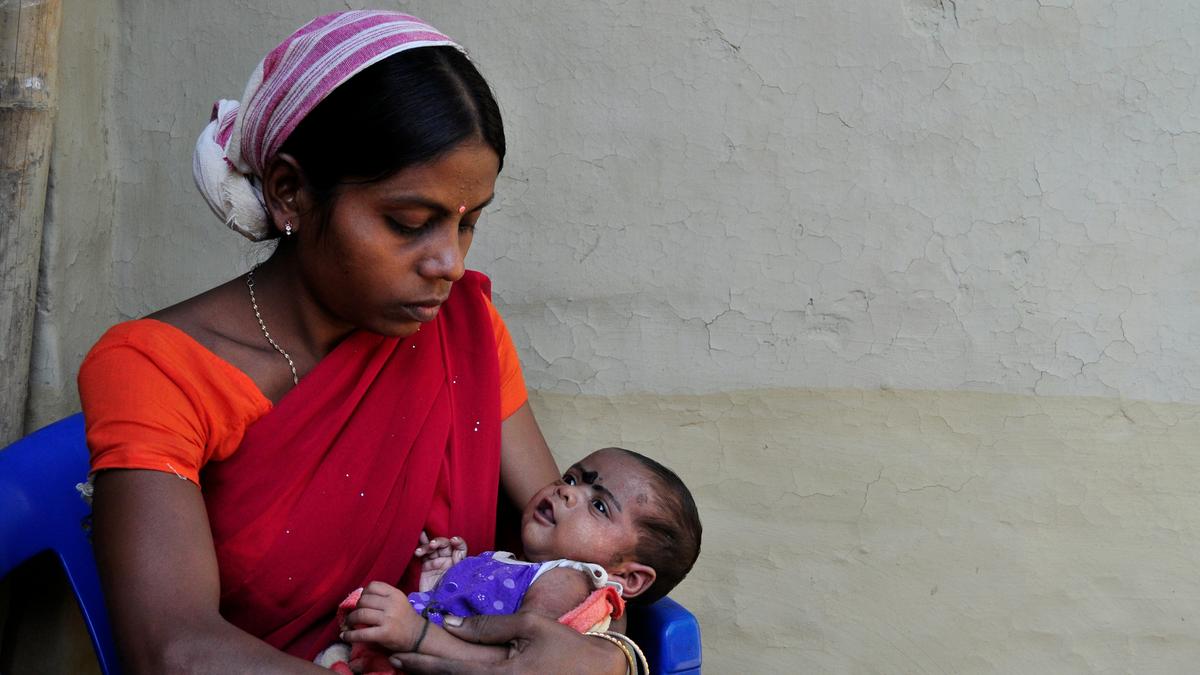
When pregnant women experience higher ambient temperatures during gestation, fewer males are born, a recent analysis of demographic and health surveys in sub-Saharan Africa and India, showed.  

A paper titled ‘Temperature and sex ratios at birth’ in the journal Demography, by Jasmin Abdel Ghany et al., concludes after a detailed analysis that experiencing higher ambient temperatures during pregnancy is associated with changes in the natural sex ratio at birth across India and sub-Saharan Africa. The paper analyses over five million births drawn from more than 90 Demographic and Health Surveys, containing local temperature data, to examine how heat exposure across trimesters shapes sex ratio at birth. Sex ratios at birth shape population composition and are closely linked to maternal health and gender discrimination. 

The researchers write: “We find that days with a maximum temperature above 20 °C are negatively associated with male births in both regions. In sub-Saharan Africa, we observe fewer male births after high first-trimester temperature exposure, consistent with increased spontaneous abortions from maternal heat stress… By contrast, in India, we find that second-trimester temperature exposure is associated with fewer male births.” These reductions are focused among older mothers in rural areas who have had a number of children, the study highlights.

The daily maximum temperature in the month of birth is 30.0 °C in sub-Saharan Africa and 30.3 °C in India. In India, in the second trimester, the results indicate a negative relationship between temperature exposure and birth sex. The effect of a 25 to 30 °C indicates a lower male birth probability by 0.014 percentage points.  

To account for both biophysical health and behavioral mechanisms, researchers chose two regions with vastly different experiences with son preference and sex-selective abortion: India (where several regions have high son preference and sex selective abortions) and sub-Saharan Africa (where there is little evidence of son preference and sex-selective abortions are minimal).  

The hypothesis is that these heat-induced pregnancy losses are male-biased, in line with Trivers and Willard’s “frail male” hypothesis. “According to this evolutionary argument, weak males may have a lower chance of surviving to birth under poor environmental conditions. After birth, males have lower survival probabilities than females and thus require greater maternal investment, the authors write.  

Vidhya Venugopal, Country Director (NIHR GHRC NCD-EC), faculty of Public Health, Sri Ramachandra Institute of Higher Education and Research, Chennai, says the results are not unexpected. Instead, they underline the urgency to examine solutions to protect vulnerable groups when temperatures soar.   

“When your body temperature rises by one or two degrees above the basal temperature, it is a fever. Pregnant women already have a higher body temperature and if with rising heat situations, there will certainly be a cascade of negative impacts… Physiologically, the organss take a hit. We can expect the same things as happen after a bout of fever – extreme tiredness, fatigue, lower cognition, at a mimimum here. In pregnant women, there is a definite increase in adverse events including hypertension, gestational diabetes, preterm births, the risk of underweight babies increases,” she explains.  

While heat is considered ‘extremely natural in tropical countries’, such as India and sub-Saharan Africa, the impact of heat stress particularly on people who live in resource poor settings is grossly underestimated, Dr. Vidhya says.  

Jane Hirst, Chair in Global Women’s Health, The George Institute for Global Health, Imperial College London, agrees. “Most of the evidence associating that risk is not from the hottest, or the low and middle income countries, she adds. That is slowly changing,” she says. Evidence is now emerging from these nations also, indicating the risks might actually be greater. “For instance, the combined global evidence points to a 25 % increase in pre-term births with heat stress. Our study in Tamil Nadu however indicated that it was three times the risk, nearly 300 %.”  

There is a huge role for governments to play here, Dr. Vidhya and Prof. Jane agree. Both of them see communicating risk to the vulnerable populations as a key step, as risk perception is very low, and thereby, capacity to intervene as well. “The communication must be done in a manner that reaches all of them,” Dr. Vidhya says. Protecting vanishing traditional knowledge systems that allow for resource-appropriate cooling mechanisms, including the diet, is also important, she adds. 

Structural changes must also be initiated according to Prof. Jane – make sure the antenatal clinic is located inside a well-ventilated building, or safe drinking water is available to help them cool off. “The Indian government has taken the lead in putting together heat action plans, at the regional and sub regional levels. However, a third of them did not consider pregnant and lactating women, and infants as a vulnerable group,” she points out.

While ensuring that there is sufficient funding and resources for climate engineering, Prof. Jane says it is important to learn from the best practices. The SMART Health Pregnancy trial, currently underway in two Indian States has been looking at providing early warning signals to AASHA workers on weather events: “This has shown acceptability and is also to be expanded across 7 other countries.”

ramya.kannan@thehindu.co.in

Published – March 06, 2026 07:15 am IST


Source link

Science

Post navigation

Previous Post: MRPL refutes declaring any force-majeure on exports
Next Post: Access Denied

Related Posts

  • Sci-Five | The Hindu Science Quiz: On first human to enter space
    Sci-Five | The Hindu Science Quiz: On first human to enter space Science
  • Centre to nudge banks to fund renewable energy projects
    Centre to nudge banks to fund renewable energy projects Science
  • Redesigned programmes can vastly improve TB treatment outcomes
    Redesigned programmes can vastly improve TB treatment outcomes Science
  • Indian astrophysicist receives COSPAR Harrie Massey Award 2024  
    Indian astrophysicist receives COSPAR Harrie Massey Award 2024   Science
  • ISRO wants to transfer 50% of PSLV development to industry consortium, says V. Narayanan
    ISRO wants to transfer 50% of PSLV development to industry consortium, says V. Narayanan Science
  • The ‘genomic accordion’ mpox viruses use to evolve, infect humans
    The ‘genomic accordion’ mpox viruses use to evolve, infect humans Science

More Related Articles

Strong solar storm hits Earth, could disrupt communications and produce northern lights in U.S. Strong solar storm hits Earth, could disrupt communications and produce northern lights in U.S. Science
Efforts to restore mangroves can turn the tide on India’s coastal security Efforts to restore mangroves can turn the tide on India’s coastal security Science
How does glue work: the physics of what makes glue so sticky How does glue work: the physics of what makes glue so sticky Science
China’s heatwaves threaten to dry up supply of yummy hairy crabs China’s heatwaves threaten to dry up supply of yummy hairy crabs Science
Loud music may damage your hearing before you realise it Loud music may damage your hearing before you realise it Science
How gels and shampoos move: Raman Research Institute builds a device to see it in action How gels and shampoos move: Raman Research Institute builds a device to see it in action Science
SiteLock

Archives

  • March 2026
  • February 2026
  • January 2026
  • December 2025
  • November 2025
  • October 2025
  • September 2025
  • August 2025
  • July 2025
  • June 2025
  • May 2025
  • April 2025
  • March 2025
  • February 2025
  • January 2025
  • December 2024
  • November 2024
  • October 2024
  • September 2024
  • August 2024
  • July 2024
  • June 2024
  • May 2024
  • April 2024
  • March 2024
  • February 2024
  • January 2024
  • December 2023
  • November 2023
  • October 2023
  • September 2023
  • August 2023
  • July 2023
  • June 2023
  • May 2023
  • April 2023
  • March 2023
  • February 2023
  • January 2023
  • December 2022
  • November 2022
  • October 2022
  • September 2022
  • August 2022
  • July 2022
  • June 2022
  • May 2022

Categories

  • Business
  • Nation
  • Science
  • Sports
  • World

Recent Posts

  • Israeli Military says it will pursue every successor of Iran’s Khamenei
  • Access Denied
  • Access Denied
  • Access Denied
  • Access Denied

Recent Comments

  1. Jamessop on UP Teacher Who Asked Students To Slap Muslim Classmate
  2. Michaelplard on UP Teacher Who Asked Students To Slap Muslim Classmate
  3. Jamessop on UP Teacher Who Asked Students To Slap Muslim Classmate
  4. Michaelplard on UP Teacher Who Asked Students To Slap Muslim Classmate
  5. Michaelplard on UP Teacher Who Asked Students To Slap Muslim Classmate
  • Gazans After Israel’s Evacuation Order: Death Better Than Leaving
    Gazans After Israel’s Evacuation Order: Death Better Than Leaving World
  • Video Shows Eatery Worker Spitting On Roti In UP’s Ghaziabad, Arrested: Cops
    Video Shows Eatery Worker Spitting On Roti In UP’s Ghaziabad, Arrested: Cops Nation
  • Russia says glide bombs strike Ukrainian troops in Kursk border region, state news reports
    Russia says glide bombs strike Ukrainian troops in Kursk border region, state news reports World
  • Sumit Nagal Loses To Seong-chan Hong In Final Qualifying Round At Indian Wells
    Sumit Nagal Loses To Seong-chan Hong In Final Qualifying Round At Indian Wells Sports
  • In a first, U.K. sends asylum seeker to Rwanda
    In a first, U.K. sends asylum seeker to Rwanda World
  • ‘My Body Shut Down,’ Says Frances Tiafoe After US Open Heartbreak
    ‘My Body Shut Down,’ Says Frances Tiafoe After US Open Heartbreak Sports
  • Government forms new panel to review all NSO data
    Government forms new panel to review all NSO data Business
  • Access Denied Sports

Editor-in-Chief:
Mohammad Ariff,
MSW, MAJMC, BSW, DTL, CTS, CNM, CCR, CAL, RSL, ASOC.
editor@artifex.news

Associate Editors:
1. Zenellis R. Tuba,
zenelis@artifex.news
2. Haris Daniyel
daniyel@artifex.news

Photograher:
Rohan Das
rohan@artifex.news

Artifex.News offers Online Paid Internships to college students from India and Abroad. Interns will get a PRESS CARD and other online offers.
Send your CV (Subjectline: Paid Internship) to internship@artifex.news

Links:
Associate Journalism
About Us
Privacy Policy

News Links:
Breaking News
World
Nation
Sports
Business
Entertainment
Lifestyle

Registered Office:
72/A, Elliot Road, Kolkata - 700016
Tel: 033-22277777, 033-22172217
Email: office@artifex.news

Editorial Office / News Desk:
No. 13, Mezzanine Floor, Esplanade Metro Rail Station,
12 J. L. Nehru Road, Kolkata - 700069.
(Entry from Gate No. 5)
Tel: 033-46011099, 033-46046046
Email: editor@artifex.news

Copyright © 2023 Artifex.News Newsportal designed by Artifex Infotech.