






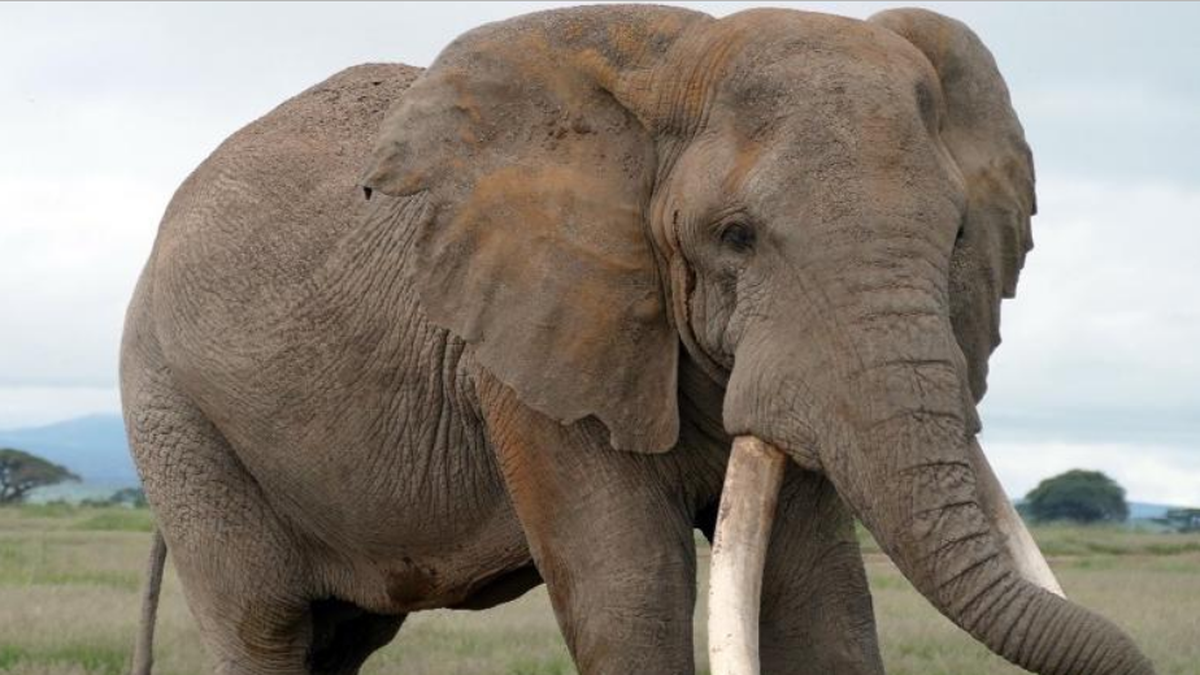
Early this year, when Craig, one of Africa’s “super tusker” elephants, died in Kenya’s Amboseli National Park, tributes poured in from across the world. Photographs of his very large ivory tusks, nearly brushing the ground as he walked with Mount Kilimanjaro in the background, resurfaced online. Tourists shared memories of sightings and safari guides recalled their encounters with the regal tusker, who was known for his patient, calm demeanour.
Also Read | Reteti Elephant Sanctuary | Rewilding in Kenya
Craig was not just an elephant. He had become a global symbol of wilderness, survival, tourism, and wildlife conservation.
An elephant with tusks that size is extraordinarily rare today. Decades of ivory poaching have selectively removed individuals with large tusks, leaving behind animals with less ivory. Craig therefore represented a genetic lineage that is rapidly disappearing. But he was also something else: a source of livelihood for many. Safaris, lodges, photographers, and local communities all benefited from the tourists he attracted. People travelled across continents hoping for a glimpse of him.
Yet his story also reveals something people often overlook. While individual animals can inspire love and attention, conservation itself does not operate at the level of individuals. It operates at the level of populations, habitats, and ecosystems.
Power of a name
Craig’s fame began with something simple: his name. Born into a closely observed herd studied for decades by biologist Cynthia Moss, he grew up in the public eye.
Naming wild animals transforms them from anonymous members of a species into characters in a story. Once an animal has a name, people follow its life, celebrate its milestones, and mourn its death. They return to a landscape hoping to see a familiar face again. Over time, public affection for an individual can, conservationists hope, grow into curiosity about the species and the ecosystem it inhabits.
Zoos have long understood this connection. ‘Star’ animals anchor public attention, drive visitor numbers, and help raise funds for conservation and education. A recent example is Pesto, the king penguin chick at the Sea Life Aquarium in Melbourne, Australia, whose extraordinary size made him a viral sensation. His popularity translated into a significant boost in visits, reportedly increasing visitor footfall by more than 30%. Other national parks and protected areas have also adopted the same paradigm through tourism, documentaries, and social media.
The practice of naming wild individuals became popular in the 1960s, when the noted primatologists Jane Goodall and Dian Fossey broke from scientific convention by naming chimpanzees and gorillas instead of assigning them numbers. David Greybeard, the chimpanzee who became famous worldwide after Goodall observed him using tools, is remembered as an individual, identifiable by the grey facial hair that gave him a characteristically wise appearance.
Similarly, Digit, a young gorilla with a missing finger, became known after appearing alongside Fossey in photographs. Naming created memory, memory created narrative, narrative created empathy. Even then, however, the science of conservation has remained firmly focused on populations.
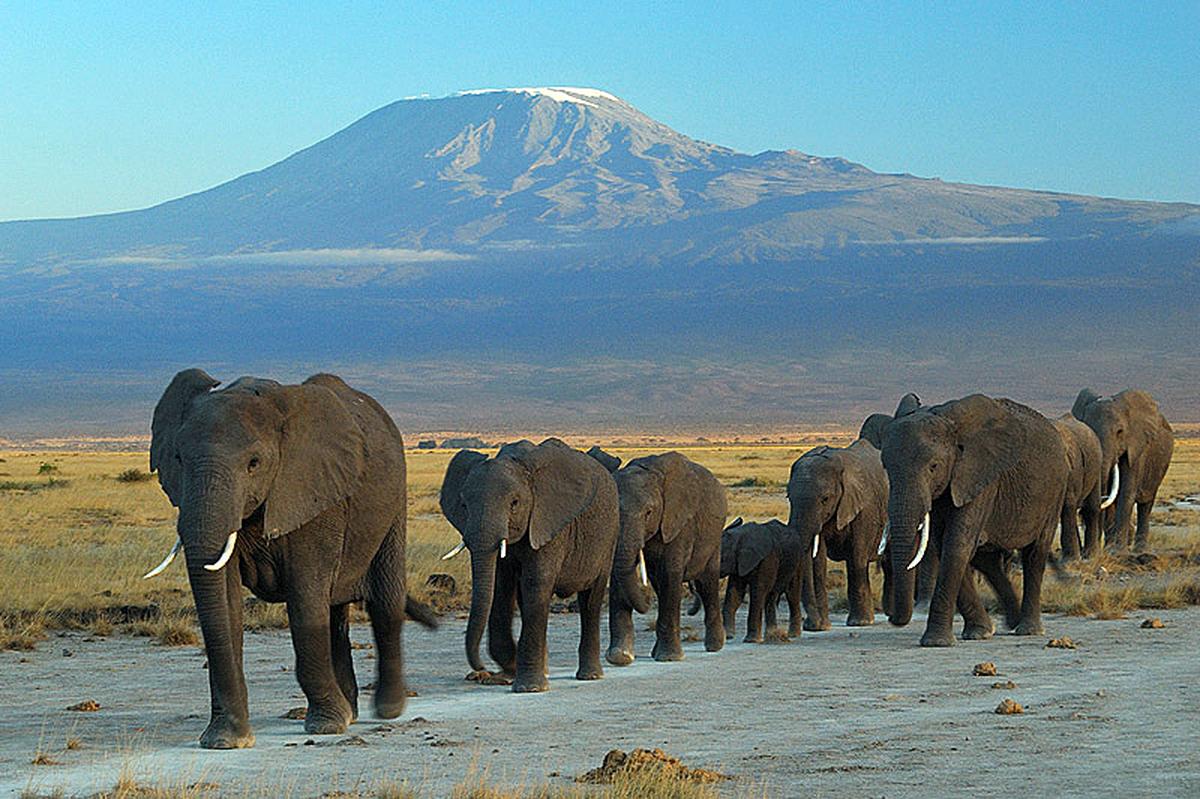
Elephants at Amboseli National Park with Mt Kilimanjaro in the background, 2012.
| Photo Credit:
Amoghavarsha JS (CC BY-SA)
Icons of tourism
India, too, has had its own version of Craig. Machli, the famed tigress of Ranthambore, became one of the most photographed tigers in the world. She appeared in documentaries, featured on magazine covers, and drew thousands of visitors to the park. Tourism associated with her reportedly generated millions of dollars over her lifetime. Her descendants continue to carry forward her legacy, still drawing tourists to Ranthambore today.
Machli was not ‘conservation’ in herself but she did not undermine it either. She coexisted with conservation goals. Her presence helped sustain tourism, which in turn supported local livelihoods and park revenues. Visitors who came to visit Machli sometimes left with a broader appreciation for forests and wildlife.
But achieving this balance has not been easy.
Wildlife tourism built around celebrity animals often expands beyond ecological limits. Resorts mushroom near park boundaries. Safari vehicles crowd sightings. Guides, who are under pressure to deliver tiger or elephant ‘encounters’, may focus narrowly on charismatic megafauna while overlooking the broader ecosystem. The wildlife biologist and conservationist Sanjay Gubbi has argued that such tourism frequently becomes a commercial enterprise rather than an educational one.
He pointed out that tiger sightings are often reduced to little more than selfie opportunities, offering visitors photographs and social media posts rather than a deeper appreciation of ecological needs.
Emotion versus ecology
The challenge lies in how the public interprets these icons of wildlife. Emotional attachment can blur the distinction between the welfare of individuals and protecting the species. In the wild, injury, starvation, and death are part of natural ecological processes. Predators may set out to hunt and return empty handed. Young animals die of disease or are killed while their elders become frail. These losses help regulate animal populations over time, ensuring they don’t exceed the resources available or the carrying capacity of the ecosystem.
Yet when a well-known animal suffers, people call for it to be saved and treated, sometimes followed by demanding its lifelong care. Such interventions can feel like a moral salve but rarely hold any conservation value. Unless a species is critically endangered, as with the great Indian bustard, where every individual truly matters, saving a single animal rarely changes the trends that matter to its population as a whole.
In his 2014 article in The Hindu, the conservation biologist and tiger expert K. Ullas Karanth argued that focusing too much on individual animals can misdirect limited resources. The survival of a species depends on protecting its habitats, making sure it has access to sufficient prey populations, keeping its populations genetically diverse, connecting it spatially to other populations nearby, and mitigating human pressures on its survival — and not on prolonging the life of one ageing tiger.
Dedicating money and human resources to high-profile rescues, he added, could in fact come at the cost of less visible but more important work necessary to sustain populations in the wild.
Therefore, from a conservation perspective, Craig’s importance lay not in his fame but in his genes. As one of the few remaining elephants with exceptionally large tusks, he carried traits that poaching has nearly erased.
Where individuals do matter
Yet dismissing individual animals entirely would also be a mistake.
“In human-dominated landscapes, certain animals can become ambassadors for coexistence,” elephant researcher Ananda M. Kumar, of the Nature Conservation Foundation, said.

He pointed to the case of a female elephant named Singari in Tamil Nadu’s Valparai plateau. Once wary of people, she began feeding calmly near settlements as old age limited her movement. And rather than drive her away, the villagers also grew protective. When she died, they gathered to mourn her.
Such relationships do not replace conservation science but they can soften attitudes toward wildlife and reduce conflict. Emotional familiarity can make tolerance possible in places where people live alongside large animals. For social species like elephants, understanding individual personalities can also help researchers predict behaviour and manage human-elephant interactions more effectively.
In such contexts, a well-known individual wild animal can help researchers track behaviour as well as communicate more effectively with local communities.
Celebrity as liability
Perhaps the risks are most visible when famous animals are involved in human deaths.
Public opinion has been known to fracture when a well-known tiger or elephant kills a person, and often along predictable lines: the animal’s urban admirers demand that it be protected while the local communities demand that it be moved away, if not killed. Eventually the forest department is caught between emotional campaigns and the need to maintain trust with the people who share space with wildlife every day.
The case of Ranthambore’s Ustad (T-24), a large male tiger and descendant of Machli, illustrated this dilemma. After being linked to multiple human deaths in 2015, local authorities decided to remove him from the wild, only for protests to erupt and legal battles to follow. To many people outside the region, he was a beloved icon — but to the villagers, Ustad was a danger.
Scientists have warned that failing to act decisively in such cases can erode local support for conservation. Dr. Karanth also articulated this perspective in his writing, noting that in healthy tiger populations, a significant fraction of individuals die every year of natural causes, territorial conflicts or the risks associated with dispersal (including being killed in road accidents or being injured in fights over territory).
So attempting to ‘rescue’ every conflict animal may satisfy public sentiment but can undermine long-term conservation goals by alienating the people whose cooperation is essential to protect habitats. Dr. Gubbi also has, in other contexts, expressed similar concerns about how emotion-driven responses can clash with ecological realities on the ground.

What Craig stood for
Craig’s death by natural causes is, in many ways, a conservation success. He survived decades in a landscape once ravaged by poaching. Unlike other famed “super tuskers” that were killed for ivory, his life reflects the benefits of sustained protection, anti-poaching enforcement, and community involvement. He was an exception.
Celebrity animals are powerful storytellers. They capture attention in ways that statistics never can. They open emotional doors through which conservation messages can enter. But they’re not the full picture.
Conservation ultimately depends on less photogenic realities such as protecting habitats, enforcing laws, partnering with communities, securing corridors, using science-based management, and securing long-term funding — things that neither trend on social media nor inspire tributes.
Perhaps the role of iconic wildlife individuals is not conservation but to lead us towards it. Loving a single elephant or tiger is easy but translating that fascination to support for policies and commitments needed to protect entire landscapes is harder, but also more necessary.
If the global mourning for Craig remains focused on the death of one magnificent elephant, very little will have been achieved. But if it leads instead to sustained support for anti-poaching efforts, habitat protection, and saving elephant corridors, then his story will serve conservation.
Ipsita Herlekar is an independent science writer.