

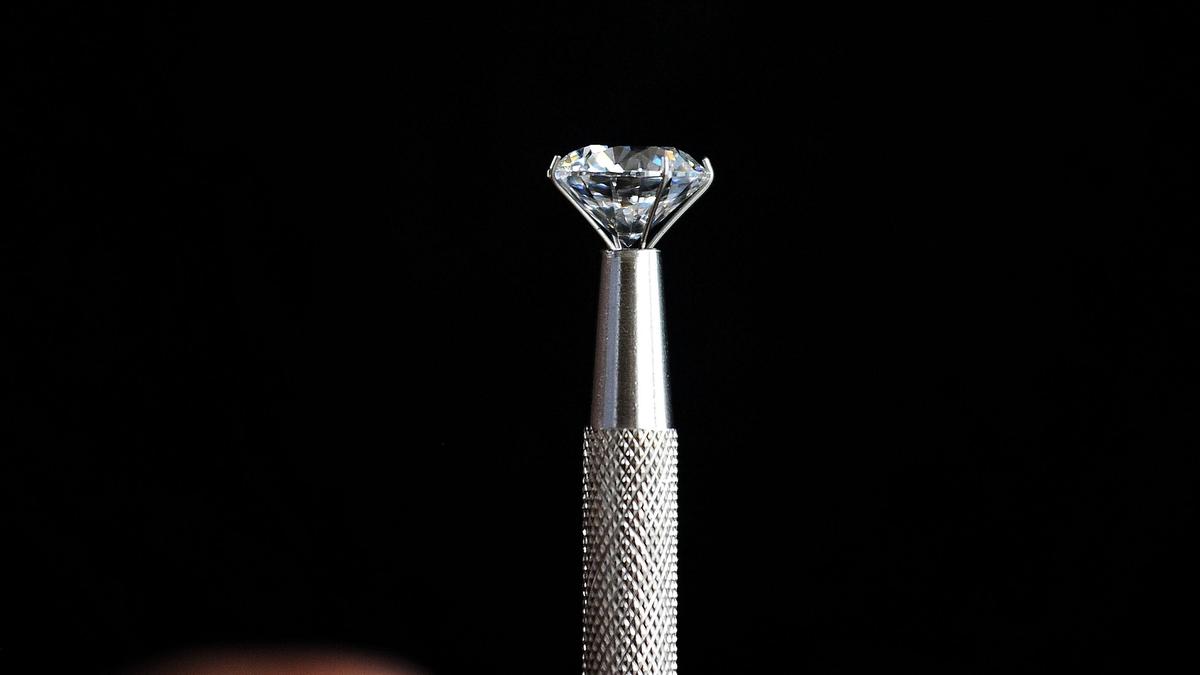
Did you know that there was a time in history when diamonds were believed to exist only in India? The hardest natural material on Earth, diamonds were first discovered in India nearly 3,000 years ago. For more than a millennia, India remained the only source of diamonds for the world, a monopoly that the country relinquished only after diamond was mined elsewhere as well.
Valued for their brilliance, diamonds were initially associated with strength and invincibility, and gradually made its foray as a symbol of love, commitment, and well, all things good. This has undoubtedly led to their popularity in jewellery, where the 4Cs — cut, colour, clarity, and carat — serve as the standard for assessing the quality of diamond. Diamonds, however, go beyond jewellery as well, with their extreme hardness playing a crucial role in industrial cutting and drilling. They’ve found their way into electronics and optics too, and are also being employed in medical tools and sensors.
An allotrope of carbon
Diamond, if you look at it from a composition point of view, is primarily composed of carbon. So is graphite, which, like diamond, is an allotrope of carbon. Or even coal, which contains mainly carbon, along with impurities. They are all, however, vastly different in terms of structure, hardness, and conductivity.
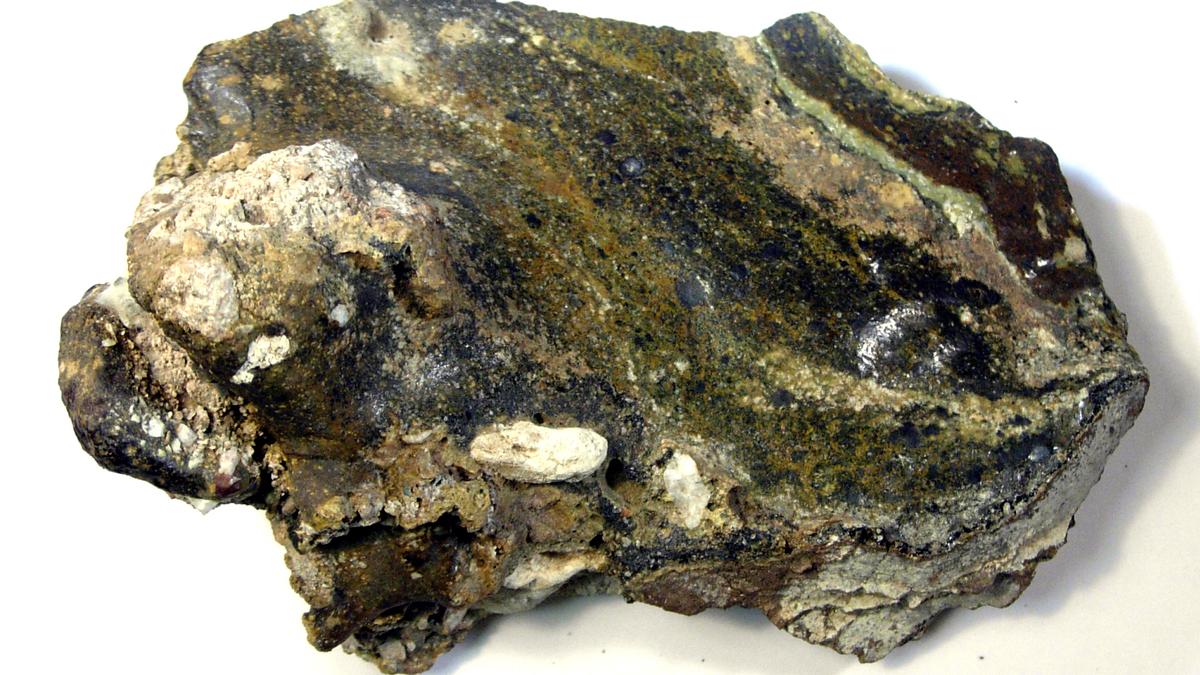
What makes a diamond a diamond is the fact that the pure carbon atoms are arranged in a crystal lattice with the 3D bonds making it one of the hardest known materials. Carbon transforms into diamond under extreme heat and pressure, a process that only occurs naturally deep within the Earth’s mantle.
Ever since it was discovered that diamond was in fact a form of carbon, the race to create non-natural diamonds was on. It eventually took centuries of efforts before Howard Tracy Hall succeeded in creating human-made diamonds.
Hall has a dream
Born in Ogden, Utah, U.S. on October 20, 1919, Hall hero-worshipped American inventor and businessman Thomas Alva Edison in his childhood. He was so inspired by Edison that by the time he reached his fourth grade, he made it his life’s goal to work for General Electric (GE), a company closely associated with the inventor.
To this end, Hall enrolled himself at the University of Utah, obtaining his bachelor’s degree in 1942 and his master’s a year later in 1943. After spending two years as an ensign in the U.S. Navy during World War II, Hall returned to his alma mater and went on to earn his PhD in physical chemistry by 1948. Months later, his childhood dream came true as he started work at GE.
Tracy Hall, the first man ever to produce synthetic diamonds in the laboratory, observes his tetrahedral X-ray diffraction press.
| Photo Credit:
Brigham Young University. News Bureau / Wikimedia Commons
Super pressure in Superpressure
By this time, GE were at the forefront of synthetic diamond research, with their research lab in Schenectady, New York, bringing together chemists, physicists, and industrial engineers. In the 1950s, Hall became part of a research group known as Project Superpressure, which also included Robert Wentorf, Herbert Strong, and Francis Bundy, among others. The team was literally under super pressure as they had to deliver results soon, lest the project be considered a monetary drain on the company.
And then, within 10 days of each other, two of the members of the team announced their success. First, it was Strong, who believed he had succeeded on December 8-9, when experimenting with a carbon and iron mixture along with two natural diamonds to seed diamond crystal growth at about 50,000 atmospheres pressure and up to 1250°C temperature.
Hall’s efforts came to fruition on December 16. He had built a pressure chamber called the “half-belt” used to create high pressure in a Watson-Stillman press. The hydraulics from this 35-year-old device leaked so much that Hall resorted to wearing rubber boots when working with it. Unable to convince others to get a better version made, Hall had several failed attempts with this before his first success.
Christmas comes early
Working at a time when most others had already left for their Christmas vacation, Hall added two diamond seed crystals to iron sulphide and followed the belt protocol, subjecting the substances to a heat of 1600°C and 1,00,000 atmospheres of pressure. He knew he had struck diamond the moment he removed the seal after the experiment.
When he recounted the moment later, Hall said “I was becoming discouraged. Then, one wintry morning, I broke open the sample cell … My hands began to tremble; my heart beat rapidly; my knees weakened and no longer gave support. My eyes had caught the flashing light from dozens of tiny triangular faces of octahedral crystals… and I knew that diamonds had finally been made by man.”

“My hands began to tremble; my heart beat rapidly; my knees weakened and no longer gave support… and I knew that diamonds had finally been made by man.”Howard Tracy Hall
After years of nothing to show for their efforts, GE had two methods to test within no time. While Strong’s experiment wasn’t reproducible, Hall’s press and belt system yielded the expected results time and again, even when it was replicated with Hall out of the building!
With Hall’s diamond-making methodology confirmed independently by others as well, GE finally decided it was time to announce it to the world. On February 15, 1955, the company made the news public, and it was picked up by newspapers around the world.
Dream turns into a nightmare
About a year after his success, however, Hall decided to leave GE as his childhood dream had by now become a nightmare. The credit for the first synthesis of human-made diamond was given to Project Superpressure, and not just him. He felt largely unappreciated by the company and the $10 savings bond that he received for his efforts almost felt like a cruel joke. Hall believed that his faith had contributed to the way he was treated, while his colleagues denied prejudice of any sort, suggesting instead that Hall was aloof and secretive on occasions.
Hall moved to Brigham Young University in Provo, becoming a professor of chemistry and director of research. As the government had slapped a secret label on the apparatus used to make synthetic diamond, Hall decided to circumvent it by inventing another apparatus, called the tetrahedral press, which achieved even better results and also steered clear of patent clashes with GE. While the government slapped a secret label on this device as well, it was later removed, enabling Hall to benefit from it.
Along with some colleagues, he started a company called MegaDiamond in Provo and the company went on to become GE’s biggest competitor domestically in the lab-grown diamonds industry. It was only in 1977 that he was honoured by the American Physical Society for his studies in synthetic diamonds. A religious man, Hall became a bishop in the 1980s, and also went on a church mission with his wife to Africa.
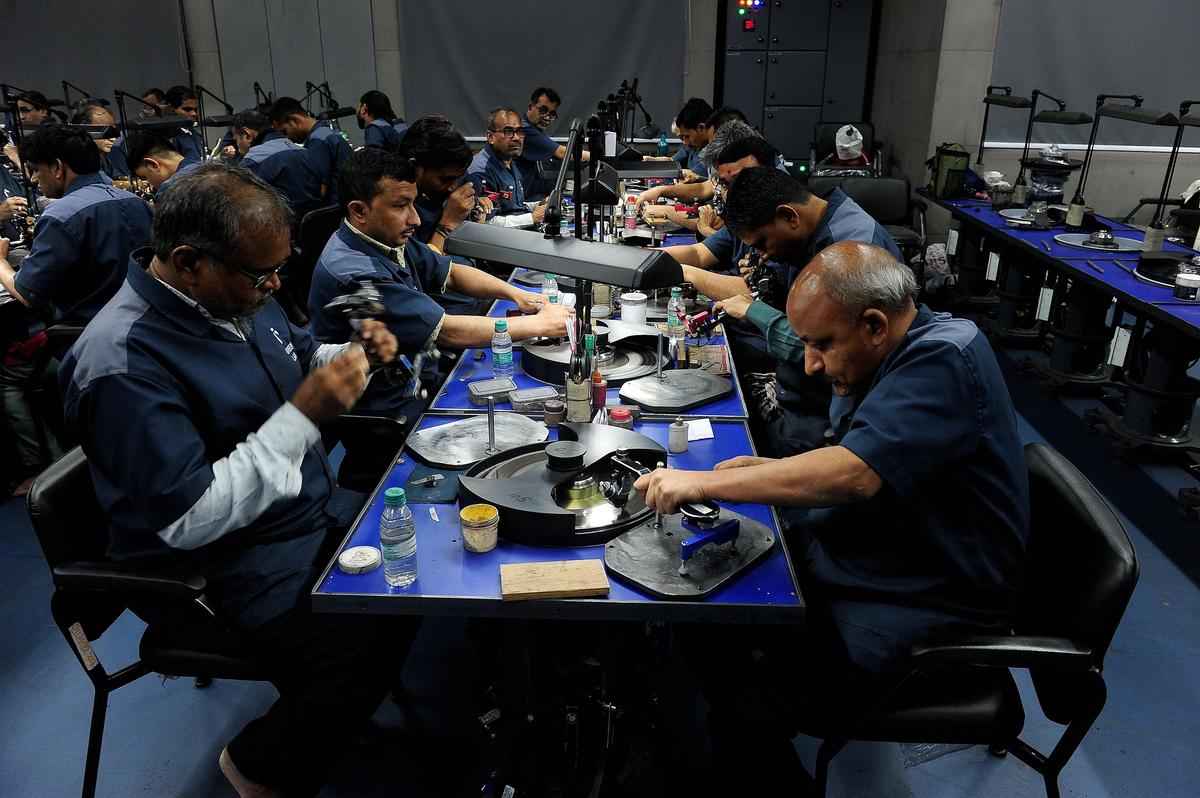
Diamond workers seen working at a lab-grown diamond factory in Surat.
| Photo Credit:
VIJAY SONEJI
Diamonds are forever
By the time Hall died on July 25, 2008 in Provo, lab-grown diamonds had grown into a full-blown industry. In addition to the High-Pressure High-Temperature (HPHT) method, which remains the most common, other techniques have also emerged to create synthetic diamonds.
Our country, which is where this story started, is sort of reclaiming some of the ground that it had lost. Even as lab-grown diamonds continue to scale globally, India has started to emerge has a hub for its production. It is steadily becoming a global powerhouse in the field, and already accounts for a sizeable portion of the world’s supply of synthetic diamonds.