




Skip to content
  • Facebook
  • X
  • Linkedin
  • WhatsApp
  • Associate Journalism
  • About Us
  • Privacy Policy
  • 033-46046046
  • editor@artifex.news
Artifex.News

Artifex.News

Stay Connected. Stay Informed.

  • Breaking News
  • World
  • Nation
  • Sports
  • Business
  • Science
  • Entertainment
  • Lifestyle
  • Toggle search form
  • Investment Advisers, Research Analysts should disclose AI tool usage to clients: SEBI
    Investment Advisers, Research Analysts should disclose AI tool usage to clients: SEBI Business
  • At least 30 people killed by Israeli strikes in Gaza as stalled ceasefire talks set to resume
    At least 30 people killed by Israeli strikes in Gaza as stalled ceasefire talks set to resume World
  • 0 Billion! Mark Zuckerberg Becomes Second-Richest Person In World
    $200 Billion! Mark Zuckerberg Becomes Second-Richest Person In World World
  • Not Mayank Yadav, LSG Coach Celebrates This Youngster For Scalping Virat Kohli. Watch
    Not Mayank Yadav, LSG Coach Celebrates This Youngster For Scalping Virat Kohli. Watch Sports
  • PM Modi Meets Italy’s Giorgia Meloni In Brazil, Holds Bilateral Talks
    PM Modi Meets Italy’s Giorgia Meloni In Brazil, Holds Bilateral Talks Nation
  • Rupee slumps 25 paise to all-time low of 88.53 against U.S. dollar
    Rupee slumps 25 paise to all-time low of 88.53 against U.S. dollar Business
  • Access Denied
    Access Denied Nation
  • WEF 2026: Five takeaways from Davos
    WEF 2026: Five takeaways from Davos World
Indian scientists make affordable dipstick test to track AMR in sewage

Indian scientists make affordable dipstick test to track AMR in sewage

Posted on February 3, 2026 By admin


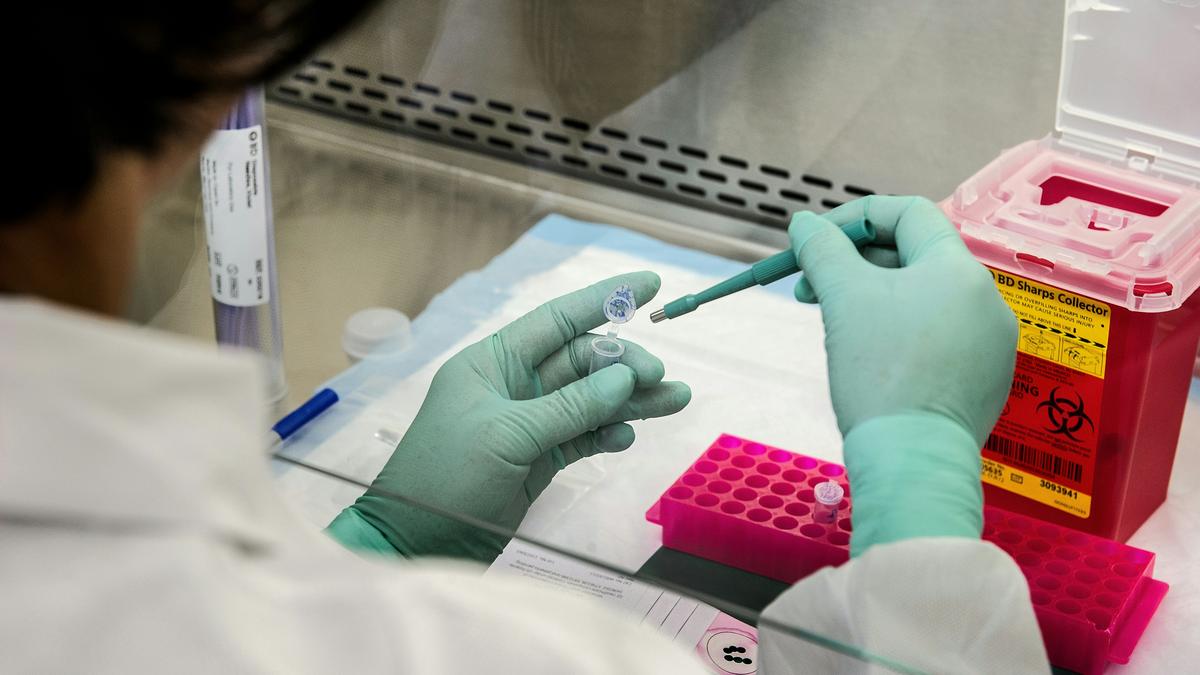
Scientists from the Translational Health Science and Technology Institute (THSTI), Faridabad, have developed an affordable way to check for antimicrobial resistance in sewage.

In their study, detailed in a paper published in Nature Communications on December 29, the scientists analysed sewage samples from 381 sites in Assam, Haryana, Jharkhand, Uttar Pradesh, Uttarakhand, and West Bengal, looking for antibiotic residues, microbial diversity, and resistance genes.

Urban sewage in India is known to be a hotspot and reservoir for antimicrobial resistance (AMR), which the team was able to confirm. But equally importantly, the findings validated the scientific test, or assay, the team developed for the purpose, which the team said was affordable without sacrificing efficiency, and thus a solution suitable for use in low- and middle-income countries.

‘See with your naked eye’

“The workflow to perform the dipstick assay is straightforward,” Deepjyoti Paul, a research scientist at THSTI and the study’s first author, said.

The approach is similar to a rapid diagnostic test, in this case to detect the resistance genes, i.e. those that confer microbes with the ability to resist certain drugs, in environmental sources. Scientists first collect sewage samples and process them to isolate the genetic material, then they amplify the quantities of those genes, e.g. using the PCR method, so that they’re easier to detect.

Then, the amplified genetic material and a detection reagent are added to a dipstick. If the AMR genes are present in the sample, they will bind to the dipstick and produce a band of a visible colour, and thus a clear visual readout.

“The beauty of the dipstick assay is that you can see bands with your naked eye and understand if the sample has a resistance gene or not,” Dr. Paul said.

Snapshot of antibiotic use

Antibiotics that once worked may become ineffective in treating infections as bacteria develop defenses against one or multiple types of the drugs. As a result, treating resistant pathogens becomes more difficult, reducing the number of treatment options available. AMR pathogens can cause life-threatening infections and create complications following surgery and organ transplantation.

Sewage is a complex environment that offers a snapshot of antibiotic usage and provides an early warning system for resistance development. Samples from sewage can capture upstream signals from communities, hospitals, animal farms, and industries. If certain antibiotics or resistance genes are prevalent at a particular location, it can be a sign that medical intervention may be required at the sources upstream. In fact, sewage sampling is considered an ethically acceptable and economically feasible approach to check for AMR in a population.

Likewise, for a nation as populous and geographically vast as India, affordable, time-efficient, and scalable testing technology is critical to curb the spread of AMR. A key feature of the dipstick assay is its affordability, with a unit cost of just around Rs 400-550 — far lower than alternatives like shotgun sequencing, whose cost can exceed Rs 9,000.

Each dipstick can also recognise 16 different resistance genes from a given sample and deliver results within two hours. In case new resistance genes are discovered anywhere in the world, researchers can also upgrade the dipstick in just three days.

“The dipstick based assay that we developed can easily be adopted in very minimal-resource settings,” THSTI professor and the study’s corresponding author Bhabatosh Das said.

Where there is smoke

While techniques like shotgun sequencing can provide a comprehensive picture of resistance genes, they are not feasible to use for routine testing and surveillance. According to the authors, the dipstick assay can fill this gap by performing rapid large-scale surveillance to potentially flag a location in the sewage system for deeper investigation and intervention, by researchers, healthcare workers, and the government.

The approach also builds on an earlier proof of concept developed in 2017 by researchers in Japan, to detect carbapenemase genes in stool specimens. Dr. Das’s lab adapted the dipstick assay approach for other applications, including to detect microbiota associated with preterm births and to identify and differentiate SARS-CoV-2 variants.

But while the dipstick assay offers rapid insights, experts urged careful interpretation of its results at this stage.

“A gene doesn’t make you unwell,” David Graham, an antimicrobial resistance expert and retired professor at Durham University who now advises the United Nations, said. “A gene just tells you the possibility of an organism being there that might make you unwell.” As he put it: “Genes are like smoke: where there is smoke, there is often fire.”

Because resistance to antibiotics can be a result of different genes or even sets of genes in different countries, he emphasised the need for a deeper understanding of the context.

Cheaper, faster, scalable

Culturing resistant pathogens and studying them at genomic, transcriptomic, and metagenomic levels could eventually develop a comprehensive understanding of the genetics of resistance. That information would provide crucial context to help researchers select genetic signatures that reliably indicate resistant pathogens.

“Our goal is to ultimately be able to track pathogens using genetics,” Dr Graham said, “because it is cheaper, faster and can be done at mass scales”.

Thus, the dipstick assay can be useful in local settings where the context and circumstances of resistance are exceptionally well understood.

“Finding a gene is probably two or three biological steps away from finding something that is resistant, [such as] a viable organism or in worst case a viable pathogen,” he added.

For now, the dipstick assay is best positioned as an early warning tool for AMR risk in and around Indian cities. Sewage-based surveillance using dipsticks could help identify localities in which wastewater treatment is inadequate or where antibiotic use might be high, allowing public health authorities to intervene upstream.

The approach could also help assess whether pharmaceutical effluent treatment plants actually  reduce the spread of resistance. Such utilities offer a crucial advantage in monitoring public health threats in a country which has become a global hotspot for AMR.

Edries Yousaf Hajam is a freelance science journalist.

Published – February 04, 2026 05:30 am IST


Source link

Science

Post navigation

Previous Post: India-US tariff trade deal: Indian, American industry bodies and leaders rejoice
Next Post: Paresthesia: The Science of ‘Sleeping Limbs’

Related Posts

  • India’s biotech surge builds momentum but faces scale bottlenecks
    India’s biotech surge builds momentum but faces scale bottlenecks Science
  • Hyderabad: Ocean research, resilience in focus as IIOSC-2025 opens in INCOIS
    Hyderabad: Ocean research, resilience in focus as IIOSC-2025 opens in INCOIS Science
  • Why are space agencies racing to the moon’s south pole?
    Why are space agencies racing to the moon’s south pole? Science
  • How are passengers able to access the Internet on aeroplanes?
    How are passengers able to access the Internet on aeroplanes? Science
  • How are salamanders able to take off and stick their landing with ease?
    How are salamanders able to take off and stick their landing with ease? Science
  • Are we taller in the morning than when we go to bed?
    Are we taller in the morning than when we go to bed? Science

More Related Articles

In its 2024 report, WHO lists over 30 pathogens that could perhaps start the next pandemic In its 2024 report, WHO lists over 30 pathogens that could perhaps start the next pandemic Science
How the concept of open science can be beneficial How the concept of open science can be beneficial Science
Researchers call Australia carbon credit scheme a ‘catastrophe’ Researchers call Australia carbon credit scheme a ‘catastrophe’ Science
NCBS museum hosts bee species from across India to spur research NCBS museum hosts bee species from across India to spur research Science
Singapore to launch space agency in response to global investment surge Singapore to launch space agency in response to global investment surge Science
Why can’t we see well right after entering a darker room? Why can’t we see well right after entering a darker room? Science
SiteLock

Archives

  • February 2026
  • January 2026
  • December 2025
  • November 2025
  • October 2025
  • September 2025
  • August 2025
  • July 2025
  • June 2025
  • May 2025
  • April 2025
  • March 2025
  • February 2025
  • January 2025
  • December 2024
  • November 2024
  • October 2024
  • September 2024
  • August 2024
  • July 2024
  • June 2024
  • May 2024
  • April 2024
  • March 2024
  • February 2024
  • January 2024
  • December 2023
  • November 2023
  • October 2023
  • September 2023
  • August 2023
  • July 2023
  • June 2023
  • May 2023
  • April 2023
  • March 2023
  • February 2023
  • January 2023
  • December 2022
  • November 2022
  • October 2022
  • September 2022
  • August 2022
  • July 2022
  • June 2022
  • May 2022

Categories

  • Business
  • Nation
  • Science
  • Sports
  • World

Recent Posts

  • Iran, U.S. to hold nuclear talks in Oman on February 6
  • A turning point for nuclear deterrence
  • Access Denied
  • Access Denied
  • Access Denied

Recent Comments

  1. DennisEpist on UP Teacher Who Asked Students To Slap Muslim Classmate
  2. DennisEpist on UP Teacher Who Asked Students To Slap Muslim Classmate
  3. CraigPaync on UP Teacher Who Asked Students To Slap Muslim Classmate
  4. DennisEpist on UP Teacher Who Asked Students To Slap Muslim Classmate
  5. Josephfeemy on UP Teacher Who Asked Students To Slap Muslim Classmate
  • Retirement Hint? Australia Great Highlights Rohit Sharma’s “Unusual” Act, Says This On Virat Kohli
    Retirement Hint? Australia Great Highlights Rohit Sharma’s “Unusual” Act, Says This On Virat Kohli Sports
  • SpiceJet to operationalise 3 grounded Boeing 737 MAX planes by April 2025; inks pact with MRO provider
    SpiceJet to operationalise 3 grounded Boeing 737 MAX planes by April 2025; inks pact with MRO provider Business
  • Access Denied World
  • Access Denied
    Access Denied Nation
  • From ‘Baby’ Of Team India To Star Batter: The Story Of Jemimah Rodrigues
    From ‘Baby’ Of Team India To Star Batter: The Story Of Jemimah Rodrigues Sports
  • Russia says it arrested four more Moscow attack plotters
    Russia says it arrested four more Moscow attack plotters World
  • Accused Researcher, Activist Granted Bail
    Accused Researcher, Activist Granted Bail Nation
  • Airstrike On Vehicle Kills 5 Pro-Iran Fighters In Syria: Report
    Airstrike On Vehicle Kills 5 Pro-Iran Fighters In Syria: Report World

Editor-in-Chief:
Mohammad Ariff,
MSW, MAJMC, BSW, DTL, CTS, CNM, CCR, CAL, RSL, ASOC.
editor@artifex.news

Associate Editors:
1. Zenellis R. Tuba,
zenelis@artifex.news
2. Haris Daniyel
daniyel@artifex.news

Photograher:
Rohan Das
rohan@artifex.news

Artifex.News offers Online Paid Internships to college students from India and Abroad. Interns will get a PRESS CARD and other online offers.
Send your CV (Subjectline: Paid Internship) to internship@artifex.news

Links:
Associate Journalism
About Us
Privacy Policy

News Links:
Breaking News
World
Nation
Sports
Business
Entertainment
Lifestyle

Registered Office:
72/A, Elliot Road, Kolkata - 700016
Tel: 033-22277777, 033-22172217
Email: office@artifex.news

Editorial Office / News Desk:
No. 13, Mezzanine Floor, Esplanade Metro Rail Station,
12 J. L. Nehru Road, Kolkata - 700069.
(Entry from Gate No. 5)
Tel: 033-46011099, 033-46046046
Email: editor@artifex.news

Copyright © 2023 Artifex.News Newsportal designed by Artifex Infotech.