



Both enduring continuities and significant shifts define the functioning of the global economy. While the North-South divide in per capita income and resource utilisation remains an enduring feature, new technologies such as semiconductors and Artificial Intelligence (AI) are gaining greater salience in powering the global economy. These technologies will have a significant impact on the everyday lives of many people around the world. Consequently, there is now a growing urgency to secure the supply of Rare Earth Elements (REEs) and to nurture manufacturing processes associated with these technologies.
On December 12, 2025, the U.S. convened the inaugural Pax Silica Summit to secure the supply chain of critical minerals and build advanced manufacturing and logistics capabilities critical to new frontier technologies such as semiconductors and AI. ‘Pax’ in Latin means ‘peace’ and ‘Silica’ is a key compound used in chip manufacturing — taken together they suggest that the supply chain for new technologies should promote peace and prosperity. The Pax Silica Declaration noted that the initiative seeks to reduce coercive dependencies, secure global tech/AI supply chains, and build trusted digital infrastructure.
Major participants
The membership of the Pax Silica is evolving. While the U.S. and Japan are technological powerhouses, Australia is the leading exporter of Lithium (a key component in rechargeable batteries and digital products) and has significant REE deposits. The Netherlands has leading firms such as ASML, which develop advanced lithography technology that enables semiconductor chip engineering, while South Korea is well-known for its manufacturing prowess in memory chips. Singapore also has a long history of chip manufacturing in collaboration with leading U.S. firms. Israel has made significant strides in AI software, defence-related technologies and cybersecurity. Moreover, the United Kingdom has the third-largest AI market and a robust innovation ecosystem, which includes established research labs and start-ups. Qatar and the United Arab Emirates command large investment funds and have initiated measures to develop world-class AI ecosystems.
Canada, the European Union, the Organisation for Economic Co-operation and Development (OECD), and Taiwan participated in the inaugural Pax Silica Summit as observers, and they may be admitted as members at a later date.
Countering China
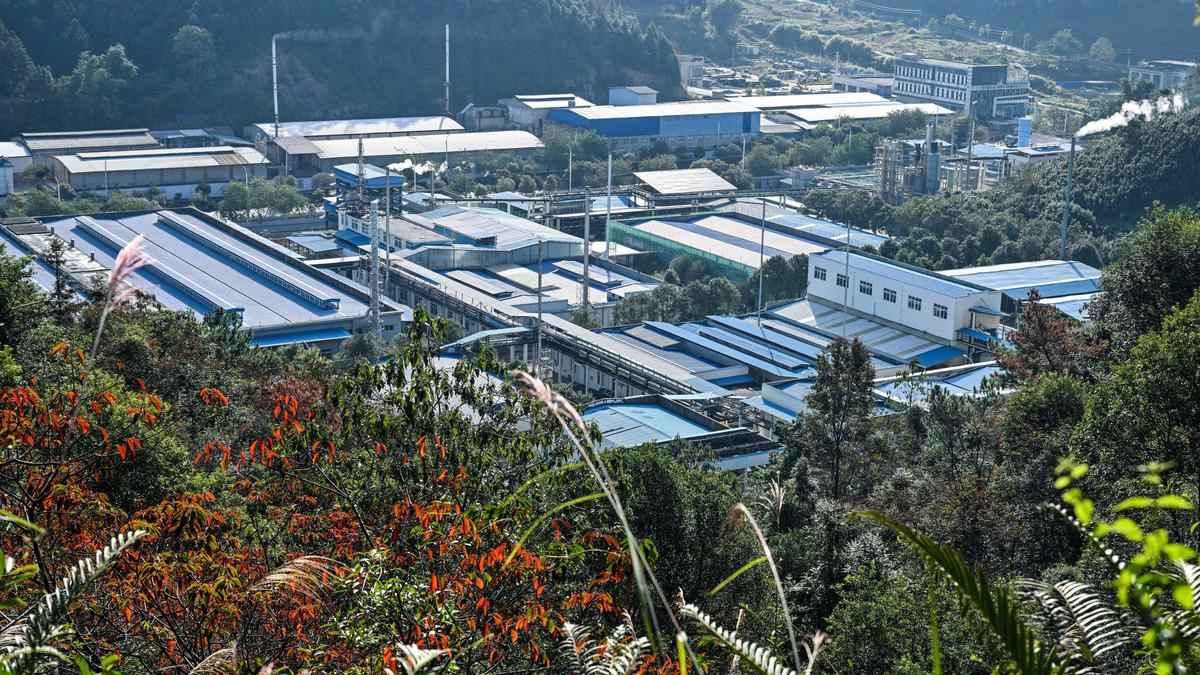
Pax Silica is a response to new geopolitical realities. There are concerns that China has emerged as a principal supplier of REEs and acquired the capability to shape the global flow of these resources. In recent years, China has restricted the flow of critical resources to achieve its desired political and economic ends. Last year, in response to U.S. President Donald Trump’s tariff policies, China suspended the export of REEs to the U.S. and other countries. India also experienced disruptions to the import of rare-earth magnets from China, negatively impacting the country’s automobile and electronics industries. The supply of rare-earth magnets to India was restored only after Indian companies complied with China’s stringent licensing regulations, which included providing an undertaking that imported rare-earth magnets would not be used for defence or dual-use purposes.
Even before the recent challenges in accessing REEs, the pandemic demonstrated the limitations of supply chains that are heavily reliant on a single country. In 2021, India, along with Australia and Japan, launched the Supply Chain Resilience Initiative. India was also working with the Quad countries to strengthen the supply chain resilience of critical and emerging technologies. The Quad Critical Minerals Initiative was launched at the foreign ministers’ meeting in Washington in 2025. Interestingly, despite being a member of the above-mentioned initiatives, India was not invited to the inaugural meeting of Pax Silica. However, on January 12, the new U.S. Ambassador to India, Sergio Gor, in his arrival speech, stated that India will soon be invited to join the Pax Silica.
India’s challenges
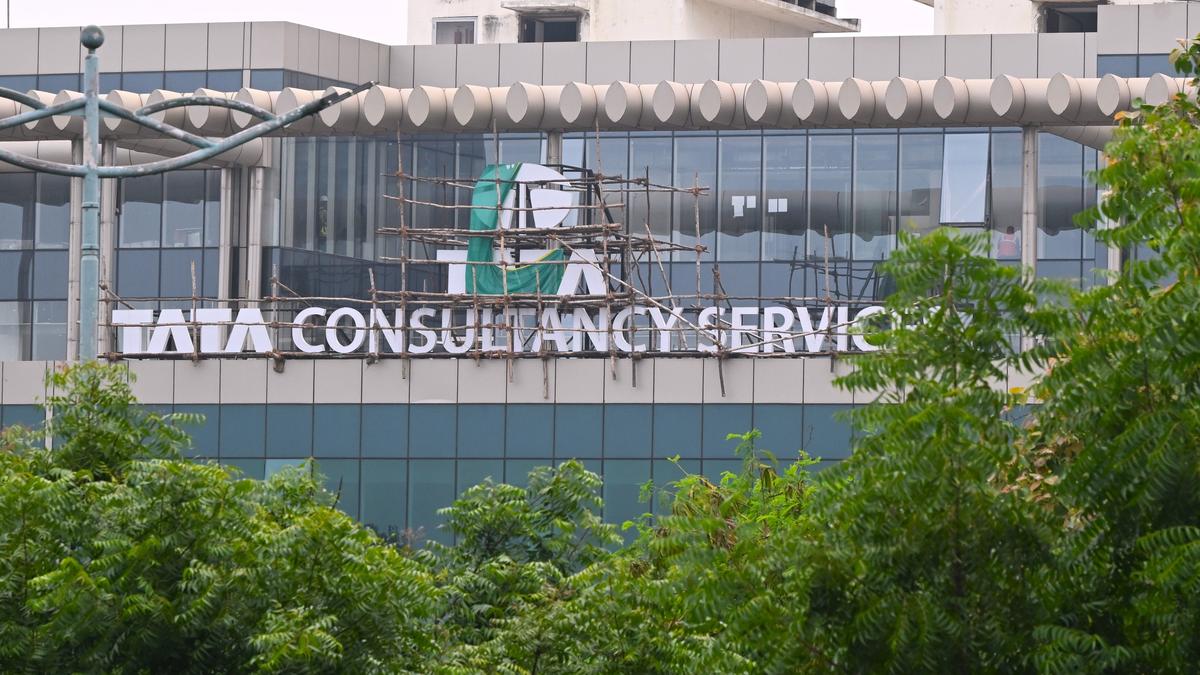
What would India bring to the table in the Pax Silica? Indian and American firms have a history of healthy collaboration in the technology domain. India has a strong digital infrastructure, and its AI market is growing rapidly, with many enterprises adopting AI solutions. It is also true that India’s AI and semiconductor ecosystems are well behind those of Pax Silica countries. However, it should be noted that India has launched AI and Semiconductor Missions with substantial financial allocations in recent years. While Indian private companies such as the Tatas have invested in the semiconductor segment, leading U.S. chip manufacturers such as Micron have also invested in India. There has also been a steady increase in the number of newly funded AI companies in India. Furthermore, India is sending a large number of educated young people to pursue graduate and PhD programmes in computer science and related fields in the U.S. If the current U.S. visa policies persist, many of these engineers will have to return to their home country, providing India with a large, highly trained human resource pool to power AI and semiconductor industries.
Moreover, India has been working to develop resilient semiconductor supply chains with other Pax Silica countries such as Japan and Singapore. Indian private-sector companies are also collaborating with Israeli firms to establish semiconductor fabrication plants in India. By participating in the Pax Silica, India can scale-up its collaborations with other countries to develop robust semiconductor and AI ecosystems in the country.
However, India will need to be mindful of a few challenges that it needs to navigate carefully. Thus far, the member countries of the Pax Silica, in addition to their technological strengths, are U.S. allies and high-income countries. If India decides to join the Pax Silica, it will be the first developing country to do so. India will also be the first non-ally (but a strategic partner) of the U.S. to join the Pax Silica. This may create an ‘expectation gap’ between India and the other members of Pax Silica. While India’s response to global security threats may not undermine the interests of the U.S. and its allies, it will differ in nuance. India will be keen to ensure that its strategic autonomy is not diluted through its participation in the Pax Silica.
As a developing country, India has relatively young semiconductor and AI ecosystems compared with those of other Pax Silica countries. Consequently, India will seek to protect its semiconductor and AI ecosystems by granting domestic firms preferential treatment through subsidies, government procurement, and calibrated import regulations. While the current mood in Washington may not be in agreement with such policy measures, it remains unclear how other Pax Silica countries will respond to such initiatives.
The road ahead
At the moment, China is a leading player in the REE supply chain and has already instituted export control regulations to preserve its dominant position.
Beijing has also not demonstrated a willingness to create REE supply chains that are sensitive to the development needs of emerging economies such as India. It is likely that the Pax Silica will come up with its own export regulation framework. Over time, two REE supply chains will dominate the global economy, namely that of China’s and Pax Silica’s. Given the history of collaboration between Indian and Western firms in information technology and related domains, India may lean towards the Pax Silica.
However, given the current strain in economic relations with the U.S., India may seek to have more conversations to better understand the possible trajectory of Pax Silica’s evolution.
Sanjay Pulipaka is the Chairperson of the Politeia Research Foundation. The views expressed here are personal.
Published – January 21, 2026 08:30 am IST