


Skip to content
  • Facebook
  • X
  • Linkedin
  • WhatsApp
  • Associate Journalism
  • About Us
  • Privacy Policy
  • 033-46046046
  • editor@artifex.news
Artifex.News

Artifex.News

Stay Connected. Stay Informed.

  • Breaking News
  • World
  • Nation
  • Sports
  • Business
  • Science
  • Entertainment
  • Lifestyle
  • Toggle search form
  • Access Denied Sports
  • Mitchell Santner Named New Zealand White Ball Captain
    Mitchell Santner Named New Zealand White Ball Captain Sports
  • Markets rebound in early trade; Sensex jumps 1,046 points; Nifty surges above 24,300-level
    Markets rebound in early trade; Sensex jumps 1,046 points; Nifty surges above 24,300-level Business
  • In A First, China To Launch Probe To Collect Samples From Far Side Of Moon
    In A First, China To Launch Probe To Collect Samples From Far Side Of Moon World
  • Access Denied Sports
  • Tropical forests may be getting too hot for photosynthesis
    Tropical forests may be getting too hot for photosynthesis Science
  • Three minors injured in Finland school shooting
    Three minors injured in Finland school shooting World
  • CCTV Footage Of Kanpur Woman At Gym On Day Trainer Murdered Her
    CCTV Footage Of Kanpur Woman At Gym On Day Trainer Murdered Her Nation
What an edible insects stall revealed about acceptance, ‘normal’ food

What an edible insects stall revealed about acceptance, ‘normal’ food

Posted on January 13, 2026 By admin


Why does the idea of eating insects provoke discomfort, even before taste or nutrition enters the conversation? At an edible insects stall during a food mela at the Science Gallery, Bengaluru, this question surfaced repeatedly as visitors negotiated curiosity, disgust and the boundaries of what they considered “normal” food.

Many assumed they were encountering a foreign idea. “This is eaten in other countries, right?” was a common question at the stall, curated under the exhibition theme ‘Calorie’. Few realised that eating insects has long been part of food cultures within India itself.

Entomophagy, the practice of eating insects, is often imagined as something that happens elsewhere, outside India. Yet insects have been consumed across several Indian States for generations. This is particularly visible in parts of Northeast India, such as Nagaland and Arunachal Pradesh, where insects are eaten seasonally and sold in markets like Dimapur’s Mava Market.

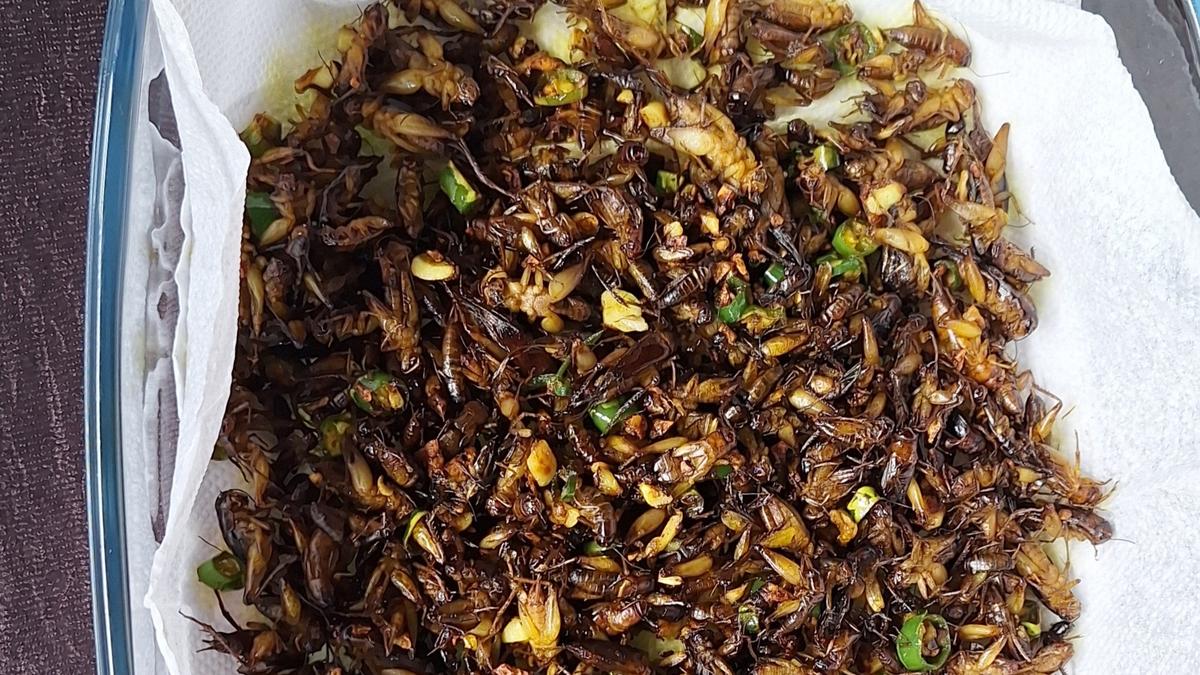
At the stall, visitors were offered cricket cookies, chilli garlic crickets, and fried silkworms. Curiosity often preceded commitment: nearly 60% of those who tasted the insects were trying for the first time. For many, the experience was marked by uncertainty followed by surprise. “It was my first time eating insects, so I didn’t know what to expect,” said a student who tried the fried silkworms. “But it turned out to be a good experience.”

Taste makes a difference

Taste, more than curiosity, seemed to shift perception. One visitor described the silkworm as tasting “like overcooked kidney beans”, while another, who tried both chilli garlic crickets and silkworms, noted the contrast clearly: “The cricket had more flavour. The silkworm had a more eggy texture.”

Beyond perception, insects are often framed as an efficient source of calories and protein in a world facing growing food demands. As populations increase and food systems strain under climate and resource pressures, edible insects are frequently cited as a sustainable alternative protein source.

Many insect species are rich in protein, vitamins and micronutrients, with a much higher proportion of their body mass being edible, around 80%, compared to about 55% for poultry. They also require significantly less land, water and feed to produce the same amount of protein. For instance, crickets need far fewer resources than conventional livestock such as sheep or broiler chickens, making them an efficient source of protein from a production standpoint.

Yet despite these nutritional and environmental benefits and despite insects being part of many food cultures. People are increasingly moving away from them. Urbanisation has created both physical and cultural distance from such practices. Many younger generations who have grown up or settled in cities are often unaware that insects are eaten across several parts of India, sometimes even within their own home States.

Distance and disconnect

During conversations at the stall, insect-eating was frequently framed as something “indigenous” acknowledged but distanced. It was seen as belonging to rural communities rather than to urban food cultures. In this framing, eating insects became less about nutrition and more about class: it did not fit into dominant ideas of modern, aspirational food.

Ironically, in the regions where these practices continue, insect-based foods are neither novel nor marginal. They are seasonal, familiar, and often tied to specific occasions and generations. Yet from an urban lens, these foods are frequently dismissed as backward, revealing how ideas of progress shape what is considered acceptable to eat.

Some visitors recognised this disconnect. “People should start overlooking the typical stereotypes and experiment more,” said a working professional, reflecting on how discomfort often precedes experience. Others framed the hesitation against sustainability concerns. “It’s a sustainable protein source that is cost-effective to produce and with low environmental impact,” noted another visitor, pointing to the gap between environmental awareness and everyday food choices. 

Even among visitors who were open to the idea, acceptance was often accompanied by hesitation. Questions emerged not just about taste or sustainability, but about sufficiency and substitution. “I’m wondering how filling this would be as a complete meal,” one visitor said. “I don’t know if it can really replace the food groups we have now.”

Others echoed this caution. “I don’t see it becoming a staple food,” a student visitor noted, while still describing the stall as “a good initiative for public health.” Alongside this, some visitors raised ethical questions about knowledge and credit. “If this practice is being promoted,” one remarked, “it’s important to acknowledge the communities and regions it comes from.”

Low-pressure spaces

The stall did not resolve these questions; it was not meant to. Instead, it made visible the assumptions, hesitations and hierarchies that shape what we call food. It raised quieter, more uncomfortable questions: why some foods are embraced while others are dismissed, why sustainability is easier to discuss than to practise, and why foods familiar to many communities still feel unfamiliar in urban spaces.

From my perspective, making insect-based foods more acceptable is as much about form and familiarity as it is about nutrition. At the stall, insects were intentionally offered in different formats, both ground into cookies and served whole, flavoured with garlic and chilli. Presenting insects in processed forms appeared to lower psychological barriers, allowing visitors to engage with taste and texture without the immediate discomfort often associated with whole insects. Public-facing experiments like food stalls can play an important role in this process by creating low-pressure spaces where curiosity can precede judgement.

As Priyadarsanan Dharma Rajan, who works on edible insects, noted, his lab, the Insect Biosystematics and Conservation (IBC) Laboratory at ATREE, is increasingly focusing on developing sustainable ways of rearing insects. Establishing standardised rearing protocols allows insects to be produced at scale rather than harvested from the wild, reducing pressure on natural populations while ensuring consistency, safety and nutritional quality. In this sense, changing how insects are produced may be as important as changing how they are perceived.

Sahanashree R. is Project Associate, IBCL Lab, Ashoka Trust for Research in Ecology and the Environment (ATREE), Bengaluru.

Published – January 14, 2026 05:15 am IST


Source link

Science

Post navigation

Previous Post: Access Denied
Next Post: Access Denied

Related Posts

  • Where do the wild colours of domesticated silkworm cocoons come from?
    Where do the wild colours of domesticated silkworm cocoons come from? Science
  • Writing by hand is better for learning, memory
    Writing by hand is better for learning, memory Science
  • Chandrayaan-3 | Another instrument onboard Pragyan confirms presence of sulphur
    Chandrayaan-3 | Another instrument onboard Pragyan confirms presence of sulphur Science
  • Ice Age’s winged relic rediscovered in Western Ghats
    Ice Age’s winged relic rediscovered in Western Ghats Science
  • A man received 217 COVID shots — what does his body teach us?
    A man received 217 COVID shots — what does his body teach us? Science
  • Science for all newsletter how do lidocaine ointments work? 
    Science for all newsletter how do lidocaine ointments work?  Science

More Related Articles

Peter Higgs, whose success as a physicist depends on whom you ask Peter Higgs, whose success as a physicist depends on whom you ask Science
Bird flu reaches mainland Antarctica for first time, scientists say Bird flu reaches mainland Antarctica for first time, scientists say Science
What will ‘cosmic detective’ OSIRIS-Rex bring back on September 24? | Explained What will ‘cosmic detective’ OSIRIS-Rex bring back on September 24? | Explained Science
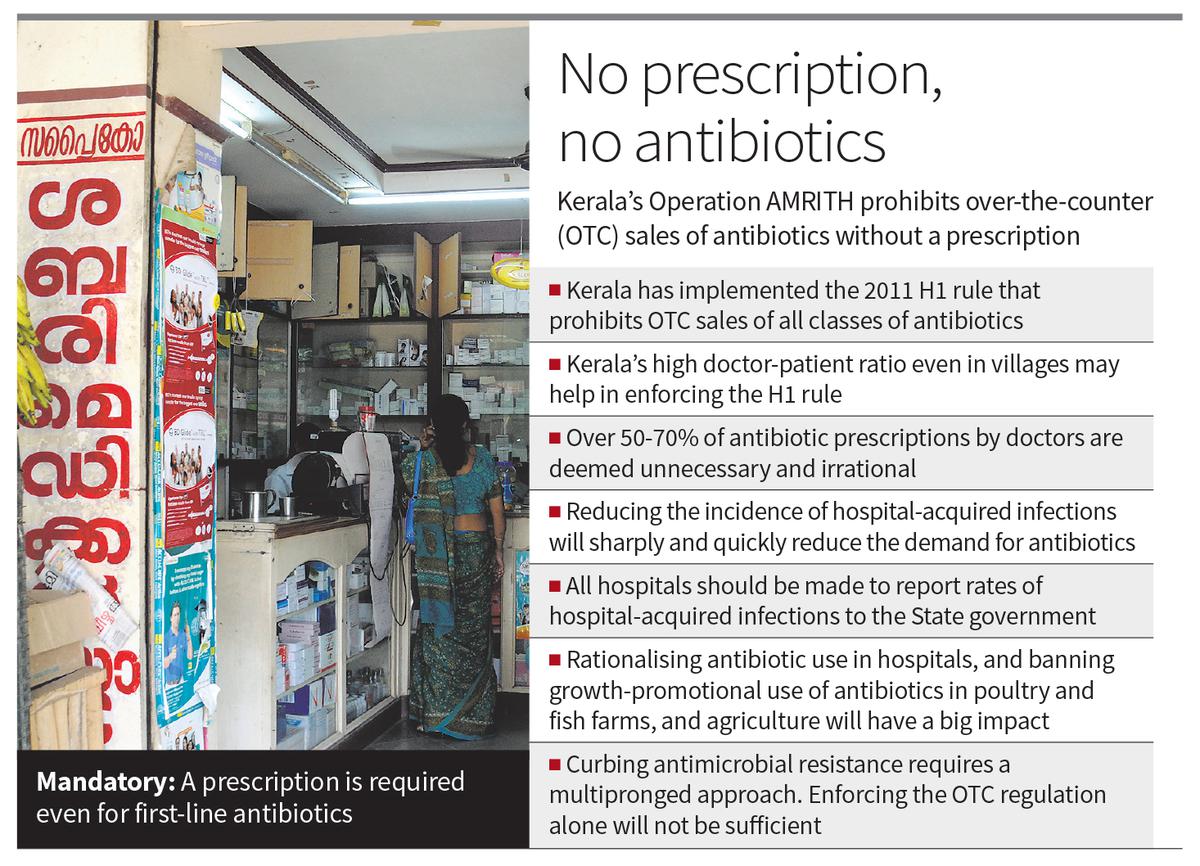
Kerala takes a pioneering step to curb antimicrobial resistance Kerala takes a pioneering step to curb antimicrobial resistance Science
After furore, Customs Department removes punitive tax on laboratory chemicals After furore, Customs Department removes punitive tax on laboratory chemicals Science
If anxiety is in my brain, why is my heart pounding? A psychiatrist explains the neuroscience and physiology of fear If anxiety is in my brain, why is my heart pounding? A psychiatrist explains the neuroscience and physiology of fear Science
SiteLock

Archives

  • January 2026
  • December 2025
  • November 2025
  • October 2025
  • September 2025
  • August 2025
  • July 2025
  • June 2025
  • May 2025
  • April 2025
  • March 2025
  • February 2025
  • January 2025
  • December 2024
  • November 2024
  • October 2024
  • September 2024
  • August 2024
  • July 2024
  • June 2024
  • May 2024
  • April 2024
  • March 2024
  • February 2024
  • January 2024
  • December 2023
  • November 2023
  • October 2023
  • September 2023
  • August 2023
  • July 2023
  • June 2023
  • May 2023
  • April 2023
  • March 2023
  • February 2023
  • January 2023
  • December 2022
  • November 2022
  • October 2022
  • September 2022
  • August 2022
  • July 2022
  • June 2022
  • May 2022

Categories

  • Business
  • Nation
  • Science
  • Sports
  • World

Recent Posts

  • Access Denied
  • Access Denied
  • Multiple Americans detained in Venezuela released, U.S. says
  • Access Denied
  • Access Denied

Recent Comments

  1. MorganCat on UP Teacher Who Asked Students To Slap Muslim Classmate
  2. Josephbaind on UP Teacher Who Asked Students To Slap Muslim Classmate
  3. Jaysonexcuh on UP Teacher Who Asked Students To Slap Muslim Classmate
  4. EdwardVon on UP Teacher Who Asked Students To Slap Muslim Classmate
  5. Steveniroms on UP Teacher Who Asked Students To Slap Muslim Classmate
  • Sri Lanka Star Kamindu Mendis Crowned ICC Men’s Emerging Cricketer Of The Year 2024
    Sri Lanka Star Kamindu Mendis Crowned ICC Men’s Emerging Cricketer Of The Year 2024 Sports
  • UN Says Israeli Tanks Burst Into Peacekeeper Base, Israel Gives Different Account
    UN Says Israeli Tanks Burst Into Peacekeeper Base, Israel Gives Different Account World
  • Champions League Final Most ‘Dangerous’ Game: Real Madrid’s Carlo Ancelotti
    Champions League Final Most ‘Dangerous’ Game: Real Madrid’s Carlo Ancelotti Sports
  • How Israel Defends Its Skies From Rocket Attacks
    How Israel Defends Its Skies From Rocket Attacks World
  • Rupee opens on flat note against U.S. dollar in early trade
    Rupee opens on flat note against U.S. dollar in early trade Business
  • Access Denied
    Access Denied Nation
  • Andaman And Nicobar Divers Perform Yoga Underwater
    Andaman And Nicobar Divers Perform Yoga Underwater Nation
  • Unionized US Apple Store At Maryland Towson Votes To Authorize Strike Amid Concerns Over Work-Life Balance
    Unionized US Apple Store At Maryland Towson Votes To Authorize Strike Amid Concerns Over Work-Life Balance World

Editor-in-Chief:
Mohammad Ariff,
MSW, MAJMC, BSW, DTL, CTS, CNM, CCR, CAL, RSL, ASOC.
editor@artifex.news

Associate Editors:
1. Zenellis R. Tuba,
zenelis@artifex.news
2. Haris Daniyel
daniyel@artifex.news

Photograher:
Rohan Das
rohan@artifex.news

Artifex.News offers Online Paid Internships to college students from India and Abroad. Interns will get a PRESS CARD and other online offers.
Send your CV (Subjectline: Paid Internship) to internship@artifex.news

Links:
Associate Journalism
About Us
Privacy Policy

News Links:
Breaking News
World
Nation
Sports
Business
Entertainment
Lifestyle

Registered Office:
72/A, Elliot Road, Kolkata - 700016
Tel: 033-22277777, 033-22172217
Email: office@artifex.news

Editorial Office / News Desk:
No. 13, Mezzanine Floor, Esplanade Metro Rail Station,
12 J. L. Nehru Road, Kolkata - 700069.
(Entry from Gate No. 5)
Tel: 033-46011099, 033-46046046
Email: editor@artifex.news

Copyright © 2023 Artifex.News Newsportal designed by Artifex Infotech.