

Skip to content
  • Facebook
  • X
  • Linkedin
  • WhatsApp
  • YouTube
  • Associate Journalism
  • About Us
  • Privacy Policy
  • 033-46046046
  • editor@artifex.news
Artifex.News

Artifex.News

Stay Connected. Stay Informed.

  • Breaking News
  • World
  • Nation
  • Sports
  • Business
  • Science
  • Entertainment
  • Lifestyle
  • Toggle search form
  • Ukraine Has Low Chance Of Survival Without US Backing: Volodymyr Zelensky
    Ukraine Has Low Chance Of Survival Without US Backing: Volodymyr Zelensky World
  • “When Rishabh Pant At The Crease, Everyone Is Scared”: Ajaz Patel To NDTV
    “When Rishabh Pant At The Crease, Everyone Is Scared”: Ajaz Patel To NDTV Sports
  • Access Denied Sports
  • Access Denied
    Access Denied Nation
  • Access Denied Sports
  • Would be happy to talk to U.S. President Donald Trump: Taiwan leader Lai Ching-te
    Would be happy to talk to U.S. President Donald Trump: Taiwan leader Lai Ching-te World
  • Why retractions alone do not protect India’s scientific record
    Why retractions alone do not protect India’s scientific record Science
  • US “Reviewing” Hamas Response On Ceasefire, Urges Israel Not To Attack Rafah
    US “Reviewing” Hamas Response On Ceasefire, Urges Israel Not To Attack Rafah World
Paying Musk, irrational exuberance and inequality

Paying Musk, irrational exuberance and inequality

Posted on January 1, 2026 By admin


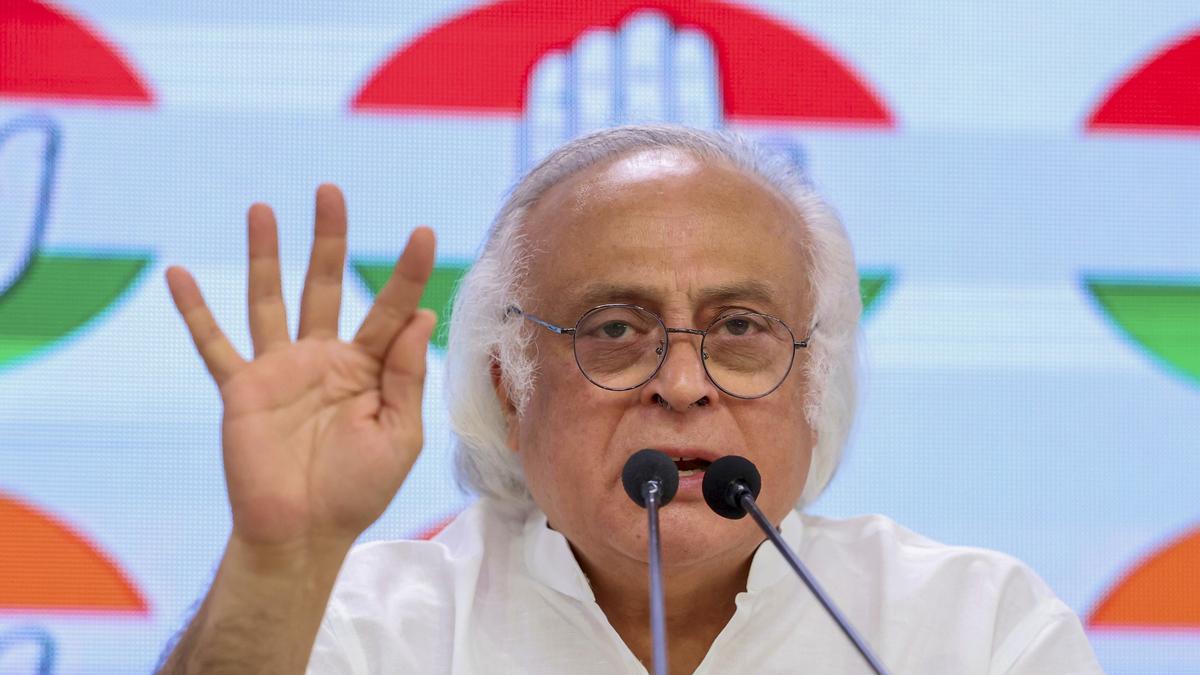
Despite the headlines, Elon Musk might never make a trillion dollars. The Tesla CEO would only receive this astronomical amount if he were to meet a set of incredibly ambitious goals, which includes increasing the stock value of the company to $8.5 trillion, selling 20 million vehicles and one million robots. It seems the stuff of science fiction, and perhaps it is. But the fact that Tesla shareholders see it fit to reward this vision should make us re-assess the place of shareholder capitalism in our economy, as it has shown itself unable to tackle two significant problems: irrational exuberance and inequality.

Speculation and inequality

Many analysts have pointed to Tesla’s stock being overvalued, with a high price-to-earnings ratio. Its market capitalisation has increased even though sales and profits fell in the wake of his association with the Trump campaign, currently standing at nearly $1.5 trillion. Why then, is Musk being rewarded when his company’s real-world performance has not matched up to the stratospheric rise of its financial values?

The current pay package voted in by Tesla shareholders is a pure bet on the future, that the company would eventually be able to transform itself into an Artificial Intelligence-behemoth under Musk’s leadership. But there is little to support the claim in the present, and the validation of Musk’s extreme pay package is a speculative bet on his ability to deliver record profits in the future. This is irrational exuberance writ large, a gamble made under profound uncertainty regarding the future, the very same irrational exuberance that has seen the economy devastated in 1929 and 2008.

As Keynes himself pointed out, only harm can accompany a system which makes economic activity the byproduct of speculation. Let us assume, however, that the gamble does pay off. The exuberance of shareholders’ might prove rational, but it would only exacerbate inequality. Under the deal, if Tesla were to achieve a $8 trillion valuation, Musk would be granted additional Tesla stock that would bring the value of his total holdings to over a trillion dollars — an enormous increase in wealth inequality concentrated under the power of a single individual. An institution designed to mitigate the worst excesses of individual entrepreneurs by diffusing power among several shareholders has shown itself decidedly incapable to the task.

Either they are guilty of perpetuating an inflated view of the company’s prospects, or of legitimising a level of wealth concentration unheard of in history, and, by extension, weakening the foundations of democracy.

Voting rights and the principles

Voting rights to shareholders are, in principle, a useful mechanism. If workers were to own shares in the modern corporation, what they would lose out due to slow wage growth could be compensated, in theory, by the rise in equity holdings. Furthermore, the diffusion of voting rights would ensure checks and balances on the exercise of CEO power. The Tesla vote has shown the limitations of these arguments.

One could argue that the trillion dollar payoff is a reward to Musk increasing shareholder wealth. This fits in with a world-view that sees inequality as being justified if it leads to an increase in living standards without making use of market distortions such as strong-arming competitors or cheating consumers. But this is to take too narrow a view of the political import of inequality.

The process of voting at Tesla may be legitimate, given the narrow bounds of procedure laid down by the company, but is unjustifiable given the fact that Elon Musk has interfered in elections, publicly made a gesture that has been interpreted as a Nazi salute and amplified hateful right-wing content on a social media platform that he owns.

The procedural form of voting is necessary, but not sufficient, for the preservation of economic democracy. A simple account of democracy, for instance, would hold that organs of free speech should not be monopolised. Yet this is exactly what X’s (Twitter) shareholders voted to do when they agreed to its sale.

Imagine that all workers of Tesla can vote on executive compensation, but not on conditions of work. Further, imagine that Musk provides a credible plan to increase stock values, and along with it comes a significant increase in his own net wealth. Voting for the plan increases workers’ net wealth, but increases the possibilities of further election interference. By the narrow bounds of economic rationality, it would be rational for individuals to vote for the plan. For shareholder capitalism to truly uphold democratic norms, voters would have to be economically irrational in prizing political objectives over their narrow economic interests.

The effect of wealth rise

One might criticise this argument by claiming that this writer is unfairly conflating political and economic objectives, which shareholder capitalism was never meant to tackle. But the unchecked wealth accumulation of the last couple of decades has meant a blurring of the boundaries separating the political from the economic. Rising wealth inequality, even if accompanied by rising individual wealth, has brought with it a weakening of political institutions.

X’s sale and Tesla’s pay package have shown that simple access to equity shares and the act of voting alone cannot meaningfully halt modern capitalism’s worst excesses. What is required is to embed these processes in broader democratic institutions that explicitly limit the concentration of wealth and its ability to interfere in democratic processes. Keynes realised this contradiction: capitalism can only meaningfully work if its operation is curtailed. It is beyond time we recognise it as well.

Rahul Menon teaches at the Jindal School of Government and Public Policy at O.P. Jindal Global University

Published – January 02, 2026 12:08 am IST


Source link

Business Tags:economic activity and speculation, economic rationality, Elon Musk and trillion dollars, executive compensation, foundations of democracy, net wealth, shareholder capitalism and economy, shareholder wealth, stock value of Tesla, Tesla shareholders, Tesla’s stock and valuation, Trump campaign and Musk, Voting rights to shareholders, wealth inequality

Post navigation

Previous Post: New year, new challenges for the Men in Blue
Next Post: Access Denied

Related Posts

  • Rupee surges 77 paise to settle at 95.08 against U.S. dollar
    Rupee surges 77 paise to settle at 95.08 against U.S. dollar Business
  • At 6.7%, growth slid to five-quarter low in Q1
    At 6.7%, growth slid to five-quarter low in Q1 Business
  • Access Denied Business
  • Access Denied Business
  • Rupee ends 14 paise lower at 90.92 against U.S. dollar
    Rupee ends 14 paise lower at 90.92 against U.S. dollar Business
  • Rupee slips 4 paise to settle at 96.57 against U.S. dollar
    Rupee slips 4 paise to settle at 96.57 against U.S. dollar Business

More Related Articles

PayPal says 220 India employees affected in latest restructuring PayPal says 220 India employees affected in latest restructuring Business
IPO rush: Hyundai, Swiggy, NTPC Green Energy among cos looking to raise ₹60,000 crore in Oct-Nov IPO rush: Hyundai, Swiggy, NTPC Green Energy among cos looking to raise ₹60,000 crore in Oct-Nov Business
Access Denied Business
Government must eliminate conflicts of interest in SEBI’s Adani probe: Congress Government must eliminate conflicts of interest in SEBI’s Adani probe: Congress Business
Union Budget 2024: Double standard deduction to ₹1 lakh keeping in mind rising expenses, inflation: KPMG Union Budget 2024: Double standard deduction to ₹1 lakh keeping in mind rising expenses, inflation: KPMG Business
Access Denied Business
SiteLock

Archives

  • September 2026
  • August 2026
  • July 2026
  • June 2026
  • May 2026
  • April 2026
  • March 2026
  • February 2026
  • January 2026
  • December 2025
  • November 2025
  • October 2025
  • September 2025
  • August 2025
  • July 2025
  • June 2025
  • May 2025
  • April 2025
  • March 2025
  • February 2025
  • January 2025
  • December 2024
  • November 2024
  • October 2024
  • September 2024
  • August 2024
  • July 2024
  • June 2024
  • May 2024
  • April 2024
  • March 2024
  • February 2024
  • January 2024
  • December 2023
  • November 2023
  • October 2023
  • September 2023
  • August 2023
  • July 2023
  • June 2023
  • May 2023
  • April 2023
  • March 2023
  • February 2023
  • January 2023
  • December 2022
  • November 2022
  • October 2022
  • September 2022
  • August 2022
  • July 2022
  • June 2022
  • May 2022

Categories

  • Business
  • Nation
  • Science
  • Sports
  • World

Recent Posts

  • Man sentenced to 5 years of imprisonment in POCSO case
  • Ansell to manufacture gloves at Perundurai plant for key global markets
  • Despite zoonotic diseases threat, Keralam’s proposed veterinary public health wing yet to take shape
  • New, sophisticated drugs did not move the needs on hearts attacks, strokes: what this teaches us
  • Fact, fiction and flying objects: This new docufiction journeys across prehistory, colonial records and UFO encounters in Pavagada

Recent Comments

  1. AlvinNet on UP Teacher Who Asked Students To Slap Muslim Classmate
  2. AlvinNet on UP Teacher Who Asked Students To Slap Muslim Classmate
  3. Jamesslits on UP Teacher Who Asked Students To Slap Muslim Classmate
  4. MichaelClear on UP Teacher Who Asked Students To Slap Muslim Classmate
  5. Jamesslits on UP Teacher Who Asked Students To Slap Muslim Classmate
  • Access Denied
    Access Denied Nation
  • Russian attacks kill three across Ukraine, strike Kyiv for second consecutive night
    Russian attacks kill three across Ukraine, strike Kyiv for second consecutive night World
  • More Than Half Of Kolkata’s Iconic Yellow Taxis To Be Off Roads In 2025, Here’s Why
    More Than Half Of Kolkata’s Iconic Yellow Taxis To Be Off Roads In 2025, Here’s Why Nation
  • Sunil Gavaskar Blasts Sam Konstas Over Boxing Day Test Incident, Has Clear Message For Umpires
    Sunil Gavaskar Blasts Sam Konstas Over Boxing Day Test Incident, Has Clear Message For Umpires Sports
  • FC Barcelona vs Athletic Bilbao LIVE Streaming Supercopa de Espana LIVE Telecast: When And Where To Watch
    FC Barcelona vs Athletic Bilbao LIVE Streaming Supercopa de Espana LIVE Telecast: When And Where To Watch Sports
  • France goes to polls as far right eyes historic win
    France goes to polls as far right eyes historic win World
  • Rahul Gandhi Urges Yogi Adityanath To Increase Hathras Compensation
    Rahul Gandhi Urges Yogi Adityanath To Increase Hathras Compensation Nation
  • How Taylor Swift’s Eras Tour Sparked A Diplomatic Row
    How Taylor Swift’s Eras Tour Sparked A Diplomatic Row World

Editor-in-Chief:
Mohammad Ariff,
MSW, MAJMC, BSW, DTL, CTS, CNM, CCR, CAL, RSL, ASOC.
editor@artifex.news

Associate Editors:
1. Zenellis R. Tuba,
zenelis@artifex.news
2. Haris Daniyel
daniyel@artifex.news

Photograher:
Rohan Das
rohan@artifex.news

Artifex.News offers Online Paid Internships to college students from India and Abroad. Interns will get a PRESS CARD and other online offers.
Send your CV (Subjectline: Paid Internship) to internship@artifex.news

Links:
Associate Journalism
About Us
Privacy Policy

News Links:
Breaking News
World
Nation
Sports
Business
Entertainment
Lifestyle

Registered Office:
72/A, Elliot Road, Kolkata - 700016
Tel: 033-22277777, 033-22172217
Email: office@artifex.news

Editorial Office / News Desk:
No. 13, Mezzanine Floor, Esplanade Metro Rail Station,
12 J. L. Nehru Road, Kolkata - 700069.
(Entry from Gate No. 5)
Tel: 033-46011099, 033-46046046
Email: editor@artifex.news

Copyright © 2023 Artifex.News Newsportal designed by Artifex Infotech.