



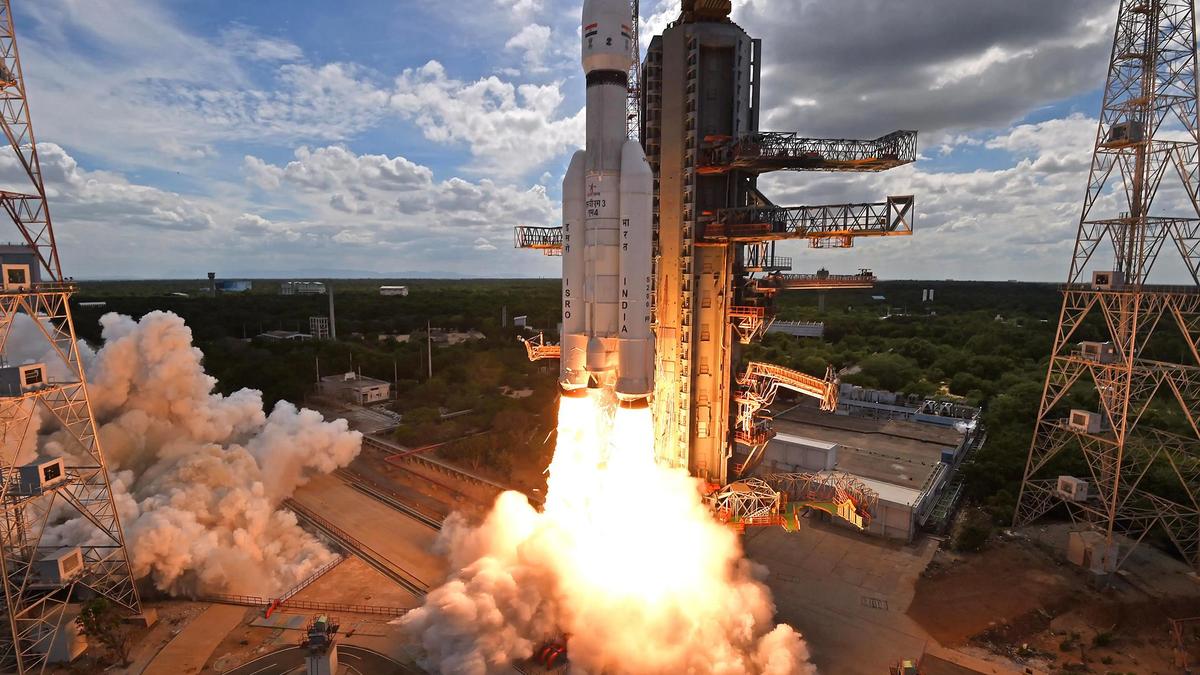
As India moves closer to flying astronauts as part of Gaganyaan, human-rating has emerged as a central but oft-unseen part of the story. Launch vehicles like LVM-3 already fly satellites safely but carrying people demands a lower tolerance for risk and a different way of thinking about failure.
What’s the definition of human-rating?
Human-rating is the rigorous engineering and certification process that makes sure a space system, like a launch vehicle or a crew module, can safely carry humans to space. As a result, human-rated systems have an acceptable level of risk.
According to NASA standards, this is a 0.2% chance for a catastrophic event causing loss of crew during the ascent and descent phases of flight.
As part of the human-rating process, engineers attach redundant critical systems, e.g., triple or quadruple redundant flight computers; robust abort capabilities throughout the time of ascent, like the crew escape system; fault tolerance to single failures; and a reliable environmental control and life support system for the crew cabin.
They also exhaustively test, verify, and document far beyond what’s required for expendable cargo rockets, all to achieve the stated loss-of-crew probability.
Why is human-rating challenging?
The endeavour of escaping the earth’s gravity is much harsher and less forgiving than flying through the atmosphere, like aeroplanes do. In fact, between flying through the atmosphere and entering the vacuum of space, rockets have to accelerate to 28,000kmph in just 8-10 minutes, experience intense vibrations, and withstand high structural loads at the point of maximum dynamic pressure.
A passenger aircraft, on the other hand, can cruise gently for hours through the atmosphere at less than 1,000 kmph with (relatively) large safety margins, can tolerate engine failure without catastrophe, and can glide or divert to an airport during emergencies.
As a result, the most reliable orbital launch vehicles have success rates of around 98-99.5%, whereas commercial airliners have safety records closer to one fatal accident per 10-20 million flights.
Which launch vehicles have been human-rated?
As of today, fully operational human-rated launch vehicles — i.e. those flying crew to earth orbit — are Russia’s Soyuz-2, China’s Long March 2F, and SpaceX’s Falcon 9.
In the U.S., United Launch Alliance’s Atlas V rocket completed its crewed test flight in 2024 using the Boeing Starliner crew capsule, but it awaits certification for routine operational crew rotation missions following post-flight technical reviews. NASA’s Space Launch System is also human-rated but it has only flown one uncrewed mission, Artemis I, and is currently preparing for its first crewed flight.
Which agency provides human-rating certificates?
In the U.S., NASA grants the final human rating certification, thus authorising the vehicle for crewed flight, particularly where NASA astronauts are involved. For commercial missions like SpaceX’s Crew Dragon and Boeing’s Starliner, NASA specifies stringent crew safety requirements.
The U.S. Federal Aviation Administration (FAA) also licenses commercial launch operations to protect public safety on the ground but doesn’t certify crew safety.
The China Manned Space Agency (CMSA) grants human-rating approval for systems like the Long March 2F and Shenzhou spacecraft. In Russia, Roscosmos is the certifying authority for the long-standing Soyuz rocket and spacecraft.
How often do human-rated launch vehicles succeed?
Russia’s Soyuz spacecraft programme has undertaken more than 150 crewed missions since 1967. It has an exceptionally high success rate, about 98%. The programme did suffer two fatal missions early in its history: Soyuz 1 in 1967 and Soyuz 11 in 1971.
However it has been nearly flawless in the current era vis-à-vis delivering crew to orbit. The Soyuz crew escape system successfully saved the lives of cosmonauts in at least three non-fatal launch failures: in 1975, 1983, and 2018. Since the 1971 incident, the crew safety success rate for the Soyuz program has been 100%.
The U.S. Space Shuttle programme completed 135 human space missions from 1981 to 2011 with 133 successes at a rate of 98.5% (133 successful). Its two failures, the Challenger and Columbia disasters in 1986 and 2003 respectively, were the only losses of vehicle and crew. All other flights safely achieved their primary objectives.
The SpaceX Falcon 9 rocket paired with the Crew Dragon spacecraft has achieved a 100% success rate across 20 of its orbital human spaceflights. These NASA Commercial Crew rotations to the International Space Station and private missions, including the Axiom-4 mission that Indian astronaut Subhanshu Shukla piloted.
China’s Shenzhou human spaceflight programme, operated by CMSA and launched aboard the Long March 2F rocket, has completed 16 crewed orbital missions with a record of success since its inaugural crewed mission in 2003. However, its flawless run was compromised by the Shenzhou-20 mission in November, when the spacecraft was damaged by space debris. While the crew returned safely aboard the Shenzhou-21 capsule, the damaged Shenzhou-20 capsule was left docked to the Tiangong space station.
Why aren’t all launch vehicles human-rated?
Human-rating a launch vehicle is essential to ensure the astronauts’ safety but it’s technically challenging and more expensive.
The certification process imposes enormous costs because it requires additional systems, rigorous testing, and extensive documentation. These provisions also increase complexity and rocket mass, potentially reducing payload performance and sometimes introducing new modes of failure.
For a cargo mission, the priority is to maximise the mass of the payload (e.g. satellite or supplies) delivered to the desired orbit at the lowest possible cost per kilogram. Adding the mass and complexity of additional systems required for human-rating for a cargo mission would however drive up the price for customers.
Which vehicle is being human-rated for Gaganyaan?
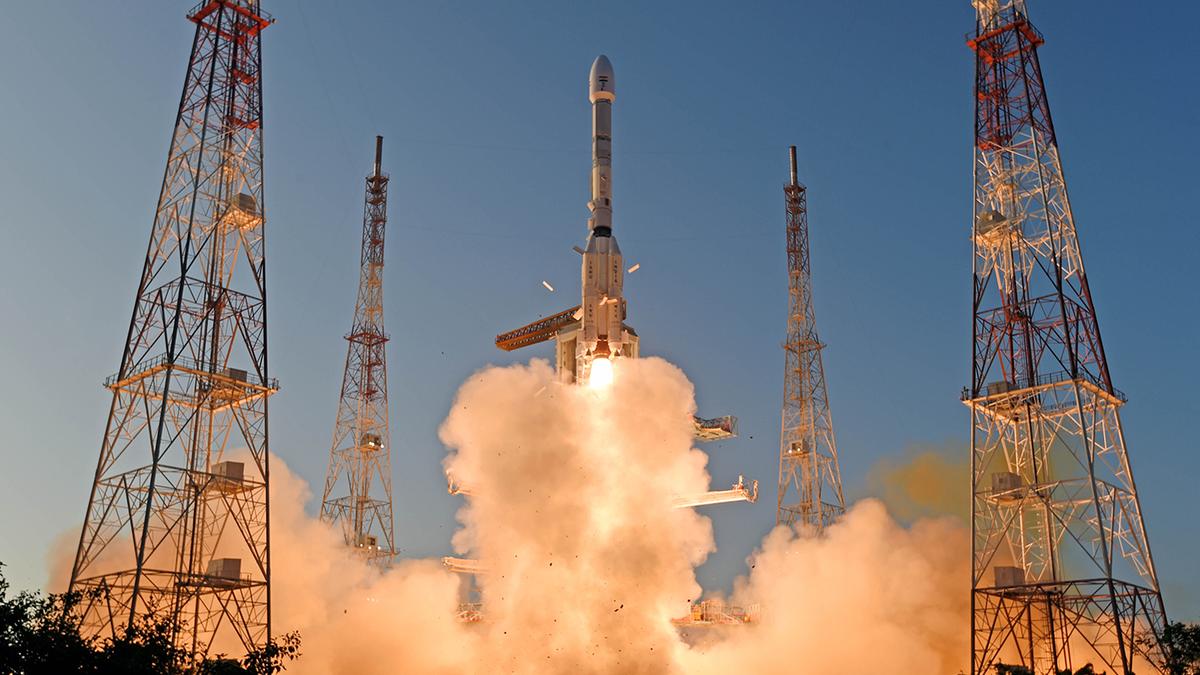
India’s maiden human spaceflight programme will use the LVM-3 rocket. The Indian Space Research Organisation (ISRO) has upgraded it and it’s currently being certified for human-rating. Once it’s thus rated, it will be called the HLVM-3 and will be able to carry Indian astronauts into space.
To this end, ISRO has added extra backup systems, made several systems and subsystems more reliable, strengthened the engines, extensively tested and built a fast crew escape system (which can pull the crew module away in case anything goes wrong during launch).
ISRO selected the LVM-3 for Gaganyaan for multiple reasons. The rocket has already proven its merits in seven consecutive successful orbital flights (including the Chandrayaan-3 mission). It’s also the most reliable rocket in ISRO’s fleet.
The rocket’s fully indigenous propulsion stages — two Vikas liquid engines, the C25 cryogenic engine, and the S200 boosters — are also aligned with India’s strategic goal to achieve self-reliance in human spaceflight, under its Atmanirbhar Bharat initiative.
Unnikrishnan Nair S. is former director of VSSC and founding director of the Human Space Flight Centre (HSFC), Bengaluru. He is an expert in launch vehicle systems and reentry technologies.