



Skip to content
  • Facebook
  • X
  • Linkedin
  • WhatsApp
  • YouTube
  • Associate Journalism
  • About Us
  • Privacy Policy
  • 033-46046046
  • editor@artifex.news
Artifex.News

Artifex.News

Stay Connected. Stay Informed.

  • Breaking News
  • World
  • Nation
  • Sports
  • Business
  • Science
  • Entertainment
  • Lifestyle
  • Toggle search form
  • Access Denied Sports
  • Access Denied Business
  • Premature blast kills suicide bomber but harms no one else, police in northwest Pakistan say
    Premature blast kills suicide bomber but harms no one else, police in northwest Pakistan say World
  • Don’t Give Smartphones To Kids Under 11, UK Network Operator Warns Parents
    Don’t Give Smartphones To Kids Under 11, UK Network Operator Warns Parents World
  • Tom Daley Takes Fifth Olympic Diving Medal But China Grab Gold
    Tom Daley Takes Fifth Olympic Diving Medal But China Grab Gold Sports
  • CSDS-Lokniti 2024 pre-poll survey | Acche din? or Acche din!: citizens’ mixed views on progress and promises 
    CSDS-Lokniti 2024 pre-poll survey | Acche din? or Acche din!: citizens’ mixed views on progress and promises  Business
  • Access Denied World
  • Drops of toilet cleaner mixed in Imran Khan’s wife Bushra Bibi’s food: spokesperson
    Drops of toilet cleaner mixed in Imran Khan’s wife Bushra Bibi’s food: spokesperson World
Savings shift reshapes India’s markets

Savings shift reshapes India’s markets

Posted on December 11, 2025 By admin


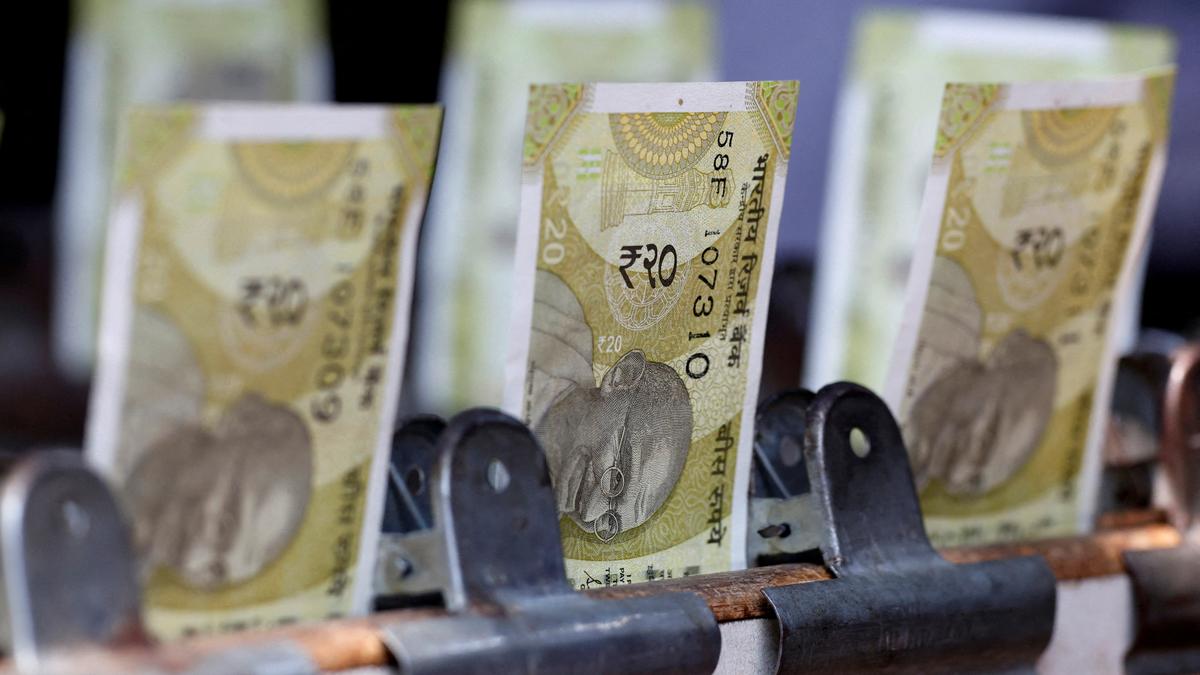
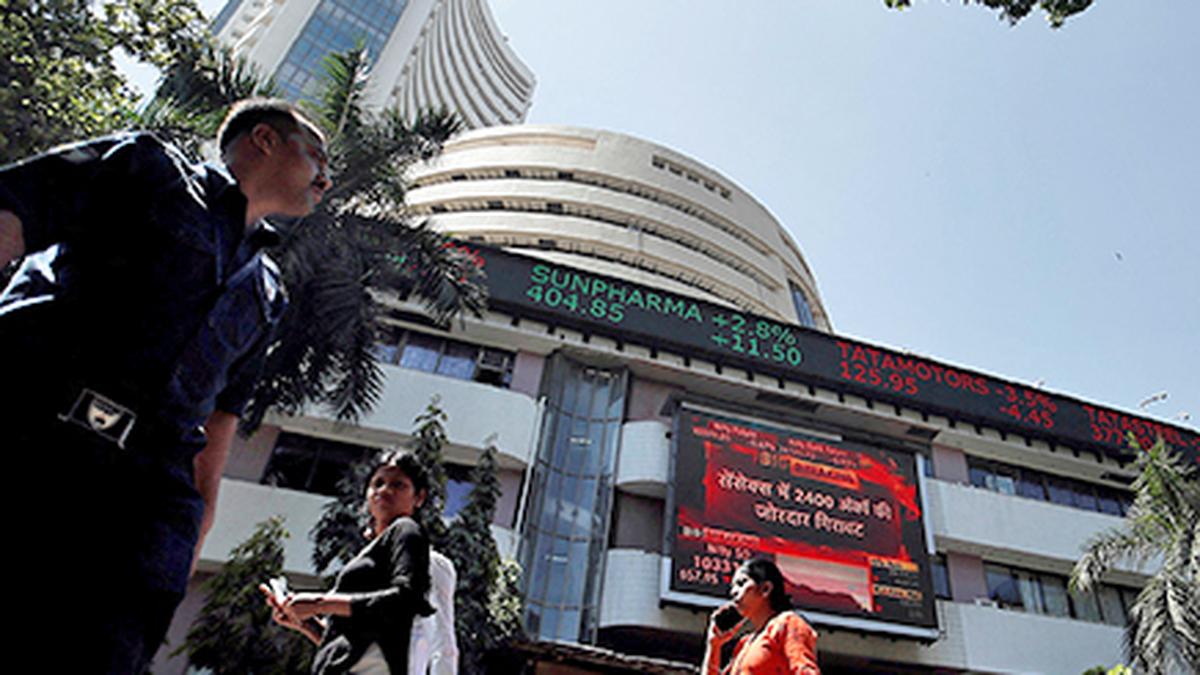
For representative purposes.
| Photo Credit: Getty Images

A significant transformation is under way in India’s capital markets. Domestic household savings are now replacing foreign institutional money. This is not just a change in numbers — it is a shift in market power. Indian equities are less exposed to the unpredictable swings of global capital, which is positive for stability. However, there is a challenge: millions of new retail investors are stepping in, and not all of them are prepared for the complexities ahead. As India aims for “Viksit Bharat 2047,” the question is whether stability built on unequal participation and limited returns supports inclusive growth.

The rise of domestic money

The latest NSE Market Pulse report shows Foreign Portfolio Investor (FPI) ownership of Indian equities at a 15-month low of 16.9% and 24.1% in the NIFTY 50. Meanwhile, domestic Mutual Funds (MFs) are hitting new highs quarter after quarter. Systematic Investment Plans (SIPs) are bringing in record inflows, and individual investors, through direct holdings and MFs, now own nearly 19% of the market, the highest in over two decades. Domestic savers are now the market’s anchor. They are helping reduce volatility and giving institutions a “flight-to-stability” option, as seen in the NIFTY 50’s surge in October.

This market ownership shift has a corresponding impact on the policy landscape. The Reserve Bank of India now enjoys greater flexibility, thanks to domestic inflows and record-low inflation — CPI inflation eased to 0.3% year-on-year in October. With less reliance on FPI flows, the central bank can prioritise stimulating bank credit growth and managing the growth-inflation trade-off, rather than defending the rupee from capital flight. Yet, this policy space is not guaranteed; it could quickly evaporate if household confidence falters or if market downturns disproportionately impact the most vulnerable. Without careful management, this shift risks becoming a source of future instability.

Boom in primary markets

Further reflecting the confidence in domestic capital, the primary market is booming. Seventy-one mainboard listings this fiscal year have raised over ₹1 lakh crore. This surge is supported by a strong appetite for capital formation: in the first nine months of FY25, Indian companies announced investments exceeding ₹32 lakh crore, a 39% increase over the same period last year. Notably, the share of private participation in these announcements has risen to around 70%.

However, beneath this growth lies a more complex reality. The celebratory narrative around MFs and retail participation often skips a key point: the quality of financial advice and how wealth is distributed. A concerning trend can be observed in the IPO market. Companies like Lenskart are commanding sky-high price-to-earnings multiples. Mamaearth and Nykaa have seen similar trends. These examples raise questions about whether market exuberance is outpacing fundamentals and whether retail investors are being exposed to excessive risk.

Financial literature provides some answers — investing doesn’t guarantee better returns. This dynamic is highlighted in the so-called “performance problem” in finance, where most active fund managers struggle to consistently beat the market after accounting for risk and fees.

Unequal outcomes

The consequences of this structural inefficiency are direct, impacting how wealth is distributed across society. When new equity wealth is concentrated among upper-income groups — as seen in higher MF participation in areas with formal financial access — market stability may inadvertently accelerate wealth inequality. The recent decline in household equity wealth by ₹2.6 lakh crore in the last quarter is particularly concerning. If these losses are concentrated among new, vulnerable investors, the promise of inclusive growth rings hollow. Moreover, concentrated benefits dampen aggregate demand, as high wealth concentration often leads to a lower marginal propensity to consume.

One can argue that increased retail participation is a sign of democratisation and will naturally lead to better outcomes as markets mature. But without appropriate safeguards and education, new investors may face higher risks and losses. Market corrections are a normal part of investing, but when losses are concentrated among inexperienced investors, long-term trust in markets can be damaged.

Fixing asymmetry

Addressing these challenges requires more than just increasing the volume of savings. The current financial system must confront the “access asymmetry problem.” This means shifting the focus from simply disclosing information to actively protecting everyday investors. Key steps include incentivising lower fees and promoting passive, low-cost investment vehicles.

With active schemes holding 9% of the market and low-cost passive funds only 1%, lowering expense ratios and educating investors on indexing are crucial steps toward solving the “performance problem.”

Deeper structural issues also demand attention. As promoter holdings in the NIFTY 50 reach a 23-year low of 40%, it is vital to ensure this reflects healthy capital raising, not opportunistic disinvestment. Strengthening corporate governance and transparency is necessary to safeguard long-term value for domestic savers.

Equally important are data-driven interventions. Using gender- and location-specific data can help identify gaps in access and outcomes, enabling targeted policies that bring more women and underrepresented investors into the financial mainstream.

The market’s new foundation is promising, but the imperative now is to shift from simply attracting funds to proactively deepening institutional integrity and broadening financial literacy. Navigating the asymmetries inherent in financial deepening is no longer a peripheral concern; it is a fiduciary imperative.

Saumitra Bhaduri is a Professor, Madras School of Economics, Chennai; Shubham Anand is a PhD Scholar

Published – December 11, 2025 10:35 pm IST


Source link

Business

Post navigation

Previous Post: PM Modi to visit Jordan, Ethiopia, Oman from December 15 to 18
Next Post: Access Denied

Related Posts

  • Infosys’ Q2 net profit up 13.2% YoY to ₹7,364 crore
    Infosys’ Q2 net profit up 13.2% YoY to ₹7,364 crore Business
  • U.S. probes whether Tesla Autopilot recall did enough to make sure drivers pay attention
    U.S. probes whether Tesla Autopilot recall did enough to make sure drivers pay attention Business
  • Amid debate about inheritance tax, rising share of personal income tax and indirect tax remains a concern
    Amid debate about inheritance tax, rising share of personal income tax and indirect tax remains a concern Business
  • Rupee rises 4 paise to 83.01 against US dollar in early trade
    Rupee rises 4 paise to 83.01 against US dollar in early trade Business
  • GST Council begins key meeting to discuss Centre’s rate cut proposals
    GST Council begins key meeting to discuss Centre’s rate cut proposals Business
  • Rupee falls 6 paise to 88.72 against U.S. dollar in early trade
    Rupee falls 6 paise to 88.72 against U.S. dollar in early trade Business

More Related Articles

Disney Hotstar head Sajith Sivanandan quits after India merger with Reliance: Report Disney Hotstar head Sajith Sivanandan quits after India merger with Reliance: Report Business
Access Denied Business
CCI clears mega-deal involving merger of media assets of RIL and Walt Disney CCI clears mega-deal involving merger of media assets of RIL and Walt Disney Business
Stock markets tumble 1% after RBI monetary policy decision; bank stocks drag Stock markets tumble 1% after RBI monetary policy decision; bank stocks drag Business
Natco Pharma Q2 net surges 83% to ₹677 crore on robust growth in formulation exports Natco Pharma Q2 net surges 83% to ₹677 crore on robust growth in formulation exports Business
The Budget and the imperative of fiscal consolidation The Budget and the imperative of fiscal consolidation Business
SiteLock

Archives

  • May 2026
  • April 2026
  • March 2026
  • February 2026
  • January 2026
  • December 2025
  • November 2025
  • October 2025
  • September 2025
  • August 2025
  • July 2025
  • June 2025
  • May 2025
  • April 2025
  • March 2025
  • February 2025
  • January 2025
  • December 2024
  • November 2024
  • October 2024
  • September 2024
  • August 2024
  • July 2024
  • June 2024
  • May 2024
  • April 2024
  • March 2024
  • February 2024
  • January 2024
  • December 2023
  • November 2023
  • October 2023
  • September 2023
  • August 2023
  • July 2023
  • June 2023
  • May 2023
  • April 2023
  • March 2023
  • February 2023
  • January 2023
  • December 2022
  • November 2022
  • October 2022
  • September 2022
  • August 2022
  • July 2022
  • June 2022
  • May 2022

Categories

  • Business
  • Nation
  • Science
  • Sports
  • World

Recent Posts

  • Israel-Iran war LIVE: Iran working on Hormuz ‘protocol’ to cover ‘costs’, says Dy FM Gharibabadi
  • Russia to fulfil all agreements on energy supply to India: FM Lavrov
  • Maruti Suzuki crosses 3 million vehicle dispatches through railways, eyes 35% share by rail
  • Delhi High Court rejects plea against tax exemption for agricultural income in Capital
  • Delhi High Court refuses to entertain PIL to prevent suicides

Recent Comments

  1. Jeffreyroure on UP Teacher Who Asked Students To Slap Muslim Classmate
  2. Stevemonge on UP Teacher Who Asked Students To Slap Muslim Classmate
  3. RichardClage on UP Teacher Who Asked Students To Slap Muslim Classmate
  4. StevenLek on UP Teacher Who Asked Students To Slap Muslim Classmate
  5. Leonardren on UP Teacher Who Asked Students To Slap Muslim Classmate
  • Iran-Israel war LIVE: Israel military says air defences responding to Iranian missiles
    Iran-Israel war LIVE: Israel military says air defences responding to Iranian missiles World
  • How AI Can Fight Sex And Gender Bias In Healthcare
    How AI Can Fight Sex And Gender Bias In Healthcare World
  • Sudan recovers 100 bodies after Darfur landslide: rebel group
    Sudan recovers 100 bodies after Darfur landslide: rebel group World
  • Access Denied Business
  • Slovenia’s President urges talks on future government after tight election outcome
    Slovenia’s President urges talks on future government after tight election outcome World
  • Access Denied Business
  • Access Denied Sports
  • India vs Pakistan, Asian Games Tennis Mixed Doubles Live Streaming: When And Where To Watch?
    India vs Pakistan, Asian Games Tennis Mixed Doubles Live Streaming: When And Where To Watch? Sports

Editor-in-Chief:
Mohammad Ariff,
MSW, MAJMC, BSW, DTL, CTS, CNM, CCR, CAL, RSL, ASOC.
editor@artifex.news

Associate Editors:
1. Zenellis R. Tuba,
zenelis@artifex.news
2. Haris Daniyel
daniyel@artifex.news

Photograher:
Rohan Das
rohan@artifex.news

Artifex.News offers Online Paid Internships to college students from India and Abroad. Interns will get a PRESS CARD and other online offers.
Send your CV (Subjectline: Paid Internship) to internship@artifex.news

Links:
Associate Journalism
About Us
Privacy Policy

News Links:
Breaking News
World
Nation
Sports
Business
Entertainment
Lifestyle

Registered Office:
72/A, Elliot Road, Kolkata - 700016
Tel: 033-22277777, 033-22172217
Email: office@artifex.news

Editorial Office / News Desk:
No. 13, Mezzanine Floor, Esplanade Metro Rail Station,
12 J. L. Nehru Road, Kolkata - 700069.
(Entry from Gate No. 5)
Tel: 033-46011099, 033-46046046
Email: editor@artifex.news

Copyright © 2023 Artifex.News Newsportal designed by Artifex Infotech.