

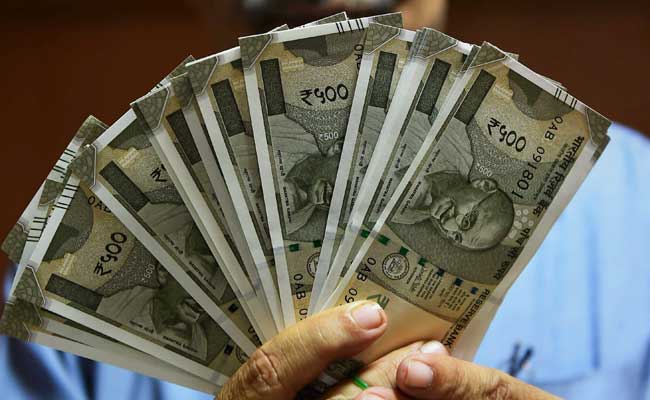

India’s latest GDP figures position the Indian economy to be producing at a significantly higher level than last year, emphasised by the ₹48.63 lakh crore output projected to be realised in a single quarter.
The general state of the economy
An 8.2% increase of GDP indicates that this rise is part of a genuine momentum rather than just being a post-pandemic bounce. The 9.1% growth in manufacturing indicates that industrial demand has increased and factories are operating closer to capacity. Services, now 60% of India’s GDP, is growing at 9.2%, with financial services at 10.2%, which reflects strong credit activity, higher transactions, and sustained urban demand.
The increase in real Gross Value Added (GVA) numbers from ₹82.88 lakh crore to ₹89.41 lakh crore further indicates that agriculture, industry and services are experiencing genuine rise in added value and not just rise in prices.
The real numbers held up because the nominal GDP increased by 8.8%, demonstrating that inflation remained under check. Moreover, Private Final Consumption Expenditure (PFCE) rising by 7.9% show that households are spending more. Further, the growth of agriculture by 3.5%, supported by fuller reservoirs and better horticulture output, points to a small but real improvement in rural incomes.
Inflation, which had been high for much of the previous years, finally eased and even slipped below target toward the end of 2024-25. Banks experienced significant credit growth and were in a position to lend with a clean balance sheet, maintaining capital buffers which are far in excess of regulatory requirements.
On the budget front, the Centre stuck to the path of consolidation with the help of strong GST and direct tax collections and successfully managed to keep the spending mix relatively high-quality. The external sector remained stable with a small current account deficit, healthy services exports and diversified foreign exchange reserves to weather global volatility.
And so, if one were to just look at these figures, it would appear that the Indian economy is moving forward even as much of the world slows down and is eclipsed in greater economic uncertainty.
The IMF’s rating
Notwithstanding this, every headline has its shadow. Here, the shadow arrived in the form of a shocker when the International Monetary Fund (IMF) announced that India had been assigned ‘Grade C’ in its recent assessment on its national income accounting. There are four grades in total: A, B, C, and D.
Some of the multiple shortcomings highlighted by the IMF team which require careful consideration and review include — a) the use of an outdated base year (2011/12); b) the use of wholesale price indices as data sources for deflators due to the lack of producer price indices; c) the excessive use of single deflation, which may introduce cyclical biases; d) sizeable discrepancies between production and expenditure approaches that may indicate the need to enhance the coverage of the expenditure approach data and the informal sector; e) lack of seasonally adjusted data and room for improvement in other statistical techniques used in the quarterly national accounts compilation; and f) a lack of consolidated data on States and local bodies after 2019.
This raises a critical question: how can a nation possibly be underrated when it’s racing at 8% while the world limps at 3%? But the truth lives in the footnotes of our own documents.
The RBI’s Annual Report (2024-25) recognises that the economy has performed well, but it also quietly lays out the structural issues that still drag down India’s credibility. Countries with discretionary exercises in projecting the good alone in numbers have two narratives: the one they tell the world and the one they whisper under their own breath. India’s 8.2% is the story its government wants tell the world. The IMF’s C is the whisper.
An economy appearing to grow fast is not the same thing as an economy growing well. What the IMF is really saying is that India’s institutional bones are not yet as strong as its muscle.
Mining output was hit by an unusually long monsoon, while electricity generation slowed because of a milder-than-usual winter that reduced heating and peak-load demand. Although these might seem like fleeting weather phenomena, they significantly undermined the industrial base of the year. The unevenness is evident even in this strong quarter. Electricity and utilities grew only 4.4%, and mining barely moved at 0.04%. These are backbone sectors and subsequently their sluggishness signals that recovery is not evenly spread across the real economy. According to nominal GVA, the primary sector accounted for 14%, the secondary sector for 26%, and the tertiary sector for 60% in Q2.
These proportions look normal for a service-led economy, but India’s case is different because its employment structure does not match its output structure: too many Indians still work in agriculture and low-wage services, sectors that contribute little to productivity gains.
Structural vulnerabilities
The RBI cautions that India’s export trajectory will continue to be impacted by growing trade protectionism, tariff uncertainty, and geopolitical tensions in key markets.
Services exports and remittances help cushion the current account, but they cannot substitute for a diversified and scaled-up goods export engine — one that India still lacks.
Another contradiction shows up in the financial markets.
The rupee looked stable from a distance, but underneath, it was constantly being pushed down by a strong U.S. dollar and the usual swings in foreign capital.
When one realises that the IMF is grading the architecture that supports India’s growth rather than the country’s growth rate, its Grade C starts to make sense. A country can grow at 8% and still have structural vulnerabilities.
It can post healthy GVA numbers and still have weak institutional capacity at the State level, low labour productivity, and an export profile mismatched with global demand. GDP captures the pace of economic activity; it does not capture the quality of governance that sustains it. The true conflict is that, despite India’s robust short-term economic momentum, its long-term framework is still being developed.
Even with the strong Q2 performance, broad-sector analysis shows agriculture growing only 3.5%, utilities at 4.4%, and mining barely above zero, sectors that collectively employ millions but contribute less and less to value creation.
This does not diminish the achievement of 8.2% growth. However, it makes the narrative more difficult. The IMF’s grade serves as a subtle reminder to see past the quarterly glow and recognise the unresolved issues in economic structure, finance, and governance. India is leading the way. What it needs now is the depth.
Deepanshu Mohan is professor and dean, O.P. Jindal Global University and Director, Centre for New Economics Studies (CNES). He is a visiting professor at LSE and a visiting fellow at University of Oxford. Geetaali Malhotra is a research analyst with CNES.
Published – December 11, 2025 08:30 am IST