
Skip to content
  • Facebook
  • X
  • Linkedin
  • WhatsApp
  • YouTube
  • Associate Journalism
  • About Us
  • Privacy Policy
  • 033-46046046
  • editor@artifex.news
Artifex.News

Artifex.News

Stay Connected. Stay Informed.

  • Breaking News
  • World
  • Nation
  • Sports
  • Business
  • Science
  • Entertainment
  • Lifestyle
  • Toggle search form
  • Pakistan Legend Shahid Afridi ‘Can’t Understand’ Haris Rauf’s Bowling Struggles
    Pakistan Legend Shahid Afridi ‘Can’t Understand’ Haris Rauf’s Bowling Struggles Sports
  • Tigress Covers 300 Km Across 3 States In 21 Days, Tranquillised In Bengal
    Tigress Covers 300 Km Across 3 States In 21 Days, Tranquillised In Bengal Nation
  • Access Denied
    Access Denied Nation
  • India, U.K. to hold next round of talks on proposed trade agreement in July
    India, U.K. to hold next round of talks on proposed trade agreement in July Business
  • ‘Note ban, GST, COVID shocks cost ₹11.3 lakh cr., 1.6 crore informal sector jobs’
    ‘Note ban, GST, COVID shocks cost ₹11.3 lakh cr., 1.6 crore informal sector jobs’ Business
  • CPM Chief, Raconteur And Pragmatic Face Of Left
    CPM Chief, Raconteur And Pragmatic Face Of Left Nation
  • Access Denied Sports
  • Access Denied
    Access Denied Nation
World AIDS Day: why HIV infections are still so hard to treat

World AIDS Day: why HIV infections are still so hard to treat

Posted on December 1, 2025 By admin


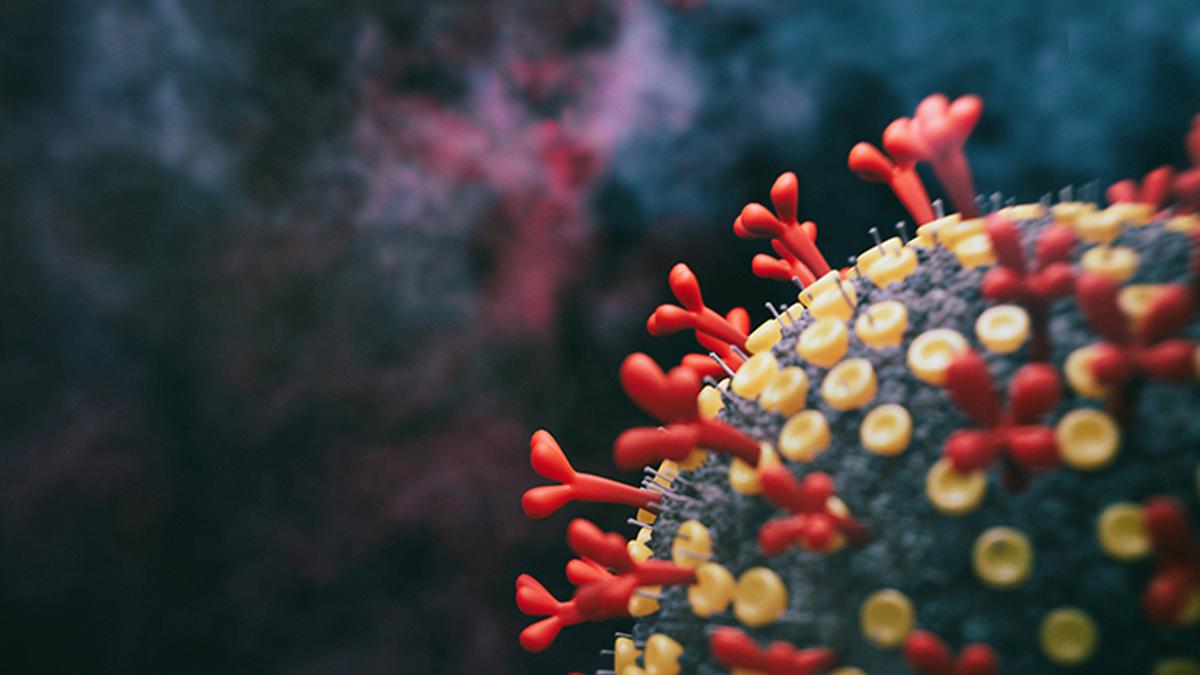
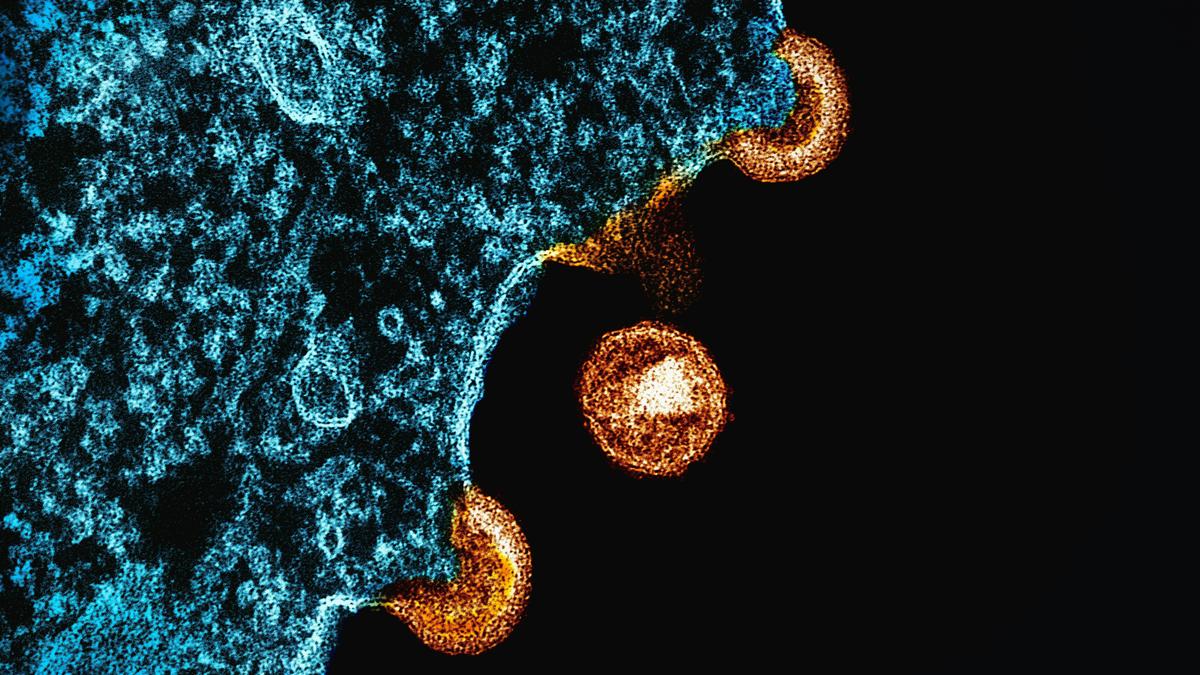
In a landmark paper in Science on May 20, 1983, researchers reported they had isolated a “retrovirus” from a patient at risk of developing AIDS. The work, led by French virologists Françoise Barré-Sinoussi and Luc Montagnier at the Institut Pasteur, was the first glimpse of what would become one of the most devastating pathogens in modern human history.

At the time, neither Barré-Sinoussi nor Montagnier knew that they had isolated the emperor of all viruses.

In the years that followed, it became tragically clear the human immunodeficiency virus (HIV), as it came to be known, was not ordinary. Patients who acquired HIV did not recover and every attempt to create a vaccine failed. If left untreated, the infection had a near-100% mortality rate, relentlessly destroying the immune system and leaving patients vulnerable to fatal opportunistic infections.

No vaccine, no cure

Today, more than four decades later, while HIV is no longer a death sentence, it remains far from cured. The virus has merely transitioned from a guarantee of death to a lifelong, tightly managed chronic illness. Survival today depends on strict, uninterrupted antiretroviral therapy — a regimen that comes with side effects and imposes the constant psychological burden of adherence, since any lapse risks viral rebound, with the added danger of the development of drug resistance.

Thus after 42 years of unprecedented investment of time, money, and scientific effort, we are left with a rather abysmal report card. There is still no vaccine. And of the estimated 91.4 million people who have ever been infected with HIV, only a handful of individuals have been declared “cured”. These rare cases were not cured by drugs but by bone-marrow transplants carried out to treat leukaemia, a form of blood cancer. Bone marrow transplants are risky procedures that are neither safe nor practical for the vast majority of persons living with HIV.

What makes HIV so resistant to a cure?

On guard for life

The answer lies in two unique properties of the virus. First, HIV belongs to a family of viruses called retroviruses. These viruses are unusual because, as part of their life cycle, they convert their genetic material from RNA to DNA, then integrate this DNA into the host’s own DNA. Once this happens, the viral DNA becomes, for all practical purposes, indistinguishable from your own. The virus becomes a part of you. The only definitive way to eliminate it would be to eliminate every single infected cell.

This challenge might still have been manageable were it not for the second property that makes HIV so formidable. After integrating its DNA into the host genome, HIV can enter a dormant state known as viral latency. In this state, an infected cell carries HIV’s genetic material but produces no new virus particles. The virus persists silently, invisible to the immune system. At any given time, some infected cells churn out new viruses while others slip into latency, creating a shifting, hidden reservoir that has so far made a true cure impossible.

This is also why antiretroviral therapy must be taken for life. The medicines merely prevent the virus from infecting new cells — but they do nothing against the silent, latent reservoir. They can’t. Once therapy is stopped, a portion of these dormant infected cells will inevitably reactivate, reigniting viral replication.

Together, these two properties make HIV uniquely difficult to cure. There are viruses that can integrate into the host genome: other retroviruses like HTLV-1 do this; even the hepatitis B virus sometimes leaves behind a stable DNA form in liver cells. There are also viruses that establish long-term latency: the herpes simplex and varicella-zoster viruses hide in nerve cells while the Epstein–Barr virus can persist silently in B-cells. And while a few viruses can even do both, none can do so with the efficiency observed in HIV.

Moving target

Despite HIV possessing several other traits that add to its resilience, none compare to the consequences of its integration and latency. HIV’s extraordinary sequence diversity, for example, is a hallmark of many RNA viruses. The hepatitis C, influenza, and some other viruses also mutate rapidly. But in HIV’s case, this diversity becomes far more dangerous because it operates on top of permanent genomic integration and deep latency.

That is, the virus constantly changes its appearance while simultaneously hiding inside long-lived cells, creating a moving target that the immune system can neither fully recognise nor completely eliminate. Over time, this relentless battle leads to immune exhaustion: the immune system becomes overwhelmed, depleted, and unable to keep up. This combination of rapid mutation layered onto integration and latency makes HIV one of the toughest pathogens humankind has ever encountered.

Fall as it lived

Yet even in this difficult battle, there are reasons for cautious optimism. Decades of public-health efforts ranging from information and education campaigns to widespread testing and the expansion of antiretroviral therapy have transformed the global response to HIV. Today, more people than ever before are on treatment, and with consistent use antiretroviral therapy not only keeps individuals healthy but also reduces the amount of virus in the blood to levels so low that transmission becomes virtually impossible.

Awareness is also higher than ever, people are getting diagnosed earlier, and treatment coverage continues to rise. As a result, the incidence of infections is falling year on year in many parts of the world, making room for hope against hope that an end to one of the worst pandemics to afflict humans may well be on the horizon.

From the very beginning, HIV has been exceptional. It defied every pattern we knew. It was a virus that destroyed the very immune cells meant to fight it, that integrated permanently into our DNA, and hid in silent reservoirs for decades, that resisted vaccines despite enormous global scientific mobilisation. Where other pathogens bent to human ingenuity, HIV forced us to rethink everything: diagnosis, therapy, prevention, even the limits of biomedical ambition.

Yet it may well be that the emperor of all viruses will finally fall — not to a cure but to awareness, prevention, and the steady narrowing of its paths of transmission. And in that fall, HIV may die as it lived, as the exception, as the one virus science could not conquer, but which was ultimately rendered powerless by humanity’s collective will.

Arun Panchapakesan is an assistant professor at the Y.R. Gaitonde Centre for AIDS Research and Education, Chennai.

Published – December 01, 2025 07:30 am IST



Source link

Science

Post navigation

Previous Post: Access Denied
Next Post: Access Denied

Related Posts

  • Ehrlich builds the basis for chemotherapy
    Ehrlich builds the basis for chemotherapy Science
  • Does the Sun rotate?
    Does the Sun rotate? Science
  • Proba-3 mission would significantly advance understanding of Sun’s Corona: Ex-ISRO scientist
    Proba-3 mission would significantly advance understanding of Sun’s Corona: Ex-ISRO scientist Science
  • The Science Quiz | Is there alien life in the Solar System?
    The Science Quiz | Is there alien life in the Solar System? Science
  • Sharks off Rio de Janeiro test positive for cocaine
    Sharks off Rio de Janeiro test positive for cocaine Science
  • Marius, the man who named Jupiter’s Galilean moons
    Marius, the man who named Jupiter’s Galilean moons Science

More Related Articles

Why do rain clouds appear grey? Why do rain clouds appear grey? Science
India launches NASA-ISRO earth observation satellite  India launches NASA-ISRO earth observation satellite  Science
‘Historic day’: Artemis astronauts break space distance record ‘Historic day’: Artemis astronauts break space distance record Science
Sci-Five | The Hindu Science Quiz: On Autism Sci-Five | The Hindu Science Quiz: On Autism Science
The Science Quiz | Want to be tickled pink out of the blue? The Science Quiz | Want to be tickled pink out of the blue? Science
Why do people catch colds and flu more often in the winter? Why do people catch colds and flu more often in the winter? Science
SiteLock

Archives

  • May 2026
  • April 2026
  • March 2026
  • February 2026
  • January 2026
  • December 2025
  • November 2025
  • October 2025
  • September 2025
  • August 2025
  • July 2025
  • June 2025
  • May 2025
  • April 2025
  • March 2025
  • February 2025
  • January 2025
  • December 2024
  • November 2024
  • October 2024
  • September 2024
  • August 2024
  • July 2024
  • June 2024
  • May 2024
  • April 2024
  • March 2024
  • February 2024
  • January 2024
  • December 2023
  • November 2023
  • October 2023
  • September 2023
  • August 2023
  • July 2023
  • June 2023
  • May 2023
  • April 2023
  • March 2023
  • February 2023
  • January 2023
  • December 2022
  • November 2022
  • October 2022
  • September 2022
  • August 2022
  • July 2022
  • June 2022
  • May 2022

Categories

  • Business
  • Nation
  • Science
  • Sports
  • World

Recent Posts

  • NEET-UG examination 2026: One suspect arrested from Nashik
  • Iran’s Guards hold military drills in capital as ceasefire teeters
  • ‘Hit the streets’: Kejriwal to students on NEET-UG paper leak; protests
  • Ever since Elon Musk took over, banning social media accounts became common: Iltija Mufti
  • The challenge to not breach the limit

Recent Comments

  1. Lavernedrums on UP Teacher Who Asked Students To Slap Muslim Classmate
  2. Raymonddow on UP Teacher Who Asked Students To Slap Muslim Classmate
  3. Jeffreyroure on UP Teacher Who Asked Students To Slap Muslim Classmate
  4. AaronPrido on UP Teacher Who Asked Students To Slap Muslim Classmate
  5. AaronThymn on UP Teacher Who Asked Students To Slap Muslim Classmate
  • Access Denied
    Access Denied Nation
  • “Maybe Virat Kohli Will Miss IPL Too,” Sunil Gavaskar’s Cheeky Comment Gives Rise To Speculation
    “Maybe Virat Kohli Will Miss IPL Too,” Sunil Gavaskar’s Cheeky Comment Gives Rise To Speculation Sports
  • Rashid Khan Clicked With Bollywood Stars Alia Bhatt, Ranbir Kapoor. Can’t Miss The Caption
    Rashid Khan Clicked With Bollywood Stars Alia Bhatt, Ranbir Kapoor. Can’t Miss The Caption Sports
  • Muslims spot Ramadan crescent moon in Saudi Arabia, month of fasting starts Monday for many
    Muslims spot Ramadan crescent moon in Saudi Arabia, month of fasting starts Monday for many World
  • Badani named Delhi Capitals head coach; Rao replaces Ganguly as men’s Director of Cricket
    Badani named Delhi Capitals head coach; Rao replaces Ganguly as men’s Director of Cricket Sports
  • Trump backs Cuomo, threatens to cut funds for New York City if Mamdani wins
    Trump backs Cuomo, threatens to cut funds for New York City if Mamdani wins World
  • Lando Norris Delighted After Beating Max Verstappen For US Pole
    Lando Norris Delighted After Beating Max Verstappen For US Pole Sports
  • Prime Minister Narendra Modi Interacts With Neeraj Chopra And Other Olympic-Bound Athletes
    Prime Minister Narendra Modi Interacts With Neeraj Chopra And Other Olympic-Bound Athletes Sports

Editor-in-Chief:
Mohammad Ariff,
MSW, MAJMC, BSW, DTL, CTS, CNM, CCR, CAL, RSL, ASOC.
editor@artifex.news

Associate Editors:
1. Zenellis R. Tuba,
zenelis@artifex.news
2. Haris Daniyel
daniyel@artifex.news

Photograher:
Rohan Das
rohan@artifex.news

Artifex.News offers Online Paid Internships to college students from India and Abroad. Interns will get a PRESS CARD and other online offers.
Send your CV (Subjectline: Paid Internship) to internship@artifex.news

Links:
Associate Journalism
About Us
Privacy Policy

News Links:
Breaking News
World
Nation
Sports
Business
Entertainment
Lifestyle

Registered Office:
72/A, Elliot Road, Kolkata - 700016
Tel: 033-22277777, 033-22172217
Email: office@artifex.news

Editorial Office / News Desk:
No. 13, Mezzanine Floor, Esplanade Metro Rail Station,
12 J. L. Nehru Road, Kolkata - 700069.
(Entry from Gate No. 5)
Tel: 033-46011099, 033-46046046
Email: editor@artifex.news

Copyright © 2023 Artifex.News Newsportal designed by Artifex Infotech.