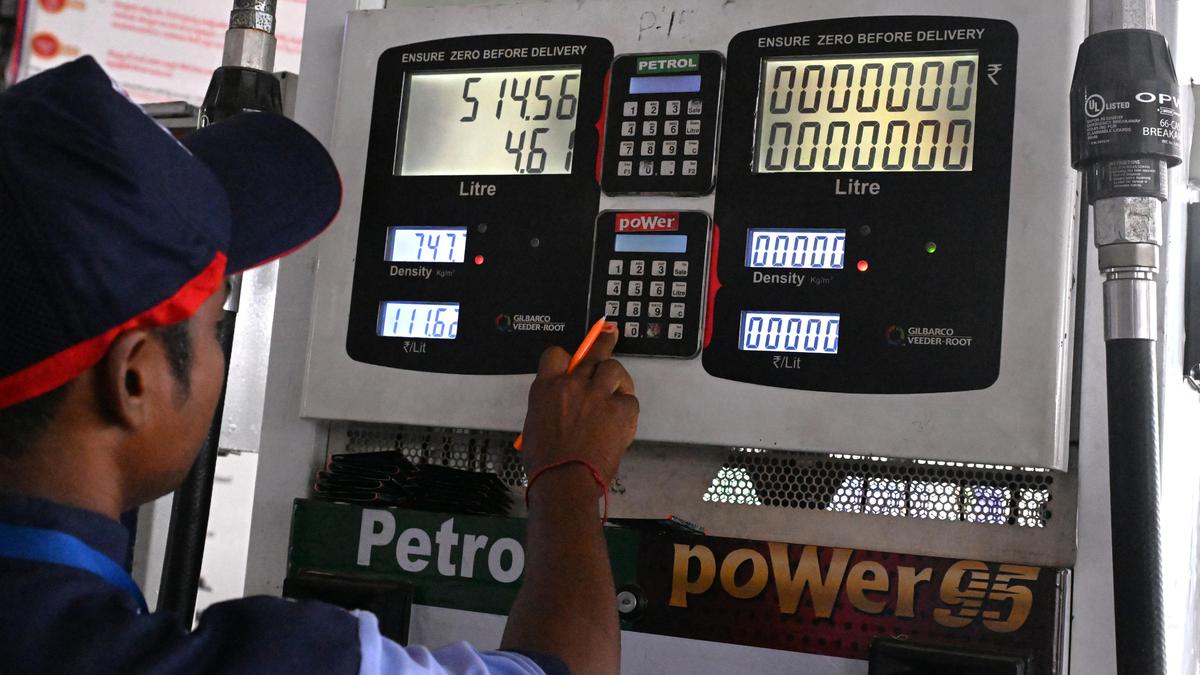




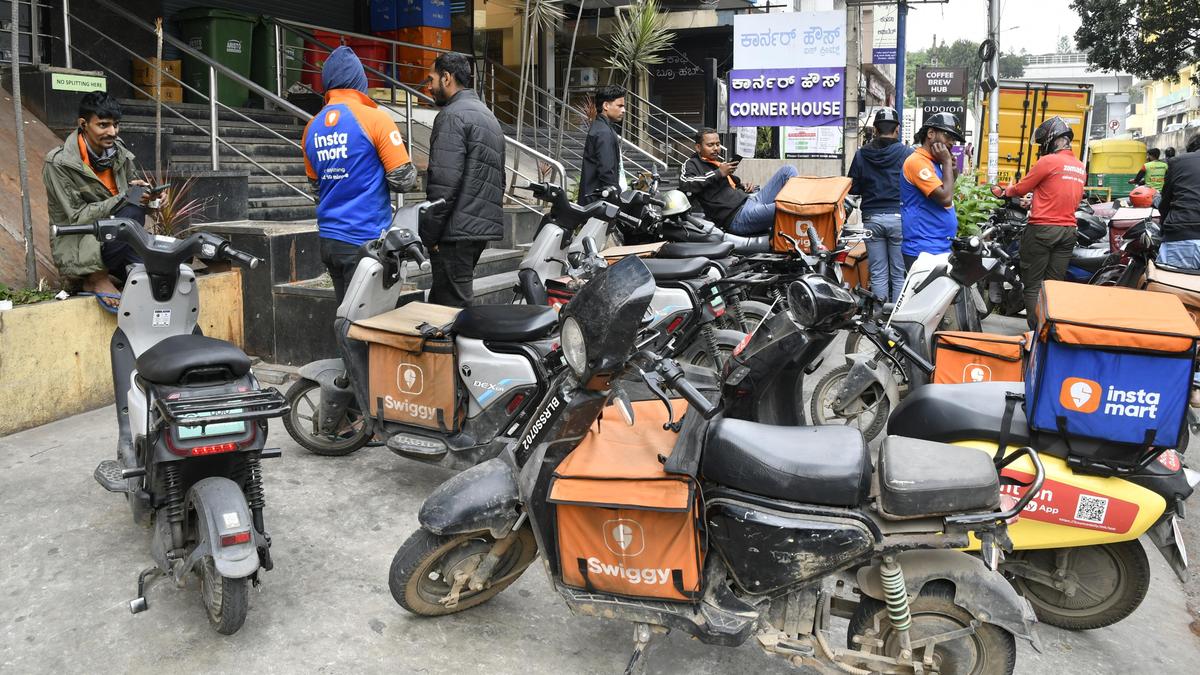
Just about everything comes to your door today — from food and groceries to clothes and appliances. For thousands of workers who bring them over, it is always a race against time. Quick commerce companies promise customers deliveries in about 10 minutes, placing an unrealistic expectation on the delivery personnel who have to navigate Bengaluru’s notorious traffic congestion. As a result, delivery workers overspeeding, zooming on footpaths to bypass jams, weaving their way through congested lanes and jumping signals is a common sight in the city.
As Bengaluru City Police Commissioner Seemant Kumar Singh puts it, the large presence of delivery personnel on pedestrian paths has even created the perception that footpaths are not out of bounds for motorists.
Interactive | Explore dark patterns in e-commerce apps
The significant number of delivery personnel on the road and the nature of the gig economy has added to making the city’s roads more unsafe than they already were. There are also several cases of delivery personnel racing against time becoming accident victims themselves. Bengaluru has recorded at least 27 accidents over the last three years where delivery persons have been victims.
Bengaluru Traffic Police data accessed by The Hindu shows that violations by delivery partners have increased dramatically. In 2023, the Bengaluru Traffic Police booked 30,968 cases against delivery personnel. This rose sharply to 52,153 in 2024, and climbed again to 63,718 in just the first nine months of 2025. These numbers point not merely to individual lapses, but to a worsening systemic issue tied to the nature of gig work, rising urban pressure, and regulatory gaps.
The police have encountered several law and order cases as well. One such incident, described by Singh, involved a worker disappearing with a laptop he was to deliver. At the time of joining, he concealed his previous theft record, and the company, operating within a fast-expanding gig-work environment, failed to conduct proper background checks. When the police probed the case, they found that he had been sacked from another company because of his alleged involvement in a similar case.
“Platforms portray as if 10-minute delivery is real, but practically it cannot be done so. Even the platforms are aware of it” Vinay Sarathy, president of the United Food Delivery Partners’ Union
In 2023, 13 law and order cases involving delivery personnel were reported. In 2024, the number recorded was seven. In 2025 so far, the tally has risen to 24, according to the city crime records bureau.
Larger social issue
According to R.S. Deshpande, former professor at the Institute for Social and Economic Change (ISEC), these rising violations are deeply rooted in broader socio-economic factors. He notes that although gig working models, prevalent in many Western countries, have expanded rapidly in India, the regulatory frameworks that support such systems in the West have not been developed here.
The absence of clear laws governing gig work has had cascading effects on workers’ lives and has resulted in growing concerns related to traffic disruptions, unsafe road behaviour, and petty crimes. Researchers studying the gig economy echoed his perspective, pointing also to the lack of social responsibility among aggregators, lawmakers’ failure to address the multi-layered dimensions of gig work, and the availability and exploitation of cheap migrant labour as major contributing factors. Singh agreed that these structural conditions amplify both traffic violations and crime.

Meeting with aggregators
As complaints grew, the Bengaluru Police convened a meeting last month with platform aggregators that employ gig workers. During the meeting, police presented an extensive set of documented violations committed by gig-economy workers and announced a series of measures. They warned aggregators that they would now begin fixing accountability directly on the companies through existing laws if violations continued.
The largest category of violations involves traffic offences.
Micromobility EV scooters, popular because they are inexpensive, lightweight, and easy to manoeuvre, make up a major share of these complaints. Yet, as police officers pointed out, almost no formal cases have been booked against riders of these scooters because they do not fall under the Motor Vehicle Act, 1988. “Legally, these scooters are treated like bicycles rather than motor vehicles,” said Sahil Bagla, DCP (East, Traffic). He noted that police cannot impose penalties unless the scooter causes a traffic disruption, although special drives are conducted regularly to address such behaviour.
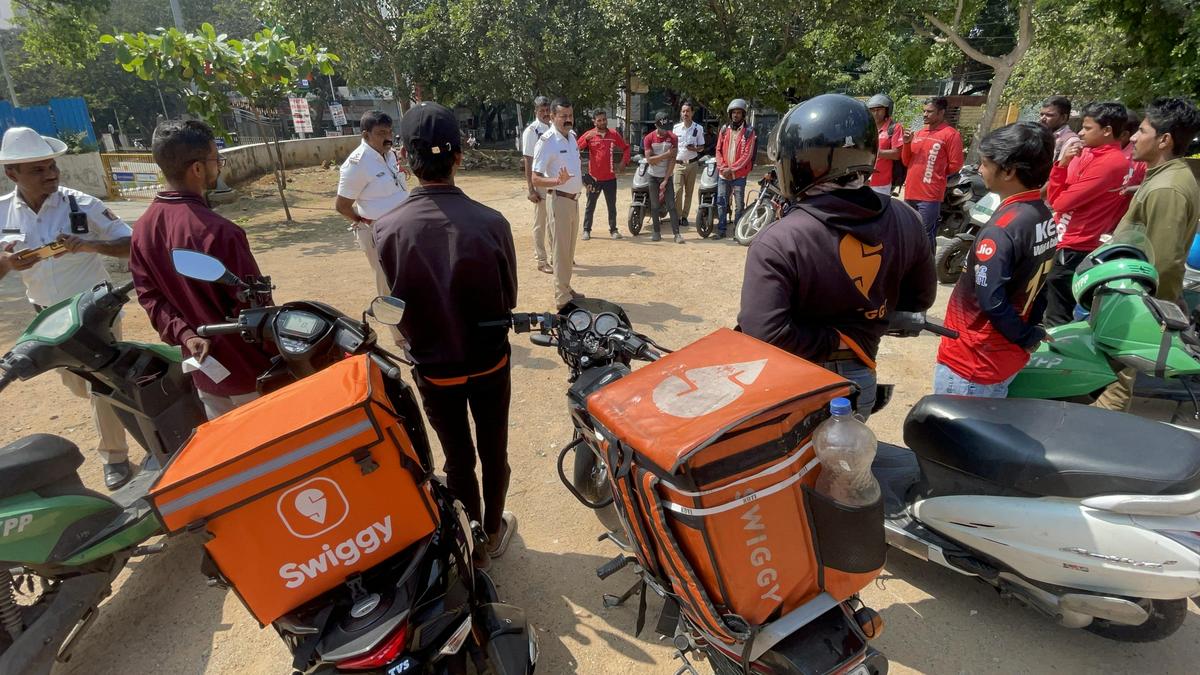
Traffic Police officials educate the gig workers employed by Food delivery service about various traffic violations and to obey traffic rules, in Bengaluru. The police have warned aggregators that they will now begin fixing accountability directly on the companies through existing laws if violations continued.
| Photo Credit:
K. MURALI KUMAR
According to documents accessed by The Hindu, other crimes listed by Bengaluru Police involving delivery workers include robbery, assault, molestation, theft, sexual harassment and public nuisance.
Another major issue is drug movement. Peddlers have often used delivery services to transport drugs to customers using parcel options provided by aggregators. While many deliveries are unintentional on the part of delivery partners, police have found cases where delivery persons colluded with peddlers, who charged customers transportation fees and passed that money to delivery personnel. In another case, peddlers packaged drugs in medium-sized boxes, filled them with heavy objects to avoid suspicion, and delivered them to locations without the knowledge of the delivery person.
The police also flag the behavioural impact of delivery persons on the public. C. Vamsi Krishna, Additional Commissioner (West), said, “When congestion is high and motorists spot delivery persons riding on the footpath, it is highly likely that others will follow the same path. Reinforcing such behaviour threatens public safety and causes traffic disorderliness.”
Unrealistic deadlines
While delivery personnel often get profiled and stigmatised as violators, Vinay Sarathy, president of the United Food Delivery Partners’ Union, pointed out that there is immense pressure on delivery partners from two sides when they are working under time-bound delivery targets: from the aggregators and from the customers.
“Platforms portray as if 10-minute delivery is real, but practically it cannot be done so. Even the platforms are aware of it. On the other hand, when delivery partners are delayed due to genuine issues on the ground, such as traffic, aggregators issue warnings and sometimes even impose fines. The punishment can go as far as deactivating the delivery partners’ IDs, which means they can no longer work with the company,” he said.

He further added that although instances of customers shouting at delivery partners do not occur very frequently, the problem still persists, and delivery partners constantly have in mind that they must deliver the parcel quickly. “So, whenever the police conduct drives to crack down on delivery partners, we have urged that they should instead hold the companies (aggregators) responsible, because they are the ones who set unrealistic deadlines,” he said.
Gajendra Singh, a delivery partner, speaking to The Hindu, said that customers lose their temper most of the time when a parcel is delayed by even 10 minutes. “There will be at least two calls if the order is delayed by a few minutes. Sometimes, when we have to deliver multiple orders, we are bound to be a bit late, but that is not condoned by customers, and they abuse us,” Gajendra Singh said, adding that such aspects of the job force them to break traffic rules.
Victims themselves
While delivery workers are often involved in violations, they are also frequent victims of crime. According to Akshay Hakay Machhindra, DCP (Central), theft is the most common crime targeting delivery personnel. Many orders are placed after 10 p.m., which requires delivery workers to navigate isolated or poorly lit routes late at night. Thieves exploit this vulnerability, frequently snatching mobile phones. Investigations have revealed that some thieves specifically seek out delivery workers because they know the workers rely heavily on their phones for work.
Delivery personnel have also been threatened or intimidated by rowdy elements, sometimes being coerced into assisting in criminal activities. In the ride-hailing segment, similar issues surface. Deepika M.G., a professor at Alliance University, noted that cab drivers get verbally abused by intoxicated passengers, and some customers refuse to pay fares.
Industrial and Legislative failures
Deepika emphasised that gaps in the regulatory framework have contributed significantly to the rising number of cases involving gig workers. When the Central government consolidated labour laws under the new labour codes, the Code on Industrial Relations did not address gig work and applied only to full-time employees. The Code on Wages (2019) also requires an employer–employee relationship, something that does not exist in the gig-work model.

“There will be at least two calls if the order is delayed by a few minutes. Sometimes, when we are late, it is not condoned by customers, and they abuse us”Gajendra Singh, a delivery partner
If aggregators had been legally defined as employers and gig workers as employees, companies would have formal accountability. This would compel them to create safer working conditions, invest in training, and ensure that workers do not violate laws in the course of earning their wages. Instead, the current system relies heavily on incentives linked to fast deliveries, the number of orders completed, and customer ratings. These incentives, experts said, encourage risky behaviour.
Most delivery workers are migrants who move to the city seeking better livelihoods. Their desire to earn and send money home often drives them to take risks. Machhindra said that aggregators maintain “zero relationship” with delivery partners, as the entire system is governed by order IDs. Delivery workers, he said, are treated simply as “a mode of transport”.
Deepika also pointed out that although Karnataka introduced the Gig Workers (Social Security and Welfare) Act, 2025, widely praised by stakeholders and activists for its progressive provisions, it has yet to be fully implemented.

Aggregators’ role
The police have pointed to several ways aggregators could reduce violations: enforcing stricter hiring practices, providing training, linking incentives to zero traffic violations, and issuing clear behavioural SOPs. However, aggregators continue to hire workers without proper background verification because of high demand and the availability of cheap labour. This has resulted in widespread problems.
Officers said aggregators avoid responsibility by defining themselves merely as “service providers” and by offering incentives that encourage unsafe, high-speed riding.
Delivery workers confirm the role of incentives. Naveen Raj, a delivery partner from Bihar, said night-time incentives and fast-delivery bonuses significantly increase their earnings. Ratings also matter, as higher ratings lead to more orders. Another delivery partner, Luv Kumar, said micro EV scooters are cost-effective and easy to manoeuvre through narrow lanes, allowing workers to make more deliveries in less time.
The city Police Commissioner noted that aggregators often fail to conduct even basic background verification, allowing habitual offenders to enter the workforce.

Deepika argued for legislative reforms to regulate this economy on the whole. She pointed out that a large number of workers from unorganised sectors have moved into gig work. With no reforms to the Contract Labour Act regarding wages and incentives, or better protections for unorganised workers, gig work becomes an attractive option because workers can earn up to ₹30,000 to ₹40,000 a month. In contrast, other unorganised workers earn an average of ₹15,000 a month and can lose an entire month’s income to a single medical bill. Thus, gig work appears more profitable despite its risks.
Now, in the absence of strict regulation, the Bengaluru Police have adopted a “fix accountability-or-book” approach.
Aggregators’ accountability
At the meeting held last month, the police issued mandatory guidelines for gig-based service operators to improve safety for both workers and the public. They said that companies must conduct thorough background checks, ensure that workers carry ID cards, provide identifiable uniforms, activate SOS features linked to police control rooms, maintain GPS tracking with at least 30 days of data, and implement night-time safety measures. Delivery workers must also receive regular training on safety, cyber-awareness, and appropriate customer conduct, the police said.
Operators must promptly share verified worker data with the police, report any crimes or accidents involving workers, and suspend workers accused of misconduct until investigations are complete. Nodal officers will be held responsible for compliance, and violations may result in legal action.
Although there are no direct legal provisions to charge aggregators, the police plan to use indirect sections under the Bharatiya Nyay Sanhita, 2023, including negligent behaviour or aiding criminal offences. They may also recommend licence cancellations of aggregators in cases of repeated violations.