

Skip to content
  • Facebook
  • X
  • Linkedin
  • WhatsApp
  • YouTube
  • Associate Journalism
  • About Us
  • Privacy Policy
  • 033-46046046
  • editor@artifex.news
Artifex.News

Artifex.News

Stay Connected. Stay Informed.

  • Breaking News
  • World
  • Nation
  • Sports
  • Business
  • Science
  • Entertainment
  • Lifestyle
  • Toggle search form
  • Indian Navy ships free hijacked Iranian fishing vessel off Somalia, rescue Pakistani nationals
    Indian Navy ships free hijacked Iranian fishing vessel off Somalia, rescue Pakistani nationals World
  • Access Denied
    Access Denied Nation
  • Access Denied Business
  • SL vs IND ODIs | Golden opportunity for Sri Lanka to end a 27-year drought
    SL vs IND ODIs | Golden opportunity for Sri Lanka to end a 27-year drought Sports
  • 63.36% Voter Turnout Recorded In Lok Sabha Phase 6, Phase 5 Recorded 62.2%
    63.36% Voter Turnout Recorded In Lok Sabha Phase 6, Phase 5 Recorded 62.2% Nation
  • Rupee jumps 18 paise to close at 83.11 against U.S. dollar
    Rupee jumps 18 paise to close at 83.11 against U.S. dollar Business
  • Access Denied
    Access Denied Nation
  • Access Denied
    Access Denied Nation
Why do astronauts wear pressurised suits? | Explained

Why do astronauts wear pressurised suits? | Explained

Posted on November 12, 2025 By admin


Space is the vast area beyond the earth’s atmosphere, filled with stars, planets, and galaxies. In this airless environment, one of the most critical differences from life here is the absence of atmospheric pressure.

Why is pressure important?

The atmosphere is a thick layer of gases held around the earth by its gravity. It protects us from harmful solar radiation, keeps temperatures stable, and provides gases to respirate. The atmospheric pressure presses down on our bodies with about 20 tonnes of force, but we don’t feel it because our bodies have evolved to push back with equal force, balancing it out. As we go higher, the atmosphere gets thinner and its pressure drops.

When a human body is suddenly exposed to vacuum, a sequence of sudden lethal effects occur, including ebullism (boiling of bodily fluids at low pressure), decompression (rapid loss of atmospheric pressure in a spacecraft), and lack of oxygen (hypoxia). The absence of atmospheric pressure causes gases to expand rapidly in the lungs and tissues, leading to loss of consciousness in seconds and death in a few minutes.

How are astronauts protected?

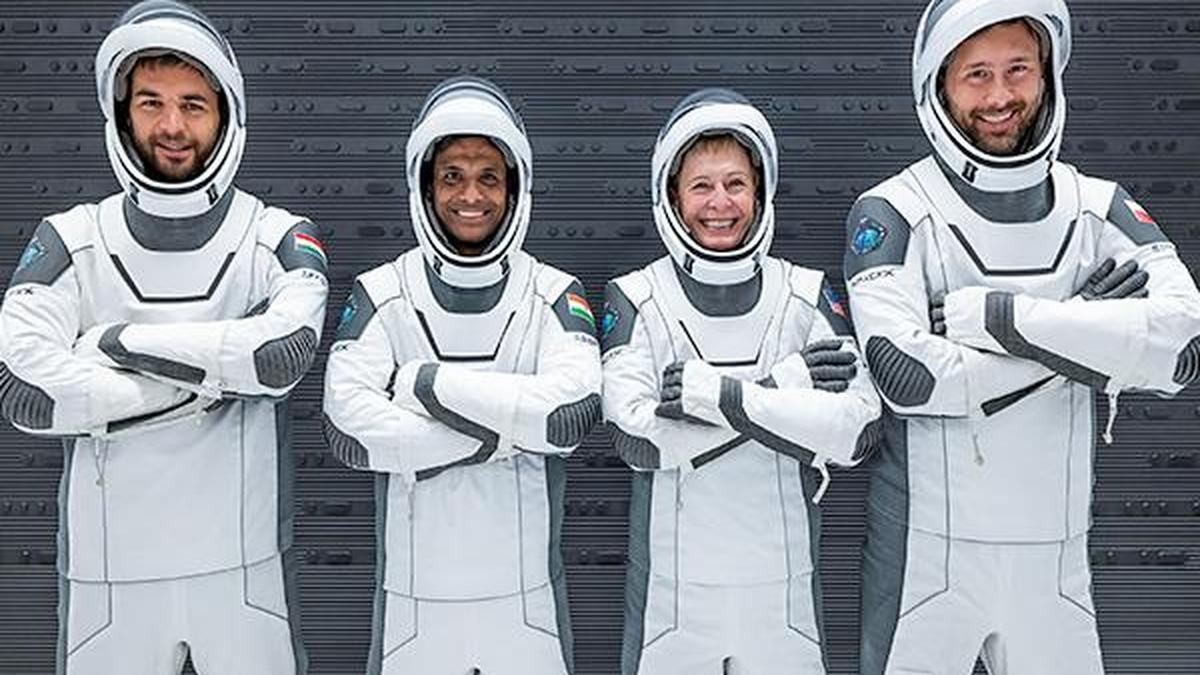
Astronauts wear special suits during space travel for their safety. Extra-vehicular activity (EVA) suits or spacesuits are for walks and work outside the spacecraft, like fixing external components and conducting maintenance. They have 12-14 layers and serve as a personal spacecraft, protecting its wearer against the vacuum of space, extreme temperatures, radiation, and space debris. Each EVA suit weighs 100-130 kg. Likewise, intra-vehicular activity (IVA) suits are worn inside the spacecraft and include a flight suit and a pressure suit. A flight suit is a general-purpose garment worn by pilots and astronauts, primarily for fire resistance, and protection against environmental conditions like temperature extremes or low pressure at high altitudes. Astronauts wear flight suits as their daily uniform while working in training facilities or onboard the International Space Station.

A pressure suit is a specialised garment designed to protect against the extremely low pressure environment of high altitudes or space. It provides full-body pressurisation, oxygen supply, and thermal regulation, making it more robust than a standard flight suit. During high-risk space missions such as launch and reentry, astronauts wear pressure suits to protect against potential cabin depressurisation and emergencies. The pressure suit weighs about 8-10 kg and has two or three major layers, depending on the model. It provides basic pressurisation, oxygen for breathing, ventilation, and communication controls. The suit’s pressure bladder is pressurised with pure oxygen to approximately 40% of standard atmospheric pressure to maintain body pressure in the event of cabin pressure failure. The outer layer is a tough, bright shell for durability and visibility, making it easier to find the crew after landing.

In 1961, Yuri Gagarin, the first human to go to space, wore a specialised IVA suit called SK-1. The U.S. and Russia have developed eight to 10 IVA suit designs.

Is wearing an IVA suit mandatory?

In the tragic Soyuz 11 mission in 1971, three cosmonauts died when returning to the earth. When the crew’s descent module separated from the orbiting module, a vent valve meant to balance cabin pressure opened too early at about 168 km altitude. It didn’t close properly, causing the air to rush out quickly, suffocating the cosmonauts. The disaster led to major safety changes in the Soviet space program, including bringing in a mandate to wear IVA suits during ascent and descent. These phases are dynamic and under exigency may involve high G-forces, sudden loss of cabin pressure, extreme heat, and vibrations, all of which pose serious risks.

In 2018, a booster separation failure during the Soyuz rocket’s ascent to the International space station triggered violent spinning, forcing an emergency abort. Wearing Sokol KV-2 suits, NASA astronaut Nick Hague and Roscosmos cosmonaut Aleksey Ovchinin endured high G-forces and landed safely in the Kazakh steppe, with the suits playing a critical role in their survival.

Which IVA suit does Gaganyaan use?

In Gaganyaan, India’s first human spaceflight mission, the ‘gaganyatris’ will be using the Russian Sokol KV2 suit manufactured by Zvezda. The suit consists of two layers: an inner pressure bladder made of rubberised polycaprolactam to remain airtight, and an outer restraint layer of white nylon canvas for structural support and protection. Many astronauts have worn the Sokol suit and it has been involved in more than 128 Soyuz crewed missions. Unlike some IVA suits that use bright colours, like international orange, for high visibility, the Sokol suit uses a more neutral colour scheme, with reflective or contrasting elements to render its wearer more visible during emergencies, such as post-landing recovery in diverse environments like water or land.The gaganyatris were trained with the Sokol suit, including putting it on and taking it off (i.e. donning and doffing) quickly in the simulated microgravity conditions of space. This weightless environment was created by flying an aircraft in a parabolic trajectory. This flight path creates short periods of free fall during which passengers feel weightless for 20-30 seconds per parabola. While the Sokol suit provides vital assurance, it also underscores a key phase in India’s space journey: leveraging global expertise while pursuing the goal of indigenous human spaceflight capability.

Unnikrishnan Nair S. is Former Director, VSSC; Founding Director, HSFC.

Published – November 12, 2025 08:30 am IST


Source link

Science

Post navigation

Previous Post: What’s the status of the rare earth hypothesis? | Explained
Next Post: Access Denied

Related Posts

  • Kalpakkam fast breeder reactor attains criticality
    Kalpakkam fast breeder reactor attains criticality Science
  • Mobile phones not linked to brain cancer, major review of 28 years of research finds
    Mobile phones not linked to brain cancer, major review of 28 years of research finds Science
  • Cabinet nod to ‘BioE3’ policy for innovation-driven support to research and development
    Cabinet nod to ‘BioE3’ policy for innovation-driven support to research and development Science
  • Daily Quiz | On Kepler’s Supernova
    Daily Quiz | On Kepler’s Supernova Science
  • What India needs from the ‘Vigyan Puraskar’ awards and what it can get | Explained
    What India needs from the ‘Vigyan Puraskar’ awards and what it can get | Explained Science
  • Serum’s HPV vaccine non-inferior to Gardasil: study
    Serum’s HPV vaccine non-inferior to Gardasil: study Science

More Related Articles

In manifesto, scientists oppose ‘militarisation’ of quantum research In manifesto, scientists oppose ‘militarisation’ of quantum research Science
Science for all newsletter how do lidocaine ointments work?  Science for all newsletter how do lidocaine ointments work?  Science
ISRO successfully conducts ‘Pushpak’ Reusable Landing Vehicle landing experiment  ISRO successfully conducts ‘Pushpak’ Reusable Landing Vehicle landing experiment  Science
Why can’t anything travel faster than light and what would happen if it did? Why can’t anything travel faster than light and what would happen if it did? Science
The biology of belief, optimism, and good health The biology of belief, optimism, and good health Science
IIT Bombay charts path to cool data centres using deep ocean water  IIT Bombay charts path to cool data centres using deep ocean water  Science
SiteLock

Archives

  • May 2026
  • April 2026
  • March 2026
  • February 2026
  • January 2026
  • December 2025
  • November 2025
  • October 2025
  • September 2025
  • August 2025
  • July 2025
  • June 2025
  • May 2025
  • April 2025
  • March 2025
  • February 2025
  • January 2025
  • December 2024
  • November 2024
  • October 2024
  • September 2024
  • August 2024
  • July 2024
  • June 2024
  • May 2024
  • April 2024
  • March 2024
  • February 2024
  • January 2024
  • December 2023
  • November 2023
  • October 2023
  • September 2023
  • August 2023
  • July 2023
  • June 2023
  • May 2023
  • April 2023
  • March 2023
  • February 2023
  • January 2023
  • December 2022
  • November 2022
  • October 2022
  • September 2022
  • August 2022
  • July 2022
  • June 2022
  • May 2022

Categories

  • Business
  • Nation
  • Science
  • Sports
  • World

Recent Posts

  • Cuba has run out of diesel and fuel oil amid U.S. oil blockade
  • Karnataka’s Leader of Opposition R Ashok to reduce escort vehicles, travel by Namma Metro
  • China, U.S. should be ‘partners not rivals’, says Xi Jinping after meeting Donald Trump
  • UAE ‘denies reports’ of secret Netanyahu visit
  • Iran working on Hormuz ‘protocol’ to cover ‘costs’, says Deputy Foreign Minister Gharibabadi

Recent Comments

  1. OrvalMaync on UP Teacher Who Asked Students To Slap Muslim Classmate
  2. Jeffreyroure on UP Teacher Who Asked Students To Slap Muslim Classmate
  3. Stevemonge on UP Teacher Who Asked Students To Slap Muslim Classmate
  4. RichardClage on UP Teacher Who Asked Students To Slap Muslim Classmate
  5. StevenLek on UP Teacher Who Asked Students To Slap Muslim Classmate
  • Abu Dhabi’s IHC says its outlook on Adani Group investments is unchanged
    Abu Dhabi’s IHC says its outlook on Adani Group investments is unchanged Business
  • Malaysian Open: Satwiksairaj Rankireddy-Chirag Shetty’s Run Ends In Semifinals
    Malaysian Open: Satwiksairaj Rankireddy-Chirag Shetty’s Run Ends In Semifinals Sports
  • Maharashtra hit backs to reduce Kerala to 35 for 3
    Maharashtra hit backs to reduce Kerala to 35 for 3 Sports
  • ‘The more we learn about bats, the less we fear them’
    ‘The more we learn about bats, the less we fear them’ Science
  • Japan Atomic Bomb Survivors’ Group Receives Nobel Peace Prize, Calls for Nuclear Ban
    Japan Atomic Bomb Survivors’ Group Receives Nobel Peace Prize, Calls for Nuclear Ban World
  • Why Is Russia Refusing To Comment On ISIS Link To Moscow Attack
    Why Is Russia Refusing To Comment On ISIS Link To Moscow Attack World
  • Sai Sudharsan, Devdutt Padikkal Rebuild India A With Unbeaten Fifties After Mukesh Kumar Rattles Australia A
    Sai Sudharsan, Devdutt Padikkal Rebuild India A With Unbeaten Fifties After Mukesh Kumar Rattles Australia A Sports
  • As China Plans World’s Largest Dam In Tibet, Its Impact On India Explained
    As China Plans World’s Largest Dam In Tibet, Its Impact On India Explained World

Editor-in-Chief:
Mohammad Ariff,
MSW, MAJMC, BSW, DTL, CTS, CNM, CCR, CAL, RSL, ASOC.
editor@artifex.news

Associate Editors:
1. Zenellis R. Tuba,
zenelis@artifex.news
2. Haris Daniyel
daniyel@artifex.news

Photograher:
Rohan Das
rohan@artifex.news

Artifex.News offers Online Paid Internships to college students from India and Abroad. Interns will get a PRESS CARD and other online offers.
Send your CV (Subjectline: Paid Internship) to internship@artifex.news

Links:
Associate Journalism
About Us
Privacy Policy

News Links:
Breaking News
World
Nation
Sports
Business
Entertainment
Lifestyle

Registered Office:
72/A, Elliot Road, Kolkata - 700016
Tel: 033-22277777, 033-22172217
Email: office@artifex.news

Editorial Office / News Desk:
No. 13, Mezzanine Floor, Esplanade Metro Rail Station,
12 J. L. Nehru Road, Kolkata - 700069.
(Entry from Gate No. 5)
Tel: 033-46011099, 033-46046046
Email: editor@artifex.news

Copyright © 2023 Artifex.News Newsportal designed by Artifex Infotech.