Skip to content
  • Facebook
  • X
  • Linkedin
  • WhatsApp
  • Associate Journalism
  • About Us
  • Privacy Policy
  • 033-46046046
  • editor@artifex.news
Artifex.News

Artifex.News

Stay Connected. Stay Informed.

  • Breaking News
  • World
  • Nation
  • Sports
  • Business
  • Science
  • Entertainment
  • Lifestyle
  • Toggle search form
  • On Camera, Speeding Car Runs Over 2 Girls Making Rangoli Outside Home In Indore Ahead Of Diwali
    On Camera, Speeding Car Runs Over 2 Girls Making Rangoli Outside Home In Indore Ahead Of Diwali Nation
  • Sourav Ganguly feels Bumrah would be ‘good leader’ in first Ind-Aus Test
    Sourav Ganguly feels Bumrah would be ‘good leader’ in first Ind-Aus Test Sports
  • Government Calls For Parliament “Special Session”, Agenda Not Revealed
    Government Calls For Parliament “Special Session”, Agenda Not Revealed Nation
  • Kuber Group Director Gets A Call From Cops After Rolls-Royce Crash Kills 2
    Kuber Group Director Gets A Call From Cops After Rolls-Royce Crash Kills 2 Nation
  • Pakistan Stars Asked To “Shut Up” On Demand For Flat Pitch, Coach Jason Gillespie Rebukes Request
    Pakistan Stars Asked To “Shut Up” On Demand For Flat Pitch, Coach Jason Gillespie Rebukes Request Sports
  • Access Denied
    Access Denied Nation
  • Mohammed Shami’s Chances To Play Border-Gavaskar Trophy 2024-25 Ends With New Injury? Here’s The Details
    Mohammed Shami’s Chances To Play Border-Gavaskar Trophy 2024-25 Ends With New Injury? Here’s The Details Sports
  • Access Denied Sports
Stress primes neural hub to trigger freezing to new, unrelated fear cues

Stress primes neural hub to trigger freezing to new, unrelated fear cues

Posted on November 11, 2025 By admin


In every living being through history, stress from a perceived threat has automatically and immediately triggered an avalanche of reactions.

‘Fight or flight’ is an example of the choices these life-forms have confronted. Every bodily function that isn’t essential for survival is moved to the sidelines as the being prepares to respond. All available resources are diverted to extricating oneself from the threatening situation.

In this sense, stress has been good for the body and for the species.

Fear response

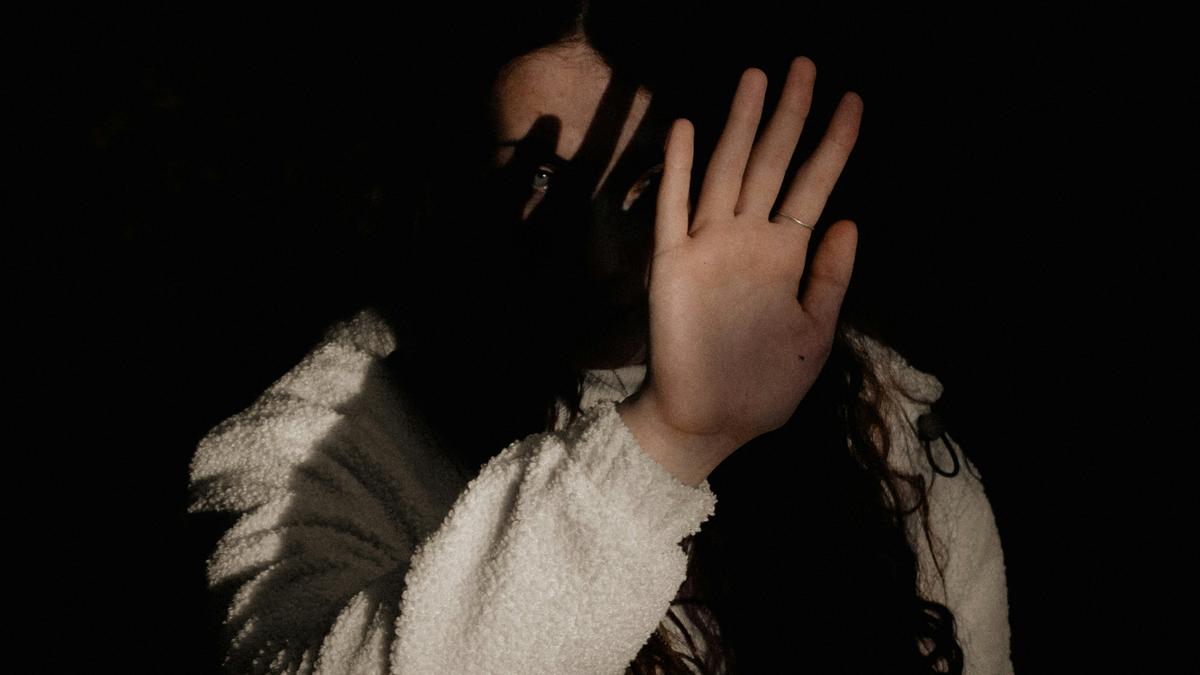
But it comes at a cost. Stress can also cause long term changes in defensive responses. For starters, it can exaggerate how you respond to a threat. If someone were attacked in a dark street, they could become afraid of any dark environment, like in movie theatres. This is called stress-enhanced fear learning.

Stress can also induce a fear of objects and situations unrelated to the original threat. This is called a stress-enhanced fear response (SEFR).

SEFR has been connected to anxiety disorders, phobias, and post-traumatic stress disorder (PTSD). The question of why this connection exists recently prompted scientists at the University of Texas, Austin, and the University of California, Los Angeles, to closely investigate it in a mouse model.

They found that they were able to induce SEFR in the mice when they were confronted with new cues unrelated to a stressor. This then prompted the team to design careful experiments to identify the precise brain regions and mechanisms driving such behaviour, paving the way for better clinical treatments for conditions like PTSD.

Experimental setup

The team confined lab mice in a conditioning chamber, an aluminium box with a clear door and about a foot long on each side. The control group animals were undisturbed while the stress group was administered a mild electrical footshock (1 mA) at random intervals.

Then the team gave the mice context exposure: the two groups were placed in the same chamber but received no footshock this time. For mice that had received the shocks earlier in a similar chamber, their surroundings sufficed to trigger a freeze response, i.e. they became completely immobile yet hyper-alert.

Freezing isn’t a conscious choice and happens automatically.

Out in the wild, mice are prey animals, so their self-preservation repertoire includes freezing, fleeing, and simply hoping to avoid detection (e.g. from a predator flying overhead). In the conditioning chamber, the confinement only induced the freeze response.

Next, the team placed these mice in a different chamber, i.e. exposed them to a new context, where they received new stimuli in the form of brief sounds. Even here, the mice displayed a heightened freeze response — an example of unlearned fear and thus of SEFR at work.

Curiously, the stress group mice froze only after they heard the audio tones, not otherwise. It was a sign that the stress mice hadn’t generalised the freeze response.

Follow the light

How does the brain develop unlearned fear?

The scientists peered into the brains of the stress group mice looking for a particular protein called c-fos. This protein is the “time to get to work” signal for brain cells. They found a part of a brain region called the paraventricular thalamus (PVT) expressing high amounts of c-fos after the audiotone test, but only in mice that received both the footshock on day 1 and the audio tone test later.

If the animals hadn’t faced the footshocks on day 1 or had received the shocks but no audio tone test after, the amounts of c-fos didn’t change. In other words, increases in c-fos in the PVT were specific to the unlearned fear response.

The PVT is named thus because it’s a part of the thalamus and is localised around (“para”) the third ventricle, one of the cavities inside the brain. The thalamus is a somewhat egg-shaped structure located roughly at the middle of the brain. All information coming into the brain first comes here and is then relayed to other regions for interpretation and response.

The research team suspected that the unlearned fear response stemmed from the PVT being activated, and sought a way to confirm this independently.

When the cells in any brain region prepare to act, they use calcium ions to signal to their neighbours to get ready. So the team injected a calcium-sensing protein genetically modified to light up when it detected calcium. Their observations confirmed that neurons in a part of the PVT were getting activated when the unlearned fear response was on show.

They also showed that when the activity in these neurons was blocked, the stress group  mice didn’t develop the freezing response when exposed to the audio tones.

Remarkably, however, this blocking action didn’t change the stress-enhanced fear learning in these mice, proving that the activation of PVT neurons was specific to SEFR.

When more is too much

The experiments by the international team showed that unlearned fear is caused by increased activity in PVT neurons. This is why the team’s study is fascinating: the findings highlight that PVT fine-tunes different defensive responses differently.

For example, learned fear behaviour is adaptive, allowing us to respond appropriately to environmental cues. But stressful or traumatic experiences can ratchet this response up manifold in response to both learned, like in the dark movie theatre, and unlearned fears, as with PTSD.

In fact, unlearned fear responses have been particularly difficult to treat because scientists didn’t fully understand their causes. The new finding, of specific activity in the PVT neurons, may now lead them to new avenues to clinically treat symptoms.

Dr. Reeteka Sud is a neuroscientist by training and senior scientist at the Center for Brain and Mind, Department of Psychiatry, NIMHANS, Bengaluru.

Published – November 11, 2025 04:24 pm IST


Source link

Science

Post navigation

Previous Post: Access Denied
Next Post: Why can we recycle only some kinds of plastics?

Related Posts

  • Read the rocks to improve India’s geological literacy
    Read the rocks to improve India’s geological literacy Science
  • Japan weather bureau says 90% chance of El Nino ending by May
    Japan weather bureau says 90% chance of El Nino ending by May Science
  • The challenge of writing about the science Nobel Prizes
    The challenge of writing about the science Nobel Prizes Science
  • Chinese fossil reveals evolution of skin in feathered dinosaurs
    Chinese fossil reveals evolution of skin in feathered dinosaurs Science
  • City light pollution is shrinking spiders’ brains
    City light pollution is shrinking spiders’ brains Science
  • See first images of human brain scanned by world’s most powerful MRI
    See first images of human brain scanned by world’s most powerful MRI Science

More Related Articles

Sci-Five | The Hindu Science Quiz: On first human to enter space Sci-Five | The Hindu Science Quiz: On first human to enter space Science
Science Quiz: When sound gets on the move Science Quiz: When sound gets on the move Science
Patent applications for HIV prevention drug opposed in India Patent applications for HIV prevention drug opposed in India Science
New insights into how Long COVID affects the brain New insights into how Long COVID affects the brain Science
Guntur, spectral lines, and the discovery of helium Guntur, spectral lines, and the discovery of helium Science
The science of plant communication The science of plant communication Science
SiteLock

Archives

  • November 2025
  • October 2025
  • September 2025
  • August 2025
  • July 2025
  • June 2025
  • May 2025
  • April 2025
  • March 2025
  • February 2025
  • January 2025
  • December 2024
  • November 2024
  • October 2024
  • September 2024
  • August 2024
  • July 2024
  • June 2024
  • May 2024
  • April 2024
  • March 2024
  • February 2024
  • January 2024
  • December 2023
  • November 2023
  • October 2023
  • September 2023
  • August 2023
  • July 2023
  • June 2023
  • May 2023
  • April 2023
  • March 2023
  • February 2023
  • January 2023
  • December 2022
  • November 2022
  • October 2022
  • September 2022
  • August 2022
  • July 2022
  • June 2022
  • May 2022

Categories

  • Business
  • Nation
  • Science
  • Sports
  • World

Recent Posts

  • Vigilant civic society partnered with courts to drive progress in gender justice: CJI
  • Photographers from Gaza Strip, Syria, India win top honours at Gulf region’s top photography event
  • Over 600 detained in 500 search operations across Kashmir: police
  • 42 feared dead in migrant shipwreck off Libya: UN
  • Govt approves Export Promotion Mission with outlay of ₹25,060 crore for six years

Recent Comments

  1. dfb{{98991*97996}}xca on UP Teacher Who Asked Students To Slap Muslim Classmate
  2. "dfbzzzzzzzzbbbccccdddeeexca".replace("z","o") on UP Teacher Who Asked Students To Slap Muslim Classmate
  3. 1}}"}}'}}1%>"%>'%> on UP Teacher Who Asked Students To Slap Muslim Classmate
  4. bfg6520<s1﹥s2ʺs3ʹhjl6520 on UP Teacher Who Asked Students To Slap Muslim Classmate
  5. pHqghUme9356321 on UP Teacher Who Asked Students To Slap Muslim Classmate
  • Rinku Singh Mocks Andre Russell’s Accent, It Has A Shah Rukh Khan Connection. Watch
    Rinku Singh Mocks Andre Russell’s Accent, It Has A Shah Rukh Khan Connection. Watch Sports
  • Amit Shah Amid Bangladesh Unrest
    Amit Shah Amid Bangladesh Unrest Nation
  • France’s Macron accelerates efforts to break PM deadlock
    France’s Macron accelerates efforts to break PM deadlock World
  • Constipation increases your risk of a heart attack, new study finds
    Constipation increases your risk of a heart attack, new study finds Science
  • Access Denied World
  • Donald Trump Urges Quick End To War Ahead Of Meeting Israel PM Benjamin Netanyahu
    Donald Trump Urges Quick End To War Ahead Of Meeting Israel PM Benjamin Netanyahu World
  • Russian space officials say air leak at International Space Station poses no danger to its crew
    Russian space officials say air leak at International Space Station poses no danger to its crew Science
  • Sunita Williams’ 3rd Mission To Space Called Off Hours Before Liftoff
    Sunita Williams’ 3rd Mission To Space Called Off Hours Before Liftoff Nation

Editor-in-Chief:
Mohammad Ariff,
MSW, MAJMC, BSW, DTL, CTS, CNM, CCR, CAL, RSL, ASOC.
editor@artifex.news

Associate Editors:
1. Zenellis R. Tuba,
zenelis@artifex.news
2. Haris Daniyel
daniyel@artifex.news

Photograher:
Rohan Das
rohan@artifex.news

Artifex.News offers Online Paid Internships to college students from India and Abroad. Interns will get a PRESS CARD and other online offers.
Send your CV (Subjectline: Paid Internship) to internship@artifex.news

Links:
Associate Journalism
About Us
Privacy Policy

News Links:
Breaking News
World
Nation
Sports
Business
Entertainment
Lifestyle

Registered Office:
72/A, Elliot Road, Kolkata - 700016
Tel: 033-22277777, 033-22172217
Email: office@artifex.news

Editorial Office / News Desk:
No. 13, Mezzanine Floor, Esplanade Metro Rail Station,
12 J. L. Nehru Road, Kolkata - 700069.
(Entry from Gate No. 5)
Tel: 033-46011099, 033-46046046
Email: editor@artifex.news

Copyright © 2023 Artifex.News Newsportal designed by Artifex Infotech.