




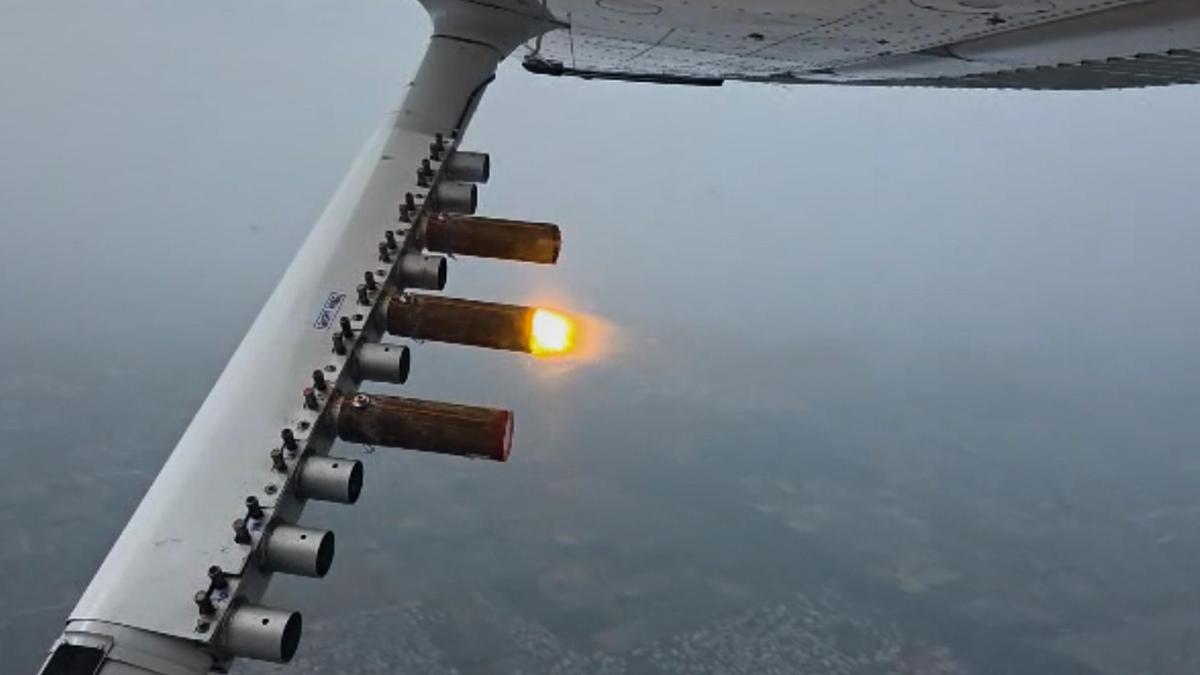
Despite inputs from the India Meteorological Department (IMD) that clouds on October 28 in Delhi would be insufficient to coax artificial rain, researchers from the Indian Institute of Technology Kanpur went ahead with their plan of flying their Cessna-plane and firing 10 kg of a concoction of silver iodide, common salt and rock salt into the clouds to tear them. Twice. And failed both times.
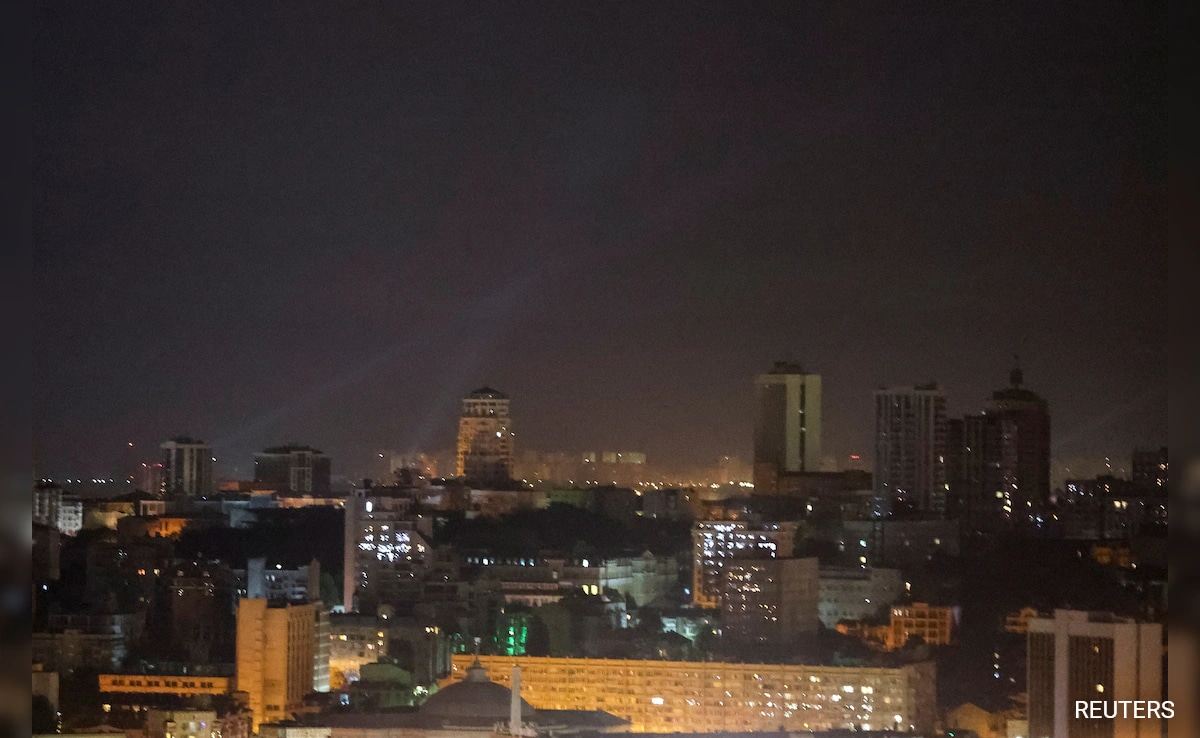
That Tuesday — with Delhi’s air quality predictably ‘poor’ — it was the first time the capital had experimented with cloud-seeding since 1972 and for the first time ever, with the express plan of improving air quality.
“We shared information with them (IIT-Kanpur) on the cloud situation but didn’t give any specific input on whether they should go ahead with cloud seeding,” a senior scientist with the Ministry of Earth Science (MoES) told The Hindu. ”We didn’t give any advice because the Indian Institute of Tropical Meteorology (IITM), Pune, has conducted several cloud seeding experiments over the years and there is still no concrete evidence that this works reliably. We didn’t give any recommendation but shared our input regarding clouds, which was that there were no clouds.”
M. Mohapatra, Director-General, IMD, confirmed to The Hindu that cloud inputs were “shared,” underlining however that this information was generic. “The information on clouding and humidity is available to anyone,” he clarified.

Manindra Agrawal, Director, IIT-Kanpur, and the public-facing official of the institute’s programme, said that while his team had interacted with “IITM and IMD” previously, their feedback had been “negative” and that “it (cloud-seeding for winter pollution) wouldn’t work.” IIT-Kanpur has considerable expertise, influence and resources in India’s scientific circles with several of its faculty involved in several Central and State (Delhi) projects including air quality matter, and therefore is no stranger to partnering with institutions for collaborative research.

The institute does not have an Atmospheric Sciences department but had an aerospace programme, said Mr. Agrawal, and the specific programme was being led by Dr. Deepu Philip, Professor, Department of Management Sciences. There were experts from the Chemistry and Aerospace departments also involved.
“But it does work,” Mr. Agrawal told The Hindu. “It may not have worked in India but it has in China and the United Arab Emirates,” The decision to go ahead with the trial despite the IMD’s forecast for unfavourable clouds was deliberate,” said Mr. Agrawal, because the team wanted to test the efficacy of their “proprietary solution,” which was “20% silver iodide, rock salt and common salt,” with the flares manufactured at Sivakasi, Tamil Nadu. “We were aware that there was less than 15% moisture (in the clouds) which is too little for seeding. However, we needed data to find out the potency of our indigenously made salt mixture.”
Cloud seeding, or spraying fine chemical aerosols into rain-clouds to induce rain, has been a subject of investigation in India for decades with the acknowledged authorities on the subject — the IITM, Pune — having conducted careful experiments on the effectiveness of cloud seeding to enhance monsoon rain since 2009.
While India’s State governments have in the past employed private companies to seed clouds, when their regions faced drought, the results have been hit-and-miss; because, it is impossible for technology to create a rain-cloud. The implicit rule of cloud seeding is that it can only help in adding more water to clouds with minimum quantities of water vapour, called ‘warm clouds.’
But if clouds already have water vapour, they would rain anyway. So what’s the gain from seeding?
The IITM-CAIPEX (Cloud Aerosol Interaction and Precipitation Enhancement Experiment) was designed to answer just that. Just as medical researchers test new drugs in randomised clinical trials, by having a group of participants receive a drug and another, only believing they have ingested a drug and then evaluating if the actual recipients had improved health outcomes, the CAIPEX researchers flared tubes of chemical powder attached to planes’ wings to the base of selected warm clouds over Solapur, Maharashtra — a rain-and-water deficit region. They chose precisely 276 warm clouds — akin to 276 patients — and flared 151, with the rest — 125 — left unseeded.
These clouds were chosen during the monsoon months of 2018 and 2019, through an array of radar (for observing cloud characteristics) and rain-gauges (to record rainfall). With this information, the researchers were able to send aircraft — each sortie cost ₹15 lakh — to the intended clouds to be seeded. It turned out that half the seeded and nearly 70% of unseeded clouds ‘dissipated’ without giving any rain. About 40% of the seeded clouds gave rainfall and 27% unseeded clouds gave rainfall.
Overall, seeded clouds gave an average 46% more rain at the seeded locations relative to the unseeded ones. Over a 100 sq.km. area downwind, there was 18% more rain in the seeded clouds vs the unseeded. This was determined following a chemical analysis of the water at the rain gauges revealing how much water came from seeded vs unseeded clouds.
The conclusion: Warm-cloud seeding was appropriate for enhancing only monsoon rainfall. There is a whole list of caveats such as seeding only after choosing the right clouds; using only calcium chloride for seeding the base of clouds; there should be a radar and gauge-system; and the specific kind of clouds to be targeted. The results of these experiments as well as an exhaustive FAQ is available on the IITM website.
Given the Delhi government’s history of reaching out for desperate measures — from smog towers to selectively banning cars based on license plates — the prospect of using cloud-seeding for clearing the smoggy air has been on the table since at least seven years. Unlike the CAIPEX scenario, this involves seeding outside the monsoon months, when the all-important warm clouds are largely absent.
For at least seven years, cloud-seeding proposals from the Delhi government have been torpedoed by the Centre. The scientific consensus from a bunch of experts, including the IITM and the IMD, has been constant and last articulated in response to a Parliamentary Question in the Rajya Sabha in December 2024: “Effective cloud seeding requires specific cloud conditions, which are generally absent during Delhi’s cold and dry winter months. Even if suitable clouds were present, the dry atmospheric layer beneath them could cause any developed precipitation to evaporate before reaching the surface. Additionally, concerns about the uncertainties, efficacy, and, potential adverse effects of cloud seeding chemicals remain,” Union Minister of State for Environment Kirti Vardhan Singh had stated.
Mr. Agrawal concedes the point that the post-monsoon and winter months (October-February) don’t usually see moisture-filled clouds that can be enhanced which can rain suitably enough to clear the air. He disagrees, however, that the exercise is worthless. “On the other hand, the IMD data suggests that on average there are 4-5 Western Disturbances (rain-bearing storms from the Mediterranean bringing rain over North India) during this season. These carry moisture-laden clouds. If we conduct seeding once in 10 days and we can reduce the Air Quality Index by a reasonable amount for, say, three days, then would not that imply a reduction of the impact of pollution by 30%? That’s a win.”
Since the WD would naturally reduce pollution, why is the seeding necessary? To which, he responds that “seeding would only enhance rain, and the more rain, the better.” So as an experiment, it is certainly worth proceeding with, in his view. In his estimate, conducting cloud seeding over Delhi during the winter months would be ₹30 crore (assuming the periodic seeding schedule he proposes). “That is a drop in the bucket, for the overall budget into reducing Delhi pollution.” Mr. Agrawal said that IIT-Kanpur had the go-ahead for more trials for this season thanks to the “encouragement” of Delhi Environment Minister Manjinder Singh Sira.
According to public estimates, CAIPEX, as an experiment during 2017-2019, employed 103 flights, each costing ₹15 lakh, or about ₹15 crore in total. The fixed one-time cost of setting up the infrastructure (radar, rain gauges, radiosondes etc) was ₹33 crore, with ₹5 crore annually as maintenance costs. To be sure, practical seeding operations done commercially would work out to four hours per seeding operation on average, or about ₹60 lakh per operation.
The variable is the flying costs. The IITM has previously stated that it could reduce costs by half if it had its own plane. IIT-Kanpur, Dr. Agrawal said, had a plane at its disposal — “a significant advantage,” he said.
“There is zero data on cloud seeding in Delhi during winter months and what we are doing is establishing a baseline. The data analysis is still on but preliminary reports suggest that a slight improvement in air quality was reported in parts of the Delhi NCR. There was zero wind that day. It is very little but definitely something. We are not reinventing the wheel; it doesn’t exist.”
The CAIPEX experiments had a separate component: Seeding 31 ‘glaciogenic’ or ‘cold clouds’ (which have both ice and water) and comparing them with 31 unseeded cold clouds in Solapur. The result was that both types of cloud yielded rain but not at the location of seeding. “Glaciogenic cloud seeding redistributed rainfall over a wider area, and had a non-discernible impact on rainfall at the CAIPEX experimental location,” their report notes.
Dr. Agrawal said he wasn’t aware if the IIT-Kanpur experiment targeted cold clouds but the use of silver iodide — a substance that can be toxic — has been used in historical cloud seeding experiments to create snow. The IIT’s Cessna planes cannot ascend to greater than three kilometres, rendering them improbable to access cold clouds that are generally higher in altitude and must be seeded from the top of the cloud, than bottom.
“The seeding mixture used contains both materials — nano-particle AgI (silver iodide) is primarily glaciogenic seeding material, whereas micro-sized rock/sea salt is hygroscopic material. We dispersed the mixture using flares, at the base of the clouds (warm clouds) — so the dispersion mechanism is hygroscopic seeding,” Mr. Philip said in text message.
“The challenging part of cloud experiments is determining how much of the salt mixture can be actually used to create water crystals that can then grow. This requires much more ground studies in what are called cloud chambers. Too much seeding is as counterproductive as too little seeding,” the scientist associated with the Earth Sciences Ministry added.