

Skip to content
  • Facebook
  • X
  • Linkedin
  • WhatsApp
  • Associate Journalism
  • About Us
  • Privacy Policy
  • 033-46046046
  • editor@artifex.news
Artifex.News

Artifex.News

Stay Connected. Stay Informed.

  • Breaking News
  • World
  • Nation
  • Sports
  • Business
  • Science
  • Entertainment
  • Lifestyle
  • Toggle search form
  • Haryana Assembly Election Result 2025 “Those With 5-Star Lives Instigating Poor Over Caste”: PM Slams Rahul Gandhi
    Haryana Assembly Election Result 2025 “Those With 5-Star Lives Instigating Poor Over Caste”: PM Slams Rahul Gandhi Nation
  • Friends Of Army Officer Colonel Santosh Mahadik, Killed In Action In Jammu And Kashmir’s Kupwara, Send Diwali Sweets To His Unit
    Friends Of Army Officer Colonel Santosh Mahadik, Killed In Action In Jammu And Kashmir’s Kupwara, Send Diwali Sweets To His Unit Nation
  • Syria’s long-ruling Baath party faces collapse
    Syria’s long-ruling Baath party faces collapse World
  • India vs Bangladesh Test | We have the most well-rounded squad to trouble India: Hathurusingha
    India vs Bangladesh Test | We have the most well-rounded squad to trouble India: Hathurusingha Sports
  • Criminal Killed In Police Firing While Trying To Escape Custody In UP
    Criminal Killed In Police Firing While Trying To Escape Custody In UP Nation
  • AM Naik Steps Down As Chairman Of L&T Group
    AM Naik Steps Down As Chairman Of L&T Group Business
  • Three Criminals Arrested After Gunfight In Gurugram: Cops
    Three Criminals Arrested After Gunfight In Gurugram: Cops Nation
  • China blows hot and cold over Quad summit
    China blows hot and cold over Quad summit World
Carabid beetles as potential bioindicators to track soil microplastics

Carabid beetles as potential bioindicators to track soil microplastics

Posted on October 21, 2025 By admin


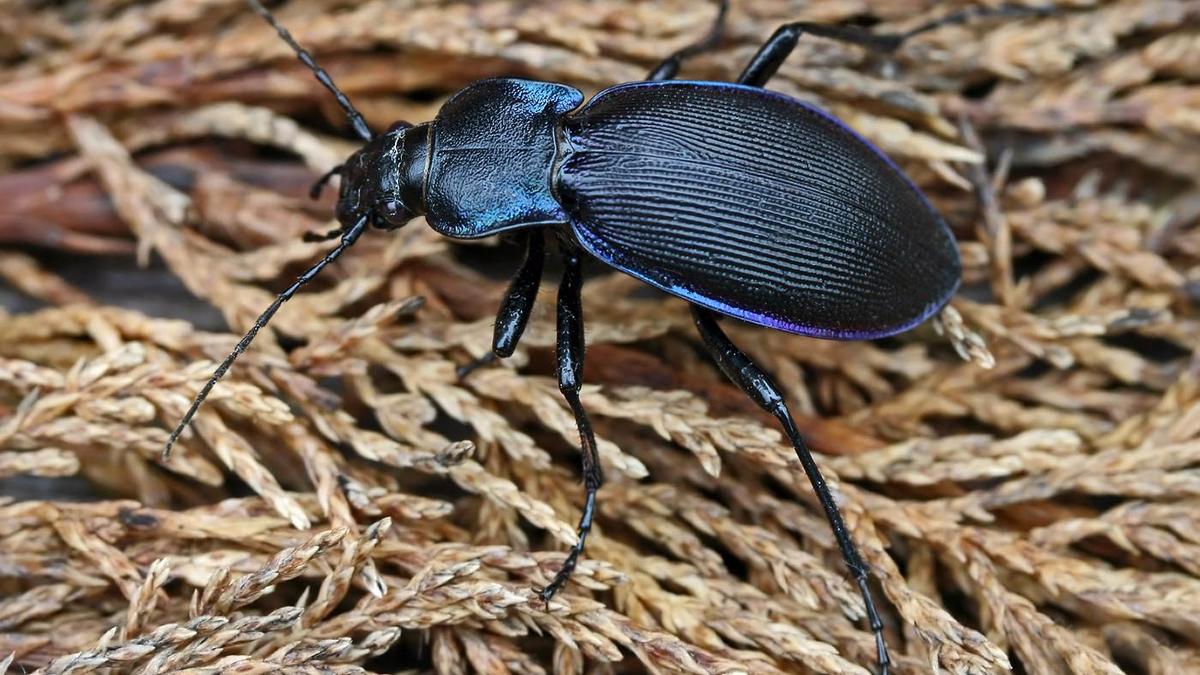
The carabid ground beetles of the family Carabidae are as common as they come. These little nocturnal hunters are found in almost any terrestrial habitat on the planet. To some, they’re simply pests — infamous for their pungent smell, which they emit when they’re threatened. Others, but farmers in particular, are fond of them because they sate their voracious appetite by snacking on a variety of garden pests, including snails, caterpillars, slugs, and other small invertebrates.

Unfortunately, their diet of late has also begun to include microplastics.

Small fragments, films, and fibres of this nuisance material are dispersed in our oceans and our lands. In soil, they have a tendency to accumulate, altering the soil’s structure and the way it retains water, and reacting almost unpredictably with the microbes in their surroundings.

The smaller a piece of microplastic is, the more easily it’s digested by organisms. Researchers have found that their subsequent effects include deleterious effects on the surrounding tissue and metabolic stress.

An innovative approach

However, while the distribution and consequences of microplastics are well documented in aquatic environments, tracking them in terrestrial ecosystems has proven quite difficult. The primary challenge is the soil itself: unlike water, which can be filtered and analysed, soil is a complex, heterogeneous matrix. Here, microplastics become entangled with organic matter, clay particles, and mineral grains, rendering scientists’ methods to extract them for study technically demanding. Even when scientists do recover them, they have difficulty distinguishing synthetic microplastic fragments from natural fibers, and need specialised labs to do so.

Burrowing earthworms and insects also help spread microplastics through the soil, and they can be carried further underground by the roots of affected plants. As a result, scientists often have to engage in laborious soil-sampling endeavours, followed by chemical treatment and expensive techniques like spectroscopy.

To fill the gap an innovative approach was necessary.

Recently, scientists from Italy took a new look at this problem. The group started looking for insects that could help detect microplastics in soil rather than scientists having to do so directly. These insects, the Italy group figured, would have to be easy to sample, be distributed widely, and be well documented in the literature for further analysis. 

The carabid beetle fit the bill.

Encouraging and unsettling

In a study published in Ecological Indicators, the scientists set pitfall traps along the Conero coast of Italy from July to October 2020. According to ScienceDirect, “Pitfall traps are plastic containers dug into the substrate until flush with the surrounding surface, often covered with plastic plates to prevent rain and debris from entering, and may contain preservatives such as ethylene glycol or saline solution.”

These traps captured carabid beetles from different sites with varying levels of human activity: a meadow, woodland, and a stony beach, among others.

When the scientists had a sample of 50 carabid beetles, they dissected each specimen, extracted the contents of their guts, digested them with oxidising solutions, filtered the remains, and examined what was left under microscopes and using infrared spectroscopy.

What they found was both encouraging and unsettling. Nearly a third of the beetles carried microplastic fragments, most of them polyester and silicone, ranging from 0.1 to 1 mm in size and often no larger than a grain of sand. The highest rates of microplastic ingestion appeared on a stony beach popular with summer tourists, where up to 87% of beetles captured in August contained plastic.

The encouragement came from the fact that the carabid beetles proved to be legitimate bioindicators of microplastics. While this study represents only the first step in this direction, according to the authors, more standardised techniques can be developed on this work. For example, carabid beetles can be integrated into bio-monitoring programs as a cost-effective way to assess the extent of microplastic contamination in a location.

Simple, sensitive marker

The idea of using bioindicators is not new. In India, farmers in particular already use bioindicators to help anticipate impending rain, to manage pests, to assess soil fertility, and to evaluate the success of certain organic farming practices. Plenty of research is also ongoing in the country to detect contaminants in rivers and agricultural lands using insects.

But why insects? The new study had in fact also unearthed earthworms (which are annelids) that had ingested microplastics.

In a review published recently in Plant Archives, a team of scientists from Navsari Agricultural University (NAU) in Surat explained why insects present clear advantages.

The principle purpose of a bioindicator is to be a simple and sensitive marker of an ecosystem’s health.

According to the Plant Archives paper, insects are effective bioindicators because they respond quickly to environmental stress, are abundant, and have short life cycles. They are also able to provide early warnings of ecological changes, are cost-effective to monitor, and sensitively reflect the consequences of pollutants on ecosystems, plants, and humans.

“Their prevalence in most terrestrial habitats followed by an ability to migrate makes them the best choice,” NAU entomologist Malireddi Prasanna and lead author of the paper said of the carabid beetles in this regard.

Humans’ response

She added that even if their populations are negatively affected when scientists pick up individuals from an area for study, what they learn could help protect the insects.

The review paper also enumerated important challenges when working with insects as bioindicators. They include natural fluctuations in their populations, temporary declines from calamities, predation pressure, and their absence in particular seasons. Their complex life cycles and varying activity patterns can also complicate scientists’ ability to interpret the data and thus demand careful, long-term monitoring for reliable assessments.

Research worldwide has established that microplastics have contaminated almost all known ecosystems and biospheres. The carabid beetles and other insects could be an important part of the way humans respond to this crisis.

Sumed Shinde hasa master’s degree in animal behaviour and conservation and is a science writer.




Source link

Science

Post navigation

Previous Post: Former French President Sarkozy begins 5-year prison sentence for campaign finance conspiracy
Next Post: Access Denied

Related Posts

  • 3D-printed guns allegedly used to kill US CEO a growing threat worldwide
    3D-printed guns allegedly used to kill US CEO a growing threat worldwide Science
  • Sci-Five | The Hindu Science Quiz: On the study of things
    Sci-Five | The Hindu Science Quiz: On the study of things Science
  • Emerging H5N1 mutations raise risk of human infections
    Emerging H5N1 mutations raise risk of human infections Science
  • Did ‘puppy dog eyes’ expression evolve exclusively in dogs due to domestication?
    Did ‘puppy dog eyes’ expression evolve exclusively in dogs due to domestication? Science
  • COVID-19 vaccines fail to alter neuro symptoms of Long COVID
    COVID-19 vaccines fail to alter neuro symptoms of Long COVID Science
  • Rising temperatures are leading to torrential rains in the Himalayas
    Rising temperatures are leading to torrential rains in the Himalayas Science

More Related Articles

SpaDeX first of many as ISRO prepares for Chandrayaan-4 SpaDeX first of many as ISRO prepares for Chandrayaan-4 Science
Bernard and the discovery of glycogen Bernard and the discovery of glycogen Science
Biodiversity of Thattekad Bird Sanctuary in Kerala grows richer as survey reveals nine new species Biodiversity of Thattekad Bird Sanctuary in Kerala grows richer as survey reveals nine new species Science
On the move with green hydrogen On the move with green hydrogen Science
Space telescopes stumble on rule-breaking black hole in early universe Space telescopes stumble on rule-breaking black hole in early universe Science
Mathematician Ruixiang Zhang to receive 2023 Sastra Ramanujan Prize Mathematician Ruixiang Zhang to receive 2023 Sastra Ramanujan Prize Science
SiteLock

Archives

  • October 2025
  • September 2025
  • August 2025
  • July 2025
  • June 2025
  • May 2025
  • April 2025
  • March 2025
  • February 2025
  • January 2025
  • December 2024
  • November 2024
  • October 2024
  • September 2024
  • August 2024
  • July 2024
  • June 2024
  • May 2024
  • April 2024
  • March 2024
  • February 2024
  • January 2024
  • December 2023
  • November 2023
  • October 2023
  • September 2023
  • August 2023
  • July 2023
  • June 2023
  • May 2023
  • April 2023
  • March 2023
  • February 2023
  • January 2023
  • December 2022
  • November 2022
  • October 2022
  • September 2022
  • August 2022
  • July 2022
  • June 2022
  • May 2022

Categories

  • Business
  • Nation
  • Science
  • Sports
  • World

Recent Posts

  • Austria deports first Afghan since Taliban seized power, says more to come
  • Access Denied
  • Access Denied
  • Access Denied
  • Access Denied

Recent Comments

  1. dfb{{98991*97996}}xca on UP Teacher Who Asked Students To Slap Muslim Classmate
  2. "dfbzzzzzzzzbbbccccdddeeexca".replace("z","o") on UP Teacher Who Asked Students To Slap Muslim Classmate
  3. 1}}"}}'}}1%>"%>'%> on UP Teacher Who Asked Students To Slap Muslim Classmate
  4. bfg6520<s1﹥s2ʺs3ʹhjl6520 on UP Teacher Who Asked Students To Slap Muslim Classmate
  5. pHqghUme9356321 on UP Teacher Who Asked Students To Slap Muslim Classmate
  • Sumit Nagal Set To Play Fifth Grand Slam, Earns Direct Entry In Australian Open 2025
    Sumit Nagal Set To Play Fifth Grand Slam, Earns Direct Entry In Australian Open 2025 Sports
  • IPL-17 | Kolkata Knight Riders look to iron out flaws against off-colour Mumbai Indians
    IPL-17 | Kolkata Knight Riders look to iron out flaws against off-colour Mumbai Indians Sports
  • Philippines says China ‘biggest disruptor’ of peace in Southeast Asia
    Philippines says China ‘biggest disruptor’ of peace in Southeast Asia World
  • Ind vs Aus 5th Test Day 2 | Pitch has enough bounce to get back into the game…ready to bowl them out, says Prasidh Krishna
    Ind vs Aus 5th Test Day 2 | Pitch has enough bounce to get back into the game…ready to bowl them out, says Prasidh Krishna Sports
  • Trump’s toxic politics of misinformation
    Trump’s toxic politics of misinformation World
  • Access Denied
    Access Denied Nation
  • Pashupati Paras Declares Support For NDA, Silent On Nephew Chirag Paswan
    Pashupati Paras Declares Support For NDA, Silent On Nephew Chirag Paswan Nation
  • Industrial Output Growth Slows To 3-Month Low Of 3.2% In December
    Industrial Output Growth Slows To 3-Month Low Of 3.2% In December Nation

Editor-in-Chief:
Mohammad Ariff,
MSW, MAJMC, BSW, DTL, CTS, CNM, CCR, CAL, RSL, ASOC.
editor@artifex.news

Associate Editors:
1. Zenellis R. Tuba,
zenelis@artifex.news
2. Haris Daniyel
daniyel@artifex.news

Photograher:
Rohan Das
rohan@artifex.news

Artifex.News offers Online Paid Internships to college students from India and Abroad. Interns will get a PRESS CARD and other online offers.
Send your CV (Subjectline: Paid Internship) to internship@artifex.news

Links:
Associate Journalism
About Us
Privacy Policy

News Links:
Breaking News
World
Nation
Sports
Business
Entertainment
Lifestyle

Registered Office:
72/A, Elliot Road, Kolkata - 700016
Tel: 033-22277777, 033-22172217
Email: office@artifex.news

Editorial Office / News Desk:
No. 13, Mezzanine Floor, Esplanade Metro Rail Station,
12 J. L. Nehru Road, Kolkata - 700069.
(Entry from Gate No. 5)
Tel: 033-46011099, 033-46046046
Email: editor@artifex.news

Copyright © 2023 Artifex.News Newsportal designed by Artifex Infotech.