



Quantum mechanics is usually described as the science of the very small — of electrons, atoms, and photons that behave in ways that defy the rules of everyday experience. Yet one of the most striking results of modern physics is that this quantum behaviour doesn’t vanish abruptly when systems become large. Instead, it continues to show itself in the behaviour of groups of particles doing something together. Over the years, physicists have learnt how to engineer these groups, measure them, and even control them to perform specific tasks.
The 2025 physics Nobel Prize has been awarded to John Clarke, Michel Devoret, and John Martinis for showing in their experiments that quantum tunnelling — a phenomenon in which a particle passes through an energy barrier instead of having to climb over it — can occur not only in the subatomic realm but also in an electrical circuit big enough to see with the naked eye. Their achievement came at the end of one particular chain of ideas stretching back to Brian Josephson, a British physicist who first described how pairs of electrons could tunnel through an insulating barrier between two superconductors, and Anthony Leggett, who later proposed that an entire circuit’s collective state could itself behave as a quantum object. Together, these ideas created a bridge from the quantum world of particles to the macroscopic world of devices.
The single quantum wave
In 1962, when Josephson was a 22-year-old graduate student at the University of Cambridge, the Bardeen-Cooper-Schrieffer (BCS) theory had explained superconductivity. In a superconductor, electrons move in pairs known as Cooper pairs, forming a collective state that flows without resistance. Josephson wondered what would happen if two superconductors were separated by a very thin insulating barrier. Would the paired electrons simply stop at the wall or would they tunnel through (since that’s something quantum physics allows)?
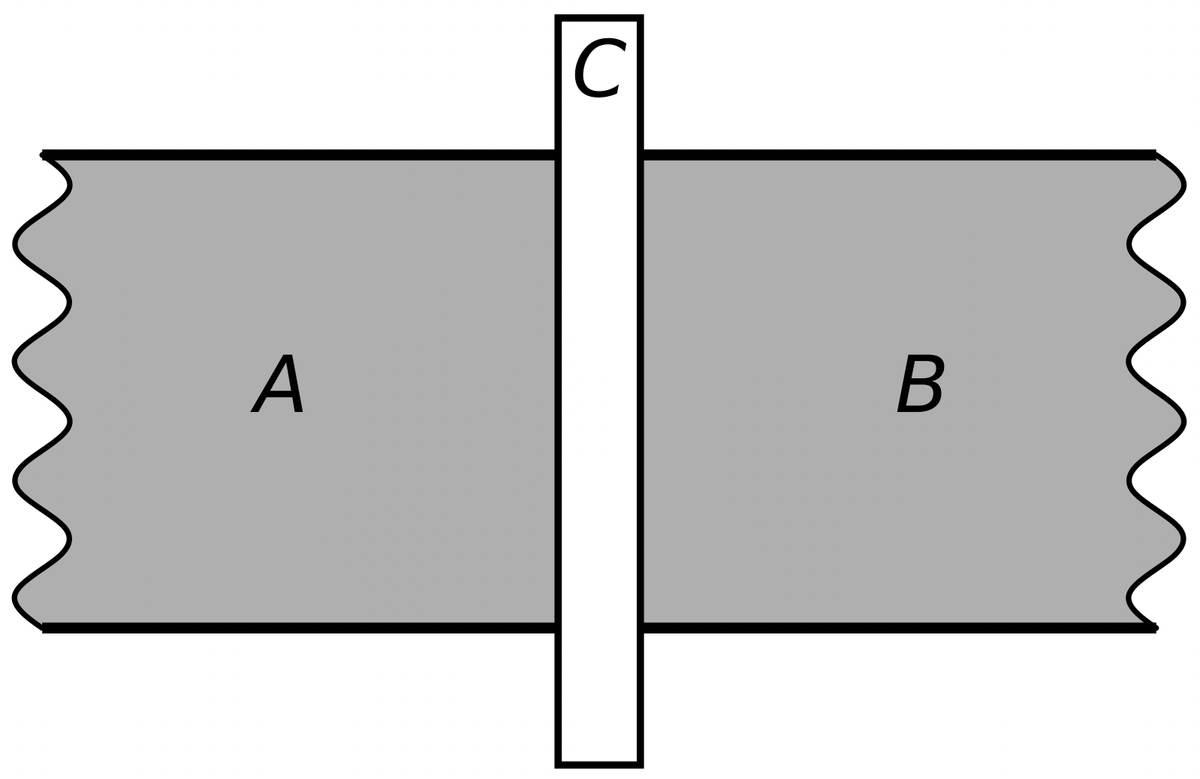
A schematic illustration of a single Josephson junction. A and B are two superconductors; C is an ultrathin insulator.
| Photo Credit:
Miraceti (CC BY-SA)
Using the maths of quantum physics, he showed that it was possible for a supercurrent, i.e. a superconducted current, to pass through even if there was no voltage across the barrier. The result was revolutionary: a current could flow indefinitely across an insulator purely because of the particular relationship between the two superconductors. Josephson derived a simple formula linking the current to the phase difference.
In a superconductor, all the electrons that form Cooper pairs act together as a single quantum wave. And like any wave, this collective quantum state has a phase, which you can think of as a measure of how far along the wave’s cycle (crest to trough) it is at a given point.
When you place two superconductors next to each other with a thin insulating barrier between them, each one has its own quantum wave and its own phase. The phase difference is simply the difference between those two phases — i.e. how much one wave leads or lags behind the other.
This difference isn’t just mathematical; it’s also physically real and it controls how electrons tunnel between the superconductors. In fact, the current that flows across the junction depends directly on the sine of that phase difference, which is what Josephson expressed in his formula: I = Ic sin(φ), where φ is the angle expressing the phase difference.
Imagine two synchronised dancers performing the same steps. If they move perfectly in sync (no phase difference), they look like one. If one dancer is slightly ahead of the other, that offset (their phase difference) creates visible interference in their motion. Similarly, when the superconductors’ phases differ, that offset drives a beat between them, producing a current even when no voltage is applied.

The next great leap
Josephson also predicted that if a voltage were applied, the current would oscillate at a specific frequency proportional to that voltage. He also said that if the setup were illuminated with microwaves of that frequency, there should be a measurable voltage across the barrier. When other researchers quickly confirmed these predictions, this Josephson effect became a cornerstone of quantum electronics. In 1972, the BCS theory won the Nobel Prize for physics, and Josephson followed the next year with the prize for his work.
To visualise the Josephson effect, imagine two reservoirs of water separated by a thin glass wall. Classically, no water should cross it. But in the quantum world, waves associated with the molecules on either side can interfere and create a small but steady leak through the wall. The Josephson junction — which is a sandwich of two superconductors and an insulator — is the electrical version of this improbable leak. The supercurrent doesn’t arise from a push, or voltage, but from the coherence of the quantum waves themselves. ‘Coherence’ here means the ability of the system to maintain its quantum character. And because of this coherence, a Josephson junction can behave like a single quantum entity, even though it consists of trillions of electrons.
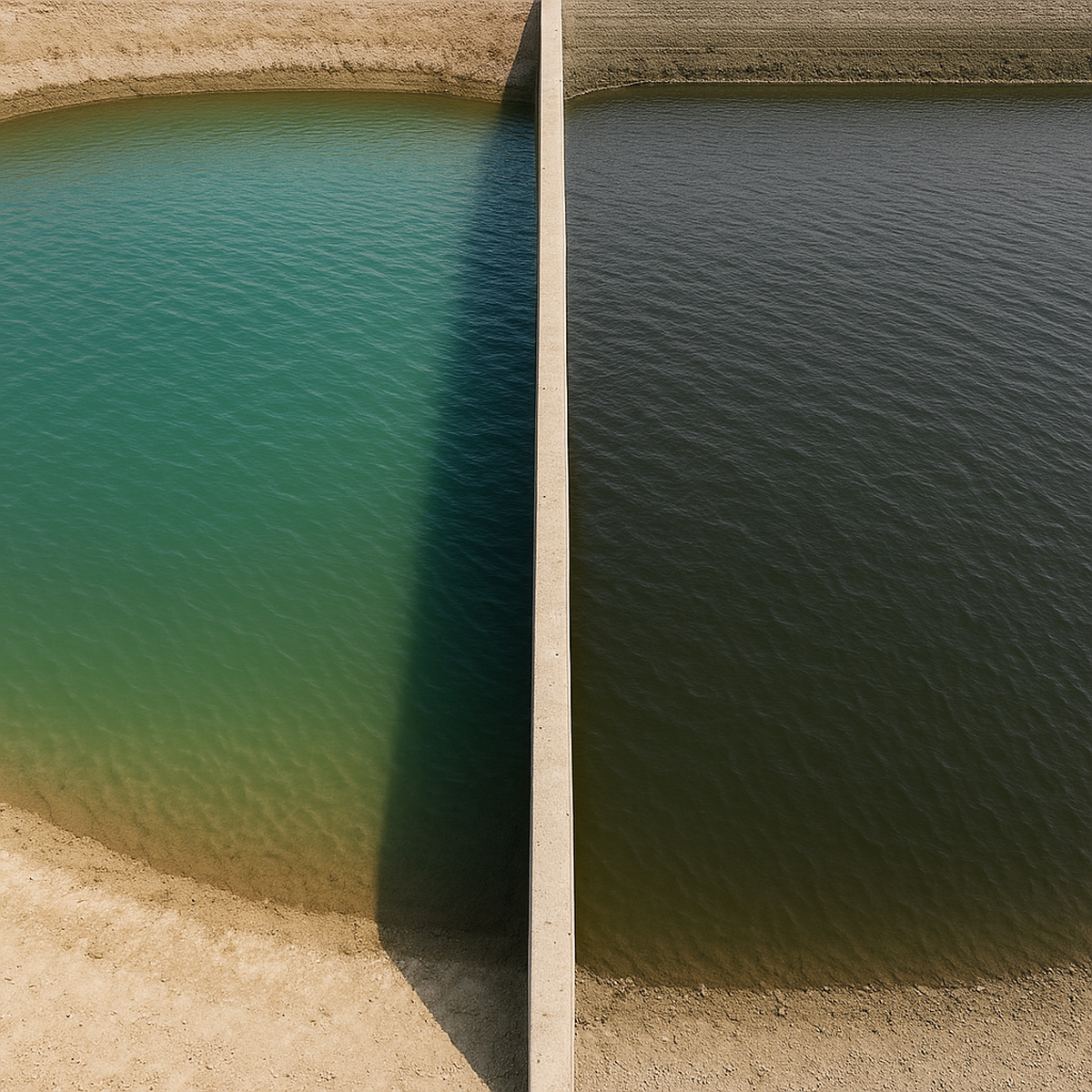
In the quantum world, waves associated with the molecules on either side of this reservoir can interfere and create a small but steady leak through the wall.
| Photo Credit:
Image created with ChatGPT 5
The next great leap on this chain was that of the British-American physicist Anthony Leggett. By the late 1970s, physicists knew Josephson junctions behaved in ways consistent with quantum theory, but there also remained a deeper conceptual question: could an entire macroscopic variable, such as the current flowing in a circuit, obey the laws of quantum mechanics as if it were a microscopic particle?
Leggett, then a young theorist with a background in superfluid helium, recognised that the Josephson junction offered the ideal testing ground. He proposed treating the phase difference between the two superconductors (remember: a collective property involving trillions of electrons) as a single parameter moving in an energy landscape. In his model, the system resembled a marble trapped in a valley between two hills. The marble represented the phase difference; the hills represented energy barriers determined by the junction’s current and capacitance. If the marble had enough energy, it could roll over the hill, corresponding to the junction switching from a zero-voltage state to one with a finite voltage. But even without enough energy, quantum mechanics allows the marble to tunnel through the hill, appearing on the other side without having to go over the top.
Leggett predicted that at a sufficiently low temperature, when there wasn’t enough heat in the system to push it over the energy barrier, a macroscopic variable of the system could tunnel through — and that this could be observed as a small current that’s independent of the temperature.

Something remarkable
His work did more than propose a radical idea: it set down specific conditions in which macroscopic quantum effects could survive the destructive influence of the environment. He analysed how frictional losses and electromagnetic noise (together known as dissipation and decoherence) would discourage quantum tunnelling, and showed how to design circuits that would minimise effects. In other words, his theory showed a way to use the Josephson junction to test the limits of quantum mechanics.
Among those who took up the challenge were Clarke, Devoret, and Martinis. They developed exquisitely clean Josephson junctions and cooled them to fractions of a degree above absolute zero. By biasing the junction with a steadily increasing current, they could watch for the point at which it switched into a finite voltage state. At high temperatures, the switch occurred at random currents determined by thermal fluctuations: i.e. the hotter the sample, the more easily it could jump over the barrier, instead of opting to tunnel through.
But as they lowered the temperature, something remarkable happened. Below a certain point, the temperature no longer mattered: the junction continued to switch with a small but steady probability, exactly as Leggett’s model predicted. This escape rate also stopped following the classical thermal pattern and instead settled into a pattern only quantum mechanics could explain. In effect, the trio had caught a macroscopic system tunnelling through an energy barrier.
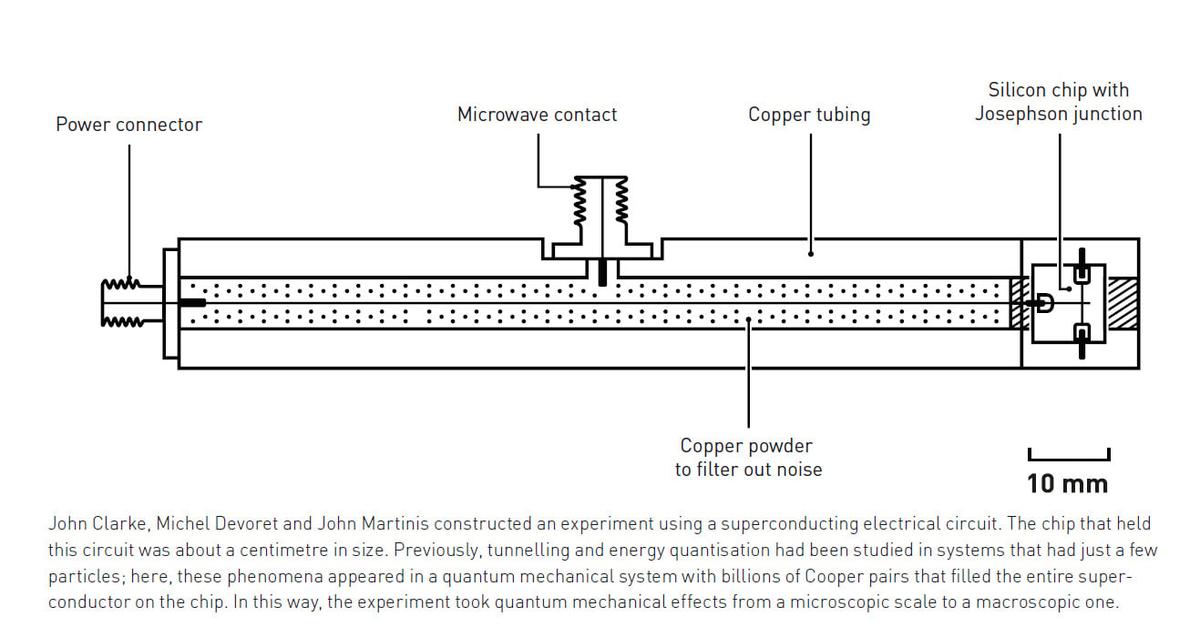
The experimental setup.
| Photo Credit:
Johan Jarnestad/The Royal Swedish Academy of Sciences
To strengthen their case, the three then turned to spectroscopy. If the phase variable truly behaved like a quantum particle, it would have to have discrete energy levels. They followed Josephson’s prediction and shone microwaves of specific frequencies on the circuit, and found that it absorbed energy only when the frequency matched the gap between energy levels. This was clear evidence of energy quantisation in a macroscopic object.
The superconducting qubit
In two papers in 1981 and 1985, they described the observation of macroscopic quantum tunnelling and quantised energy levels, both in a single Josephson junction — a result that built directly on Josephson’s discovery and Leggett’s theory. Over the next few decades, as physicists developed materials more suited to these tests and advanced techniques that could make finer measurements, they were able to confirm these effects with ever greater precision. Eventually, the experiments became the foundation of today’s quantum computers.
At the heart of these computers is the superconducting qubit, which is a device that works by harnessing the same quantum behaviour seen in Josephson junctions. A qubit is the basic unit of information in a quantum computer. Unlike a classical bit, which can be either 0 or 1, a qubit can exist in a superposition: part 0 and part 1 at the same time. This allows quantum computers to explore many possibilities simultaneously, making them powerful for solving problems that are too complex for classical computers. Each of these qubits consists of a circuit of the sort the laureates used. By virtue of behaving like a quantum particle, a variable of the macroscopic circuit — e.g. the phase difference — would essay the role of the qubit, while the large size of the circuit would make it easy for an operator to manipulate and measure it.
Leggett has often reflected that while quantum mechanics appears universal, there may still be limits imposed by environmental factors, and that probing those limits is as important as building devices that exploit them. His work on macroscopic quantum systems helped establish the modern field of quantum coherence, which now spans condensed-matter physics, quantum optics, and quantum information science. Josephson, meanwhile, went on to explore the philosophical implications of coherence, proposing that the deep connectedness implied by quantum phase relations may have analogues in other domains.