


Skip to content
  • Facebook
  • X
  • Linkedin
  • WhatsApp
  • YouTube
  • Associate Journalism
  • About Us
  • Privacy Policy
  • 033-46046046
  • editor@artifex.news
Artifex.News

Artifex.News

Stay Connected. Stay Informed.

  • Breaking News
  • World
  • Nation
  • Sports
  • Business
  • Science
  • Entertainment
  • Lifestyle
  • Toggle search form
  • Rupee falls 16 paise to 90.11 against U.S. dollar in early trade
    Rupee falls 16 paise to 90.11 against U.S. dollar in early trade Business
  • Daily Quiz: On chemistry constant that connects atoms to cosmos
    Daily Quiz: On chemistry constant that connects atoms to cosmos Science
  • Access Denied Sports
  • 6-Storey Building Collapses In Gujarat; 15 Injured, Many Feared Trapped
    6-Storey Building Collapses In Gujarat; 15 Injured, Many Feared Trapped Nation
  • Last Date To Exchange Rs 2,000 Note Is September 30, Clarifies RBI
    Last Date To Exchange Rs 2,000 Note Is September 30, Clarifies RBI Nation
  • “Let’s Not Get Into…”: R Ashwin’s Surprising Remark On Sunil Narine Has People ‘Reading Between Lines’
    “Let’s Not Get Into…”: R Ashwin’s Surprising Remark On Sunil Narine Has People ‘Reading Between Lines’ Sports
  • 7 Changes Coming Into Effect From November 1
    7 Changes Coming Into Effect From November 1 Nation
  • 8 Navy Veterans Sentenced To Death In Qatar: They Commanded Warships
    8 Navy Veterans Sentenced To Death In Qatar: They Commanded Warships Nation
Why public health nutrition policies need novelty, precise targeting

Why public health nutrition policies need novelty, precise targeting

Posted on January 4, 2025 By admin


Global Nutrition Targets (GNTs) were set by the World Health Assembly as key national indicators of the effect of public health policies in alleviating maternal and child malnutrition. Some of the targets were — reduce stunting by 40% in under-5 children, reduce anaemia by 50% in women of reproductive age, and no increase in childhood overweight.

A recent evaluation of the global progress toward the achievement (or not) of the targets was published in The Lancet. This colossal analysis provided estimates of progress at a regional and national level in 204 countries from 2012 to 2021, with projections up to 2050. In general, there appeared to be slow and insufficient progress across countries. By 2030, it was projected that few countries (not India) would meet the targets for stunting, and none would meet low birthweight, anaemia, and childhood overweight. In short, little progress in undernutrition, but an increase in overweight.

We are now in the last year of the first quarter of the 21st century. Fresh thinking is needed if the same sorry situation is to be avoided at the end of the next quarter of this century. The immediate questions are: why is there slow progress, and what next?

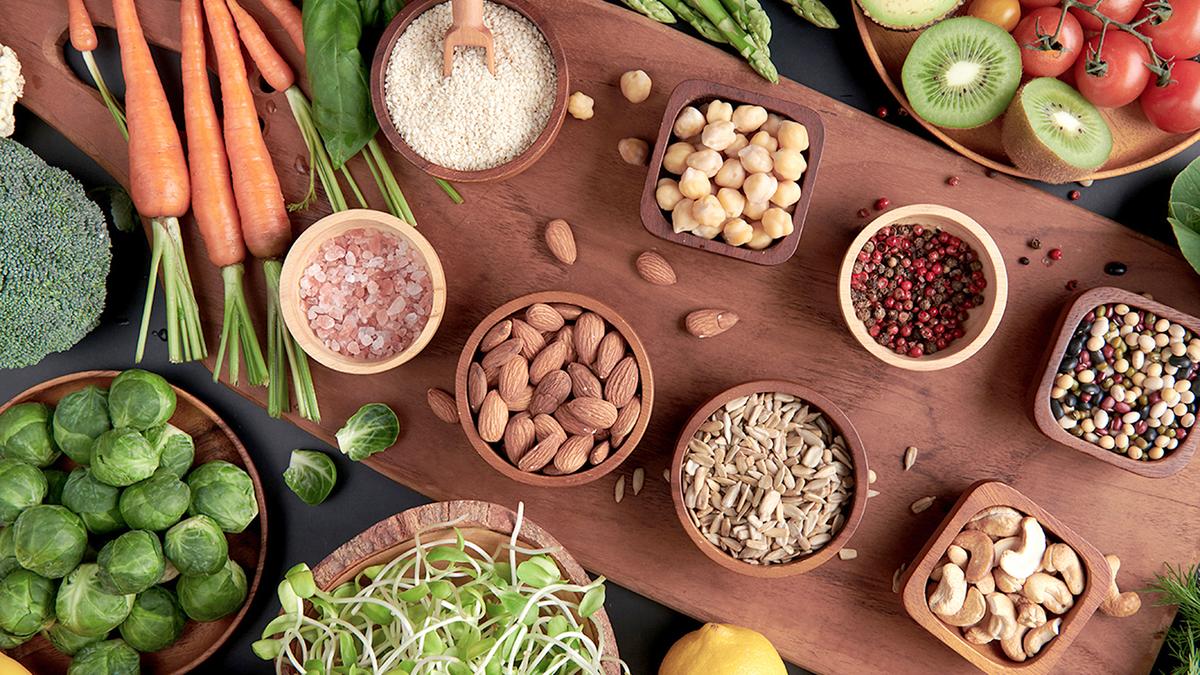
Slow progress can be blamed on poor programme implementation. However, other important aspects merit consideration too. For instance, the prevalence of anaemia has remained static in India for the last two decades. First, with no national surveys, we do not know the cause of anaemia in India. This is presumed to be iron deficiency, resulting in policies to improve dietary iron intake through fortification and supplementation. But recent large-scale surveys reveal that iron deficiency accounts for only a third of anaemia, while unknown causes account for another significant third. Tellingly, a study in north Karnataka school children during the COVID lockdown documented an increase in anaemia when the midday school meal was stopped, but this was not due to iron deficiency. Clearly, a medley of nutrients prevents anaemia, and the whole diet works better than the sum of its parts. Therefore, rather than focusing on select nutrient deficiencies, it is time to diversify diets effectively.

Second, the static anaemia prevalence, despite adaptation and chemical nutrient intake, begs the question of the metrics of measurement, which vary by context and method. In India, a national survey in children showed that venous blood-based anaemia prevalence (as recommended by WHO) was roughly half the capillary blood-based prevalence in comparable national surveys. Third, the actual diagnostic cut-off for anaemia (true for stunting as well) is the subject of much science: one cut-off might not fit all populations. Accurate metrics are crucial for successful public health interventions.

As for the sustained negligible progress in the target for stunting, the knee-jerk response might be to feed even more. But this has unintended consequences — children are more likely to grow fatter rather than faster when overfed after two years of age. This is because stunting actively occurs within the first two years of life; in India, stunting increases from about 7-8% at birth to nearly 40% at two years of age. On average, children reach half their adult height in two years. If already stunted at two, it is difficult to un-stunt children by overfeeding in the hope of faster growth. Prevention in the first two years is most important, even though the global nutrition target refers to stunting in under-5 children.

Second, energy intake is the driver of growth in the first two years. The most energy-dense food is oil. It is disheartening that the average fat intake of poor children in India is just 7 grams per day (NNMB reports), versus their requirement of 30-40 grams per day. But it is encouraging to note that the new POSHAN guidelines for feeding children aged under-3 with take-home rations now include oil, which was not specified earlier.

Finally, The Lancet paper showed that overweight had increased in children in almost all countries but was less than the prevailing undernutrition. This might mean that policy should continue to focus on undernutrition. But overweight does not capture the risk of ‘metabolic overnutrition’ in children. It has been shown that metabolic risk occurs in about no less than 50% of Indian children aged 5-19 years, even in those stunted and underweight. Therefore, the burden of childhood overnutrition should be an important policy target.

The slow progress in GNTs on undernutrition, notwithstanding the considerations pointed out above and the hidden overweight burden, tell us that the need of the hour is to zealously and precisely focus on double duty actions to simultaneously address the under- and over-nutrition burden. Else, ongoing efforts that are skewed towards undernutrition will continue to fuel overnutrition and related non-communicable diseases. 

(Anura Kurpad is Professor of physiology and nutrition at St John’s Medical College, Bengaluru. Harshpal Singh Sachdev is a senior consultant in paediatrics and clinical epidemiology, Sitaram Bhartia Institute of Science and Research, New Delhi)

Published – January 04, 2025 10:00 pm IST


Source link

Science

Post navigation

Previous Post: Study traces the route of Ebola virus to the skin surface
Next Post: Barcelona vs Barbastro Live Streaming Copa Del Rey Live Telecast: When And Where To Watch

Related Posts

  • NASA’s Perseverance rover on Mars begins steep climb to rim of a crater
    NASA’s Perseverance rover on Mars begins steep climb to rim of a crater Science
  •  Australia, New Zealand brace for looming bird flu threat
     Australia, New Zealand brace for looming bird flu threat Science
  • 35% doctors in India feel unsafe while at work, study shows
    35% doctors in India feel unsafe while at work, study shows Science
  • Panic in the time of cholera: addressing issues critical to managing a resurgence 
    Panic in the time of cholera: addressing issues critical to managing a resurgence  Science
  • US Open lit by lights designed to cut light pollution
    US Open lit by lights designed to cut light pollution Science
  • Asian cities are growing upwards more than outwards, satellite data show
    Asian cities are growing upwards more than outwards, satellite data show Science

More Related Articles

What is ‘The Wow!’ signal? What is ‘The Wow!’ signal? Science
ISRO focusing on Gaganyaan project, says Narayanan ISRO focusing on Gaganyaan project, says Narayanan Science
ecDNA challenges law of genetics, groundbreaking new studies find ecDNA challenges law of genetics, groundbreaking new studies find Science
The Science Quiz | Indelible ink The Science Quiz | Indelible ink Science
Where does ‘us versus them’ bias in the brain come from? Where does ‘us versus them’ bias in the brain come from? Science
Horseshoe crabs, living fossils of the sea, draw endangered species petition Horseshoe crabs, living fossils of the sea, draw endangered species petition Science
SiteLock

Archives

  • May 2026
  • April 2026
  • March 2026
  • February 2026
  • January 2026
  • December 2025
  • November 2025
  • October 2025
  • September 2025
  • August 2025
  • July 2025
  • June 2025
  • May 2025
  • April 2025
  • March 2025
  • February 2025
  • January 2025
  • December 2024
  • November 2024
  • October 2024
  • September 2024
  • August 2024
  • July 2024
  • June 2024
  • May 2024
  • April 2024
  • March 2024
  • February 2024
  • January 2024
  • December 2023
  • November 2023
  • October 2023
  • September 2023
  • August 2023
  • July 2023
  • June 2023
  • May 2023
  • April 2023
  • March 2023
  • February 2023
  • January 2023
  • December 2022
  • November 2022
  • October 2022
  • September 2022
  • August 2022
  • July 2022
  • June 2022
  • May 2022

Categories

  • Business
  • Nation
  • Science
  • Sports
  • World

Recent Posts

  • Nicobarese oppose proposal for three wildlife sanctuaries
  • Visakhapatnam Collector calls for inter-departmental synergy to boost investments
  • Kohli’s masterful knock powers Royal Challengers to the top
  • Senior IPS officer Asra Garg posted IGP Intelligence
  • Vijay Narayan earns rare distinction of being Advocate General under two different governments

Recent Comments

  1. StevenLek on UP Teacher Who Asked Students To Slap Muslim Classmate
  2. Leonardren on UP Teacher Who Asked Students To Slap Muslim Classmate
  3. NathanQuins on UP Teacher Who Asked Students To Slap Muslim Classmate
  4. Davidgof on UP Teacher Who Asked Students To Slap Muslim Classmate
  5. NathanJobre on UP Teacher Who Asked Students To Slap Muslim Classmate
  • Asylum Seekers Fear UK’s Rwanda Deportation Law
    Asylum Seekers Fear UK’s Rwanda Deportation Law World
  • 1,644 Lok Sabha Poll Candidates Have Criminal Cases Against Them: Report
    1,644 Lok Sabha Poll Candidates Have Criminal Cases Against Them: Report Nation
  • Access Denied
    Access Denied Nation
  • Access Denied
    Access Denied Nation
  • Airborne DNA Can Be Extracted To Be Used For Forensic Analysis, Study Finds
    Airborne DNA Can Be Extracted To Be Used For Forensic Analysis, Study Finds World
  • Access Denied World
  • Lionel Messi-less Inter Miami Extend MLS Lead With 2-1 Win Over Chicago Fire
    Lionel Messi-less Inter Miami Extend MLS Lead With 2-1 Win Over Chicago Fire Sports
  • Congress Leader Rameshwar Dudi Suffers Brain Haemorrhage, Hospitalized
    Congress Leader Rameshwar Dudi Suffers Brain Haemorrhage, Hospitalized Nation

Editor-in-Chief:
Mohammad Ariff,
MSW, MAJMC, BSW, DTL, CTS, CNM, CCR, CAL, RSL, ASOC.
editor@artifex.news

Associate Editors:
1. Zenellis R. Tuba,
zenelis@artifex.news
2. Haris Daniyel
daniyel@artifex.news

Photograher:
Rohan Das
rohan@artifex.news

Artifex.News offers Online Paid Internships to college students from India and Abroad. Interns will get a PRESS CARD and other online offers.
Send your CV (Subjectline: Paid Internship) to internship@artifex.news

Links:
Associate Journalism
About Us
Privacy Policy

News Links:
Breaking News
World
Nation
Sports
Business
Entertainment
Lifestyle

Registered Office:
72/A, Elliot Road, Kolkata - 700016
Tel: 033-22277777, 033-22172217
Email: office@artifex.news

Editorial Office / News Desk:
No. 13, Mezzanine Floor, Esplanade Metro Rail Station,
12 J. L. Nehru Road, Kolkata - 700069.
(Entry from Gate No. 5)
Tel: 033-46011099, 033-46046046
Email: editor@artifex.news

Copyright © 2023 Artifex.News Newsportal designed by Artifex Infotech.