



Skip to content
  • Facebook
  • X
  • Linkedin
  • WhatsApp
  • Associate Journalism
  • About Us
  • Privacy Policy
  • 033-46046046
  • editor@artifex.news
Artifex.News

Artifex.News

Stay Connected. Stay Informed.

  • Breaking News
  • World
  • Nation
  • Sports
  • Business
  • Science
  • Entertainment
  • Lifestyle
  • Toggle search form
  • Late Change In India XI For 1st Australia Test? Star Shrugs Off Big Injury Concern
    Late Change In India XI For 1st Australia Test? Star Shrugs Off Big Injury Concern Sports
  • Orry Joins IPL 2024 Commentary Panel For CSK vs RCB Game, Internet Goes On Overdrive
    Orry Joins IPL 2024 Commentary Panel For CSK vs RCB Game, Internet Goes On Overdrive Sports
  • Access Denied
    Access Denied Nation
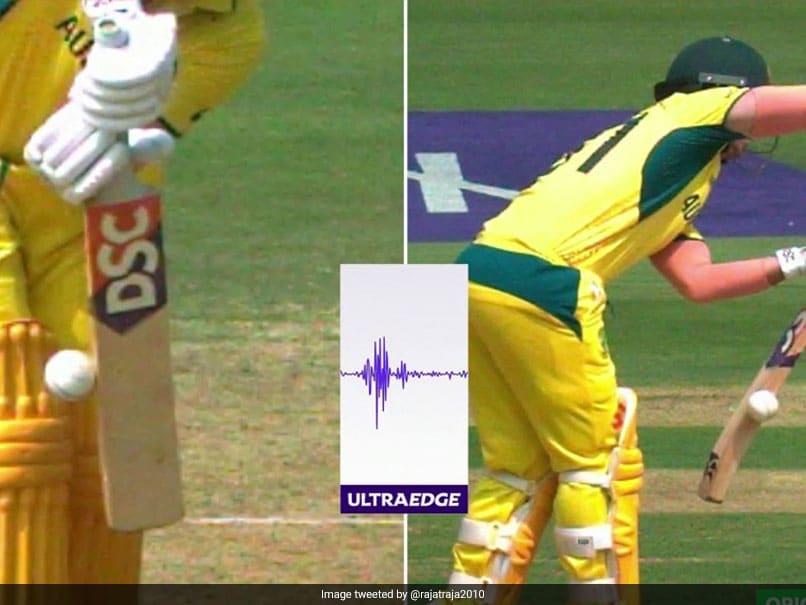
  • World Cup 2023: Pakistan’s First-Ball Review Against Australia Ends In Total Embarrassment
    World Cup 2023: Pakistan’s First-Ball Review Against Australia Ends In Total Embarrassment Sports
  • Tom Latham Counting On World-Class Bowling Attack To Tame In-Form South Africa
    Tom Latham Counting On World-Class Bowling Attack To Tame In-Form South Africa Sports
  • Mysterious Reason Why Over 300 Elephants Died In Botswana Revealed
    Mysterious Reason Why Over 300 Elephants Died In Botswana Revealed World
  • Access Denied
    Access Denied Nation
  • US Aviation Agency Issues Travel Warning Ahead Of Rare Celestial Event
    US Aviation Agency Issues Travel Warning Ahead Of Rare Celestial Event World
The physics of light-based computers can change the way AI works

The physics of light-based computers can change the way AI works

Posted on September 12, 2025 By admin


Modern computing banks on conventional electronics and algorithms to process data. But because the hardware operates according to the laws of physics, data processing has a physical speed limit. The availability of power further constrains this speed, especially if the software being run is a power-guzzling artificial intelligence (AI) model. Thus one major preoccupation of scientists worldwide is coming up with new kinds of computers that increase the speed limit by operating differently.

One promising kind is light-based, a.k.a. optical, computing. These computers use photons, the particles of light, rather than electrons. Because photons travel at the speed of light and photonic devices generate less heat than electronic devices do, optical computing promises to be faster, have more bandwidth, and be more energy-efficient.

An important part of an optical computer will be the optical fibres that transmit data from one component to another within the machine. This particular technology is already in use worldwide: it transmits billions of bytes of data between countries and continents and enables superfast internet services.

A new door

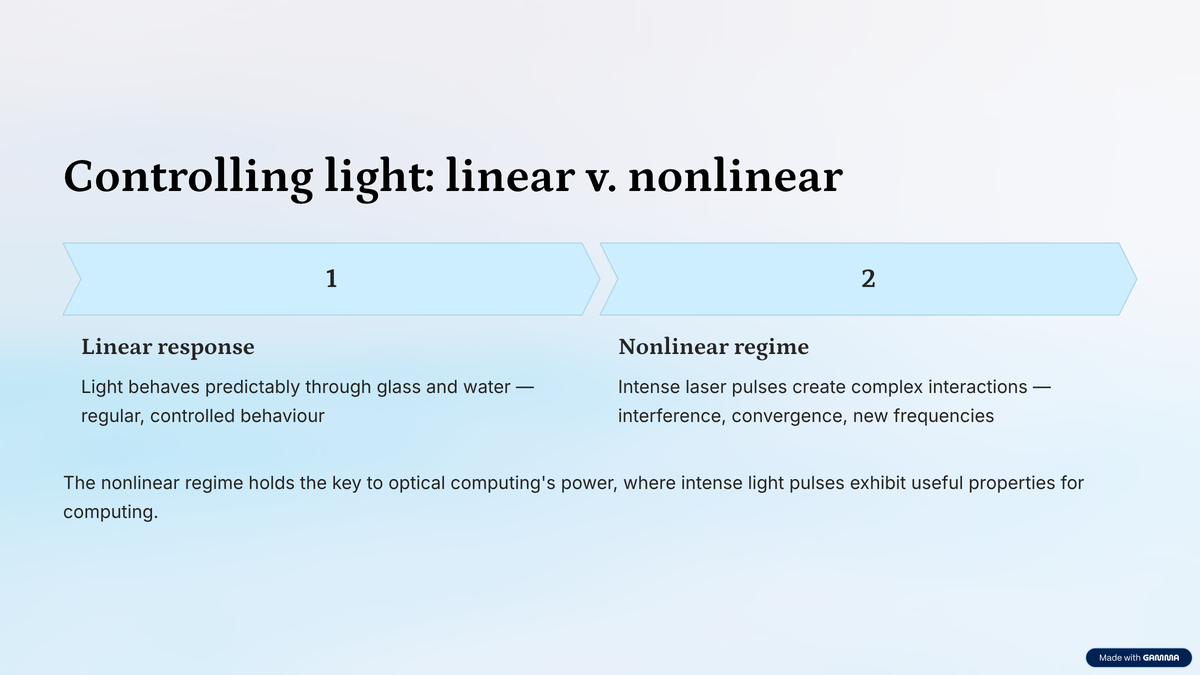
But before scientists can use optical computing to supercharge AI models, they need some handles to control certain physical properties of light. Light usually behaves in a regular, predictable way when it passes through media like glass or water. Scientists know this as light’s linear response.

However, when light pulses are very intense, like those issued by a powerful laser, they elicit a different response from the material they are passing through. This is the non-linear regime. Among others, light pulses in this regime can interfere with each other, spread out or converge, and generate new frequencies (colours) of light.
Linear v. nonlinear regimes

Linear v. nonlinear regimes

Recently, two research teams — from Tampere University in Finland and Université Marie et Louis Pasteur in France — studied nonlinear interaction between intense light pulses passing through thin glass fibres and uncovered something unusual. The researchers reported that it’s possible to use the physics of light in optical fibres to perform complex AI tasks potentially much faster and with less energy than traditional computers.

The work has opened a door to new types of AI hardware that can be used in areas where speed and efficiency are critical. The findings were published in Optical Letters in June.

Image to numbers and back

In the study, the researchers focused on an AI model called an extreme learning machine (ELM). Instead of using traditional computer chips, they used the physical properties of light travelling through optical fibres to perform calculations. Their main goal was to understand how well this approach worked for recognising images and what factors affected its accuracy.

An ELM is a type of neural network that is fast and simple. It has only one hidden layer (between the input and output layers), and only the output weights are trained. The ELM finds these weights in a single step using a mathematical method, rather than learning through repeated adjustments like in deep neural networks.

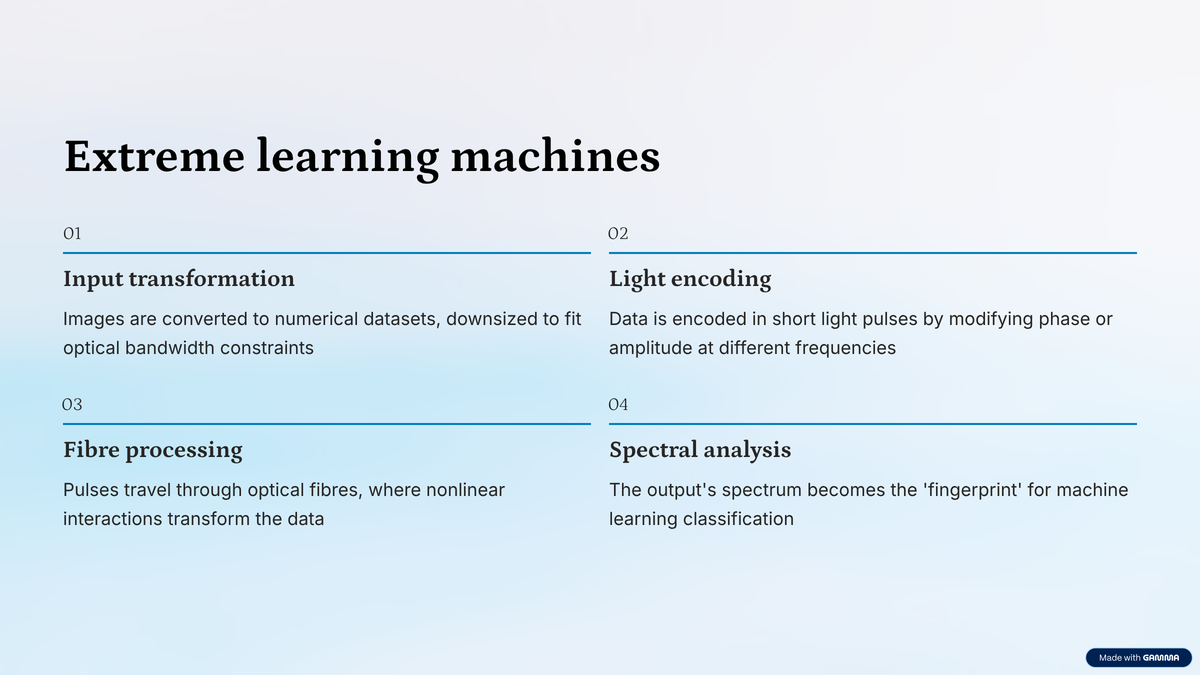
In this setup, the input data, like an image, was transformed into a dataset of numbers. This made it easier for the network to separate and classify different types of inputs. Then, the ELM used a simple linear calculation to match the transformed data to the correct label, e.g. which digit an image shows.
Extreme learning machines

Extreme learning machines

The researchers use the unique properties of light in optical fibres to perform the transformation needed for the ELM.Each image was first downsized — like from 28 × 28 pixels to 10 × 10 — to fit the limited bandwidth of the light pulse. The image data was then encoded onto a very short pulse of light, either by changing the phase (how the light wave oscillates) or the amplitude (how strong the light is) at different frequencies.

Fingerprint in the colours

The encoded light pulse was then sent through a length of optical fibre. The pulse fibre interactions were in the nonlinear regime. The researchers tracked how the fibre responded to the pulses and how different colours of light travel at different speeds, a property called dispersion. These changes mixed up the information in the light pulses in a way that was hard to reverse — but useful for the ELM’s transformation step.

At the end of the fibre, the team measured how much light there was of each colour. This spectrum contained a ‘fingerprint’ of the original image, transformed by the fibre’s nonlinear effects. The team used it  as the hidden layer in the ELM — the computing layer between the input and the output that gave rise to the machine’s ‘intelligence’.

In this way, the team trained the ELM on  thousands of labelled images. Then they tested the model on new images to see how accurately it could classify them.

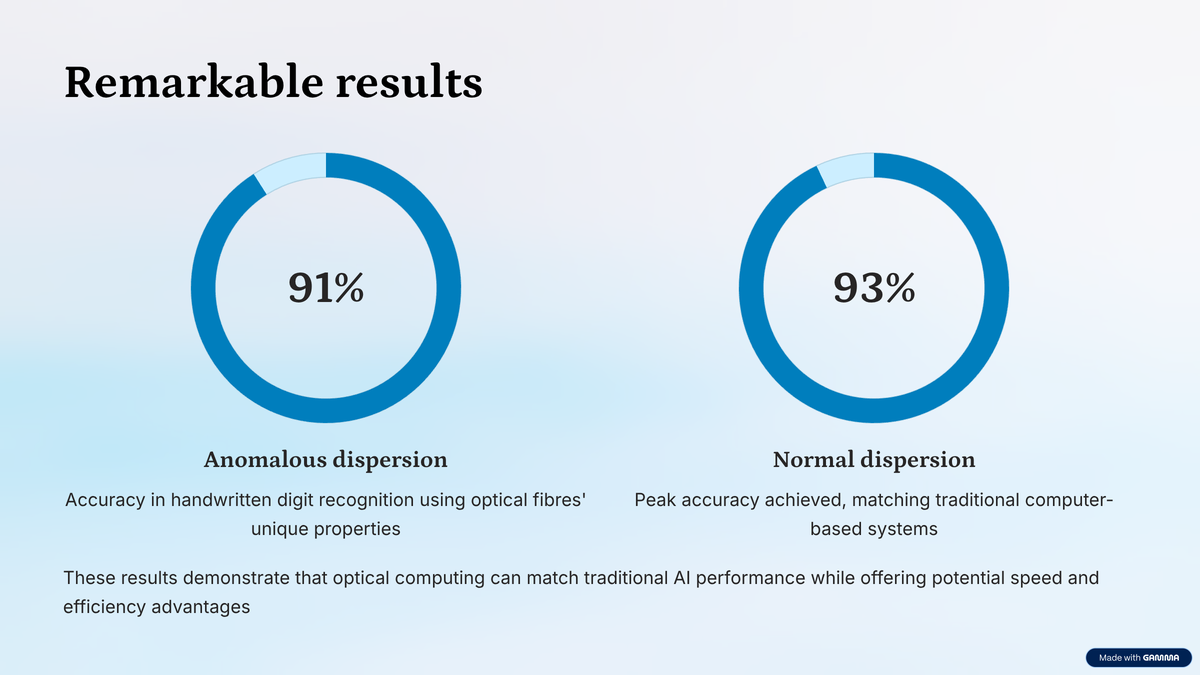
With optimal settings, the team found that the ELM  was more than 91% accurate at recognising handwritten digits using the optical fibre’s anomalous dispersion regime and more than 93% accuracy in the normal dispersion regime. These results were close to those achieved by traditional computer-based ELMs but were achieved using the physics of light instead of electronics.
Test with images

Test with images

Let there be light

According to the published paper, increasing the strength of the nonlinear effects and the fibre fibre length improved accuracy, but only up to a point. Too much of an increase caused the system to become unstable and less accurate. There is thus an optimal range for these parameters.

In sum, the study demonstrated that optical fibres can be used as powerful tools for machine learning, specifically for tasks like image recognition. By carefully tuning the system’s parameters and understanding the effects of noise and encoding, it’s possible to achieve high accuracy using the natural properties of light. This approach could lead to new, faster, and more efficient AI systems in the future.

The scientists who led the teams behind the study said in a statement: “This work demonstrates how fundamental research in nonlinear fibre optics can drive new approaches to computation.”

The study paper did note some limitations it said could be overcome in future research. For example, the team’s model didn’t include all possible real-world effects, such as changes in the light’s polarisation (the direction in which its electric field oscillates). It said future work could also explore encoding information on different polarisation states or using more complex optical fibres. There is also a stated potential to improve the system by measuring not just the spectrum’s intensity but also its phase.

This said, the study highlighted the opportunities within light-based computing with optical fibres to meet the growing demand for faster as well as smarter AI. By using the speed and efficiency of light, computers of the future could think and learn in ways that may make the AI models available to us today seem crude. But this will take many more years as experts and businesspersons design and test new technologies like photonic integrated circuits and optical neural networks.
Paradigm shift

Paradigm shift

Qudsia Gani is an assistant professor in the Department of Physics, Government Degree College Pattan, Baramulla.

Published – September 12, 2025 05:30 am IST



Source link

Science

Post navigation

Previous Post: Access Denied
Next Post: Access Denied

Related Posts

  • How SpaceX’s rocket diplomacy backfired in the Bahamas
    How SpaceX’s rocket diplomacy backfired in the Bahamas Science
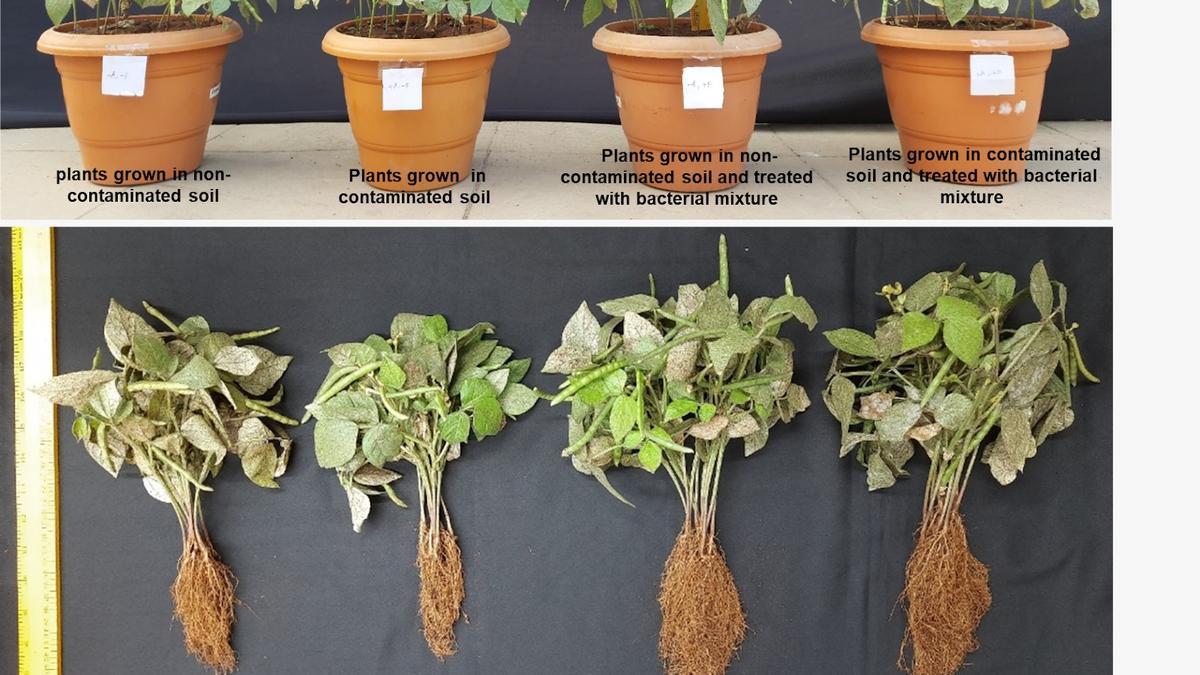
  • Researchers find bacteria that can clean up pesticides from soil to enhance crop yield
    Researchers find bacteria that can clean up pesticides from soil to enhance crop yield Science
  • UN body that regulates ocean floor prepares for election amid debate over deep-sea mining
    UN body that regulates ocean floor prepares for election amid debate over deep-sea mining Science
  • Why Greenland? Remote but resource-rich island occupies a key position in a warming world
    Why Greenland? Remote but resource-rich island occupies a key position in a warming world Science
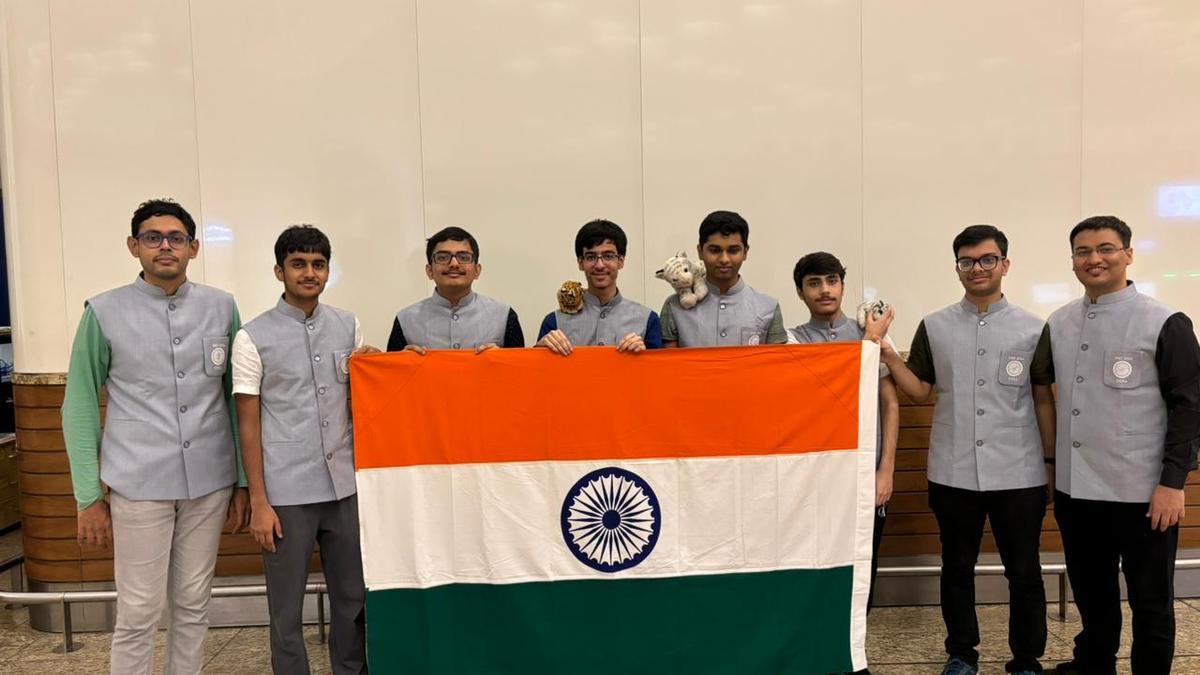
  • Behind India’s record performance at International Math Olympiad 2024
    Behind India’s record performance at International Math Olympiad 2024 Science
  • Chandrayaan-3 | Centre asks universities to organise special assemblies to watch Moon landing
    Chandrayaan-3 | Centre asks universities to organise special assemblies to watch Moon landing Science

More Related Articles

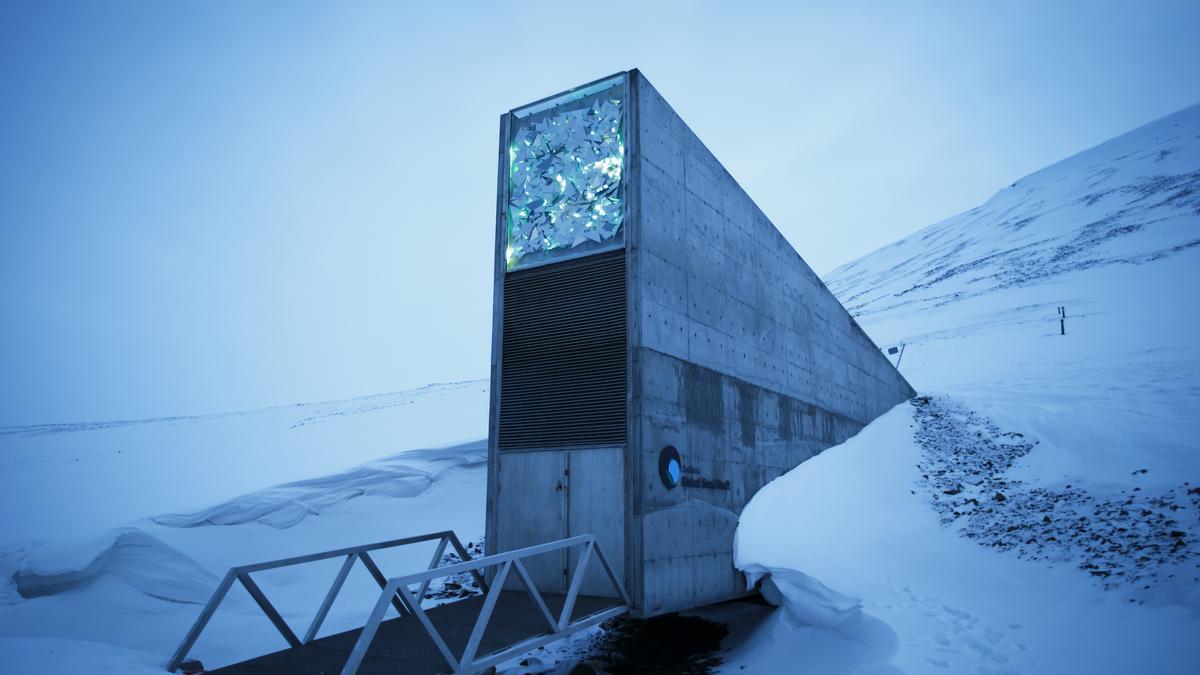
Svalbard seed vault evokes epic imagery, controversy because of the power of seeds Svalbard seed vault evokes epic imagery, controversy because of the power of seeds Science
Aditya-L1 to shed more light on present, future of Sun: ARIES director Aditya-L1 to shed more light on present, future of Sun: ARIES director Science
Millions of diabetes, heart disease cases globally linked to sugary drinks Millions of diabetes, heart disease cases globally linked to sugary drinks Science
ISRO is all geared up for Gaganyaan, says Group Director at Satish Dhawan Space Centre ISRO is all geared up for Gaganyaan, says Group Director at Satish Dhawan Space Centre Science
Vinesh Phogat versus the perplexing biochemistry of losing weight Vinesh Phogat versus the perplexing biochemistry of losing weight Science
India’s next moon mission will be precursor to the country’s ambitious lunar sample return mission: PRL Director  India’s next moon mission will be precursor to the country’s ambitious lunar sample return mission: PRL Director  Science
SiteLock

Archives

  • September 2025
  • August 2025
  • July 2025
  • June 2025
  • May 2025
  • April 2025
  • March 2025
  • February 2025
  • January 2025
  • December 2024
  • November 2024
  • October 2024
  • September 2024
  • August 2024
  • July 2024
  • June 2024
  • May 2024
  • April 2024
  • March 2024
  • February 2024
  • January 2024
  • December 2023
  • November 2023
  • October 2023
  • September 2023
  • August 2023
  • July 2023
  • June 2023
  • May 2023
  • April 2023
  • March 2023
  • February 2023
  • January 2023
  • December 2022
  • November 2022
  • October 2022
  • September 2022
  • August 2022
  • July 2022
  • June 2022
  • May 2022

Categories

  • Business
  • Nation
  • Science
  • Sports
  • World

Recent Posts

  • Access Denied
  • Access Denied
  • Access Denied
  • U.N. Security Council condemns strikes on Qatar without naming Israel
  • China digs in on ‘rare earth’, commands global market

Recent Comments

  1. dfb{{98991*97996}}xca on UP Teacher Who Asked Students To Slap Muslim Classmate
  2. "dfbzzzzzzzzbbbccccdddeeexca".replace("z","o") on UP Teacher Who Asked Students To Slap Muslim Classmate
  3. 1}}"}}'}}1%>"%>'%> on UP Teacher Who Asked Students To Slap Muslim Classmate
  4. bfg6520<s1﹥s2ʺs3ʹhjl6520 on UP Teacher Who Asked Students To Slap Muslim Classmate
  5. pHqghUme9356321 on UP Teacher Who Asked Students To Slap Muslim Classmate
  • How Can I Respect You?
    How Can I Respect You? Nation
  • Manchester United Beat Copenhagen Thanks To Unlikely Heroes Harry Maguire, Andre Onana
    Manchester United Beat Copenhagen Thanks To Unlikely Heroes Harry Maguire, Andre Onana Sports
  • Virat Kohli Goes Through Many Emotions As India Avoid Follow-On In 3rd Australia Test – Video Is Viral
    Virat Kohli Goes Through Many Emotions As India Avoid Follow-On In 3rd Australia Test – Video Is Viral Sports
  • US Capitol Rioters, Supporters Of Donald Trump, Await Pardons
    US Capitol Rioters, Supporters Of Donald Trump, Await Pardons World
  • 3-Foot-Tall Ganesh Baraiya Becomes Doctor
    3-Foot-Tall Ganesh Baraiya Becomes Doctor Nation
  • Calcutta High Court Refuses To Interfere In Centre’s Decision To Rename Port Blair
    Calcutta High Court Refuses To Interfere In Centre’s Decision To Rename Port Blair Nation
  • On Harris’s 60th Birthday, Trump To Visit McDonald’s Store To Mock Her
    On Harris’s 60th Birthday, Trump To Visit McDonald’s Store To Mock Her World
  • Those Who Became Rulers With Maratha Support Failed To Do Justice For Them: Eknath Shinde
    Those Who Became Rulers With Maratha Support Failed To Do Justice For Them: Eknath Shinde Nation

Editor-in-Chief:
Mohammad Ariff,
MSW, MAJMC, BSW, DTL, CTS, CNM, CCR, CAL, RSL, ASOC.
editor@artifex.news

Associate Editors:
1. Zenellis R. Tuba,
zenelis@artifex.news
2. Haris Daniyel
daniyel@artifex.news

Photograher:
Rohan Das
rohan@artifex.news

Artifex.News offers Online Paid Internships to college students from India and Abroad. Interns will get a PRESS CARD and other online offers.
Send your CV (Subjectline: Paid Internship) to internship@artifex.news

Links:
Associate Journalism
About Us
Privacy Policy

News Links:
Breaking News
World
Nation
Sports
Business
Entertainment
Lifestyle

Registered Office:
72/A, Elliot Road, Kolkata - 700016
Tel: 033-22277777, 033-22172217
Email: office@artifex.news

Editorial Office / News Desk:
No. 13, Mezzanine Floor, Esplanade Metro Rail Station,
12 J. L. Nehru Road, Kolkata - 700069.
(Entry from Gate No. 5)
Tel: 033-46011099, 033-46046046
Email: editor@artifex.news

Copyright © 2023 Artifex.News Newsportal designed by Artifex Infotech.