



You were probably taught in high school that new neurons, or brain cells, are not born during adulthood. That it stops during your childhood. The actual picture has been more complicated: scientists have been debating among themselves for a long time as to when neurogenesis stops, although most of them believed it was possible in adulthood.
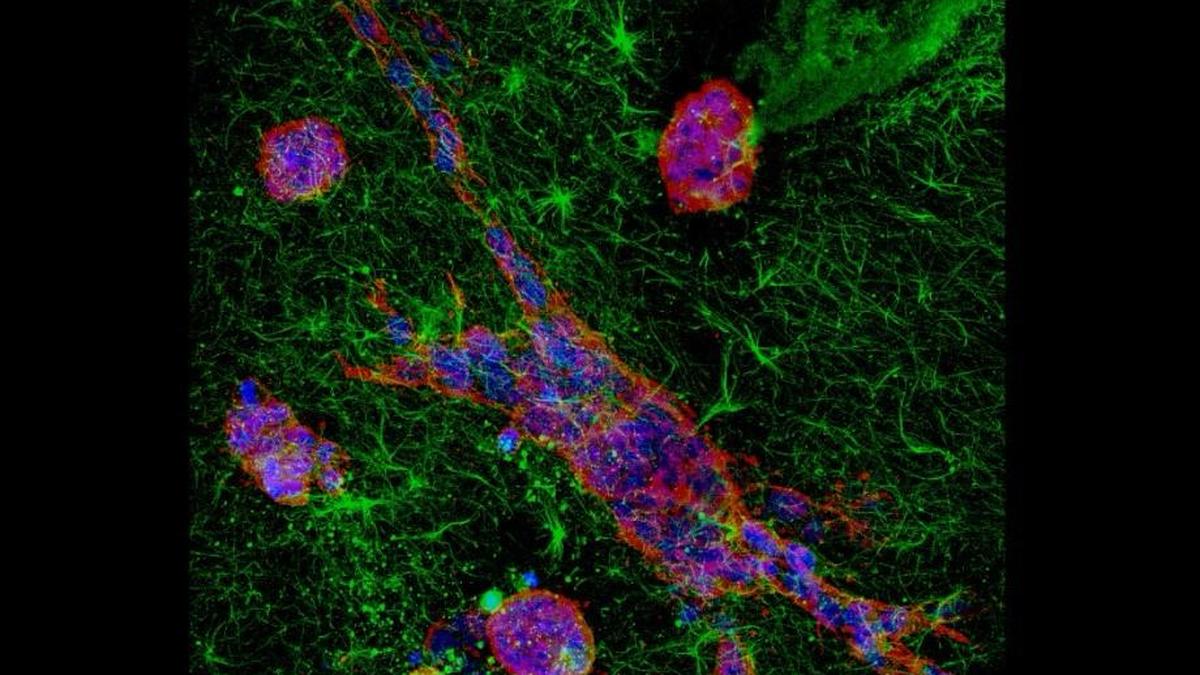
A new study in Science now promises to kick this dust up all over again: it has reported evidence of neural progenitor cells and young neurons — which are the intermediate stages of cellular development — in the hippocampus, the memory centre of adult human brains.
Promise and scrutiny
“Historically, the brain was considered a non-regenerative organ,” Prem Tripathi, a senior scientist who studies neurogenesis at the CSIR-Indian Institute of Chemical Biology in Kolkata, said. “However, in 1998, a pioneering study provided the first direct evidence that new neurons could be generated in the hippocampus in adults, suggesting a regenerative potential in the adult brain.”
This finding opened the door for exciting possibilities for regenerative therapies, particularly in ageing individuals suffering from neurodegenerative diseases like Alzheimer’s, Parkinson’s, and other dementias.
The promise of regenerative therapies also brought more scientific scrutiny, however. The 1998 study had used brain samples of individuals suffering from brain cancers, prompting experts to question whether neurons in adulthood were being born due to the tumours.
“The other criticism was that they showed this in a small sample size, only in five individuals,”, Navneet Vasistha, an assistant professor who studies neurogenesis at the University of Copenhagen, said.
Even as doubt lingered over whether neurogenesis occurred in the human adult hippocampus, many research groups showed that neurogenesis did occur in the adult brains of mice, rats, and even monkeys.
“Importantly, these studies identified several critical functions of adult-born neurons in the hippocampus,” Hiyaa Ghosh, associate professor of neurobiology at the National Centre for Biological Sciences, Bengaluru, said. This included “the ability to distinguish between very similar contexts, the ability to rewrite memories, and stress resilience.”
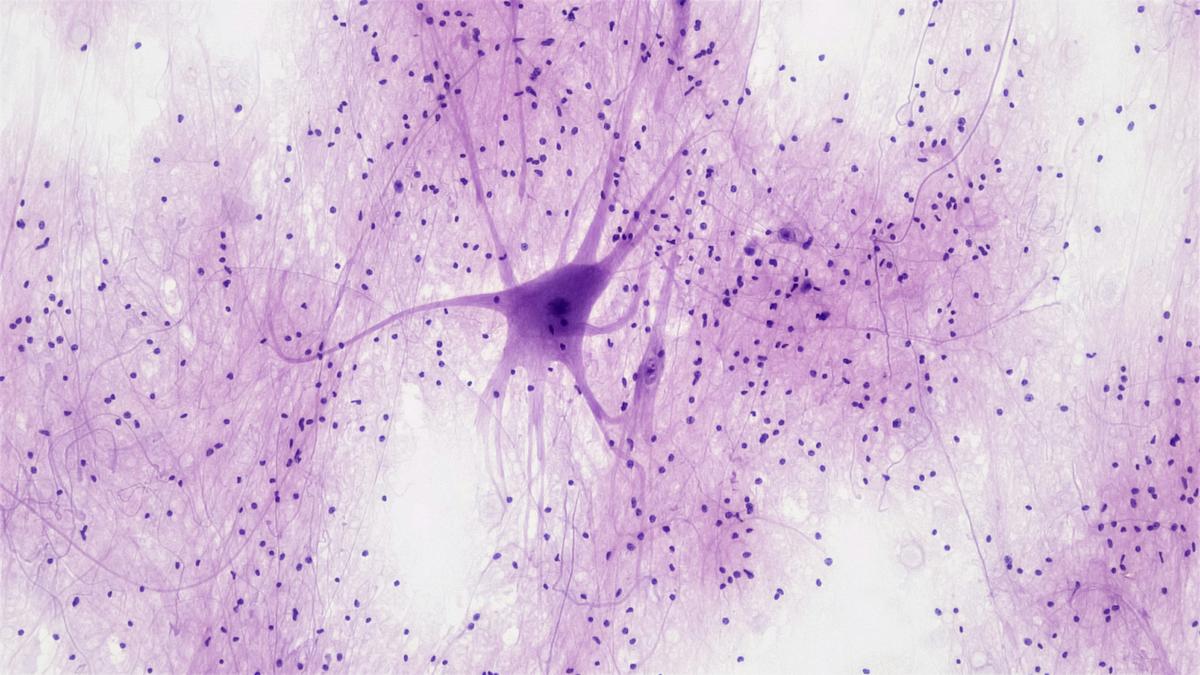
These processes are all mediated by neural circuits in the dentate gyrus of the hippocampus, which is where new neurons are thought to be continually generated throughout life.
Yet the evidence for adult neurogenesis in human brains has been inconsistent. One study from a group at the University of California in San Francisco found that while new neurons were born in the infant hippocampus, their numbers declined sharply within the first year of life. Another group replicated these findings independently, lending support to the idea that neurogenesis stops after infancy.
At single-cell resolution
Amid this morass of conflicting studies, the new study — from researchers at the Karolinska Institutet in Stockholm — provides further evidence for adult neurogenesis using modern sequencing and machine-learning methods.
The researchers isolated more than 4,00,000 neurons from the hippocampal region of post-mortem brain samples from (deceased) individuals aged less than a year to 78 years. Then they analysed them using a technique called single nuclei RNA sequencing, which provides a near-complete signature of genes that are expressed (or turned on) in each cell.
This allowed the team to monitor hundreds of markers in cells simultaneously, including those specific to cells that divided regularly. They trained a machine-learning algorithm to recognise these markers using RNA sequencing data from hippocampal samples younger than five years old, when neurogenesis is well-documented to occur.
“What we know from mouse models is that, typically, there are stem cells which every now and then get activated, proliferate to produce more intermediate progenitors, which also divide extensively,” Ionut Dumitru, one of the first authors of the study and a research specialist at Karolinska, said. “Those that survive become what we call neuroblasts — very young neurons.”
In the study, the team was able to identify all three types of intermediate neuronal stages — neural stem cells, neural progenitors, and neuroblasts — using the machine learning algorithm even in adolescent and adult brain samples.
“One of the key strengths of this study is in combining transcriptomics with spatial localisation,” Tripathi said.
The authors also used advanced techniques called RNAscope and Xenium to doubly confirm that RNA signatures belonged to progenitor cells within the dentate gyrus.
Ghosh added that “inclusion of a broad age range also strengthened their observations, demonstrating that neural progenitor cells can be detected throughout the human lifespan.”
Both Tripathi and Ghosh also agreed that the RNA signature similarities between human and rodent progenitors supported the idea that adult neurogenesis is a conserved feature in mammals — meaning mammals don’t lose this ability in the course of evolution.

Yet scepticism lingers
Not everyone is convinced, of course.
For example, Vasistha expressed concern that the authors relied on RNA signatures, which may not indicate functional relevance. According to the central dogma of molecular biology, DNA is transcribed into RNA, which is then translated into proteins, which finally perform cellular functions. So detecting RNA alone, Vasistha contended, doesn’t prove that a gene is actively producing a functional protein.
“They could be remnants from the cell’s history, persisting in the cell or in the daughter cell,” he said.
Instead, Vasistha continued, using antibody-based staining methods to label the marker proteins directly would have been more convincing. This is the same method that the two papers that couldn’t detect young neurons in the adult hippocampi used.
While this method is often considered the gold standard to address whether a cell has a certain protein, it is also restrictive. Since the method is based on the ability to distinguish between fluorescent dyes, only four markers can be labelled simultaneously, as opposed to hundreds or more in the RNA sequencing method.
Marta Paterlini, a researcher at the Karolinska Institutet and the other first author of this study, argued the same thing: that the team “wanted to move away from this restrictive antibody-based labelling method.”
I tried so many different antibodies, but they all gave different results,” she added.
This is to say: while the authors interpreted the variable antibody-based staining results as a limitation of the technique, others like Vasishtha remain cautious and question the identification and presence of neural progenitor cells.
Another point of contention, with which Tripathi and Ghosh agreed as well, is that the number of neural progenitor cells is highly variable between individuals. The authors of the study attributed this to two reasons, technical and biological.
“We never claimed our result to be quantitative,” Paterlini said. “We cannot tell exact numbers, but we can tell for sure that the neuroblast and neural progenitor cells are there in the adult hippocampus.”
“Sometimes the techniques we use work well for some samples but not as well for others,” Dumitru added, highlighting the technical variability despite the team’s best efforts.
The biological variation, they have further argued, stems from inherent genetic differences in the humans from whom the samples were obtained.
“The human samples are so incredibly different from each other genetically,” he added, “in contrast, mouse models involve genetically similar individuals, which naturally reduces inter-individual variation.”
This variation can also be attributed to environmental and lifestyle differences.
“For example, physical activity increases neural progenitor cell proliferation, while chronic stress or social isolation reduces neurogenesis,” Ghosh said. “So two healthy individuals could show markedly different levels of neurogenesis based on such influences.”
She also noted that including comprehensive metadata like stress levels, exercise habits, and psychological state could enrich future postmortem studies.
A call for consensus
After 27 years of intense debate and speculation, Dumitru and Paterlini are ready to move on.
“Initially, sceptics would say ‘no neurogenesis, full stop’. But now, with new papers showing that there are progenitors, it’s shifted to ‘okay, there is neurogenesis, but very few neurons are born in adults, right?’” Dumitru said of the shifting trend.

Vasistha remains unconvinced. He called upon the neurogenesis field as a whole to arrive at a consensus on the markers that scientists would have to use to identify neural progenitor cells, to standardise the protocols used for postmortem sample preparation, and to establish a robust validation framework based on RNA and protein detection for adult neurogenesis.
All things considered, experts in the field agree the methodological differences seem to be the root cause of discrepancies across different studies.
Adult neurogenesis is important in the hippocampus because it can explain how the hippocampus can perform critical memory-related functions. For example, some scientists have hypothesised that the dentate gyrus consists of a mixture of mature and immature neurons.
“The hippocampal circuitry appears to rely on this unique property — maintaining a mixed population of highly excitable young neurons and sparsely firing mature neurons — to optimise processing,” Ghosh said.
This dynamic composition in this region can account for plastic responses, i.e. flexibility in responses to similar situations, such as when you need to distinguish between where you parked the car yesterday versus where you parked today.
From a clinical point of view, Vasistha said, “We currently don’t have any good therapies for dementia or for other kinds of cognitive impairment. So if somebody can uncover a mechanism by which you can boost the amount of neurogenesis, that would give people back some level of memory retention and cognitive ability, so they regain some dignity in their old age.”
Dumitru added that “it is much easier, way more elegant, to encourage locally present neural progenitor cells to produce the neurons that are needed, rather than transplant externally differentiated stem cells, which can be an invasive and risky procedure.”
However, these regenerative therapies are a long way away. Before clinical applications can be designed, many fundamental questions persist.
For the group from Karolinska, the first step is to understand more about the adult-born neurons like their function, number, and distribution.
“To kill the debate, we must show the specifics,” Dumitru added.
The team is also examining other areas in the adult brain where neurogenesis may occur, which could launch yet another spirited debate.
Sheetal Potdar has a PhD in neuroscience and works as a science writer.