
Skip to content
  • Facebook
  • X
  • Linkedin
  • WhatsApp
  • YouTube
  • Associate Journalism
  • About Us
  • Privacy Policy
  • 033-46046046
  • editor@artifex.news
Artifex.News

Artifex.News

Stay Connected. Stay Informed.

  • Breaking News
  • World
  • Nation
  • Sports
  • Business
  • Science
  • Entertainment
  • Lifestyle
  • Toggle search form
  • Access Denied Sports
  • Access Denied Business
  • The ICJ ruling on Israel’s Rafah offensive and its implications | Explained
    The ICJ ruling on Israel’s Rafah offensive and its implications | Explained World
  • US targets China’s chip industry with new restrictions
    US targets China’s chip industry with new restrictions World
  • Access Denied
    Access Denied Nation
  • S Jaishankar On Russia-Ukraine Conflict
    S Jaishankar On Russia-Ukraine Conflict Nation
  • Access Denied Sports
  • PM Modi Arrives In Bhutan For 2-Day Tour, To Hold Talks With King
    PM Modi Arrives In Bhutan For 2-Day Tour, To Hold Talks With King Nation
Another slip up by India in the trade pact with the U.K.

Another slip up by India in the trade pact with the U.K.

Posted on August 3, 2025 By admin


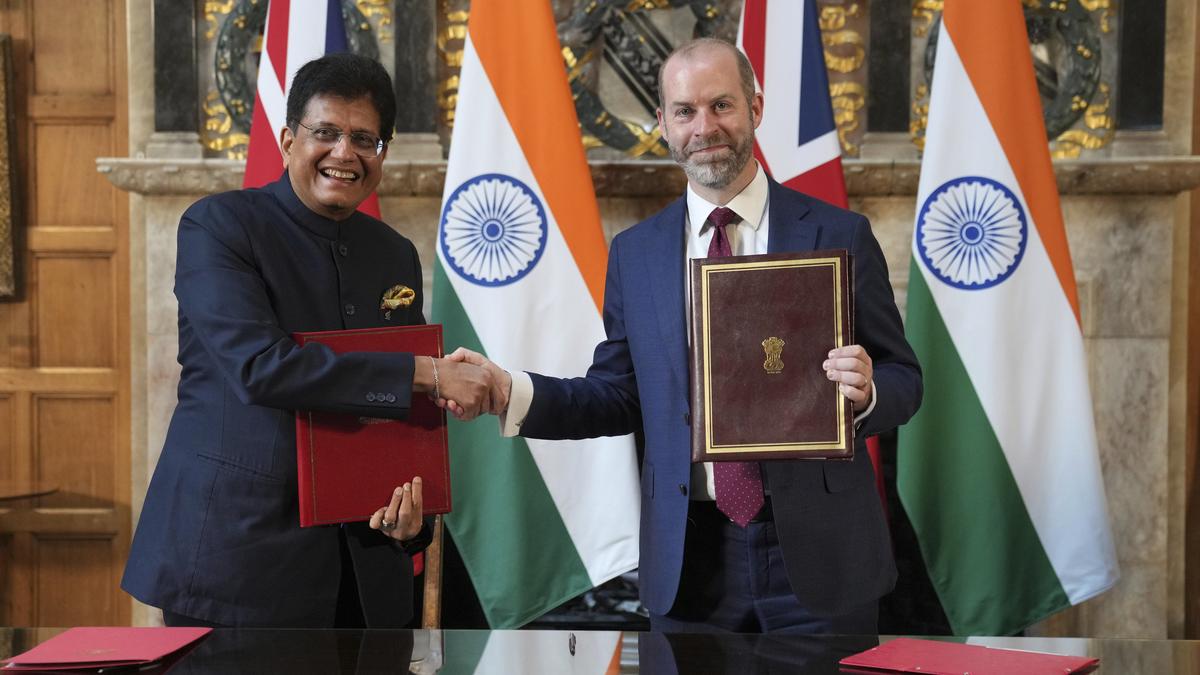
The India-United Kingdom Comprehensive Economic and Trade Agreement (CETA) raises several questions regarding India’s commitments in the CETA’s intellectual property chapter (Chapter 13). A problematic article in this chapter is Article 13.6, “Understandings Regarding TRIPS and Public Health Measures”, in particular its first paragraph: “The Parties recognise the preferable and optimal route to promote and ensure access to medicines is through voluntary mechanisms, such as voluntary licensing which may include technology transfer on mutually agreed terms” (http://bit.ly/46zLEzj).

India’s agreeing to this provision would result in dilution of its position on two critical issues. First, India consistently backed the use of compulsory licensing as opposed to voluntary licensing, to address high prices of patented medicines. Second, India argued that advanced countries must transfer technologies to developing countries on “favourable terms”, for their industrialisation, and also for reducing their carbon footprints.

EXPLAINED | What does the new U.K.-India trade deal entail?

Issue of pricing

High prices of patented medicines are a serious anomaly of the patent system, due to excessive rent-seeking by patentees. Compulsory licensing of patented medicines can vastly improve the affordability of high-priced medicines by facilitating the production of such medicines. This was experienced following the grant of compulsory licence to Natco Pharma in 2012 for producing an anti-cancer medicine, sorafenib tosylate. The price came down to less than ₹8,800 for a month’s treatment, from the ₹2,80,428 charged by the owner of the patent on the medicine, Bayer Corporation (http://bit.ly/4lVTc4l).

For remedying such instances of excessive rent-seeking, India’s law-makers included compulsory licensing as a key safeguard while amending the Patents Act to make it compatible with the World Trade Organization’s (WTO) Agreement on Trade Related Aspects of Intellectual Property Rights (TRIPS). Both Houses of the Parliament unanimously adopted this legislation after a Joint Parliamentary Committee had carefully considered its provisions (http://bit.ly/4l7Z1uh).

Also Read | India, U.K. sign trade deal, PMs launch new partnership framework

Grant of compulsory licence

India’s TRIPS-consistent Patents Act allows grant of compulsory licence to anyone interested in producing a patented product in India, three years after the grant of a patent. This licence can be granted if: reasonable requirements of the public with respect to the patented invention are not satisfied; or the patented invention is not available to the public at reasonably affordable price, or the patented invention is not “worked” in the territory of India, implying, it has not been commercially exploited in the country (http://bit.ly/4lTSBjI).

Patent rules monitor “working” requirement and, accordingly, patentees must submit the working status of their inventions. They had to do so annually until this requirement was diluted through India’s FTA with the European Free Trade Association, with India agreeing that the periodicity of reporting “shall not be less than 3 years” (http://bit.ly/4o4NCxU). This dilution, has now been reinforced through the CETA, and it takes away an important ground for issuing compulsory licences.

By backing voluntary licensing to address the problem of access to medicines, India has, de facto, given up its position as a strong votary of compulsory licensing in the WTO. A coalition of developing countries, including India earned the right to issue compulsory licences through the Doha Declaration on the TRIPS Agreement and Public Health in 2001, despite strident opposition from advanced countries. The Declaration emphasised, “each Member has the right to grant compulsory licences and the freedom to determine the grounds upon which such licences are granted” (http://bit.ly/3IUwjiW).

Voluntary licences cannot ensure access to affordable medicines due to the weak bargaining position of domestic companies in developing countries vis-à-vis dominant pharmaceutical corporations. Médecins Sans Frontières (MSF), a medical humanitarian organisation, observed that using the terms of voluntary licences, pharmaceutical corporations can set various limitations, including to control the supply of active pharmaceutical ingredients, besides imposing restrictions on licensees. Therefore, options for getting affordable access are compromised when voluntary licences are used (http://bit.ly/3U0j6aQ). The MSF’s observations were proven when Cipla produced the anti-COVID drug, remdesivir, in India under a voluntary licence from Gilead Sciences, the owner of the patent on the medicine. The price of remdesivir fixed by Cipla for India was, in purchasing power terms, higher than that Gilead had charged in the United States.

COMMENT | The India-U.K. FTA spells a poor deal for public health

India’s demand will be affected

The CETA undermines India’s demand for technology transfer “on favourable terms” in several multilateral forums. This demand was first made through the United Nations General Assembly Resolution on the New International Economic Order (NIEO) in 1974. A key aspect of the NIEO was the call for facilitated technology transfer from advanced to developing countries to promote the industrialisation efforts of the developing countries (http://bit.ly/41ejRRl). However, despite their best efforts, little progress was seen regarding technology transfer.

The disappointment of developing countries was reflected in India’s Fourth Biennial Update Report to the United Nations Framework Convention on Climate Change in 2024: “Despite substantial national efforts and investments, barriers like slow international technology transfer and intellectual property rights (IPR) hinder the rapid adoption of [climate friendly] technologies” (http://bit.ly/3H1ITfU).

As India has compromised its long-held position that technology transfer to developing countries must be on “favourable terms”, its demand for climate-friendly technologies from advanced countries could lose its sting.

Biswajit Dhar is former Professor of Economics at the Jawaharlal Nehru University. K.M. Gopakumar is Senior Researcher and Legal Adviser, Third World Network

Published – August 04, 2025 12:48 am IST


Source link

Business Tags:access to medicines, affordability of high-priced medicines, Agreement on Trade Related Aspects of Intellectual Property Rights, anti-COVID drug remdesivir, CETA’s intellectual property chapter, Compulsory licensing of patented medicines, Doha Declaration on the TRIPS Agreement and Public Health, European Free Trade Association, high prices of patented medicines, India-United Kingdom Comprehensive Economic and Trade Agreement, India’s Fourth Biennial Update Report to the United Nations Framework Convention on Climate Change, India’s TRIPS-consistent Patents Act, Médecins Sans Frontières, production of medicines, technology transfer, Understandings Regarding TRIPS and Public Health Measures, United Nations General Assembly Resolution on the New International Economic Order, use of compulsory licensing, voluntary licensing, World Trade Organization

Post navigation

Previous Post: Seeds of seabuckthorn, Himalayan buckwheat part of experiment on ISS
Next Post: U.S. stocks and tax implications in India

Related Posts

  • Access Denied Business
  • Q2 slowdown hit India Inc.’s Q3 investments
    Q2 slowdown hit India Inc.’s Q3 investments Business
  • Disappointing Q2 GDP numbers aren’t a blip but clear slowdown in economy: Jairam Ramesh
    Disappointing Q2 GDP numbers aren’t a blip but clear slowdown in economy: Jairam Ramesh Business
  • Access Denied Business
  • Access Denied Business
  • New tax regime ‘sweetened’ to benefit maximum number of taxpayers: CBDT Chairman
    New tax regime ‘sweetened’ to benefit maximum number of taxpayers: CBDT Chairman Business

More Related Articles

Access Denied Business
Textiles and garment exports fall 2.2% in 2025-26: Global Trade Research Initiative Textiles and garment exports fall 2.2% in 2025-26: Global Trade Research Initiative Business
NPCI inks pact with Bank of Namibia for developing UPI-like instant payment system NPCI inks pact with Bank of Namibia for developing UPI-like instant payment system Business
SiteLock

Archives

  • May 2026
  • April 2026
  • March 2026
  • February 2026
  • January 2026
  • December 2025
  • November 2025
  • October 2025
  • September 2025
  • August 2025
  • July 2025
  • June 2025
  • May 2025
  • April 2025
  • March 2025
  • February 2025
  • January 2025
  • December 2024
  • November 2024
  • October 2024
  • September 2024
  • August 2024
  • July 2024
  • June 2024
  • May 2024
  • April 2024
  • March 2024
  • February 2024
  • January 2024
  • December 2023
  • November 2023
  • October 2023
  • September 2023
  • August 2023
  • July 2023
  • June 2023
  • May 2023
  • April 2023
  • March 2023
  • February 2023
  • January 2023
  • December 2022
  • November 2022
  • October 2022
  • September 2022
  • August 2022
  • July 2022
  • June 2022
  • May 2022

Categories

  • Business
  • Nation
  • Science
  • Sports
  • World

Recent Posts

  • Farmers’ body, Opposition seek immediate rollback of sugar export ban
  • Pope decries the rise of AI-directed warfare, saying it leads to a spiral of annihilation
  • MAHE and Griffith University expand India-Australia academic partnership with dual Ph.D programme
  • The cool crew in Chennai
  • Agree ‘100%’ with Xi Jinping that U.S. was on decline, but under Joe Biden: Donald Trump

Recent Comments

  1. Antoniomaida on UP Teacher Who Asked Students To Slap Muslim Classmate
  2. MichaelCom on UP Teacher Who Asked Students To Slap Muslim Classmate
  3. JamesMah on UP Teacher Who Asked Students To Slap Muslim Classmate
  4. JamesMah on UP Teacher Who Asked Students To Slap Muslim Classmate
  5. JamesMah on UP Teacher Who Asked Students To Slap Muslim Classmate
  • Part Of Kannauj Railway Station Collapses In UP, Dozens Feared Trapped
    Part Of Kannauj Railway Station Collapses In UP, Dozens Feared Trapped Nation
  • India tour of Australia: Australia PM XI vs Indian XI two-day warm-up match at manuka oval on november 30 2024
    India tour of Australia: Australia PM XI vs Indian XI two-day warm-up match at manuka oval on november 30 2024 Sports
  • Kuldeep Yadav Sledges Bangladesh Star in T20 World Cup Match, Internet Says “Took Revenge For Kohli”
    Kuldeep Yadav Sledges Bangladesh Star in T20 World Cup Match, Internet Says “Took Revenge For Kohli” Sports
  • Access Denied Business
  • Ferry Collision Death Count Rises To 14 As Body Of Passenger Missing Found
    Ferry Collision Death Count Rises To 14 As Body Of Passenger Missing Found Nation
  • After Bihar, Cops Find A Maharashtra Connection In NEET Paper Leak Case
    After Bihar, Cops Find A Maharashtra Connection In NEET Paper Leak Case Nation
  • Suresh Raina Recalls Sachin Tendulkar’s Advice During World Cup 2011 Quarterfinal Against Australia
    Suresh Raina Recalls Sachin Tendulkar’s Advice During World Cup 2011 Quarterfinal Against Australia Sports
  • Rahul Gandhi Leaves For Hathras, Will Meet Stampede Victims’ Families
    Rahul Gandhi Leaves For Hathras, Will Meet Stampede Victims’ Families Nation

Editor-in-Chief:
Mohammad Ariff,
MSW, MAJMC, BSW, DTL, CTS, CNM, CCR, CAL, RSL, ASOC.
editor@artifex.news

Associate Editors:
1. Zenellis R. Tuba,
zenelis@artifex.news
2. Haris Daniyel
daniyel@artifex.news

Photograher:
Rohan Das
rohan@artifex.news

Artifex.News offers Online Paid Internships to college students from India and Abroad. Interns will get a PRESS CARD and other online offers.
Send your CV (Subjectline: Paid Internship) to internship@artifex.news

Links:
Associate Journalism
About Us
Privacy Policy

News Links:
Breaking News
World
Nation
Sports
Business
Entertainment
Lifestyle

Registered Office:
72/A, Elliot Road, Kolkata - 700016
Tel: 033-22277777, 033-22172217
Email: office@artifex.news

Editorial Office / News Desk:
No. 13, Mezzanine Floor, Esplanade Metro Rail Station,
12 J. L. Nehru Road, Kolkata - 700069.
(Entry from Gate No. 5)
Tel: 033-46011099, 033-46046046
Email: editor@artifex.news

Copyright © 2023 Artifex.News Newsportal designed by Artifex Infotech.