



Skip to content
  • Facebook
  • X
  • Linkedin
  • WhatsApp
  • Associate Journalism
  • About Us
  • Privacy Policy
  • 033-46046046
  • editor@artifex.news
Artifex.News

Artifex.News

Stay Connected. Stay Informed.

  • Breaking News
  • World
  • Nation
  • Sports
  • Business
  • Science
  • Entertainment
  • Lifestyle
  • Toggle search form
  • IPL-17 | Have to look into areas we can work on, says Naveen
    IPL-17 | Have to look into areas we can work on, says Naveen Sports
  • It is time for government to double health budget: former health secretary Sujatha Rao
    It is time for government to double health budget: former health secretary Sujatha Rao Business
  • Sensex, Nifty slump 1% amid unabated foreign fund outflows, weak global trends
    Sensex, Nifty slump 1% amid unabated foreign fund outflows, weak global trends Business
  • Napoli Draw Hands Inter Milan Golden Opportunity To Lead Serie A Title Race
    Napoli Draw Hands Inter Milan Golden Opportunity To Lead Serie A Title Race Sports
  • U.S. Fed holds interest rates, now sees just one cut this year
    U.S. Fed holds interest rates, now sees just one cut this year Business
  • BCCI Hands Strict Deadline To Mohammed Shami, Gives Him Huge Condition For Return To Team India
    BCCI Hands Strict Deadline To Mohammed Shami, Gives Him Huge Condition For Return To Team India Sports
  • 50 people are injured by a ‘strong movement’ on a plane traveling from Australia to New Zealand
    50 people are injured by a ‘strong movement’ on a plane traveling from Australia to New Zealand World
  • Kidnapping At Gunpoint, Then 800-Km Drive: Faridabad Bank Manager Rescued
    Kidnapping At Gunpoint, Then 800-Km Drive: Faridabad Bank Manager Rescued Nation
India has world’s highest number of slum clusters in flood-prone areas

India has world’s highest number of slum clusters in flood-prone areas

Posted on July 29, 2025 By admin


Flooding events are a major hazard worldwide. According to a 2024 Moody’s report, more than 2.3 billion people are exposed to flooding every year. In India, more than 600 million people are at risk of coastal or inland flooding. However, there is a lack of comprehensive data on vulnerable communities’ flood exposure risk, especially in the Global South.

A new study has attempted to bridge exactly this gap by analysing satellite images of informal settlements or slum dwellings in 129 low- and middle-income countries and comparing them with maps of 343 well-documented large-scale floods.

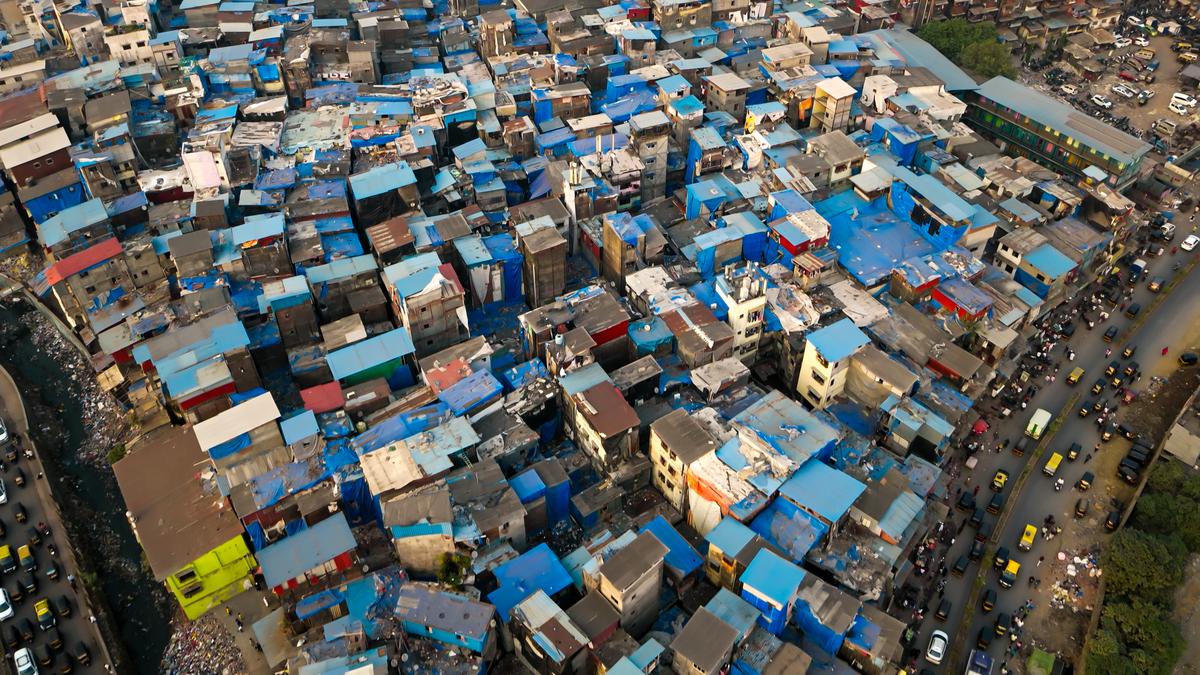
The study found that India has the world’s largest number of slum dwellers living in vulnerable settlements in floodplains — over 158 million, more than the population of Russia — with most of them concentrated in the naturally flood-prone delta of the Ganga river.

Watch | India has world’s highest number of slum clusters in flood-prone areas: Study

The largest concentrations and largest numbers of such people are in South Asian countries; northern India leads in absolute numbers, followed by Indonesia, Bangladesh, and Pakistan. Other notable ‘hotspots’ include Rwanda and its neighborhood, northern Morocco, and the coastal regions of Rio de Janeiro.

Overall, in the Global South, 33% of informal settlements, making up around 445 million people living in 908,077 households within 67,568 clusters, lie in areas that have already been exposed to floods. Countries like India and Brazil also have a disproportionately high number of floodplain settlements despite also having suffered many large floods.

The study, published in Nature Cities in July, highlights the lack of risk management strategies that prioritise vulnerable communities, including those that have already experienced floods, beyond population-level approaches.

Risk and settlement

The researchers classified human settlements as rural, suburban, and urban, and found that Latin America and the Caribbean had high rates of urbanisation (80%), and thus more than 60% of settlements were in urban areas. In contrast, Sub-Saharan Africa had the lowest rates of urbanisation and nearly 63% of informal settlements were rural. In Sierra Leone and Liberia, informal settlements hosted most of the population.

In India, at the time of the study, 40% of slum dwellers resided in urban and suburban areas.

People settle in, or are forced to settle in, floodplains due to a combination of factors including access to jobs, social vulnerability, and financial constraints. In India and Bangladesh, the low lying Gangetic delta and the large national population contribute to the numbers.

The study also highlighted inequities in access to resources and thus local responses to flooding. These vulnerable residents also suffer the loss of jobs and access to services among the indirect consequences of floods.

Exposed populations’ vulnerability was found to depend on socioeconomic factors like education level and institutional factors like flood insurance.

The authors of the study wrote that both slum-dwellers and non-slum residents live in floodplains around the world, but for different reasons. In wealthier regions like Europe, subsidised flood insurance premiums in high risk areas promotes the desirability of floodplain areas like beachfronts and water views.

Infrastructure like levies also exist to protect people and houses. However, in the Global South, flood zones offer cheaper land and housing, pushing low income households into more vulnerable areas.

Data reveal that patterns of informal settlements also have a distinct bias towards settling in floodplains, with slum dwellers being 32% more likely to settle in a floodplain than outside due to lower costs, as evidenced in cities like Mumbai and Jakarta. In fact, the higher the risk of flood, the higher the chance of people settling there.

“In cities like Bengaluru, there definitely is a very strong correlation between informal settlements and their vulnerability to flood,” Aysha Jennath, climate mobility researcher and post-doctoral fellow at the Indian Institute for Human Settlements, Bengaluru, said.

“Flood prone localities are not preferred by large builders for gated communities or IT parks, so those areas are available for migrant workers and informal settlements as they are cheaper.”

Informal settlements in such urban areas are typically tin-sheet, tent or tarp housing, with rent paid to owners through land contractors (“thekedars”).

SDG deadline looms

The researchers specified the need to act on flood vulnerability risk for poorer populations as the 2030 deadline for the United Nations’ Agenda for Sustainable Development Goals (SDGs) nears. The goals number 17, including eliminating poverty and hunger, availing clean water and sanitation, and taking climate action. They apply to all the UN’s member countries and focus on vulnerable communities.

The study also articulated the importance of taking a human-centric approach (instead of location-focused) to improve inadequate infrastructure.

Data show large concentrations of settlements in smaller areas, indicating gaps in housing, infrastructure, and basic services. Often, even gated communities gentrify flood-prone areas, pushing vulnerable communities to areas of higher risk exacerbated by failing infrastructure and lack of drainage, Jennath said.

“Real estate plays a huge role in how these informal settlements come up.”

Finally, the researchers also discussed the need for the government to collaborate with communities instead of banking only on traditional disaster preparedness. Skill improvement in areas like sanitation, waste management, and installing drainage systems could enhance the resilience to not just floods but also other risks like infectious disease, while providing jobs.

“These data-driven insights highlight the disproportionate flood exposure faced by slum dwellers in the Global South and underscore the need for just and equitable flood adaptation management,” they wrote.

The findings are also a proof-of-concept for using machine learning, which can process large quantities of data, to analyse satellite imagery and extract nuanced insights, like socioeconomic data embedded in population densities. As a follow-up, the authors have said they plan to study timewise processes such as slum expansion, climate change, and human migration to effectively predict future flood risk.

Sandhya Ramesh is a freelance science journalist.



Source link

Science

Post navigation

Previous Post: Procter & Gamble names operating chief Shailesh Jejurikar as CEO
Next Post: US-EU trade deal boosts dollar against major peers

Related Posts

  • 100 years of electroencephalography (EEG) in human medicine
    100 years of electroencephalography (EEG) in human medicine Science
  • Data | India tops AI projects in GitHub
    Data | India tops AI projects in GitHub Science
  • Boeing launches NASA astronauts for the first time after years of delays
    Boeing launches NASA astronauts for the first time after years of delays Science
  • How a Bronze Age rock became a ‘treasure map’ for researchers
    How a Bronze Age rock became a ‘treasure map’ for researchers Science
  • Studies zero in on biology TB bacteria use to evade immune response
    Studies zero in on biology TB bacteria use to evade immune response Science
  • Tonga volcano could cause unusual weather for rest of decade: study
    Tonga volcano could cause unusual weather for rest of decade: study Science

More Related Articles

Brains that don’t see in greyscale first over-rely on colours: Project Prakash study Brains that don’t see in greyscale first over-rely on colours: Project Prakash study Science
Green Humour by Rohan Chakravarty on State of India’s Birds 2023 report Green Humour by Rohan Chakravarty on State of India’s Birds 2023 report Science
CSIR-IICT scientists identify microalgae as a potential protein supplement CSIR-IICT scientists identify microalgae as a potential protein supplement Science
New measurements reveal the enormous halos shrouding all galaxies New measurements reveal the enormous halos shrouding all galaxies Science
Columbus was a Sephardic Jew from Western Europe, study finds Columbus was a Sephardic Jew from Western Europe, study finds Science
How do SIM cards work? | Explained How do SIM cards work? | Explained Science
SiteLock

Archives

  • August 2025
  • July 2025
  • June 2025
  • May 2025
  • March 2025
  • February 2025
  • January 2025
  • December 2024
  • November 2024
  • October 2024
  • September 2024
  • August 2024
  • July 2024
  • June 2024
  • May 2024
  • April 2024
  • March 2024
  • February 2024
  • January 2024
  • December 2023
  • November 2023
  • October 2023
  • September 2023
  • August 2023
  • July 2023
  • June 2023
  • May 2023
  • April 2023
  • March 2023
  • February 2023
  • January 2023
  • December 2022
  • November 2022
  • October 2022
  • September 2022
  • August 2022
  • July 2022
  • June 2022
  • May 2022

Categories

  • Business
  • Nation
  • Science
  • Sports
  • World

Recent Posts

  • Access Denied
  • Access Denied
  • OpenAI establishes Indian unit, plans to open office in New Delhi
  • Access Denied
  • Access Denied

Recent Comments

  1. dfb{{98991*97996}}xca on UP Teacher Who Asked Students To Slap Muslim Classmate
  2. "dfbzzzzzzzzbbbccccdddeeexca".replace("z","o") on UP Teacher Who Asked Students To Slap Muslim Classmate
  3. 1}}"}}'}}1%>"%>'%> on UP Teacher Who Asked Students To Slap Muslim Classmate
  4. bfg6520<s1﹥s2ʺs3ʹhjl6520 on UP Teacher Who Asked Students To Slap Muslim Classmate
  5. pHqghUme9356321 on UP Teacher Who Asked Students To Slap Muslim Classmate
  • India Badminton Star Sivarajan Solaimalai’s ‘Flying Return’ At Paralympics Is Viral. Watch
    India Badminton Star Sivarajan Solaimalai’s ‘Flying Return’ At Paralympics Is Viral. Watch Sports
  • Israel parliament votes to oppose Palestinian state
    Israel parliament votes to oppose Palestinian state World
  • Noida Man Charged For Uploading Dawood Ibrahim’s Photo On Social Media
    Noida Man Charged For Uploading Dawood Ibrahim’s Photo On Social Media Nation
  • The Science Quiz | The solar cycle
    The Science Quiz | The solar cycle Science
  • War, Not Money, Dominates Saudi Arabia’s Major Investor Summit
    War, Not Money, Dominates Saudi Arabia’s Major Investor Summit World
  • Delhi Man Dies Weeks Before Wedding As Wagon R Goes Up In Flames
    Delhi Man Dies Weeks Before Wedding As Wagon R Goes Up In Flames Nation
  • Sharath Kamal To Be India’s Flag Bearer, Mary Kom Appointed Chef De Mission For Paris Olympics
    Sharath Kamal To Be India’s Flag Bearer, Mary Kom Appointed Chef De Mission For Paris Olympics Sports
  • INDIA Bloc Turns On Congress After Haryana, J&K Results
    INDIA Bloc Turns On Congress After Haryana, J&K Results Nation

Editor-in-Chief:
Mohammad Ariff,
MSW, MAJMC, BSW, DTL, CTS, CNM, CCR, CAL, RSL, ASOC.
editor@artifex.news

Associate Editors:
1. Zenellis R. Tuba,
zenelis@artifex.news
2. Haris Daniyel
daniyel@artifex.news

Photograher:
Rohan Das
rohan@artifex.news

Artifex.News offers Online Paid Internships to college students from India and Abroad. Interns will get a PRESS CARD and other online offers.
Send your CV (Subjectline: Paid Internship) to internship@artifex.news

Links:
Associate Journalism
About Us
Privacy Policy

News Links:
Breaking News
World
Nation
Sports
Business
Entertainment
Lifestyle

Registered Office:
72/A, Elliot Road, Kolkata - 700016
Tel: 033-22277777, 033-22172217
Email: office@artifex.news

Editorial Office / News Desk:
No. 13, Mezzanine Floor, Esplanade Metro Rail Station,
12 J. L. Nehru Road, Kolkata - 700069.
(Entry from Gate No. 5)
Tel: 033-46011099, 033-46046046
Email: editor@artifex.news

Copyright © 2023 Artifex.News Newsportal designed by Artifex Infotech.