






Abhay Karandikar, Secretary, Department of Science & Technology (DST):
The Budget provides an overall and possibly unprecedented thrust on research and innovation by setting aside Rs 20,000 crore for DST towards research in the private sector, including corporates and startups.
There is a focused attempt to bring together academia, private sector and startups to work on national missions, such as the AI and quantum missions already underway, and the newly announced nuclear mission (to set up small and modular reactors), the geospatial mission, and others.
Abhay Karandikar delivering an address at KLE Technological University, Hubballi/
| Photo Credit:
Kiran Bakale/The Hindu
A key focus of the funding trend is to boost research, development and innovation. The dedicated fund of Rs 20,000 crore is part of the Rs 1 lakh crore corpus fund announced in the budget of July 2024 to boost private sector R&D, especially in deeptech and sunrise sectors. DST will be the nodal ministry driving this fund. This will be a major step towards creating strategic autonomy in some key technology sectors.
The National Geospatial Mission has been announced with an allocation of Rs 100 crore for FY 2025-2026 to develop foundational geospatial infrastructure and data. The mission will help implement the National Geospatial Policy 2022, notified by DST with the goal of expanding the access and use of geospatial data and making India a world leader in the geospatial sector.
The Union Finance Minister has also announced several initiatives to boost science, technology, and innovation in the country including the Nuclear Energy Mission, initiatives in clean tech, Atal Tinkering Labs, and the Centre of Excellence on AI in Education.
Rajesh Gokhale, Secretary, Department of Biotechnology (DBT):
The Union Budget demonstrates a strong commitment to advancing India’s biotechnology sector, aligning closely with the DBT’s objectives. The Rs 3,446.64 crore allocation reflects a significant increase of 51.45%from the previous year’s allocation.
An allocation of Rs 20,000 crore has been designated to support private-sector-driven research. Recently, the government also approved the ‘Bio-RIDE’ scheme to foster innovation, promote bio-entrepreneurship, and strengthen India’s position as a global leader in biomanufacturing and biotechnology.
The Budget introduces several initiatives that align closely with DBT’s mission to advance India’s biotechnology sector. The support for private sector research is expected to accelerate advancements in areas such as gene-editing, personalised medicine, and sustainable agriculture.
Rajesh Gokhale
| Photo Credit:
File photo
The proposal for a light-touch regulatory framework based on principles and trust is a progressive step. Simplifying regulations and updating outdated laws will enhance the ease of conducting biotech research and development, facilitating faster translation of scientific discoveries into market-ready solutions.
The National Mission on High Yielding Seeds will focus on strengthening the research ecosystem and developing high-yielding, pest-resistant, and climate-resilient seeds, aligning with DBT’s efforts in agricultural biotechnology.
Aligned with the government’s ‘BioE3 Policy’ for fostering high-performance biomanufacturing, the National Manufacturing Mission (NMM) announced in the Budget aims to accelerate technology development and commercialisation. Additionally, it will drive the expansion of India’s skilled workforce and boost job creation. Efforts are already underway to implement the BioE3 Policy in support of the NMM.
Similarly, some of DBT’s initiatives contribute to self-reliance programmes, such as the mission on minor oil seeds (with identification of new genes/alleles for linseed, sesame, niger, and safflower for accelerated genetic improvement, productivity enhancement, and sustainability). Another is a mission programme on “Characterisation of Genetic Resources”, to sequence/re-sequence and characterise available germplasm resources of pulses such as chickpea.
N. Kalaiselvi, Director-General, Council of Scientific and Industrial Research (CSIR):

N. Kalaiselvi
| Photo Credit:
File photo/The Hindu
The Union Budget reinforces science, technology, and innovation (STI) as key enablers of national progress, aligning with CSIR’s vision of advancing self-reliance and global competitiveness. The budget’s focus on public-private partnerships, industry collaboration, and technology-driven entrepreneurship will accelerate innovation in manufacturing, healthcare, sustainability, and strategic sectors.
For agriculture and rural prosperity, CSIR’s Aroma and Floriculture Missions align with the Agri-Districts Initiative, promoting value-added farming and boosting farmer incomes. Similarly, CSIR’s Millets Mission supports self-reliance in pulses and oilseeds, ensuring nutritional security and climate-resilient farming. The CSIR Cotton Mission aligns with the National Cotton Mission, strengthening India’s position in global textile markets.
The Indigenous Manufacturing and Smart Packaging Missions finds synergy with the NMM, driving innovation-led industrial growth. The Green Hydrogen Mission, spearheaded by CSIR, supports the clean energy transition.
For youth-skilling, CSIR’s Jigyasa Programme complements the Atal Tinkering Labs, fostering STEM education and research exposure. The Seaweed Mission and Learn & Earn Program empower women entrepreneurs, supporting economic inclusion. Additionally, CSIR’s Footwear for Healthcare and India Footwear Sizing Program align with the leather sector initiatives.
This budget cements CSIR’s pivotal role in nation-building and reinforces STI as the foundation for a self-reliant, inclusive, and globally competitive India.
K.S. Parthasarathy, former Secretary, Atomic Energy Regulatory Board (AERB):
I was one among a handful of officers who joined a nascent AERB and was its secretary for nearly 17 years, almost entirely its entire formative years.
The Central government’s ambitious programme to enhance the share of nuclear power to 100 GWe by 2047 and to invest heavily to support associated R&D is challenging to all stakeholders. Accepting private sector participation in the nuclear sector adds a new dimension to the programme. Success in the project to develop and install small modular reactors (SMRs) is essential in India’s energy transition. As per the IAEA, SMRs are nuclear reactors of power generating capacity 300 MWe equivalent or less.
The AERB has implemented measures to regulate the safety of VVER Russian reactors, pressurised heavy water reactors of 700 MWe, the prototype fast breeder reactor, etc., all of which include first of the kind technologies.
AERB’s reports to the IAEA Convention of Nuclear Safety reveal how openly and transparently it has been fulfilling its mandate. AERB staff updates its knowledge and expertise in safety-related disciplines associated with new technologies. It has linkages with the US Nuclear Regulatory Commission and the French regulatory agency among others, and exchanges its experience regularly.
C.P. Rajendran, National Institute for Advanced Studies:
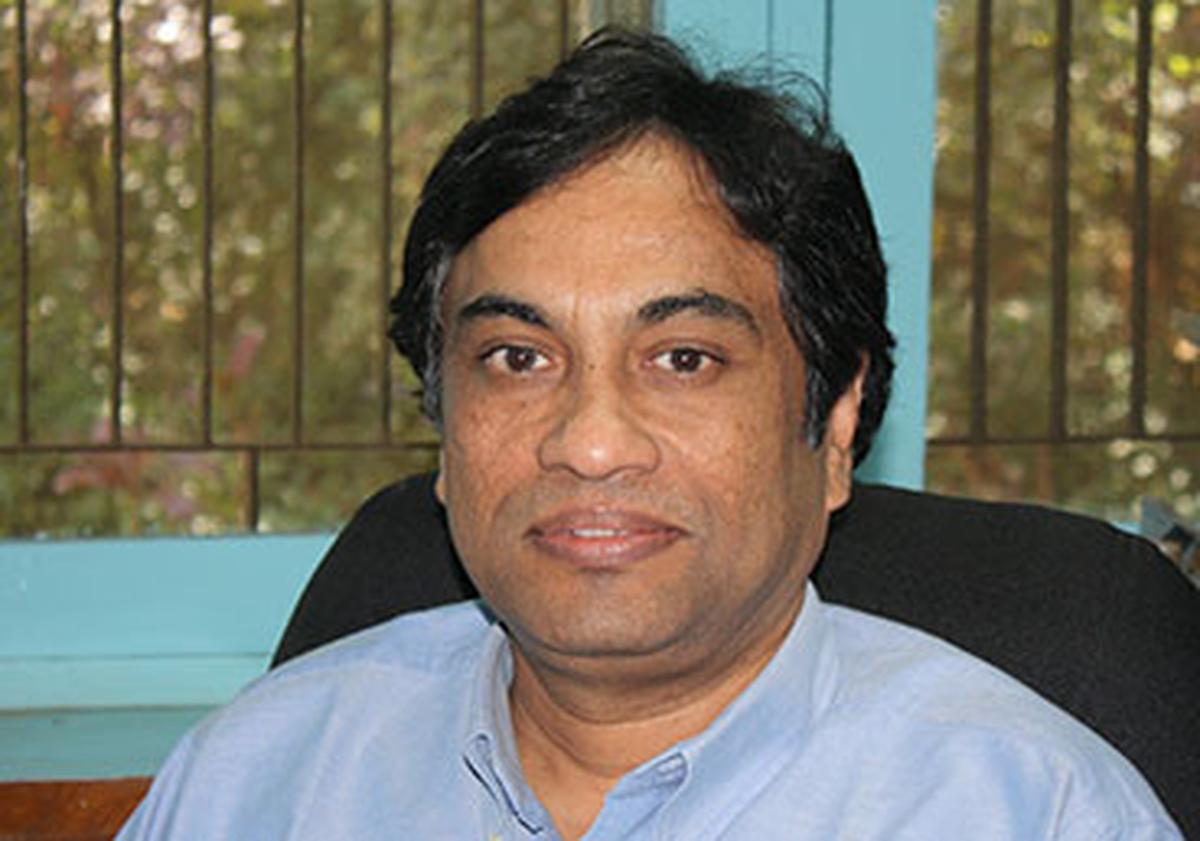
C.P. Rajendran
| Photo Credit:
File photo
The Budget indicates a significant influx of funding for science and technology, as well as for the DBT, whereas the allocation for the Department of Scientific and Industrial Research is nominal. Beyond the fine print, the less obvious factors will take time to surface.
Overall, two key points emerge: the importance of curiosity-driven science does not seem to be a major priority. Much of the funding appears directed towards mission-mode programmes such as nuclear energy, AI, the Jal Jeevan Mission, and private sector initiatives, among others. The government also plans to amend the Nuclear Liability and Damage Act 2010, which makes operators liable for nuclear damage. This will have serious ramifications. Many experts have raised concerns about SMRs.
The Finance Minister also announced the expansion of the Small Industries Development Bank of India Fund for Startups with an additional Rs 10,000 crore corpus to enhance the “deeptech ecosystem” in startups focused on AI, biotech, and space technology. India has many deeptech startups, with over 3,600 in 2023. In that year, they raised $850 million, reflecting a 77% decrease from 2022 due to investors’ lack of confidence regarding investment returns. It seems the increase in funding will primarily benefit technology development.
Curiosity-driven research is the type of research propelled by scientists’ curiosity regarding specific research questions and investigation methods that require creativity. What I observe is a growing corporatisation of science driven solely by immediate utility. Another critical issue is the rigid bureaucracy surrounding funding, which has created significant problems over the years.
Tapasya Srivastava, head, Department of Genetics, University of Delhi South Campus:
The Budget brings forth cheer to meet the increasing need of health research and biomedical devices given the recent Economic Survey report that recognised physical and mental harms of ultra-processed food leading to non-communicable diseases.
The government continues to show excellent commitment to research, development and innovation through the Ministry of Science and Technology. Following up on the R&D fund last year, this year’s budget has made an allocation of Rs 20,000 crore towards the fund. This corpus has taken the Ministry’s allocation from Rs 8,029 crore last year to Rs 28,508 crore this year.
The percentage increase from revised estimates 2024-2025 to budget estimates 2025-2026 to Central universities (4.3%) is about half of that given to IITs (8.4%), which is disappointing given the number of students and the overhauling with respect to the National Education Policy (NEP) that universities are going through. These changes require unprecedented support from the government, which is not evident looking at these numbers.
It would have been more meaningful if the Prime Minister’s Research Fellowship became an interim research fellowship of a reasonable amount that replaces the abysmally low Rs-8000 non-NET UGC. The PMRF is competitive and is given mostly to labs sufficiently endowed with their own funding.
The AI bandwagon is something that all governments seem to want to rush into. The allocation has come into the Centre of Excellence in AI education and therefore one hopes the Centre of Excellence also sets benchmarks for adoption in a way that truly benefits Indian society, beyond buzzwords.
The Annual Status of Education Report 2024 shows some of the highest enrolment in a decade, not only recovering from COVID-19 decline but exceeding expectations.
With a significant number of youth struggling with mental health issues, overall health decline, reduced attention span and consumerism, the unprecedented advantage of a steady government for thoughtful implementation of value-based learning and life skills in school education to bring generational changes, appears to have been lost.
Soumitro Banerjee, Professor, Department of Physical Sciences, Indian Institute of Science Education and Research, Kolkata:
The Union Budget lacks the vision to create a scientific India. The scientific community of India is dismayed to see the low financial allocation to sectors crucial for the country’s scientific development. The NEP-2020, adopted by the same government, recommended the expenditure on education be 6% of the GDP, which requires at least 10% of the Union Budget to be spent on education.
But since 2020, there has been no attempt to meet this target. This year the allocation is only 2.54%. This implies that through NEP-2020, the government is trying to change the structure and content of education without improving its quality. The direction of change is clear from the five-fold increased outlay for ‘Indian Knowledge Systems’.
Basic science research has taken a backseat as the funding for IISc and the IISERs has been reduced. The UGC, which funds all universities, saw a drastic reduction in its budget last year (from Rs 5,360 crore to Rs 2,500 crore). Despite some increase this year (Rs 3,336 crore), it is far below the pre-2024 figure. As a result the condition of research in universities will continue to be dismal.
In order to see the vision of a scientific India come to fruition, the need of the day is a significantly larger outlay in scientific and technological research to the extent of 3% of the GDP and an increase in the education budget to 6% of the GDP.
T.V. Padma is a science journalist in New Delhi.
Published – February 11, 2025 06:00 am IST