
Skip to content
  • Facebook
  • X
  • Linkedin
  • WhatsApp
  • Associate Journalism
  • About Us
  • Privacy Policy
  • 033-46046046
  • editor@artifex.news
Artifex.News

Artifex.News

Stay Connected. Stay Informed.

  • Breaking News
  • World
  • Nation
  • Sports
  • Business
  • Science
  • Entertainment
  • Lifestyle
  • Toggle search form
  • Germans mourn attack on Christmas market with no answers about why World
  • IISc announces distinguished alumni awards for 2023 Science
  • Himanta Sarma After Trump Shot At Nation
  • Malayalam Actor M Mukesh Ready To Cooperate With Sex Abuse Probe, Says Lawyer Nation
  • Donald Trump To Make History With Two State Visits Hosted By Britain’s Royal Family World
  • 4 Arrested For Allegedly Defacing Flag Of Israel In Mumbai Nation
  • Himachal Pradesh Records 3rd Driest November In Over 100 Years Nation
  • Body Of Ex Professor GN Saibaba To Be Donated To Hospital Like He Wanted: Family Nation

IIT Bombay researchers find a technique to measure degradation of iron coatings

Posted on February 6, 2025 By admin


A team of researchers at the Indian Institute of Technology (IIT) – Bombay have come up with a new technique that can measure the rate of iron coating degradation. This discovery claims to hold the potential of benefiting the steel industry. Metals corrode with time, and some metals corrode more than others, like iron rusts in days, while gold and silver take decades or centuries to deteriorate. According to a recent market analysis report by Grand View Research, the market for such corrosion inhibitors is a $8.93 billion market projected to grow at 3.6% annually from 2025 to 2030.

Metals often have a layer of protective coating, like the paint on cars, to prevent corrosion. A more efficient way of protecting metals is by coating them with organic coatings that are basically layers of carbon-based polymeric substances, natural or synthetic, applied in the form of paints and varnishes. However, the efficiency of organic coatings deteriorates with time because the coatings have pores and defects that allow water and oxygen to reach the underlying metal surface over time and corrode it.

The coating wears with time because of a fundamental electrochemical process called oxygen reduction reaction (ORR), where molecular oxygen gets reduced to water or hydrogen peroxide or hydroxyl ions. This process occurs in various electrochemical devices, including fuel cells and metal-air batteries.

A couple of years ago, a team of researchers led by Professor Vijayshankar Dandapani at the Department of Metallurgical Engineering and Materials Science at IIT Bombay established an improved quantitative method to characterise the performance of organic coatings used for corrosion protection. The researchers combined hydrogen permeation-based potentiometry (HPP) with electrochemical impedance spectroscopy (EIS) and this technique allowed the researchers to quantify the degradation rates at the interface between the organic coating and the metal. While HPP gives a direct measure of hydrogen permeation, EIS provides insights into how hydrogen permeation corrodes the coated metal. 

Mr. Dandapani said, “The idea itself came from an attempt to find if a complementary technique such as EIS can be used to strengthen the interpretations from the HPP approach.”

In an earlier study, Mr. Dandapani said that the researchers provided proof-of-concept by measuring ORR at the interface between a model polymer coating and palladium metal using HPP and EIS. In this new study, the IIT Bombay’s team along with researchers from the University in Brest, France, have extended this application to an important industrial metal, iron.

This study received funding from the Indo-French Centre for Promotion of Advanced Research -CEFIPRA and the Science and Engineering Research Board (SERB), India.

“We coated a thin layer of iron on palladium membranes and coated the iron with a polymer called poly-methyl methacrylate (PMMA). They measured the rate at which oxygen reduction reaction occurred at the interface between PMMA and iron using HPP-EIS. They captured the current-potential (I(U)) curves and corresponding impedance values, which they found to be higher than that for a bare iron surface. High impedance values correspond to low corrosion rates and vice versa. The combined usage of HPP-EIS also gave a clearer picture of ORR happening at the interface between the iron surface and the organic coating, more than either of them could individually and validated the use of the HPP-EIS technique to evaluate ORR occurring at interfaces that one cannot easily study using the traditional methods because the interface between organic coatings and metals is buried and inaccessible,” Mr. Dandapani explained.

HPP-EIS is cost-effective because it requires only two potentiostats, simple electronic devices that control and measure the voltage between two electrodes. Mr. Dandapani said that HPP-EIS can be used to monitor how quickly the organic coating will give way for the iron to rust, and that the method would be of interest not only to the steel industry but will also be useful in the field of fuel cells and sensors.

With hydrogen blending becoming increasingly popular to reduce emissions from natural gas, one can also apply the HPP-EIS technique to determine how quickly the coat of paint on a natural gas pipeline, where hydrogen is blended with natural gas, degrades, Mr. Dandapani said highlighting a potential application.

Published – February 06, 2025 04:57 pm IST



Source link

Science Tags:Grand View Research, IIT Bombay, iit bombay iron coating degradation study, iron coating degradation, oxygen reduction reaction

Post navigation

Previous Post: SBI Q3 results: Net profit surges 84% to ₹16,891 crore
Next Post: Bharti Airtel profit soars more than 5-fold to ₹16,134 crore in Oct-Dec quarter

Related Posts

  • 95% of space-components in Indian rockets are indigenous: S Somanath Science
  • Taking away Fukushima’s melted nuclear gas will likely be tougher than the reduce of plant’s wastewater Science
  • Daily Quiz: On life and work of Isaac Newton Science
  • V. Narayanan assumes charge as new ISRO chief, succeeding S. Somanath Science
  • Unlocking the mind: Understanding memory to enhance learning Science
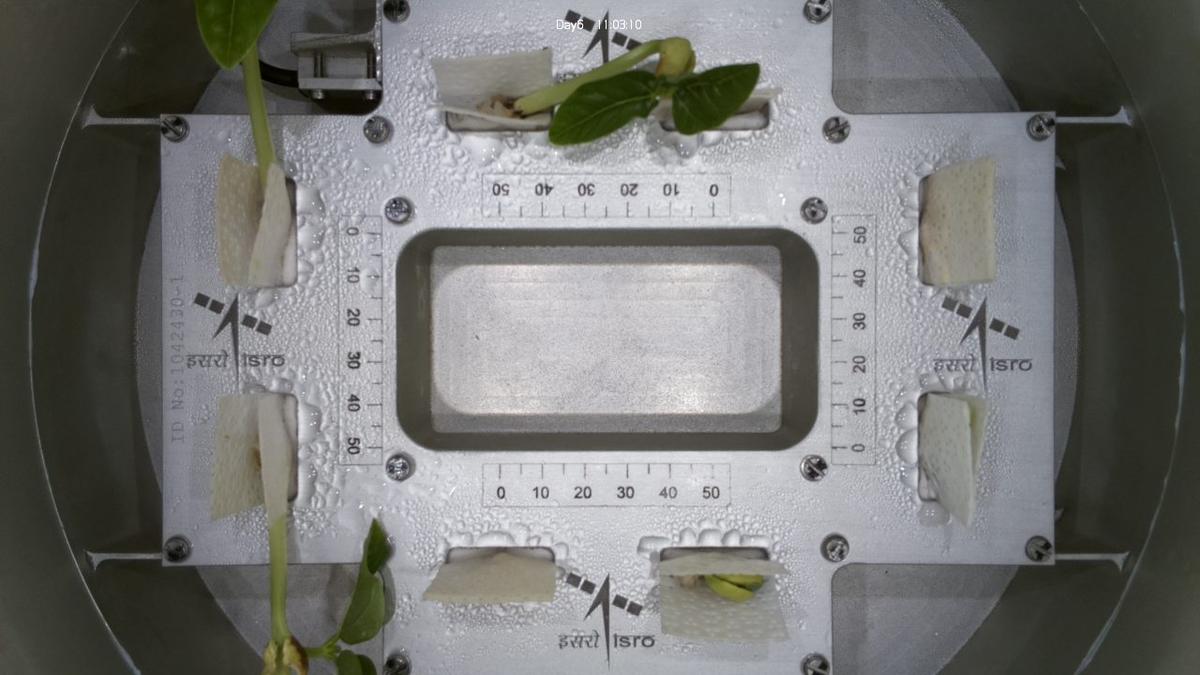
  • Cowpea sprouts unveil first leaves in space: ISRO shares images Science

More Related Articles

Cowpea sprouts unveil first leaves in space: ISRO shares images Science
Gaganyaan astronauts | IAF fighter pilots with distinguished service Science
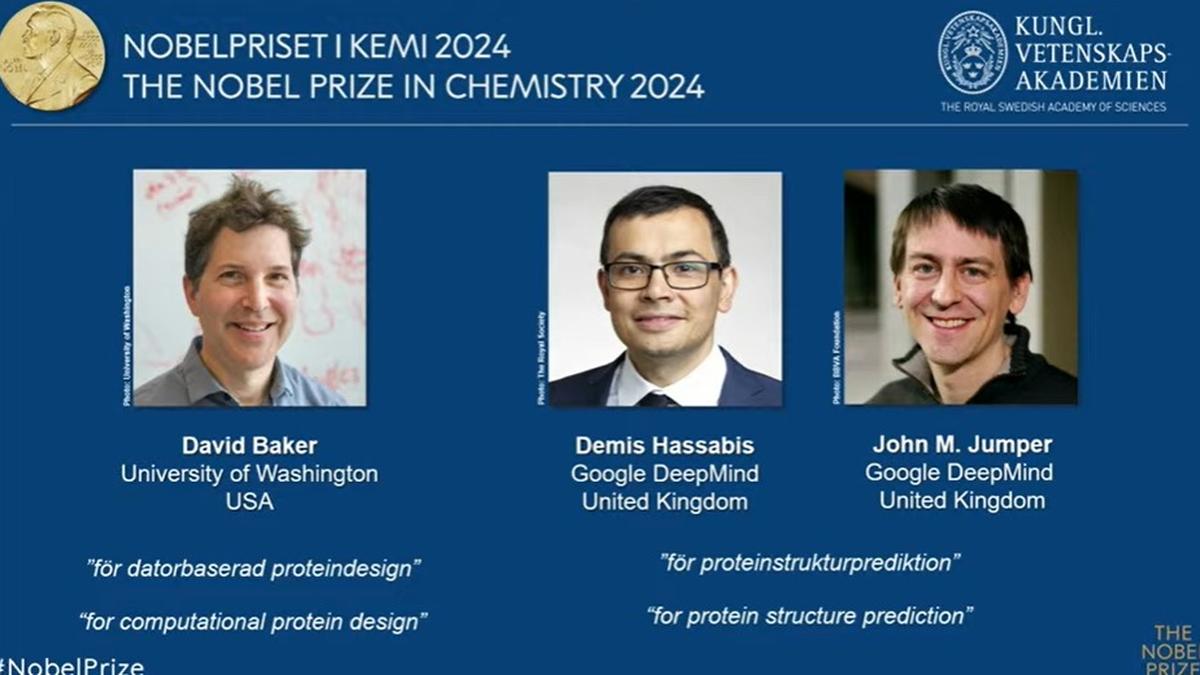
Nobel Prize in Chemistry 2024 awarded to David Baker, along with Demis Hassabis and John M. Jumper Science
Brown, botany, and Brownian motion Science
What are ceramics? Science
To boost ethanol production, Centre moots dedicated enzyme manufacturing Science
SiteLock

Archives

  • February 2025
  • January 2025
  • December 2024
  • November 2024
  • October 2024
  • September 2024
  • August 2024
  • July 2024
  • June 2024
  • May 2024
  • April 2024
  • March 2024
  • February 2024
  • January 2024
  • December 2023
  • November 2023
  • October 2023
  • September 2023
  • August 2023
  • July 2023
  • June 2023
  • May 2023
  • April 2023
  • March 2023
  • February 2023
  • January 2023
  • December 2022
  • November 2022
  • October 2022
  • September 2022
  • August 2022
  • July 2022
  • June 2022
  • May 2022

Categories

  • Business
  • Nation
  • Science
  • Sports
  • World

Recent Posts

  • Record Number Of Journalists Killed In 2024: Report
  • Over 2 Crore Devotees Take Holy Dip On Maghi Purnima
  • ODI Tri-Series: Mohammad Rizwan And Salman Agha Smash Tons As Pakistan Defeat South Africa In Record Chase
  • Trump, Putin agree to begin ‘negotiations’ on ending Ukraine war
  • $10 Million Settlement For Family Of Black Woman Shot Dead By US Police

Recent Comments

  1. dfb{{98991*97996}}xca on UP Teacher Who Asked Students To Slap Muslim Classmate
  2. "dfbzzzzzzzzbbbccccdddeeexca".replace("z","o") on UP Teacher Who Asked Students To Slap Muslim Classmate
  3. 1}}"}}'}}1%>"%>'%> on UP Teacher Who Asked Students To Slap Muslim Classmate
  4. bfg6520<s1﹥s2ʺs3ʹhjl6520 on UP Teacher Who Asked Students To Slap Muslim Classmate
  5. pHqghUme9356321 on UP Teacher Who Asked Students To Slap Muslim Classmate
  • Ex-Harrods Owner’s Son On Sex Abuse Claims Against Father World
  • Pankaj Advani Once Again The King Of Cue Sports In India In 2024 Sports
  • Sofas, ACs, Beds Missing From Official Bungalow Vacated By Tejashwi Yadav, Claims BJP Nation
  • Watch: Kagiso Rabada Sends Warning To India, Video Of Wicket Goes Viral Ahead Of T20 World Cup Final Sports
  • Bangladesh HC acquits ex-PM Khaleda Zia’s son in 2004 Hasina attack case World
  • ‘If PM Narendra Modi Agrees…’: Ex-Pakistan Star’s Blockbuster Take On India’s Champions Trophy Row Sports
  • No Maternity Leave In Madhya Pradesh State Schools, Claim Guest Teachers Nation
  • “Law, Order Being Made A Joke In Mumbai”: Baba Siddique’s Son Zeeshan Nation

Editor-in-Chief:
Mohammad Ariff,
MSW, MAJMC, BSW, DTL, CTS, CNM, CCR, CAL, RSL, ASOC.
editor@artifex.news

Associate Editors:
1. Zenellis R. Tuba,
zenelis@artifex.news
2. Haris Daniyel
daniyel@artifex.news

Photograher:
Rohan Das
rohan@artifex.news

Artifex.News offers Online Paid Internships to college students from India and Abroad. Interns will get a PRESS CARD and other online offers.
Send your CV (Subjectline: Paid Internship) to internship@artifex.news

Links:
Associate Journalism
About Us
Privacy Policy

News Links:
Breaking News
World
Nation
Sports
Business
Entertainment
Lifestyle

Registered Office:
72/A, Elliot Road, Kolkata - 700016
Tel: 033-22277777, 033-22172217
Email: office@artifex.news

Editorial Office / News Desk:
No. 13, Mezzanine Floor, Esplanade Metro Rail Station,
12 J. L. Nehru Road, Kolkata - 700069.
(Entry from Gate No. 5)
Tel: 033-46011099, 033-46046046
Email: editor@artifex.news

Copyright © 2023 Artifex.News Newsportal designed by Artifex Infotech.