


Skip to content
  • Facebook
  • X
  • Linkedin
  • WhatsApp
  • YouTube
  • Associate Journalism
  • About Us
  • Privacy Policy
  • 033-46046046
  • editor@artifex.news
Artifex.News

Artifex.News

Stay Connected. Stay Informed.

  • Breaking News
  • World
  • Nation
  • Sports
  • Business
  • Science
  • Entertainment
  • Lifestyle
  • Toggle search form
  • Access Denied
    Access Denied Nation
  • Access Denied World
  • Never imagined that I would represent the country at a World Cup: Deepesh Devendran
    Never imagined that I would represent the country at a World Cup: Deepesh Devendran Sports
  • Access Denied
    Access Denied Nation
  • Photos Of Emergency Alert On iPhones Go Viral. Here’s What It Is
    Photos Of Emergency Alert On iPhones Go Viral. Here’s What It Is Nation
  • Winning against India will be a shot in the arm for Sri Lanka: Pathirana
    Winning against India will be a shot in the arm for Sri Lanka: Pathirana Sports
  • Firefly Sparkle galaxy offers a taste of the infant Milky Way
    Firefly Sparkle galaxy offers a taste of the infant Milky Way Science
  • PM Modi To Address Meri Maati Mera Desh Culmination Event Tomorrow
    PM Modi To Address Meri Maati Mera Desh Culmination Event Tomorrow Nation
To boost ethanol production, Centre moots dedicated enzyme manufacturing

To boost ethanol production, Centre moots dedicated enzyme manufacturing

Posted on August 31, 2024 By admin


Days after the Centre unveiled its BioE3 policy to boost bio-technology-centric manufacturing in India, the Department of Biotechnology – as part of first steps – is contemplating setting up enzyme-manufacturing facilities to bolster ethanol production., according to scientists and officials with the Department of Biotechnology.

The first such plant may come up in Manesar, Haryana and will likely be a supplier to proposed 2G bio-ethanol plants in Mathura (Uttar Pradesh), Bhatinda (Punjab) and an existing plant in Panipat. Among other things, the BioE3 (Biotechnology for Economy, Environment and Employment) policy cleared by the Union Cabinet last week aims to set up ‘bio-foundries’ that will produce biotechnology-developed feedstock and catalysts.

The NITI Ayog estimates that India will need about 13.5 billion litres of ethanol annually by 2025–26. Of this, about 10.16 billion litres will go towards meeting the fuel-blending mandate of E20. ‘2G’ or second generation bioethanol is ethanol that is produced from rice-straw as opposed to the conventional method of sourcing it from molasses (sugarcane).

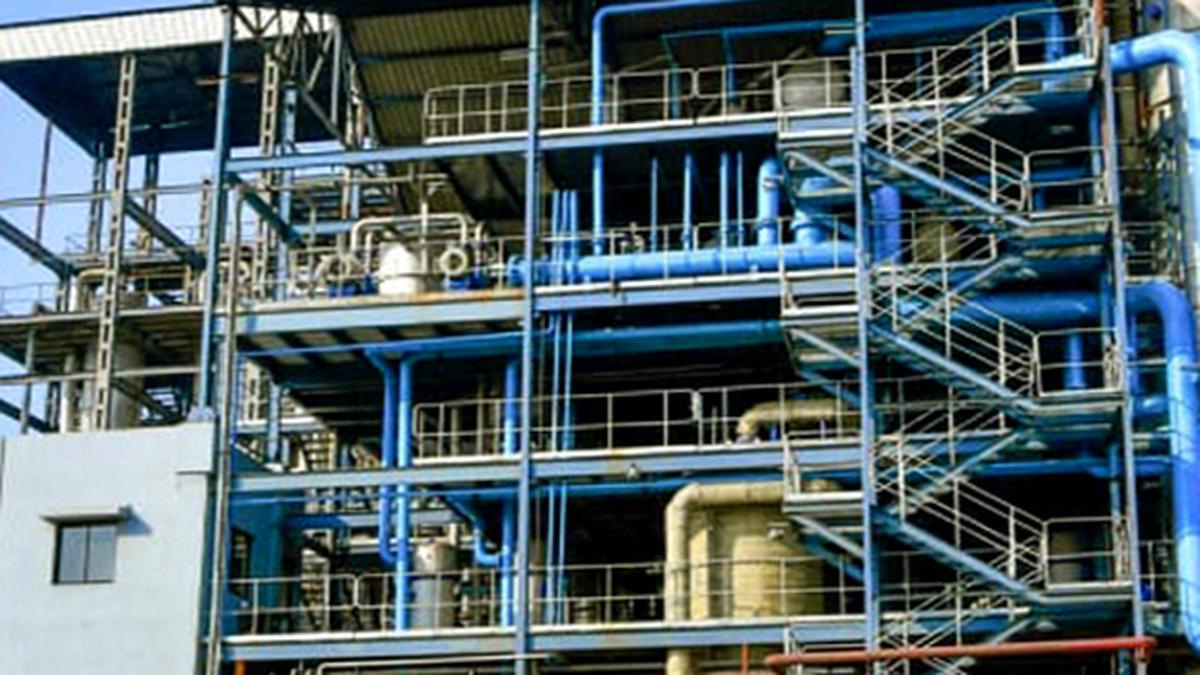
In 2022, the Indian Oil Corporation Ltd. set up a first-of-its-kind 2G ethanol plant in Panipat that uses rice stubble – whose burning spikes pollution in north India – as a feedstock. The plant, theoretically capable of producing 1,00,000 litres of ethanol a day runs at 30% capacity and needs 1,50,000 – 2,00,000 tonnes of rice straw per year, which is generated at the end of the sowing period in September-October.

However a critical ingredient to convert stubble into ethanol are a cocktail of enzymes and an appropriate treatment process. As of today, these enzymes are imported and constitute a significant component of the cost of the 2G-ethanol production process, said Dr. Ramesh Sonthi, Director, International Centre for Genetic Engineering and Biotechnology (ICGEB). “We have developed enzymes that are as good, if not better, than the ones currently used for the production of ethanol at Panipat. We have been able to show its efficacy in producing up to 15,000 litres of ethanol and are looking at scaling up,” Mr. Sonthi said.

Maharashtra-based Praj Industries, a leading industrial biotechnology company is the technology licensor (of enzymes from Danish Biotechnology company, Novozymes). That, alongside Praj’s “proprietary technology” (treatment) powers the ethanol refining plant at Panipat, according to a press release from 2022.

“We are now currently working with Praj and they have tested our enzyme and said it as good as the ones they use. They are going to work with us on techno-economic analysis as well as the building of plants,” Dr. Shams Yazdani, senior scientist at the ICGEB, whose research group has developed the enzymes, said. While still early days, a first step is to be able to produce at least 20,000 litres of ethanol at Panipat using the ICGEB-Praj processes.

The enyzmes in question are derived from tweaking a fungus that belongs to a broader family of fungii called Penicillium funoculosum.

However, it is only through several steps of genetic engineering that the fungus can be tweaked to produce the necessary enzymes in sufficient quantity that can then act as an efficient hydrolyser of organic refuse such as rice stubble.

EDITORIAL: ​Biotech enigma: On the BioE3 proposal and beyond

The fungus, which is found in soil and a part of the solid waste, in this case rice stubble, itself can be used to grow the fungi and secrete enzymes.

“It is a cell-free system with enzymes available now to digest the biomass. So eventually what you have after digestion is a free sugar, which can be fermented not only for ethanol but to make cosmetics, active pharmaceutical ingredients (APIs, or the base components of drugs),” said Yazdani.

He estimates that if India’s future ethanol needs – government policy currently mandates all petrol to be blended 20% with ethanol by 2025 – were to rely on locally developed enzymes it could mean a roughly 2/3rd reduction cost in procuring the enzymes.

OPINION: India’s ethanol conundrum

A report by the NITI Ayog on India’s ethanol blending programme estimates that a litre of ethanol requires 2.3 kg of rice, 2.6 kg of maize or 50 kg of sugarcane. Because these are key food crops, relying on them for fuel means using land for food for fuel. Secondly these crops are extremely water-guzzling. The recommendation thus is to rely on agriculture biomass, and further municipal solid waste, to serve as the feedstock for ethanol. Additionally, use agriculture residue as fuel sources, also translates to an alternate use of stubble that is otherwise burned by farmers to clear the land for cropping. This year Punjab alone is estimated to produce 20 million tonnes of rice stubble. A plant, even like the one at Panipat, can process at its maximum 2,00,000 tonnes.

Producing ethanol is one part of the larger BioE3 programme, which was approved by the Cabinet – though sans a budgetary outlay – last week. While the fossil fuel industry is the main source of a variety of consumer products at present and resulting in pollution and plastic pollution, BioE3 aims to leverage India’s capabilities and put it at the forefront of a global movement, already underway, away from fossil fuel and towards using biological organisms and biotechnology as the new sources of energy and consumer products, said Rajesh Gokhale, Secretary, Department of Biotechnology.



Source link

Science Tags:bioe3 policy, enzyme manufacturing in india, ethanol production in india

Post navigation

Previous Post: CBI To Court In UPSC Aspirants’ Death Case
Next Post: Question Mark On PCB Over Decision To Pay PKR 50 Lakh Each To Mentors For Champions Cup

Related Posts

  • Study brings lifestyle of enigmatic extinct humans into focus
    Study brings lifestyle of enigmatic extinct humans into focus Science
  • How is India planning to protect its satellites in space?
    How is India planning to protect its satellites in space? Science
  • Defined | Why did Chandrayaan-3 land at the close to facet of the moon?
    Defined | Why did Chandrayaan-3 land at the close to facet of the moon? Science
  • Scientists genetically modify ‘sexual’ fruit fly to reproduce asexually
    Scientists genetically modify ‘sexual’ fruit fly to reproduce asexually Science
  • Young anacondas use surprising S-shaped gait to make quick escapes
    Young anacondas use surprising S-shaped gait to make quick escapes Science
  • ‘Station’ in Ladakh begins research to simulate life on Moon, Mars
    ‘Station’ in Ladakh begins research to simulate life on Moon, Mars Science

More Related Articles

NISAR satellite mounted on GSLV for launch on July 30, 2025 NISAR satellite mounted on GSLV for launch on July 30, 2025 Science
How quantum algorithms solve problems that classical computers can’t How quantum algorithms solve problems that classical computers can’t Science
Karman Line: Where space begins Karman Line: Where space begins Science
Scans of seemingly empty space reveal black holes not far from earth Scans of seemingly empty space reveal black holes not far from earth Science
100 years of electroencephalography (EEG) in human medicine 100 years of electroencephalography (EEG) in human medicine Science
Space startup Agnikul raises ₹150 crore to fund reusable rockets Space startup Agnikul raises ₹150 crore to fund reusable rockets Science
SiteLock

Archives

  • May 2026
  • April 2026
  • March 2026
  • February 2026
  • January 2026
  • December 2025
  • November 2025
  • October 2025
  • September 2025
  • August 2025
  • July 2025
  • June 2025
  • May 2025
  • April 2025
  • March 2025
  • February 2025
  • January 2025
  • December 2024
  • November 2024
  • October 2024
  • September 2024
  • August 2024
  • July 2024
  • June 2024
  • May 2024
  • April 2024
  • March 2024
  • February 2024
  • January 2024
  • December 2023
  • November 2023
  • October 2023
  • September 2023
  • August 2023
  • July 2023
  • June 2023
  • May 2023
  • April 2023
  • March 2023
  • February 2023
  • January 2023
  • December 2022
  • November 2022
  • October 2022
  • September 2022
  • August 2022
  • July 2022
  • June 2022
  • May 2022

Categories

  • Business
  • Nation
  • Science
  • Sports
  • World

Recent Posts

  • ATS questions 57 in Maharashtra over alleged gangster network links
  • Nicobarese oppose proposal for three wildlife sanctuaries
  • Visakhapatnam Collector calls for inter-departmental synergy to boost investments
  • Kohli’s masterful knock powers Royal Challengers to the top
  • Senior IPS officer Asra Garg posted IGP Intelligence

Recent Comments

  1. RichardClage on UP Teacher Who Asked Students To Slap Muslim Classmate
  2. StevenLek on UP Teacher Who Asked Students To Slap Muslim Classmate
  3. Leonardren on UP Teacher Who Asked Students To Slap Muslim Classmate
  4. NathanQuins on UP Teacher Who Asked Students To Slap Muslim Classmate
  5. Davidgof on UP Teacher Who Asked Students To Slap Muslim Classmate
  • Access Denied Sports
  • Daily Quiz: International Day of Human Space Flight
    Daily Quiz: International Day of Human Space Flight Science
  • 4 Arrested For Trafficking Indians To Ukraine War Zone
    4 Arrested For Trafficking Indians To Ukraine War Zone Nation
  • Access Denied Sports
  • India set to transition to hyperlocal extreme weather forecasting
    India set to transition to hyperlocal extreme weather forecasting Science
  • 5 Devotees Killed As Speeding Truck Hits Them Outside Assam Temple: Cops
    5 Devotees Killed As Speeding Truck Hits Them Outside Assam Temple: Cops Nation
  • Access Denied
    Access Denied Nation
  • IPL RCB vs LSG | RCB top-order needs to make an explosive start
    IPL RCB vs LSG | RCB top-order needs to make an explosive start Sports

Editor-in-Chief:
Mohammad Ariff,
MSW, MAJMC, BSW, DTL, CTS, CNM, CCR, CAL, RSL, ASOC.
editor@artifex.news

Associate Editors:
1. Zenellis R. Tuba,
zenelis@artifex.news
2. Haris Daniyel
daniyel@artifex.news

Photograher:
Rohan Das
rohan@artifex.news

Artifex.News offers Online Paid Internships to college students from India and Abroad. Interns will get a PRESS CARD and other online offers.
Send your CV (Subjectline: Paid Internship) to internship@artifex.news

Links:
Associate Journalism
About Us
Privacy Policy

News Links:
Breaking News
World
Nation
Sports
Business
Entertainment
Lifestyle

Registered Office:
72/A, Elliot Road, Kolkata - 700016
Tel: 033-22277777, 033-22172217
Email: office@artifex.news

Editorial Office / News Desk:
No. 13, Mezzanine Floor, Esplanade Metro Rail Station,
12 J. L. Nehru Road, Kolkata - 700069.
(Entry from Gate No. 5)
Tel: 033-46011099, 033-46046046
Email: editor@artifex.news

Copyright © 2023 Artifex.News Newsportal designed by Artifex Infotech.