

Skip to content
  • Facebook
  • X
  • Linkedin
  • WhatsApp
  • YouTube
  • Associate Journalism
  • About Us
  • Privacy Policy
  • 033-46046046
  • editor@artifex.news
Artifex.News

Artifex.News

Stay Connected. Stay Informed.

  • Breaking News
  • World
  • Nation
  • Sports
  • Business
  • Science
  • Entertainment
  • Lifestyle
  • Toggle search form
  • What Trinamool Congress’s Abhishek Banerjee Said
    What Trinamool Congress’s Abhishek Banerjee Said Nation
  • Space startup Agnikul Cosmos raises ₹150 crore in fresh funding round at 0 million valuation
    Space startup Agnikul Cosmos raises ₹150 crore in fresh funding round at $500 million valuation Science
  • What PM Modi Discussed With Bill Gates
    What PM Modi Discussed With Bill Gates Nation
  • Access Denied Sports
  • Australia’s Great Barrier Reef in grip of ‘mass bleaching event’
    Australia’s Great Barrier Reef in grip of ‘mass bleaching event’ World
  • Man Kidnapped In Madhya Pradesh After Dispute, Forced To Drink Urine: Cops
    Man Kidnapped In Madhya Pradesh After Dispute, Forced To Drink Urine: Cops Nation
  • Fiscal discipline improved ‘progressively’; States having better tax positions: CEA in Economic Survey
    Fiscal discipline improved ‘progressively’; States having better tax positions: CEA in Economic Survey Business
  • Algeria has turned back 20,000 migrants to Niger this year: NGO
    Algeria has turned back 20,000 migrants to Niger this year: NGO World
Beyond tax cuts, a closer read of the Union Budget

Beyond tax cuts, a closer read of the Union Budget

Posted on February 2, 2025 By admin


‘The Budget’s policy announcements and fiscal plans need closer scrutiny’
| Photo Credit: ANI

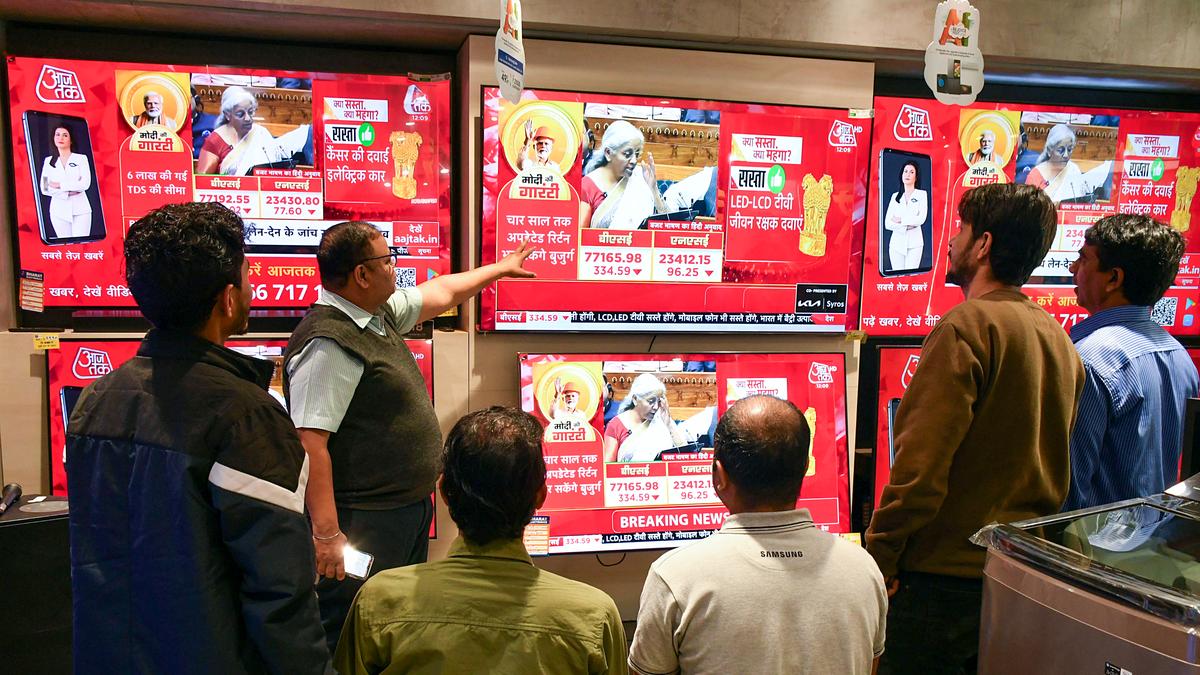
The Union Finance Minister, Nirmala Sitharaman’s presentation of the Union Budget on Saturday, February 1, was against the backdrop of pressing macroeconomic challenges — persistently high taxes and unemployment squeezing the middle-income class, subdued private investment, mounting external vulnerabilities that threaten to derail the growth story, and a looming fiscal overhang. While the Finance Minister laid out an ambitious road map for Viksit Bharat, spanning agriculture, manufacturing, micro, small and medium enterprises (MSME), social welfare, and infrastructure, the Budget’s policy announcements and fiscal plans need closer scrutiny.

Targets that raise questions

First, the fiscal consolidation target of 4.4% of GDP in FY26 is a key highlight of the Budget. However, achieving this target hinges on ambitious revenue projections, including a 11.2% growth in total tax revenues and a 14.4% increase in income tax revenues compared to FY25 estimates. These assumptions appear overly optimistic given the significant tax cuts announced in the Budget and the prevailing economic headwinds such as softening domestic consumption and weakening external demand. Much will also depend on the success of the second asset monetisation plan (2025-30), announced in the Budget. The underperformance of the previous asset monetisation programme raises valid concerns. Furthermore, the estimated ₹11.54 lakh crore in net market borrowings risks crowding out private capital at a critical juncture when credit demand remains tepid. Achieving the ambitious revenue targets will require improved tax buoyancy, more efficient tax administration, and realistic asset monetisation strategies to ensure that the fiscal consolidation plan remains on track.

Second, the revisions in personal income-tax rates and slabs under the new tax regime, exempting incomes up to ₹12 lakh from tax (after factoring in the rebate benefit), and significantly reducing tax liabilities across various income brackets, offer welcome relief to middle-income taxpayers.

However, while these changes are likely to boost disposable income, they shall come at a cost — of ₹1 lakh crore in foregone direct tax revenue, which, in turn, could constrain the government’s ability to fund critical developmental initiatives. The tax-base erosion also comes when household savings have shown a structural decline over the past decade, dropping to 18.4% of GDP in FY23 (Economic Survey 2024-25). This raises pressing questions about the long-term sustainability of these tax cuts, particularly when public investments in infrastructure and social welfare remain critical to drive inclusive economic growth.

Third, on the manufacturing front, the Budget reiterates India’s ambition to emerge as a global manufacturing powerhouse. The Economic Survey 2024-25 flagged India’s underperformance in manufacturing, which accounts for a mere 17% of GDP. While production-linked incentives (PLIs) have shown moderate success in sectors such as electronics, their scalability and long-term impact remain uncertain. In that light, the Budget announcements on enhanced credit facilities for MSMEs and the launch of a National Manufacturing Mission aimed at improving ease of doing business, to foster a future-ready workforce, and promote clean-tech manufacturing, are important steps. The revision of MSME classification criteria — increasing investment limits by 2.5x and doubling turnover thresholds— may improve scale economies. However, the measures fall short of addressing core competitiveness issues such as regulatory inefficiencies, infrastructure gaps, and low innovation capacity. The absence of concrete measures to boost industrial research and development — currently at a dismal 0.64% of GDP — undermines India’s ability to compete with innovation-driven economies such as China and Germany. While the Budget’s focus on manufacturing is a step in the right direction, achieving global competitiveness will require deeper structural reforms and sustained investment in innovation and infrastructure.

The gaps remain in agriculture

Fourth, agriculture, a key pillar of the economy, received significant attention through initiatives such as the Prime Minister Dhan-Dhaanya Krishi Yojana and the National Mission on High-Yielding Seeds. These measures are with the aim of enhancing productivity and climate resilience, which are critical for food security. The increase in the Kisan Credit Card (KCC) loan limit from ₹3 lakh to ₹5 lakh, along with targeted interventions in 100 low-productivity districts, signals a strategic pivot from blanket subsidies to precision support, empowering farmers with greater financial flexibility. However, the measures fall short of addressing systemic inefficiencies in agricultural markets. The Budget lays an emphasis on credit enhancements, yet the focus on short-term loans perpetuates the dependency of farmers on debt without addressing the issues of price volatility or market access. Moreover, the absence of concrete measures to promote agricultural exports — particularly as India eyes leadership in millets and natural farming — represents a missed opportunity.

Fifth, while the Budget introduces some promising measures for the external sector, significant gaps remain unaddressed. Services exports, particularly in IT and business process outsourcing, continue to grow at a robust 10.5% CAGR, but budgetary efforts to diversify the export portfolio remain insufficient. Trade facilitation initiatives such as Bharat Trade Net (BTN) and export credit support for MSMEs, which were announced in the Budget, are positive steps but lack the scale required to tackle India’s persistent trade deficits. Moreover, the challenges posed by the depreciation of the rupee and declining forex reserves require a more ambitious export strategy. The fiscal push to value-added sectors such as pharmaceuticals, electronics, renewable energy, and high-value agricultural products could have strengthened India’s position in global supply chains and enhanced export competitiveness.

Not a transformative push

Finally, while the Budget signals intent on climate action and clean energy, its financial commitments reveal a cautious, incremental approach rather than a transformative push. The Budget’s focus on supply-chain resilience — through incentives for lithium-ion battery recycling, duty exemptions on critical minerals, and support for domestic solar photovoltaic and battery manufacturing — is a pragmatic move to reduce import dependence. However, without a parallel investment in grid modernisation, energy storage, and industrial decarbonisation, the transition to a low-carbon economy will remain fragmented.

The Budget’s fiscal outlays will eventually be judged by how effectively they address the fundamental trade-offs of Indian growth: how to unleash private enterprise while ensuring inclusive development; how to boost consumption without compromising savings, and how to accelerate growth while maintaining macroeconomic stability. Ultimately, the credibility of execution and the government’s willingness to course-correct where necessary will matter.

Amarendu Nandy is an Assistant Professor (Economics Area) at the Indian Institute of Management (IIM) Ranchi. The views expressed are personal

Published – February 03, 2025 12:16 am IST



Source link

Business Tags:agriculture manufacturing micro, Bharat Trade Net, Budget’s focus on supply-chain resilience, Economic Survey 2024-25, fiscal consolidation target, high taxes and unemployment, improving ease of doing business, Kisan Credit Card, launch of a National Manufacturing Mission, macroeconomic challenges, middle-income class, National Mission on High-Yielding Seeds, Prime Minister Dhan-Dhaanya Krishi Yojana, private investment and external vulnerabilities, revision of MSME classification criteria, revisions in personal income-tax rate, second asset monetisation plan, slabs under the tax regime, Small and Medium Enterprises, social welfare and infrastructure, transition to a low-carbon economy, Union Finance Minister and presentation of Union Budget, Viksit Bharat

Post navigation

Previous Post: India’s Shivam Dube Feels “Great” To Contribute As All-Rounder Against England In 5th T20I
Next Post: Amidst Trump’s tariff war, India slashes peak tariffs from 150% to 70%, to ‘correct bad optics’

Related Posts

  • UAE looking to expand scope of trade under CEPA with India: official
    UAE looking to expand scope of trade under CEPA with India: official Business
  • Tata Steel, Bharti Airtel, SBI, Bajaj Finance Among 650+ Companies To Declare Earnings During Feb 2-7 Business
  • Shivam Dube’s Heroics In Vain As New Zealand Thwart India By 50 Runs In 4th T20I Business
  • Fundamental sciences important in developing talent for future: GE Aerospace CTO
    Fundamental sciences important in developing talent for future: GE Aerospace CTO Business
  • Access Denied Business
  • Access Denied Business

More Related Articles

Budget 2024-25: Economy – The Hindu Budget 2024-25: Economy – The Hindu Business
Access Denied Business
Fitch affirms India’s sovereign rating at ‘BBB-’ on robust growth, solid external finances Fitch affirms India’s sovereign rating at ‘BBB-’ on robust growth, solid external finances Business
Sensex, Nifty surge in early trade on May 4 Sensex, Nifty surge in early trade on May 4 Business
Access Denied Business
PPF returns 41 bps behind formula rates PPF returns 41 bps behind formula rates Business
SiteLock

Archives

  • May 2026
  • April 2026
  • March 2026
  • February 2026
  • January 2026
  • December 2025
  • November 2025
  • October 2025
  • September 2025
  • August 2025
  • July 2025
  • June 2025
  • May 2025
  • April 2025
  • March 2025
  • February 2025
  • January 2025
  • December 2024
  • November 2024
  • October 2024
  • September 2024
  • August 2024
  • July 2024
  • June 2024
  • May 2024
  • April 2024
  • March 2024
  • February 2024
  • January 2024
  • December 2023
  • November 2023
  • October 2023
  • September 2023
  • August 2023
  • July 2023
  • June 2023
  • May 2023
  • April 2023
  • March 2023
  • February 2023
  • January 2023
  • December 2022
  • November 2022
  • October 2022
  • September 2022
  • August 2022
  • July 2022
  • June 2022
  • May 2022

Categories

  • Business
  • Nation
  • Science
  • Sports
  • World

Recent Posts

  • Ever since Elon Musk took over, banning social media accounts became common: Iltija Mufti
  • The challenge to not breach the limit
  • Trump embarks on visit to China, focus on trade
  • Baltimore ship crash: U.S. slaps criminal cases against Singapore, Chennai firms and Indian national
  • Three arrested for smuggling banned tobacco products, over 112 kg seized

Recent Comments

  1. Lavernedrums on UP Teacher Who Asked Students To Slap Muslim Classmate
  2. Raymonddow on UP Teacher Who Asked Students To Slap Muslim Classmate
  3. Jeffreyroure on UP Teacher Who Asked Students To Slap Muslim Classmate
  4. AaronPrido on UP Teacher Who Asked Students To Slap Muslim Classmate
  5. AaronThymn on UP Teacher Who Asked Students To Slap Muslim Classmate
  • Ferrari’s Charles Leclerc Wins Italian Grand Prix As Max Verstappen Falters Again
    Ferrari’s Charles Leclerc Wins Italian Grand Prix As Max Verstappen Falters Again Sports
  • India beat England by seven wickets in first T20I
    India beat England by seven wickets in first T20I Sports
  • Judge rules Prince Harry was not unfairly stripped of U.K. security detail after he moved to the U.S.
    Judge rules Prince Harry was not unfairly stripped of U.K. security detail after he moved to the U.S. World
  • Ukraine says it shot down 33,000 Russian drones in March, monthly record
    Ukraine says it shot down 33,000 Russian drones in March, monthly record World
  • NHRC notice to Centre, T.N. government over ‘discrimination’ by manufacturer of electronic devices in jobs
    NHRC notice to Centre, T.N. government over ‘discrimination’ by manufacturer of electronic devices in jobs Business
  • Watch: Germany wants Indian workers, but right-wing AfD resists
    Watch: Germany wants Indian workers, but right-wing AfD resists World
  • Textiles and garment exports fall 2.2% in 2025-26: Global Trade Research Initiative
    Textiles and garment exports fall 2.2% in 2025-26: Global Trade Research Initiative Business
  • Amid 2nd Impeachment, A Look At Troubled History Of South Korean Presidents
    Amid 2nd Impeachment, A Look At Troubled History Of South Korean Presidents World

Editor-in-Chief:
Mohammad Ariff,
MSW, MAJMC, BSW, DTL, CTS, CNM, CCR, CAL, RSL, ASOC.
editor@artifex.news

Associate Editors:
1. Zenellis R. Tuba,
zenelis@artifex.news
2. Haris Daniyel
daniyel@artifex.news

Photograher:
Rohan Das
rohan@artifex.news

Artifex.News offers Online Paid Internships to college students from India and Abroad. Interns will get a PRESS CARD and other online offers.
Send your CV (Subjectline: Paid Internship) to internship@artifex.news

Links:
Associate Journalism
About Us
Privacy Policy

News Links:
Breaking News
World
Nation
Sports
Business
Entertainment
Lifestyle

Registered Office:
72/A, Elliot Road, Kolkata - 700016
Tel: 033-22277777, 033-22172217
Email: office@artifex.news

Editorial Office / News Desk:
No. 13, Mezzanine Floor, Esplanade Metro Rail Station,
12 J. L. Nehru Road, Kolkata - 700069.
(Entry from Gate No. 5)
Tel: 033-46011099, 033-46046046
Email: editor@artifex.news

Copyright © 2023 Artifex.News Newsportal designed by Artifex Infotech.